
SSRI Bleeding Risk Calculator
Risk Assessment Tool
This tool estimates your relative bleeding risk based on your SSRI type, medications, and health factors. Remember: this is for informational purposes only. Always consult your doctor for medical advice.
When you take an SSRI for depression or anxiety, you’re not just changing your mood-you’re also changing how your blood clots. It’s not a side effect most people hear about, but it’s real, and it can be serious. Selective Serotonin Reuptake Inhibitors like fluoxetine, sertraline, and paroxetine work by boosting serotonin in your brain. But serotonin isn’t just a mood chemical. About 99% of the serotonin in your body is stored in your platelets, the tiny blood cells that help stop bleeding. When SSRIs block serotonin reuptake, they drain those platelet stores. And without enough serotonin, platelets can’t stick together properly when you get a cut or bruise.
How SSRIs Mess With Your Platelets
Platelets need serotonin to amplify their response to injury. When a blood vessel gets damaged, platelets rush to the site. They release serotonin, which tells other platelets to clump together and form a plug. That’s how minor cuts stop bleeding quickly. SSRIs interfere with this process by blocking the serotonin transporter (5-HTT) on platelets. Without that signal, platelets don’t activate fully. Studies show that people taking paroxetine can lose over 80% of their platelet serotonin. That’s not a small drop-it’s enough to make your blood take longer to clot.
Not all SSRIs are the same. The strength of how tightly they bind to the serotonin transporter matters. Paroxetine has the strongest binding (Ki = 0.17 nM), followed by fluvoxamine. Sertraline and citalopram bind more weakly. That’s why paroxetine carries a higher bleeding risk than sertraline. In one study, paroxetine users had a 40-50% higher chance of upper GI bleeding compared to people on other antidepressants. Sertraline users? Only 20-30% higher. This isn’t theoretical-it shows up in real-world data from the FDA’s adverse event database, where 8.7% of SSRI-related reports mentioned bleeding, with gastrointestinal bleeding and easy bruising being the most common.
When SSRIs Combine With Other Drugs
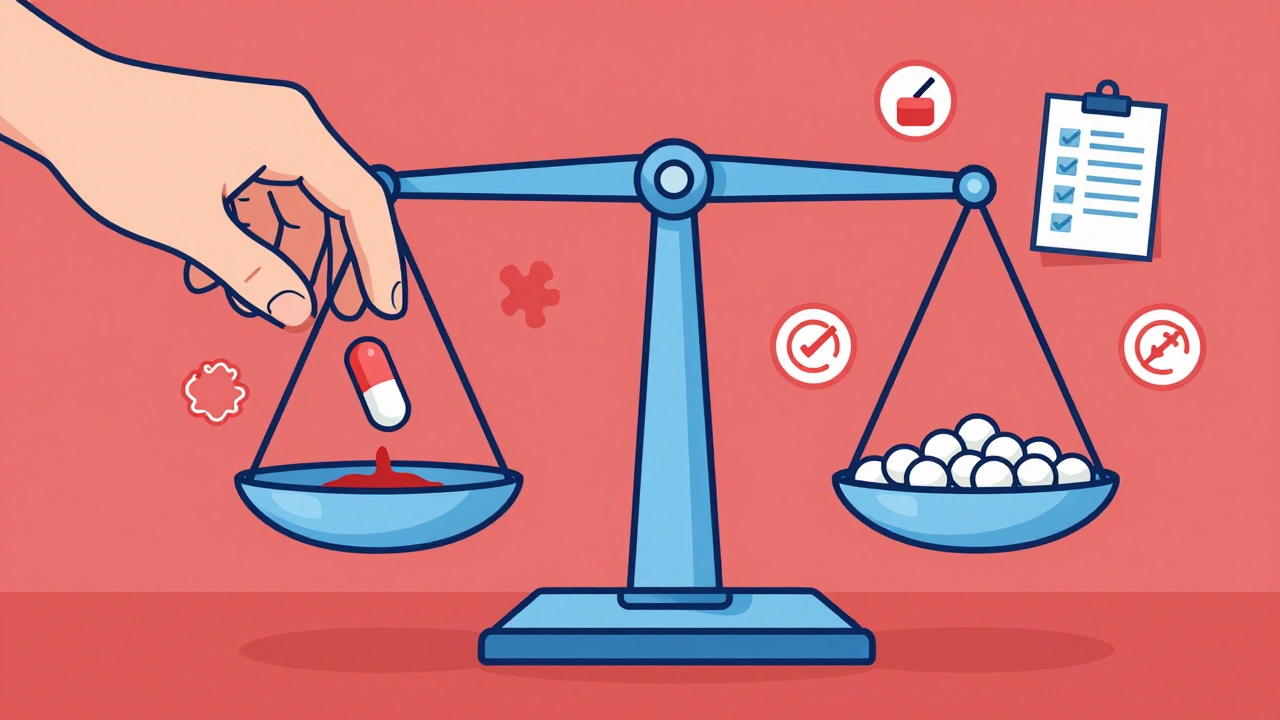
The biggest danger isn’t SSRIs alone-it’s SSRIs mixed with other medications that also affect bleeding. Take blood thinners like warfarin or apixaban. When you add an SSRI to that mix, your risk of major bleeding jumps by 35%, according to a 2024 meta-analysis in JAMA Network Open. NSAIDs like ibuprofen or naproxen make it worse. Combining them with SSRIs increases bleeding risk by 4.5 times, because NSAIDs damage the stomach lining while SSRIs weaken platelet function. It’s a double hit.
Even antiplatelet drugs used after heart attacks or stents can interact. But here’s an important twist: a 2023 study of patients who had stents and were on powerful antiplatelets like prasugrel or ticagrelor found no extra bleeding from SSRIs. Why? Because those drugs are so strong they override the platelet weakness caused by SSRIs. That means context matters. If you’re on a high-dose antiplatelet, your SSRI might not add much risk. But if you’re on a blood thinner, it’s a different story.
Who’s at Highest Risk?
You’re more likely to have problems if you’re older, have kidney or liver disease, have a history of ulcers or bleeding, or take multiple medications that affect clotting. The HAS-BLED score helps doctors measure this risk. It looks at things like high blood pressure, abnormal lab results, past bleeding, and age. A score of 3 or higher means you’re in the high-risk group. For those patients, switching from paroxetine to sertraline or citalopram can cut the risk significantly. In some cases, doctors may avoid SSRIs entirely and choose alternatives like bupropion or mirtazapine, which don’t affect platelets.
Genetics also play a role. A 2024 study found that people with the S/S version of the 5-HTTLPR gene (a serotonin transporter gene) have 2.3 times higher bleeding risk on SSRIs than those with the L/L version. This isn’t routine testing yet, but it’s coming. The European Medicines Agency is reviewing whether to add genetic risk markers to SSRI labels by late 2025.
What Happens During Surgery or Procedures?
If you’re scheduled for surgery, dental work, or even a colonoscopy, your doctor needs to know you’re on an SSRI. For minor procedures, they might just tell you to watch for unusual bruising. For major surgeries with high bleeding risk-like brain or spine operations-they may ask you to stop the SSRI 5-7 days beforehand. But here’s the catch: stopping antidepressants suddenly can trigger withdrawal or make depression worse. For heart surgery, the American Psychiatric Association says to keep SSRIs going because the risk of relapse is higher than the bleeding risk. It’s a balance.
Some hospitals now have alerts in their electronic systems that pop up when a doctor tries to prescribe an SSRI to someone on a blood thinner. One analysis showed these alerts cut dangerous combinations by over 20%. That’s progress.
Real People, Real Stories
Online communities tell the unfiltered truth. On Reddit’s r/SSRI, hundreds of people share stories of unexplained bruising, nosebleeds after blowing their nose, or bleeding gums when brushing teeth. One user wrote: “I used to get a small cut and it would stop in minutes. Now, if I nick myself shaving, I’m still wiping blood off my face five minutes later.” Another said: “I switched from paroxetine to sertraline, and the bruising on my legs disappeared in two weeks.”
Drugs.com reviews show 12.4% of SSRI users report easy bruising. Paroxetine users? Nearly 19%. Sertraline? Just over 9%. That’s not a coincidence. These aren’t rare events-they’re common enough that 63% of doctors on a physician network say they’ve seen increased bleeding in SSRI patients during minor procedures. But only 22% of them feel it’s bad enough to stop the medication.

What You Should Do
If you’re on an SSRI, here’s what matters:
- Know your drug. Paroxetine and fluvoxamine carry the highest bleeding risk. Sertraline and citalopram are safer choices if bleeding is a concern.
- Avoid NSAIDs. Don’t take ibuprofen, naproxen, or aspirin unless your doctor says it’s okay. Use acetaminophen (Tylenol) for pain instead.
- Watch for warning signs. Black or tarry stools, vomiting blood or coffee-ground-looking material, unexplained bruising, or bleeding that won’t stop are red flags. Call your doctor immediately.
- Talk before surgery. Tell every provider-even your dentist-that you’re on an SSRI. Don’t assume they know.
- Don’t stop cold turkey. If you think your SSRI is causing bleeding, talk to your doctor. They can help you switch safely.
There’s no need to panic. For most people, the benefits of treating depression outweigh the bleeding risk. But ignoring it? That’s dangerous. The FDA issued a safety alert in 2019. Drug labels now include bleeding warnings. And the medical community is starting to treat this like a real, measurable risk-not just a footnote.
The Bigger Picture
Depression kills. People with untreated depression have higher rates of heart disease, suicide, and premature death. Avoiding SSRIs because of bleeding risk can be just as harmful as the bleeding itself. The goal isn’t to avoid SSRIs-it’s to use them wisely. Choose the right one. Avoid the dangerous combos. Monitor for signs. And never assume your doctor knows everything about your medications.
Today, we have better tools than ever to manage this risk. Genetic testing may soon help personalize choices. Platelet-rich plasma is being tested to reverse SSRI effects before surgery. And doctors are learning to weigh the risks more carefully. The message is clear: SSRIs aren’t harmless. But they’re not a no-go either. With the right knowledge, you can stay safe and get the mental health care you need.
Can SSRIs cause internal bleeding?
Yes. SSRIs can increase the risk of internal bleeding, especially in the stomach and intestines. This happens because they reduce platelet serotonin, which weakens the blood’s ability to clot. Signs include black, tarry stools, vomiting blood, or unexplained abdominal pain. The risk is higher with paroxetine and when combined with NSAIDs or blood thinners.
Which SSRI has the lowest bleeding risk?
Sertraline and citalopram have the lowest bleeding risk among SSRIs because they bind less tightly to the serotonin transporter. Paroxetine and fluvoxamine carry the highest risk. If you’re at risk for bleeding-due to age, other medications, or past bleeding history-sertraline is often the preferred choice.
Should I stop my SSRI before surgery?
It depends. For minor procedures like dental work or colonoscopies, stopping isn’t usually needed. For major surgeries with high bleeding risk, doctors may ask you to stop 5-7 days beforehand. But for heart surgery or if you have severe depression, guidelines recommend continuing SSRIs because the risk of relapse is greater than the bleeding risk. Always discuss this with your doctor-don’t stop on your own.
Can I take ibuprofen with an SSRI?
No. Combining ibuprofen or other NSAIDs with SSRIs increases bleeding risk by 4.5 times. NSAIDs irritate the stomach lining, and SSRIs make it harder for your blood to clot. Together, they can cause dangerous ulcers or bleeding. Use acetaminophen (Tylenol) instead for pain relief.
Do all SSRIs affect platelets the same way?
No. SSRIs vary in how strongly they block serotonin reuptake. Paroxetine has the highest binding affinity (Ki = 0.17 nM), meaning it drains platelet serotonin the most. Sertraline (Ki = 0.52 nM) and citalopram (Ki = 0.91 nM) have weaker effects. This difference explains why bleeding risk varies between SSRIs, even though they all work on serotonin.
Is bleeding from SSRIs a sign of something worse?
Not always. Easy bruising or nosebleeds can be a direct effect of platelet dysfunction. But if you’re passing black stools, vomiting blood, or have sudden severe pain, it could mean a serious bleed-like a stomach ulcer or gastrointestinal hemorrhage. These require immediate medical attention. Don’t wait to see if it gets better.

Jay Everett
Yo, this is wild. I was on paroxetine for 3 years and thought my bruises were just from being clumsy. Turns out my platelets were basically on vacation. Switched to sertraline and my legs stopped looking like a crime scene. 🤯 Also, NSAIDs? No. Just no. Tylenol is my new BFF now. Thanks for the clarity!
मनोज कुमार
SSRIs inhibit 5-HTT on platelets leading to reduced granule secretion and impaired aggregation. Paroxetine Ki=0.17nM > sertraline Ki=0.52nM. Clinical data confirms increased GI bleed risk with strong reuptake inhibitors. FDA adverse event reports show 8.7% bleeding-related submissions. Simple pharmacology. Stop overcomplicating.
Joel Deang
wait so u mean like… my nosebleeds after i blow my nose? that’s not just dry air?? 😳 i thought i was just a walking paper cut. switched from parox to zoloft and holy crap the bleeding stopped. also i used to take advil for headaches now i just chew tylenol like gum. 🤪
Roger Leiton
This is so fascinating. I never realized serotonin was such a multitasker. It’s like the body’s Swiss Army knife - mood, clotting, gut motility, all in one molecule. The fact that we’re tinkering with this system and not tracking bleeding risks feels like driving a car without checking the brakes. I wonder if we’ll ever have routine platelet function tests before prescribing SSRIs? 🤔
Laura Baur
It’s deeply irresponsible how casually doctors prescribe SSRIs without even mentioning this. I’ve seen patients on multiple anticoagulants, NSAIDs, and paroxetine simultaneously - and no one bats an eye. The system is broken. We treat depression like a minor inconvenience, not a life-altering condition that interacts with every biological system. And now we’re surprised when people bleed out from a simple dental cleaning? Wake up. This isn’t ‘side effect’ territory - it’s pharmacological negligence.
Arun kumar
good info man. i was on fluvoxamine and got random bruising. switched to sertraline and no more. also avoid ibuprofen like fire. tylenol is the way. india doctors dont talk about this much. thanks for sharing
Zed theMartian
Oh wow. So we’re now admitting that antidepressants are basically blood thinners? That’s not a side effect - that’s a feature of systemic toxicity. Next they’ll tell us SSRIs cause osteoporosis and infertility. At what point do we stop pretending these are ‘safe’? This isn’t medicine - it’s chemical roulette with your organs. I’m done.
ATUL BHARDWAJ
Paroxetine bad. Sertraline good. NSAIDs worse. Tylenol fine. Tell doctor before surgery. Simple.
Steve World Shopping
Platelet serotonin depletion is a well-documented pharmacodynamic effect. The Ki values are not debatable. The clinical correlation with GI bleeding is statistically significant (p<0.01). The EMA is reviewing genetic markers. This is not anecdotal. This is clinical pharmacology 101. If you don't understand this, you shouldn't be prescribing or self-medicating.
Rebecca M.
So… my ‘mood stabilizer’ is also my ‘bleed easily’ pill? How poetic. I guess my depression comes with a side of hematomas. Thanks, Big Pharma. 🙃 I’ll just keep using my 12-year-old razor and hope for the best.
Lynn Steiner
I’ve been on sertraline for 5 years and I’ve had 3 nosebleeds this month alone. My gums bleed when I brush. I’m 32. I shouldn’t be acting like an 80-year-old with hemophilia. Why didn’t anyone tell me? I feel so violated. I trusted my doctor. I trusted the pill. Now I feel like my body is betraying me. 😭
Alicia Marks
You got this. It’s scary, but you’re not alone. Switching meds is a big deal, but you’re already doing the right thing by learning. Talk to your doctor - they’ll help you find a safer option. And please, no ibuprofen. Tylenol is your friend now. 💪
Shannara Jenkins
Love how this breaks it down without fearmongering. I’m a nurse and I’ve seen so many patients with unexplained bruising who never connected it to their SSRI. This should be standard info at every prescription refill. Also - yes, tell your dentist. I had a patient bleed for 20 minutes after a simple extraction because she didn’t mention her paroxetine. Scary stuff.
Elizabeth Grace
My mom switched from paroxetine to citalopram after she started bruising like a toddler. Took 3 weeks but the purple spots faded. She still takes it for anxiety and doesn’t feel worse. Honestly? I wish my doctor had told us this before she started. Now I’m reading everything about every med I take. Thanks for the heads up.
Steve Enck
While the pharmacokinetic data presented is methodologically sound, the causal inference drawn between platelet serotonin depletion and clinically significant hemorrhage remains correlational in most observational cohorts. Confounding variables - including age, polypharmacy, and comorbid gastrointestinal pathology - are inadequately controlled in the cited meta-analyses. Furthermore, the risk-benefit calculus must be contextualized against the high mortality rate of untreated major depressive disorder. To frame this as a primary safety concern is to engage in medical reductionism of the highest order.