Antidepressant Side Effect Comparator
Which Side Effects Matter Most To You?
Select the concerns that are most important to you. This tool will help you understand which antidepressant might be better suited for your needs.
Your Personalized Comparison
Important note: This tool provides general information only. Always consult with your doctor or psychiatrist before making any changes to your medication.
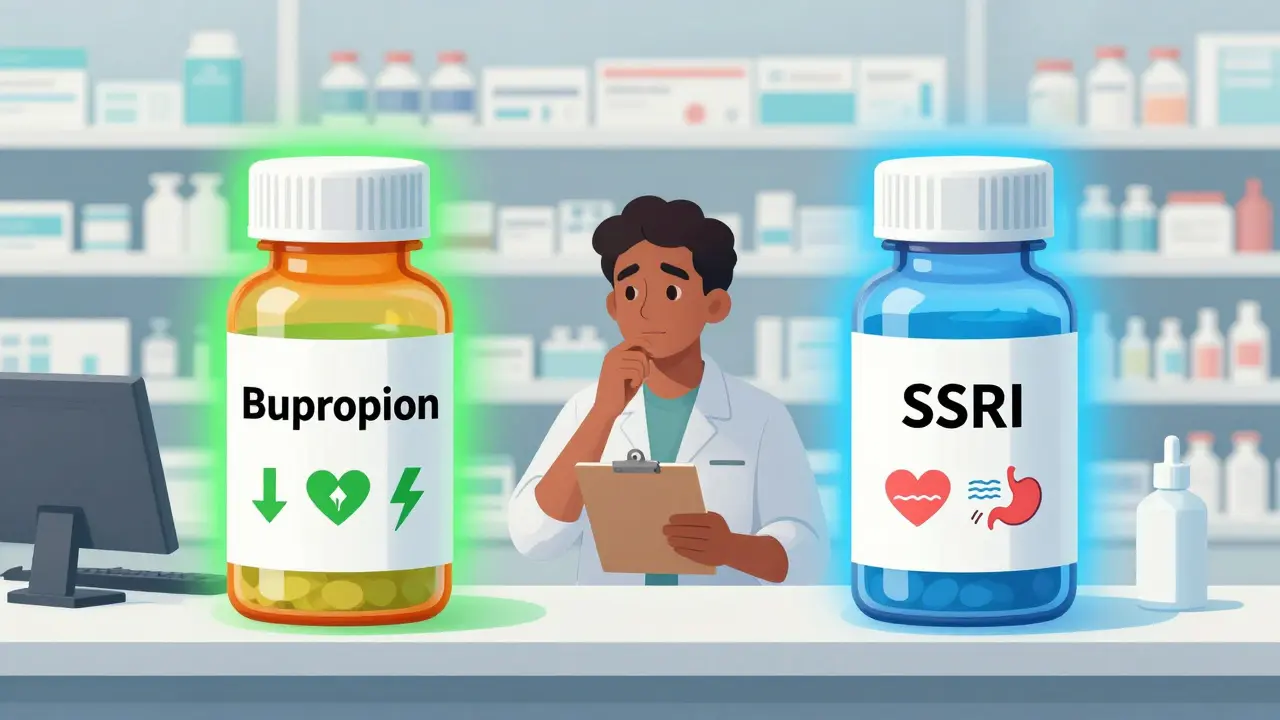
When you're trying to find the right antidepressant, the goal isn't just to lift your mood-it's to live your life without new problems replacing the old ones. That's why so many people end up switching meds: not because the first one didn't work, but because it made other parts of life harder. Two of the most common choices are bupropion and SSRIs. They both treat depression, but they do it in very different ways-and their side effects couldn't be more opposite.
How They Work (And Why It Matters)
Bupropion, sold under brand names like Wellbutrin and Zyban, doesn't touch serotonin at all. Instead, it boosts norepinephrine and dopamine-two brain chemicals tied to energy, focus, and motivation. Think of it like turning up the volume on your inner drive. That’s why people often say they feel more "awake" on bupropion. It’s not sedating. It doesn’t make you sluggish.
SSRIs-like sertraline (Zoloft), escitalopram (Lexapro), and fluoxetine (Prozac)-do the opposite. They lock onto serotonin transporters and keep more of the chemical around. Serotonin helps regulate mood, but it also controls digestion, sleep, and sexual function. That’s why, for many, SSRIs bring relief from sadness… but also nausea, fatigue, and a loss of interest in sex.
The difference isn’t subtle. It’s the reason one person switches from Lexapro to Wellbutrin after six months… and never looks back.
Sexual Side Effects: The Biggest Dealbreaker
If you’ve ever taken an SSRI, you’ve probably heard-or felt-this: "I don’t want sex anymore." It’s not just in your head. Studies show 30% to 70% of people on SSRIs experience sexual side effects. Paroxetine (Paxil) tops the list, with up to 76% of users reporting problems. That includes low libido, trouble getting aroused, delayed orgasm, or full-on orgasmic shutdown.
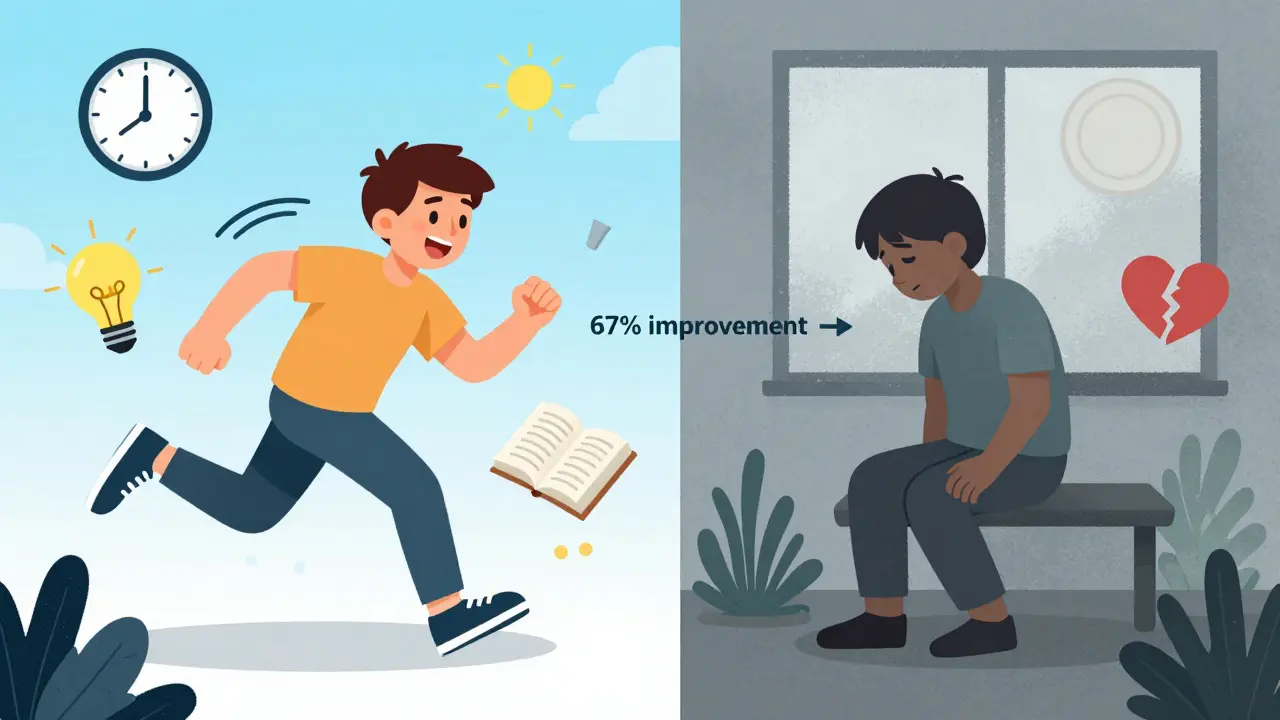
Bupropion? Around 13% to 15% of users report similar issues. That’s roughly half the rate of SSRIs. A 2015 study in the Journal of Sexual Medicine found that 67% of people who stopped SSRIs because of sexual side effects saw their sex drive come back after switching to bupropion. Even when doctors add bupropion to an ongoing SSRI, about 70% of patients report improvement.
Real talk from patients: On Drugs.com, 47% of negative reviews for Lexapro mention "zero sex drive." Meanwhile, bupropion’s top positive comment? "Finally, I feel like myself again-inside and out."
Weight Changes: Gain vs Loss
Weight gain is one of the most feared side effects of SSRIs. Studies show that over 6 to 12 months, people on paroxetine or sertraline typically gain 2.5 to 3.5 kilograms (5.5 to 7.7 pounds). Some gain more. A Reddit user wrote: "Gained 25 pounds in one year. Couldn’t eat less, moved more-still gained."
Bupropion does the opposite. It’s one of the few antidepressants linked to weight loss. In a 2009 study published in Obesity, people taking bupropion XL 400 mg/day lost an average of 7.2% of their body weight over 24 weeks. Even at standard depression doses (150-300 mg/day), most people lose 0.8 to 1.2 kg (1.8 to 2.6 pounds) over the same period.
That’s not magic. It’s science. Bupropion reduces appetite slightly and may increase metabolic rate. For someone already stressed about body image, this can be a game-changer.
Energy, Sleep, and Brain Fog
SSRIs often cause drowsiness. Fluoxetine? Sedating. Paroxetine? Even worse. Many patients say they feel like they’re moving through syrup. It’s not depression-it’s the medication.
Bupropion? It’s the opposite. It’s the only antidepressant commonly prescribed to people who need to stay alert-like truck drivers, nurses, or students. A 2008 review in CNS Drugs found bupropion had a 73% lower risk of somnolence than SSRIs. People on bupropion report feeling "clear-headed," "sharp," and "in control."
But here’s the catch: that same energy can backfire. If you struggle with anxiety, bupropion might make it worse. A 2017 study in the Journal of Affective Disorders found that 28% of patients with anxiety disorders stopped bupropion because it triggered restlessness, panic, or racing thoughts. SSRIs? They often calm anxiety faster.
Physical Side Effects: Nausea, Diarrhea, and More
SSRIs are notorious for GI upset. Up to 50% of users feel nauseous in the first few weeks. Diarrhea? That’s common too. The same 2002 meta-analysis showed bupropion had a 60% lower risk of nausea and a 69% lower risk of diarrhea compared to SSRIs. If you’ve ever thrown up after your first Zoloft pill, you know why this matters.
Another big one: sweating. SSRIs can cause night sweats or excessive daytime sweating. Bupropion? Almost no reports of that.
Seizures and Heart Risks: The Hidden Warnings
Bupropion has a serious warning: seizures. At 300 mg/day, about 1 in 1,000 people have a seizure. At 400 mg/day, it jumps to 4 in 1,000. That’s why doctors never start you at full dose. You begin at 150 mg, wait a week, then increase. And if you’ve ever had a seizure, an eating disorder like anorexia, or are on certain other meds (like Adderall or antipsychotics), bupropion is off-limits.
SSRIs? Almost zero seizure risk. Around 0.02% to 0.04%-so low it’s rarely a concern.
Bupropion can also raise blood pressure. On average, systolic pressure increases by 3 to 5 mmHg. That’s not huge, but if you already have hypertension, your doctor will monitor you closely. SSRIs? They usually don’t affect blood pressure-or may even lower it slightly.
Switching Between Them: What You Need to Know
If you’re switching from an SSRI to bupropion, timing matters. Fluoxetine (Prozac) sticks around for weeks. You need a full two-week gap before starting bupropion. For other SSRIs like sertraline or escitalopram? One week is enough.
Why? Because mixing them can cause serotonin syndrome-a rare but dangerous condition where your brain gets flooded with serotonin. Symptoms: confusion, rapid heartbeat, high fever, muscle rigidity. One case report in Cureus (2020) documented a seizure in a healthy person after combining bupropion 300 mg with escitalopram 20 mg.
Also: never stop an SSRI cold turkey. Even if you hate the side effects, taper slowly. Otherwise, you risk withdrawal: dizziness, brain zaps, nausea, and mood crashes.
What the Data Says About Real People
A 2021 survey in Patient Preference and Adherence asked over 1,200 people which antidepressant they’d pick if they could choose again. 63% chose bupropion for fewer sexual side effects. But 71% of those with anxiety disorders chose SSRIs.
On Drugs.com:
- Bupropion: 7.4/10 average rating. 68% positive. Top reasons: "No weight gain," "No sex problems," "I feel awake."
- Lexapro: 6.8/10. 47% of negative reviews mention sexual side effects. 38% mention weight gain.
Reddit threads are full of stories like this: "I was on 20 mg of Lexapro for 2 years. My marriage was falling apart because I had no desire. Switched to Wellbutrin. Within three weeks, I wanted sex again. Then I couldn’t sleep. But I’d rather be awake than numb."
Who Gets Bupropion? Who Gets SSRIs?
Choose bupropion if:
- You’ve had sexual side effects from SSRIs
- You want to avoid weight gain-or lose a little weight
- You feel sluggish or foggy on other meds
- You don’t have anxiety, seizures, or an eating disorder
- You’re not on other meds that lower seizure threshold
Choose an SSRI if:
- You have anxiety along with depression
- You have a history of seizures or eating disorders
- You need something with a proven track record for OCD or PTSD
- You’re worried about blood pressure spikes
- You’ve tried bupropion and it made you too jittery
There’s no "best" antidepressant. Only the best one for you.
What’s New in 2026?
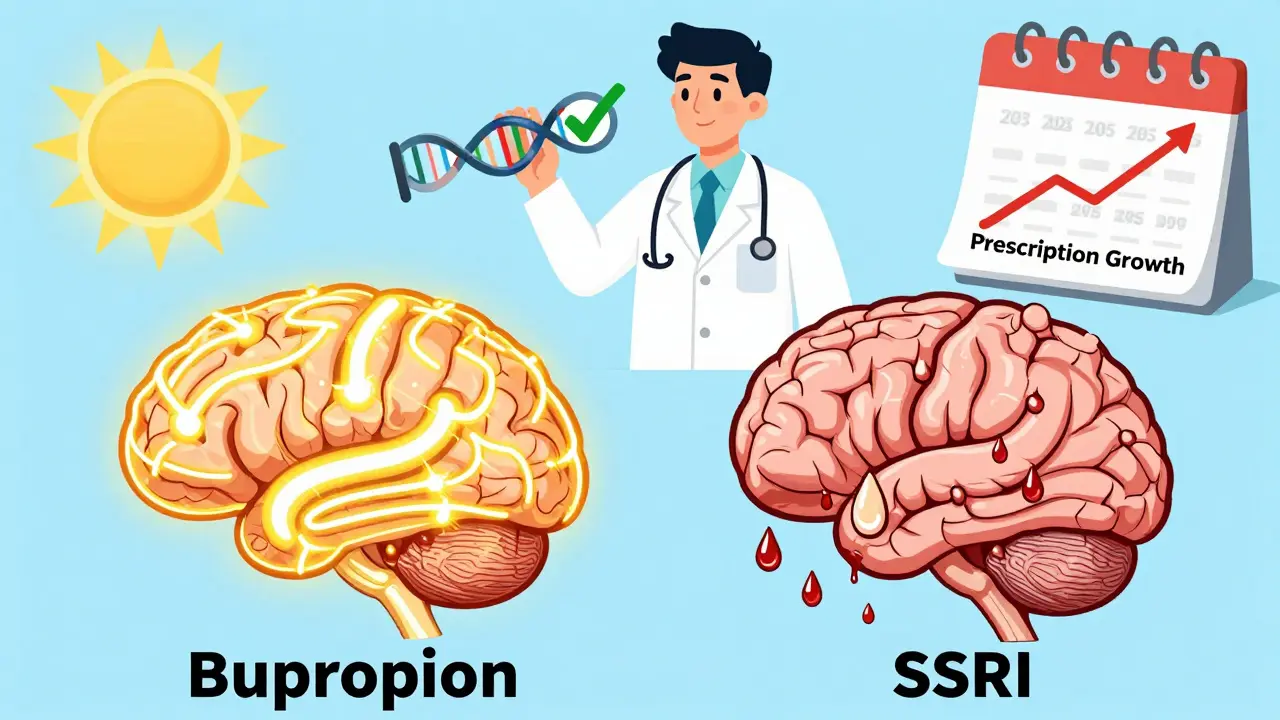
Pharmacogenetic testing-where your DNA helps predict which drug you’ll tolerate best-is now being used in clinics across Australia and the U.S. The 2023 GUIDED trial showed that using genetic info to guide antidepressant choice improved remission rates by 14.2% compared to standard care.
Bupropion is often flagged for people with certain gene variants that make them more likely to experience nausea or sexual side effects from SSRIs. That means more people are getting the right drug on the first try.
And while SSRIs still make up 70% of antidepressant prescriptions, bupropion’s use is growing-especially for sexual dysfunction, weight management, and fatigue. The market for antidepressants is expected to hit $18.3 billion by 2027, not because more people are depressed, but because more people are demanding medications that don’t steal their life.
Can bupropion help if I had sexual side effects from an SSRI?
Yes. Studies show that 67% of people who stopped SSRIs due to sexual side effects saw improvement after switching to bupropion. Even adding bupropion to an existing SSRI helped 70-80% of patients in open-label trials. It’s one of the most reliable fixes for this problem.
Will bupropion make me lose weight?
Not everyone does, but many do. At standard depression doses (150-300 mg/day), most people lose 0.8 to 1.2 kg (1.8-2.6 lbs) over 6-12 months. At higher doses (400 mg/day), weight loss can reach 7% of body weight. It’s one of the few antidepressants that may help with weight management.
Is bupropion safe if I have anxiety?
It can be risky. Bupropion is activating, which can worsen anxiety, restlessness, or panic in about 28% of people with anxiety disorders. SSRIs are often better for anxiety because they calm the nervous system. If you have panic attacks or generalized anxiety, your doctor may start you on an SSRI instead.
Can I take bupropion with other antidepressants?
Yes, but with caution. Combining bupropion with an SSRI is sometimes done to treat both depression and sexual side effects. However, this increases the risk of serotonin syndrome and seizures. Always use low doses, monitor closely, and never combine without medical supervision. One case report documented a seizure from this combo in someone with no prior history.
Why is bupropion less prescribed than SSRIs?
SSRIs are prescribed more often because they’re effective for a wider range of conditions-like OCD, PTSD, and anxiety. Bupropion is less effective for anxiety and has stricter safety rules (seizure risk, blood pressure). But it’s the fourth most prescribed antidepressant in the U.S., and its use is growing fast, especially for people who’ve had bad side effects from SSRIs.
How long does it take for bupropion to start working?
Like most antidepressants, it takes 2 to 4 weeks to notice mood improvements. But some people feel more energy and alertness within the first week. Sexual side effects often improve faster-within 1 to 3 weeks. That’s quicker than SSRIs, where sexual function can take months to recover-even after switching.
Does bupropion cause insomnia?
Yes, it can. Because it boosts dopamine and norepinephrine, bupropion is stimulating. Insomnia is one of the most common side effects, reported by about 20-30% of users. Taking it earlier in the day helps. If insomnia is severe, your doctor might lower the dose or switch you to an SSRI at night.
Are there long-term risks with bupropion?
Long-term use is generally safe if you don’t have seizures, eating disorders, or uncontrolled high blood pressure. The main risks remain the same: seizure (especially at high doses), increased blood pressure, and insomnia. Regular check-ups every few months are recommended. Unlike SSRIs, bupropion doesn’t cause long-term weight gain or sexual dysfunction in most users.

John Haberstroh
I switched from Lexapro to Wellbutrin last year after my libido vanished into thin air. Three weeks in, I was back to normal - not just sexually, but mentally. I started hiking again, cooking, even texting my friends. The insomnia? Yeah, that sucked. But I moved my dose to 8 a.m. and it’s fine now. Worth it. I’d rather be awake and horny than numb and exhausted.
James Lloyd
The data here is solid. Bupropion’s sexual side effect profile is objectively better - 13-15% vs 30-70%. But people forget the trade-offs. If you have anxiety, it can be a nightmare. I’ve seen patients on bupropion go from mild worry to full panic attacks within days. SSRIs aren’t perfect, but they’re gentler for the nervous system. Context matters more than the headline.
Logan Hawker
I mean… this is just pharma marketing dressed up as clinical insight. Bupropion’s "energy boost"? That’s just stimulant-like CNS activation. And the weight loss? It’s not magic - it’s appetite suppression, which is why it’s used off-label for obesity. They’re selling a dopamine high as depression treatment. And don’t get me started on the "no weight gain" narrative - it’s a selective cherry-pick. SSRIs help with emotional eating. Bupropion just starves you. Which one’s really better?
Digital Raju Yadav
You Americans act like bupropion is some miracle drug. In India, we’ve got SSRIs as first-line for a reason - they’re cheaper, safer, and work for comorbid anxiety. Your obsession with sex drive and weight is a luxury problem. Most of us are just happy to get out of bed. Also, 7% weight loss? That’s not therapy - that’s a diet. Stop pretending this is science.
Liam Earney
I’ve been on bupropion for four years now - and honestly? I think it saved me. Not because it "fixed" my depression, but because it didn’t steal my life. I remember being on sertraline: no libido, constant nausea, gained 18 pounds, couldn’t focus. I felt like a zombie in a slow-motion horror movie. Switching to Wellbutrin? It was like someone turned the lights back on. I still get jittery sometimes - especially if I drink coffee - but I’d rather be anxious than numb. And yes, I sleep poorly. But I sleep less because I’m living more. I’m not saying it’s perfect - just that the alternatives are worse.
PRITAM BIJAPUR
The real question isn’t bupropion vs SSRIs - it’s whether we’re treating depression or managing symptoms of modern life. We’ve turned antidepressants into lifestyle enhancers: "I want to lose weight," "I want sex," "I want to focus." But depression isn’t a software bug you fix with a patch. The brain isn’t a battery. These drugs alter neurochemistry - not just mood, but identity. I’m not anti-medication. I’m anti-reductionism. What happens when you stop needing the drug? Do you still know who you are?
Philip Blankenship
I just want to say - if you're considering switching meds, please talk to your doctor first. I went off Lexapro cold turkey because I "hated how I felt" - turned out, I had brain zaps for two weeks, couldn't sleep, and cried for no reason. Then I tried bupropion and got a seizure scare (not even a real one, but the ER visit was terrifying). Both meds have pros and cons. But you don't just swap them like phone cases. Take it slow. Listen to your body. And maybe, just maybe, try therapy too.
Tony Shuman
This whole post feels like a Wellbutrin ad. Why isn’t anyone talking about how SSRIs are the only antidepressants proven to reduce OCD symptoms? Or how bupropion has zero data for PTSD? You’re acting like these are interchangeable - they’re not. One’s a mood lifter. The other’s a stimulant with antidepressant side effects. Stop pretending it’s a one-size-fits-all game.
Kancharla Pavan
I’m tired of people treating antidepressants like Tinder dates - "I don’t like your side effects, I’m swiping left." You think depression is a personal failure? It’s not. But neither is popping pills and calling it a day. If you’re using bupropion just to get laid or lose weight, you’re missing the point. Depression isn’t a dating profile. It’s a systemic illness. And you’re treating it like a lifestyle upgrade.
Jonathan Ruth
Bupropion made me feel like a robot with a caffeine IV. I lost 15 lbs. Got my sex drive back. But I also had panic attacks every time I missed a dose. And yeah - I got a weird tingling in my left arm once. Thought I was having a stroke. Turns out it was just the drug. Not worth it. I went back to escitalopram. Still numb. But at least I’m not scared of my own brain.
Carrie Schluckbier
Did you know the FDA approved bupropion in 1985… but the manufacturer quietly funded studies that downplayed seizure risks? And that one 2015 "sex drive" study? It was funded by GlaxoSmithKline. Same company that made Paxil. Coincidence? I think not. Big Pharma doesn’t want you to know that SSRIs work better for anxiety - because they’re cheaper to make. Bupropion? It’s a premium product. And you’re being sold a dream.
Oliver Calvert
For anyone switching: if you're going from an SSRI with a long half-life like fluoxetine, wait at least 14 days. I didn't - took bupropion after 7 days. Ended up in the ER with serotonin syndrome symptoms. Mild, but terrifying. Don't be like me. Taper. Wait. Listen. Your brain isn't a light switch.
guy greenfeld
The real tragedy isn’t the side effects - it’s that we’ve reduced human suffering to a pharmacological equation. "Which drug gives me more sex and less weight?" We’ve turned healing into optimization. But depression doesn’t care about your libido or your waistline. It’s a silence. And no pill can fill that. Maybe we need to stop asking which drug is better… and start asking why we need drugs at all.