
Imagine sitting in a treatment chair, feeling perfectly fine one moment, and then suddenly your throat feels like it’s closing up. It is a terrifying scenario that oncology teams work hard to prevent, but chemotherapy hypersensitivity reactions are immune-mediated adverse events triggered by cancer drugs, ranging from mild rashes to life-threatening anaphylaxis remain a significant risk. About 5% of patients receiving chemotherapy experience these allergic responses. While most are manageable, some can escalate to fatal outcomes within minutes if not recognized immediately.
The difference between a mild rash and circulatory collapse often comes down to seconds. Understanding the specific signs, the drugs that trigger them, and the exact protocols for intervention is not just medical knowledge-it is a matter of survival. This guide breaks down what you need to know about recognizing these reactions and how healthcare providers manage them.
Recognizing the Early Warning Signs
Hypersensitivity reactions do not always announce themselves with dramatic symptoms right away. They often start subtly. The body releases histamine and other inflammatory mediators when it mistakenly identifies a chemotherapy drug as a harmful invader. This release causes a cascade of effects across different body systems.
You might notice itching or flushing first. These are common early indicators. According to clinical data, pruritus (itching) occurs in over 70% of mild reactions, while skin flushing appears in nearly 60% of cases. If you feel hot, see redness spreading on your chest or face, or feel an intense itch without a visible bug bite, speak up immediately.
Respiratory changes are another critical warning sign. You may experience wheezing, shortness of breath, or a tight sensation in your chest. In moderate reactions, nearly half of patients report difficulty breathing. Gastrointestinal symptoms like nausea, vomiting, or abdominal cramps can also occur, though these are sometimes confused with standard chemo side effects. The key differentiator is the speed of onset-these symptoms appear suddenly during or shortly after the infusion starts.
In severe cases, known as anaphylaxis, the reaction becomes systemic. You might feel dizzy, lightheaded, or have a sense of impending doom. Blood pressure can drop rapidly (hypotension), leading to fainting. In extreme instances, swelling of the lips, tongue, or throat (angioedema) can block the airway. Recognizing these signs early allows nurses to pause the infusion before the situation becomes unmanageable.
Which Drugs Carry the Highest Risk?
Not all chemotherapy drugs carry the same risk of causing hypersensitivity. Some agents are notorious for triggering immune responses, especially after repeated exposure. Knowing which drugs are high-risk helps patients and providers stay vigilant.
| Drug Class | Specific Drug | Risk Factor / Timing |
|---|---|---|
| Platinum Compounds | Carboplatin | Low risk in cycles 1-5; rises sharply to 27% after cycle 8 |
| Platinum Compounds | Oxaliplatin | ~19% overall incidence; severe reactions rare (1.6%) |
| Taxanes | Paclitaxel | High risk due to solvent Cremophor EL; requires premedication |
| Monoclonal Antibodies | Rituximab | Reactions often occur during first infusion |
| Enzymes | L-asparaginase | Highly immunogenic; strict monitoring required |
Carboplatin presents a unique challenge. Unlike many other drugs where the first dose is the most dangerous, carboplatin reactions are cumulative. The risk is less than 1% in the first five cycles but jumps to 6.5% by the sixth cycle and reaches 27% in patients receiving more than seven cycles. This means patients who have tolerated previous rounds safely must still be monitored closely in later treatments.
Taxanes like Paclitaxel and Docetaxel are also high-risk. Interestingly, much of the reaction is not to the drug itself but to the vehicle used to dissolve it, such as Cremophor EL. This is why rigorous premedication protocols are standard for these agents.
Standard Management Protocols
When a reaction occurs, time is the most critical factor. Healthcare teams follow structured protocols based on the severity of the symptoms. These guidelines ensure that every patient receives consistent, life-saving care.
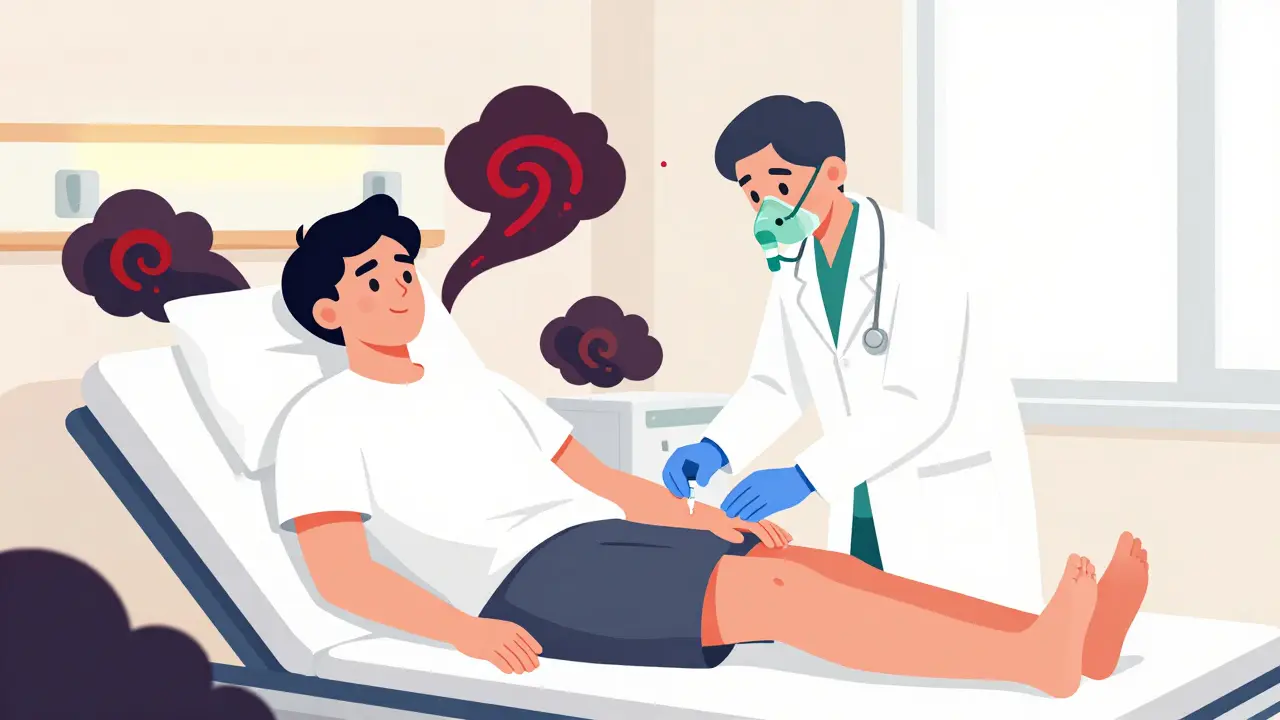
For mild reactions (Grade 1-2), such as localized itching or mild flushing, the nurse will typically pause the infusion. They will monitor your vital signs closely and administer antihistamines like diphenhydramine (Benadryl) or corticosteroids like dexamethasone. Once symptoms resolve, the infusion may be restarted at a slower rate.
Moderate reactions involve more widespread symptoms, such as hives covering large areas of the body, facial swelling, or mild respiratory distress. The infusion is stopped completely. Treatment includes intravenous antihistamines, steroids, and possibly bronchodilators if breathing is affected. The patient is observed until all symptoms disappear.
Severe reactions (Anaphylaxis) are medical emergencies. Symptoms include hypotension (low blood pressure), bronchospasm (severe wheezing), or loss of consciousness. The protocol mandates immediate cessation of the drug, administration of epinephrine (adrenaline) via injection into the thigh, oxygen therapy, and IV fluids to support blood pressure. Airway management becomes the top priority. Epinephrine is the only medication that can reverse the rapid progression of anaphylaxis; antihistamines alone are insufficient for severe cases.
Prevention and Premedication Strategies
Prevention is the best defense against hypersensitivity reactions. For drugs known to cause allergies, oncologists use premedication regimens to suppress the immune response before the chemotherapy enters your system.
A standard premedication cocktail for taxanes includes:
- Dexamethasone: A steroid given 12 and 6 hours before infusion to reduce inflammation.
- Diphenhydramine: An antihistamine given 30 minutes prior to block histamine effects.
- Famotidine: An H2 blocker given 30 minutes prior to provide additional histamine blockade.
Even with premedication, reactions can still occur. Therefore, slow infusion rates are often used for subsequent doses after a mild reaction. For patients who have had severe reactions but still need the drug for their cancer treatment, desensitization protocols may be employed. This involves giving tiny, gradually increasing amounts of the drug over 4-12 hours under strict supervision to temporarily "trick" the immune system into tolerating the medication.
Patient Role in Safety
Your awareness is a crucial part of the safety net. Nurses cannot see everything happening inside your body. You are the first line of detection.
If you feel anything unusual-a metallic taste in your mouth, sudden warmth, tingling in your lips, or anxiety-tell your nurse immediately. Do not wait for them to ask. Many patients hesitate because they don’t want to bother staff, but reporting subtle symptoms can prevent a crisis. Always inform your healthcare team about any previous allergic reactions to medications, foods, or contrast dyes, as this history significantly influences your treatment plan.
Can I develop a chemotherapy allergy even if I had no issues in previous cycles?
Yes, this is particularly true for platinum-based drugs like Carboplatin. The risk of hypersensitivity increases with cumulative exposure. You might tolerate the first five cycles perfectly well, but the immune system can sensitize over time, leading to a reaction in later cycles. This is why monitoring remains essential throughout your entire treatment journey.
What is the difference between an infusion reaction and an allergic reaction?
While they look similar, an infusion reaction is often a non-allergic response to the drug or its carrier solution, causing fever, chills, or rigors. An allergic (hypersensitivity) reaction involves the immune system producing IgE antibodies or activating mast cells, releasing histamine. Both require immediate attention, but true allergies may necessitate permanent discontinuation of the drug or specialized desensitization protocols.
How long after chemotherapy can a reaction occur?
Most acute hypersensitivity reactions happen during the infusion or within a few hours after completion. However, delayed reactions can occur 1-2 days post-infusion. Symptoms might include rash, fever, or joint pain. If you experience new symptoms after leaving the clinic, contact your oncology team promptly.
Is epinephrine safe for cancer patients?
Yes, in the context of anaphylaxis, epinephrine is life-saving and necessary. While it can increase heart rate and blood pressure, the risk of untreated anaphylaxis (which can cause cardiac arrest) far outweighs the temporary cardiovascular stress. Medical staff will monitor you closely after administration to ensure stability.
Will I never be able to take the drug again if I have a reaction?
Not necessarily. For mild reactions, the drug may be continued with slower infusion rates and enhanced premedication. For severe reactions, alternative drugs might be considered. If the reacted-to drug is the most effective option for your cancer, a desensitization protocol can allow you to receive it safely under controlled conditions.
