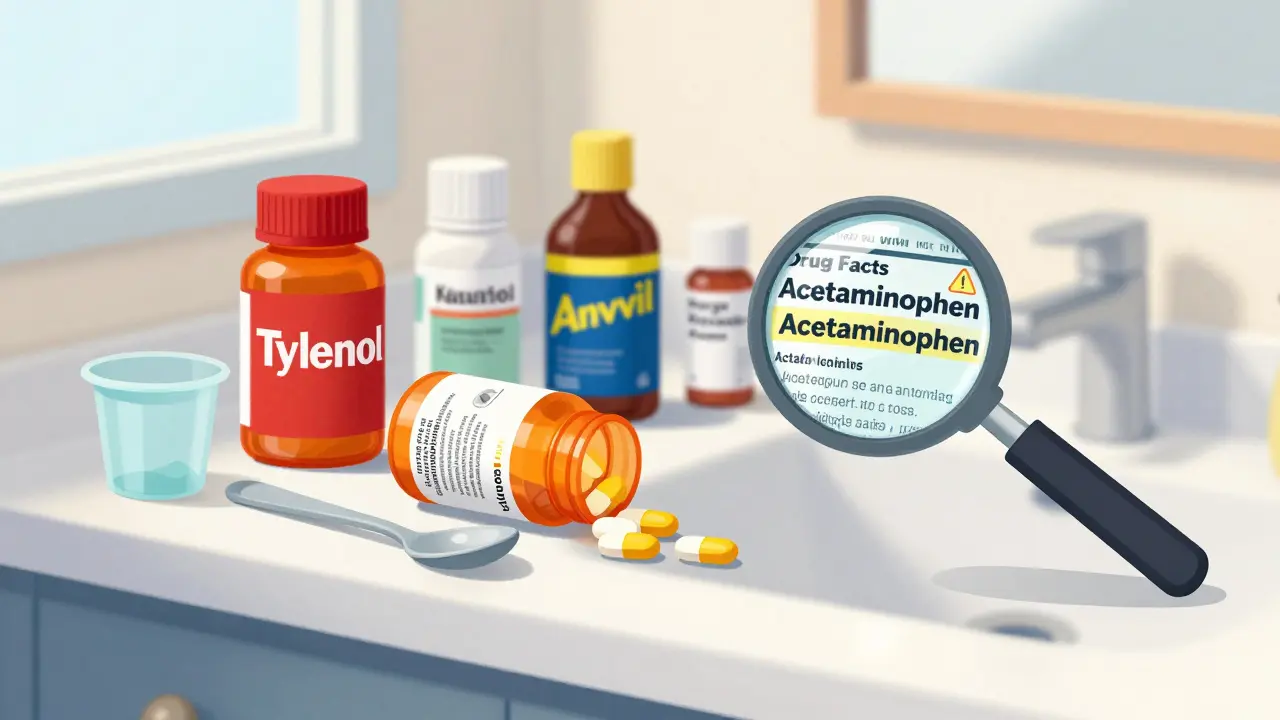
Every year, millions of Americans reach for an OTC medication without thinking twice. A headache, a stuffy nose, heartburn after dinner - these are everyday problems, and OTC drugs make them easy to fix. But just because you don’t need a prescription doesn’t mean these pills are harmless. In fact, misuse of over-the-counter medications sends more than 68,000 people to the emergency room each year, according to the CDC. The truth is, OTC medications are powerful tools - and like any tool, they need to be used correctly.
What Exactly Counts as an OTC Medication?
Over-the-counter doesn’t just mean painkillers. The FDA classifies a wide range of products as OTC, including things many people don’t realize are medications. Fluoride toothpaste? That’s one. Antifungal dandruff shampoo with selenium sulfide? Also an OTC drug. So are eye drops for dry eyes, wart removers with salicylic acid, and antibiotic ointments for cuts. These aren’t cosmetics or supplements - they’re active drugs regulated by the FDA, just like prescription pills.There are more than 300,000 OTC products on U.S. shelves today, covering around 80 different health conditions. The biggest categories? Pain relief (32% of the $114 billion OTC market), digestive aids (19%), and cold and cough meds (16%). But knowing what’s in your medicine is far more important than knowing how popular it is.
The Big Four: Pain Relievers and How They Really Work
When you have a headache or sore muscles, you’ve got two main choices: acetaminophen (Tylenol) or NSAIDs like ibuprofen (Advil, Motrin) and naproxen (Aleve). They look similar, but they work differently - and carry different risks.Acetaminophen is the go-to for most people because it’s gentle on the stomach. It’s effective for fever and mild to moderate pain. But here’s the catch: your liver can only handle so much. The maximum daily dose for adults is 3,000 mg - that’s six extra-strength tablets or nine regular ones. Go over that, and you risk serious liver damage. In the U.S., acetaminophen overdose causes about 56,000 ER visits and 458 deaths each year, according to the American Liver Foundation. And it’s easy to overdose - many cold medicines contain acetaminophen too. If you’re taking more than one product, you might be doubling up without realizing it.
NSAIDs like ibuprofen and naproxen reduce inflammation, which makes them better for joint pain, sprains, or menstrual cramps. But they’re harder on your body. They can cause stomach bleeding, raise blood pressure, and increase your risk of heart attack or stroke - especially if you take them long-term or at high doses. The FDA now requires all NSAID labels to warn about these heart risks. If you have high blood pressure (affecting nearly half of U.S. adults), asthma, or a history of ulcers, NSAIDs could be dangerous for you. Ibuprofen should never be taken by people with asthma - about 8.3% of Americans have this condition - because it can trigger severe breathing problems.
Bottom line: Use acetaminophen for general pain. Use NSAIDs only when inflammation is the real issue. And never mix them unless your doctor says it’s okay.
Reading the Drug Facts Label - Not Just a Formality
Every OTC medicine sold in the U.S. must have a Drug Facts label. It’s not marketing fluff - it’s the law. And yet, only 22% of people read the whole thing, according to the FDA. That’s a problem. Here’s what you actually need to know:- Active Ingredients: This is the drug itself. Look for the name - not the brand. Tylenol, Panadol, and Excedrin all contain acetaminophen. If you take two of these, you’re taking double the dose.
- Purpose: What is this medicine supposed to treat? If your symptoms don’t match, don’t take it.
- Uses: Lists the specific conditions it’s approved for. Don’t use it for something not listed.
- Warnings: This section tells you who shouldn’t take it - and what to avoid. If you’re on blood thinners, have kidney disease, or are pregnant, this is critical.
- Directions: How much? How often? Never exceed the maximum daily dose. More isn’t better.
- Inactive Ingredients: These are fillers, dyes, flavors. But if you’re allergic to gluten, dairy, or certain dyes, this matters.
Here’s a real example: You buy a cold medicine labeled "Daytime Cold & Flu." It says it contains 325 mg acetaminophen and 10 mg pseudoephedrine. You also take a daily multivitamin that has 500 mg acetaminophen. You just hit 825 mg before even taking the cold medicine. That’s more than a third of your daily limit. This is why checking active ingredients is non-negotiable.
When OTC Medicines Are Risky - And Who’s Most at Risk
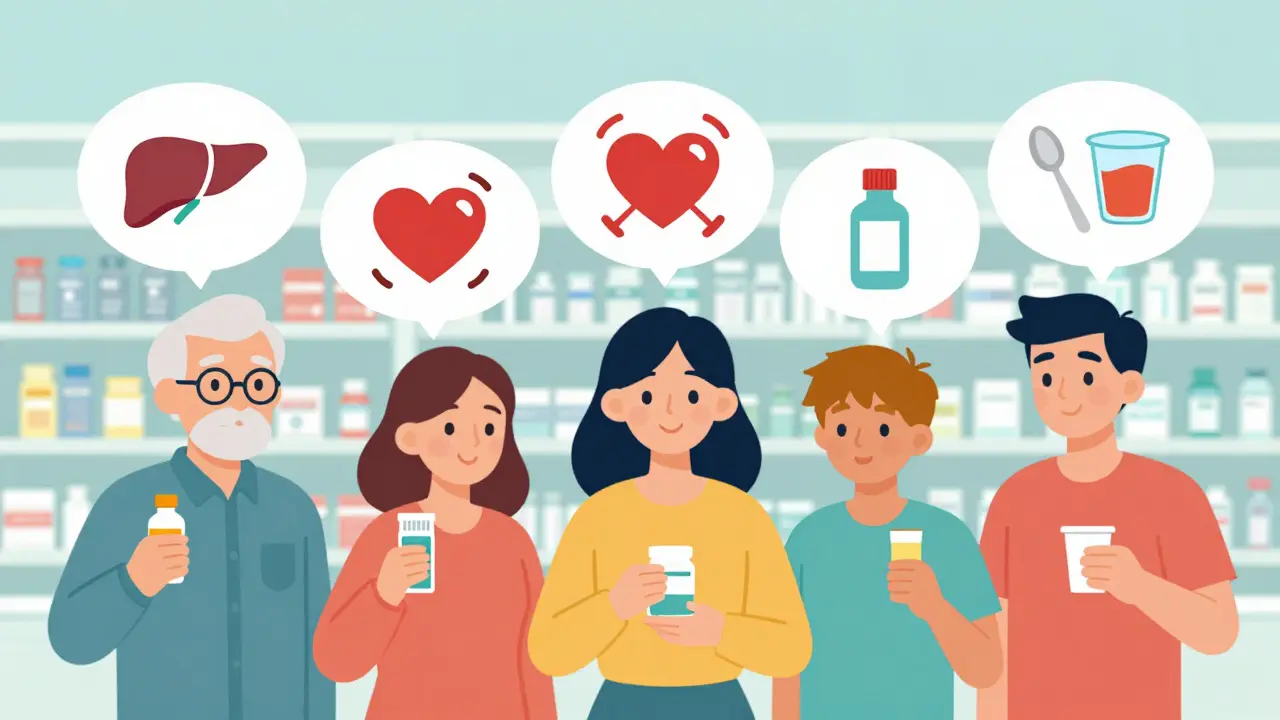
OTC drugs are safe for most people - when used correctly. But some groups are far more vulnerable.Older adults are the most likely to have problems. About 24% of people over 65 take five or more prescription drugs. Adding an OTC pain reliever or sleep aid can create dangerous interactions. A 70-year-old on blood pressure meds who takes ibuprofen for arthritis might end up with kidney failure. One in 15 older adults has an adverse reaction from OTC meds, according to JAMA Internal Medicine.
Children are another high-risk group. Liquid acetaminophen overdoses jumped 7.1% in 2022. Why? Parents use kitchen spoons instead of dosing cups. Or they mix adult and children’s formulas. The concentration differs - what’s safe for a 10-year-old can kill a 2-year-old. Always use the measuring tool that comes with the bottle.
People with chronic conditions - diabetes, heart disease, liver problems - need to be extra careful. Many OTC meds can worsen these conditions. For example, decongestants like pseudoephedrine (in Sudafed) can spike blood pressure. That’s why 37 states now require a photo ID to buy them - they’re used to make illegal methamphetamine.
And then there’s the myth: "It’s just OTC, so it’s safe." That’s the biggest danger. The FDA has issued 12 safety alerts on OTC drugs since 2020 - including warnings about rare but deadly skin reactions from NSAIDs. Just because you can buy it on a shelf doesn’t mean it’s risk-free.
What to Do Before You Take Anything
Before you pop a pill, follow this three-step checklist:- Match your symptoms to the label. If your product says "for runny nose and sneezing" but you have a fever and body aches, it’s not the right one.
- Check every active ingredient. Look at your prescription bottles, supplements, and other OTC meds. Are you doubling up on acetaminophen? Ibuprofen? Antihistamines? That’s how most overdoses happen.
- Verify the dose. Is it based on weight? Age? Kidney or liver function? If you’re unsure, don’t guess. Ask a pharmacist.
These steps cut medication errors by 68%, according to the American Society of Health-System Pharmacists. That’s not a small win - it’s life-saving.
When to Stop Self-Care and See a Doctor
OTC meds are for short-term relief. If symptoms stick around, something else is going on.Call your doctor if:
- Pain lasts more than 10 days
- Fever stays above 102°F for more than 3 days
- You’re vomiting, having trouble breathing, or feeling dizzy
- Your skin turns red, blisters, or peels after taking an NSAID
- You have black, tarry stools or vomit blood (signs of internal bleeding)
These aren’t "wait and see" situations. They’re red flags. OTC meds mask symptoms - they don’t fix the root cause. If you keep needing them, it’s time to get checked out.
How Pharmacists Can Help - And Why You Should Use Them
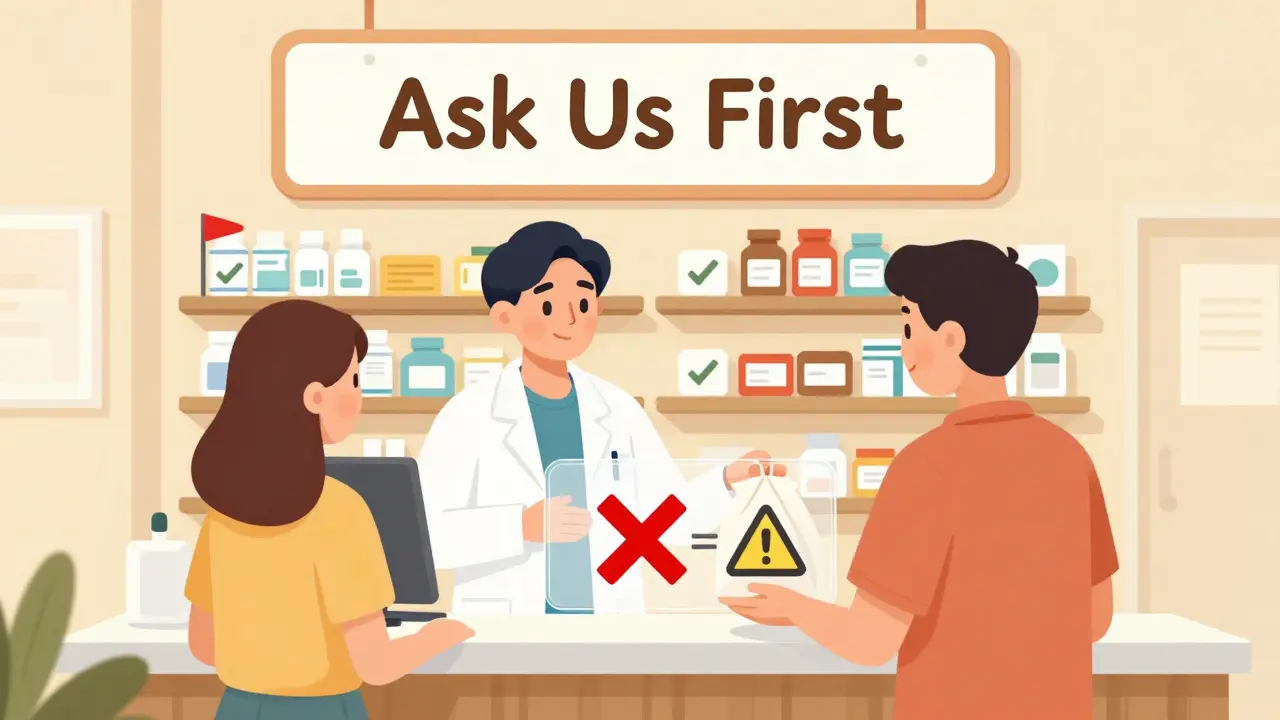
You don’t need to figure this out alone. Pharmacists are trained experts in OTC meds - and 78% of them give free advice every year, according to the American Pharmacists Association. They check for drug interactions, confirm dosing, and spot hidden risks you might miss.Here’s what they do:
- 92% review your meds for dangerous interactions
- 89% verify you’re not taking too much of the same active ingredient
- 85% flag conditions that make certain drugs unsafe for you
And it works. Chain pharmacies now offer free medication reviews - and those services have reduced inappropriate OTC use by 42%. You don’t need an appointment. Just walk in with your meds (including vitamins and supplements) and ask: "Is this safe for me?"
Storage, Expiration, and Waste
OTC meds don’t last forever. Most have a shelf life of 2-3 years. Keep them in a cool, dry place - not the bathroom or the car. Heat and moisture break down the active ingredients. A bottle of ibuprofen left in a hot car might not work at all.Always check the expiration date. Expired meds aren’t necessarily dangerous, but they lose potency. If you’re taking something past its date, you might not get the relief you need.
And don’t hoard them. About $3.1 billion worth of unused OTC meds are thrown away each year. That’s waste - and it’s risky. Old bottles with leftover pills can end up in the hands of kids or teens. If you have expired or unneeded meds, take them to a drug take-back program. Don’t flush them or toss them in the trash.
The Future of OTC Medications
The system is changing. Thanks to the CARES Act of 2020, the FDA is modernizing how OTC drugs are approved. By 2026, they plan to review 250 pending safety issues - and may remove products that don’t prove they work. Some OTC drugs could disappear from shelves if they lack solid evidence.Also on the horizon: AI-powered tools that help you pick the right OTC med based on your health history. And more states are allowing pharmacists to prescribe certain OTC drugs - like emergency contraception - without a doctor’s note.
But the biggest change? Awareness. As more people learn to read labels, check ingredients, and ask pharmacists, the number of OTC-related ER visits should drop. The goal isn’t to stop using OTC meds - it’s to use them wisely.
Can I take two different OTC pain relievers together?
Only if you know what’s in each one and you’re not doubling up on the same active ingredient. For example, you can take acetaminophen and ibuprofen together - they work differently and are often combined safely. But never take two products that both contain acetaminophen, like Tylenol and a cold medicine. That can lead to liver damage. Always check the Drug Facts label.
Are "natural" OTC products safer?
Not necessarily. The term "natural" isn’t regulated by the FDA. A herbal supplement labeled "natural" can still interact with your prescription drugs or cause side effects. For example, St. John’s Wort can interfere with blood thinners, antidepressants, and birth control. Just because it’s plant-based doesn’t mean it’s safe. Always treat herbal OTC products like real medicine - read the label, check for interactions, and talk to a pharmacist.
Why do some OTC meds require a photo ID to buy?
Products containing pseudoephedrine - like Sudafed - are kept behind the counter because they can be used to make illegal methamphetamine. The Combat Methamphetamine Epidemic Act of 2005 requires pharmacies to log purchases and ask for photo ID. This doesn’t mean the medicine is unsafe for you - it’s a legal restriction to prevent abuse. You can still buy it, but you’ll need to show ID and sign a logbook.
Is it safe to give OTC medicine to a child based on their weight?
Yes - but only if you use the right formula. Many children’s OTC medicines list dosing by weight, not age. Always check the label and use the measuring device that comes with the bottle. Never use a kitchen spoon - they’re inaccurate. If you’re unsure, ask a pharmacist. Giving too much acetaminophen or ibuprofen to a child can cause liver or kidney damage.
What should I do if I think I’ve taken too much OTC medicine?
Call Poison Control immediately at 1-800-222-1222. Don’t wait for symptoms. Acetaminophen overdose can cause liver damage without obvious signs for hours. Even if you feel fine, get help. Keep the medicine bottle handy - the poison control center will need to know exactly what you took and how much.

Phil Kemling
It's wild how we treat medicine like candy now. We’ve outsourced our bodily intuition to pill bottles and Google searches. The body isn’t a machine you can reboot with a dose of ibuprofen-it’s a living system, and we’re treating it like a broken toaster. The real crisis isn’t misuse-it’s the erosion of personal responsibility. We don’t even pause before popping something anymore. We just expect a quick fix. And the system lets us.
Patty Walters
seriously tho-read the drug facts label. i used to ignore it until i took a cold med and a tylenol and hit 4k mg of acetaminophen in one day. felt fine till i started vomiting at 3am. liver enzymes were through the roof. never again. pharmacists are your real heroes.
Kiruthiga Udayakumar
People in the US think because it's 'over the counter' it's 'no big deal'. But in India, we know better-our grandparents never took pills without asking a doctor first. You don't just swallow something because it's cheap and shiny on the shelf. This isn't a grocery run. It's your health. Wake up.
Catherine Scutt
oh wow. someone actually wrote a 2000-word essay on not poisoning yourself. groundbreaking. i'm sure the CDC will be thrilled.
Jacob Paterson
LOL. You're telling me people don't read labels? Newsflash: most Americans can't read past the word 'FREE'. And now you want them to decode pharmaceutical jargon? Give me a break. This isn't a public service announcement-it's a lecture for people who already know better.
Diana Stoyanova
Y’ALL. I just wanna say-this post made me cry. Not because I’m emotional, but because I used to be one of those people who popped 3 Advil like Skittles and thought ‘it’s just OTC’-until I had a panic attack from the caffeine in my cold med + my coffee + my pre-workout. I thought I was having a heart attack. Turns out I was just a walking cocktail of bad decisions. Now I keep a little notebook next to my meds. Active ingredient. Dose. Time. And I ask my pharmacist every damn time. You’re not weak for asking. You’re smart. And if you’re reading this-you already are.
Johanna Baxter
my mom took 4 tylenol for her back and ended up in the hospital. they said she had liver failure. she didn’t even know the cold medicine had it too. now she’s on a transplant list. and the worst part? she didn’t even read the bottle. nobody does. we’re all just sleepwalking through our own bodies.
Jenci Spradlin
just a heads up-some generic brands use different fillers. i’m gluten sensitive and got sick from a store-brand ibuprofen. turned out it had wheat starch. switched to the one that says ‘gluten-free’ on the box. saved my gut. check inactive ingredients too. they matter more than you think.
tali murah
Let’s be clear: this isn’t a guide. It’s a plea for basic human competence. The fact that we need a 3,000-word treatise on not overdosing on acetaminophen is a national tragedy. We have PhDs who can’t read a Drug Facts label. We have parents measuring liquid medicine with teaspoons. We have a society that outsources responsibility to corporations and then wonders why the ER is full. This isn’t about medication. It’s about the collapse of collective literacy. And we’re all complicit.
Jerian Lewis
the real problem? we don’t teach this in school. no one learns how to read a pill bottle. but we learn quadratic equations. ironic, right? we’re more afraid of failing math than failing our own bodies.
Elisha Muwanga
you know what’s worse than OTC misuse? the fact that we’re being told what to do by people who think ‘pharmacist’ is a job title, not a profession. this isn’t America. This is a nation of people who think ‘natural’ means ‘safe’ and ‘OTC’ means ‘no consequences’. And now we’re lectured like children by someone who wrote a 12-section essay on not dying from a headache. Congrats. You’ve solved nothing.