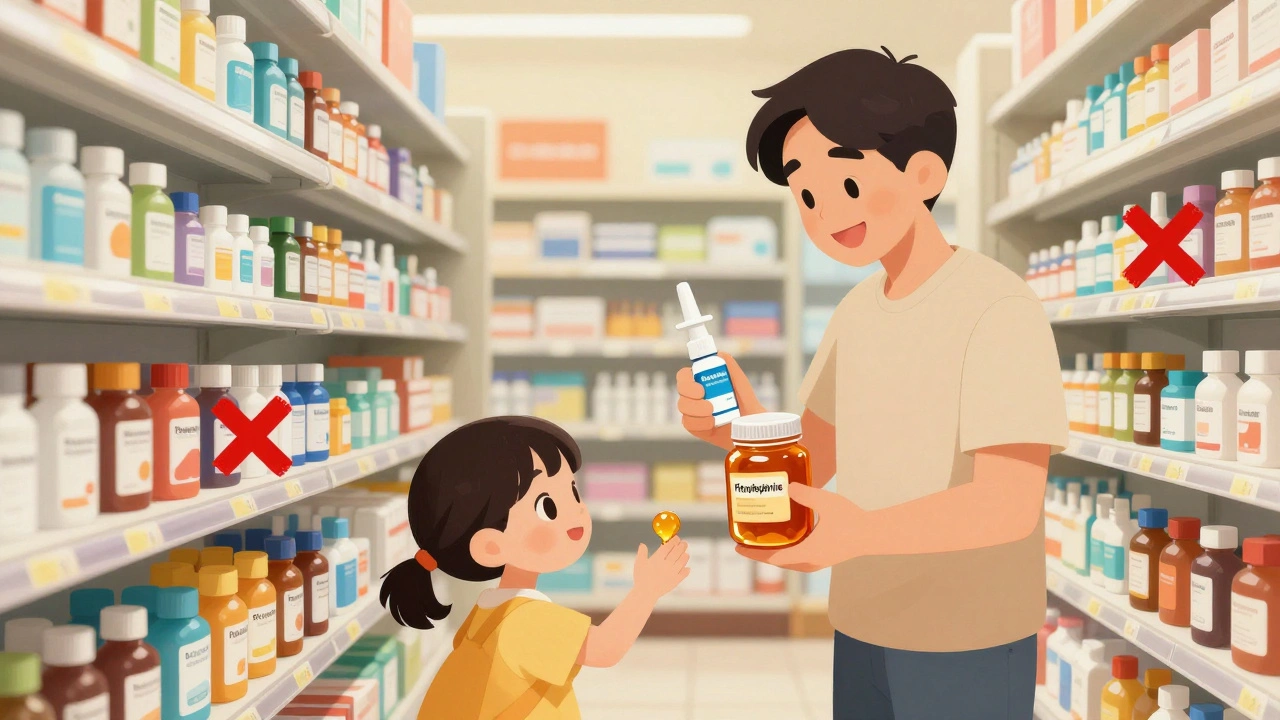
Every winter, millions of people reach for the same bottles on the pharmacy shelf: DayQuil, Sudafed PE, Robitussin, Vicks. They expect relief from coughs, stuffy noses, and sore throats. But what if those medicines aren’t doing what they promise? And worse-what if they’re putting your kids or yourself at risk?
The truth is, many over-the-counter (OTC) cough and cold medicines you’ve been using for years don’t work. Not because they’re dangerous in small doses, but because the science says they’re useless. The FDA just confirmed it. And if you’re giving them to your child, you’re not helping them-you’re wasting money and possibly exposing them to side effects with zero benefit.
Why Phenylephrine Is the Biggest Problem
If you’ve bought a cold medicine in the last five years, chances are it contains phenylephrine. It’s in Sudafed PE, Tylenol Cold, DayQuil, and dozens of other brands. It’s supposed to unblock your nose. But here’s the catch: oral phenylephrine doesn’t work.
In September 2023, the FDA’s own advisory panel reviewed over 100 studies and concluded that a 10mg dose-what’s in every pill you buy-has no meaningful effect on nasal congestion. Not even close. A 2007 study found it performed no better than a sugar pill. Even a 25mg dose (which isn’t sold over the counter) only gave a 27% improvement-and patients didn’t even feel better.
So why is it still on shelves? Because it’s cheap to make. Manufacturers swapped out pseudoephedrine (which actually works) for phenylephrine after laws made pseudoephedrine harder to buy due to its use in making meth. Now, billions of dollars in cold medicine sales rely on a drug that doesn’t work. You’re paying for placebo.
What About Dextromethorphan and Guaifenesin?
Let’s talk about the cough suppressant and expectorant duo: dextromethorphan and guaifenesin. You’ll find them in Robitussin, Mucinex, and many combination products. The idea is simple: dextromethorphan stops the cough, guaifenesin thins mucus.
But here’s what the data says: neither works well for acute coughs. A 2014 review of 29 clinical trials found no consistent benefit for either ingredient in adults or children. In fact, some studies showed no difference between these drugs and plain water.
And dextromethorphan? It’s not harmless. At high doses, it can cause dizziness, nausea, rapid heartbeat, and even hallucinations. Teens misuse it. Adults with depression or on antidepressants risk dangerous interactions. If you’re taking an SSRI or MAOI, mixing this with dextromethorphan could spike your blood pressure to dangerous levels.
Why Kids Are at Risk
Parents are the most vulnerable to marketing. You see a bottle labeled “Children’s Cough & Cold” and think you’re doing the right thing. You’re not.
The FDA has warned since 2008: never give OTC cough and cold medicine to children under 2. Since then, research has shown no benefit-even for kids aged 2 to 6. A 2008 analysis of child deaths linked to these medications found 13 out of 20 occurred in children under two. Many of those deaths were from accidental overdose because parents gave multiple products with the same active ingredients.
What’s worse? A 2023 survey found that 73% of parents have stopped giving OTC cold meds to kids under 6 after learning the truth. But millions still do. Why? Because the packaging looks safe. The colors are bright. The label says “gentle.” It’s a trap.
What Actually Works (And It’s Not in a Bottle)
If the medicine doesn’t work, what does? Simple, cheap, and proven things:
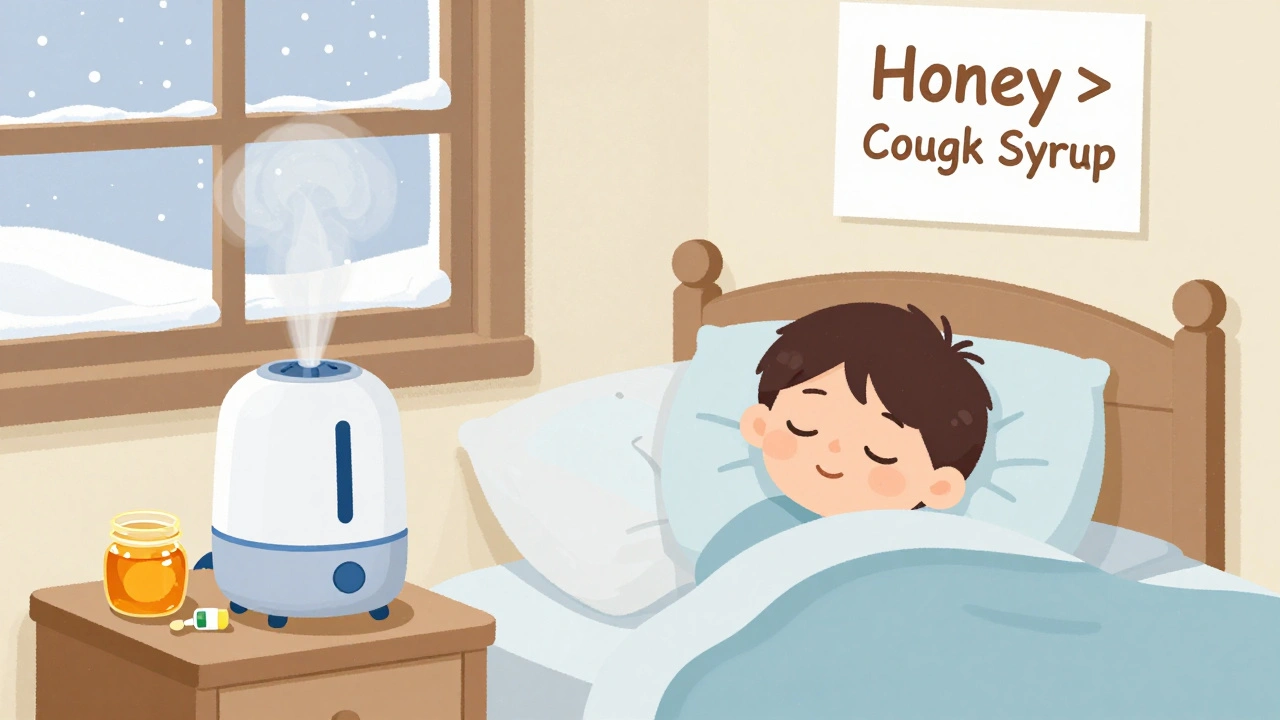
- Honey-yes, honey. For kids over 12 months, a half-teaspoon before bed reduces cough frequency and severity better than many OTC cough syrups. A 2023 study from the American Medical Association found it as effective as dextromethorphan. And it’s safe. Keep a jar in your pantry.
- Saline nose drops and bulb suction-for babies and toddlers, clearing nasal passages with saltwater and a bulb syringe is more effective than any nasal spray or pill.
- Humidified air-a cool-mist humidifier in the bedroom helps loosen mucus. Don’t use steam; it’s a burn risk.
- More fluids-water, broth, warm tea. Staying hydrated keeps mucus thin and easier to clear.
- Nasal decongestant sprays-if you’re an adult with a stuffy nose, oxymetazoline (Afrin) works. But use it for no more than three days. Longer, and you get rebound congestion.
These aren’t fancy. They don’t come in fancy packaging. But they’re backed by science. And they’re safe.
What to Look for on the Drug Facts Label
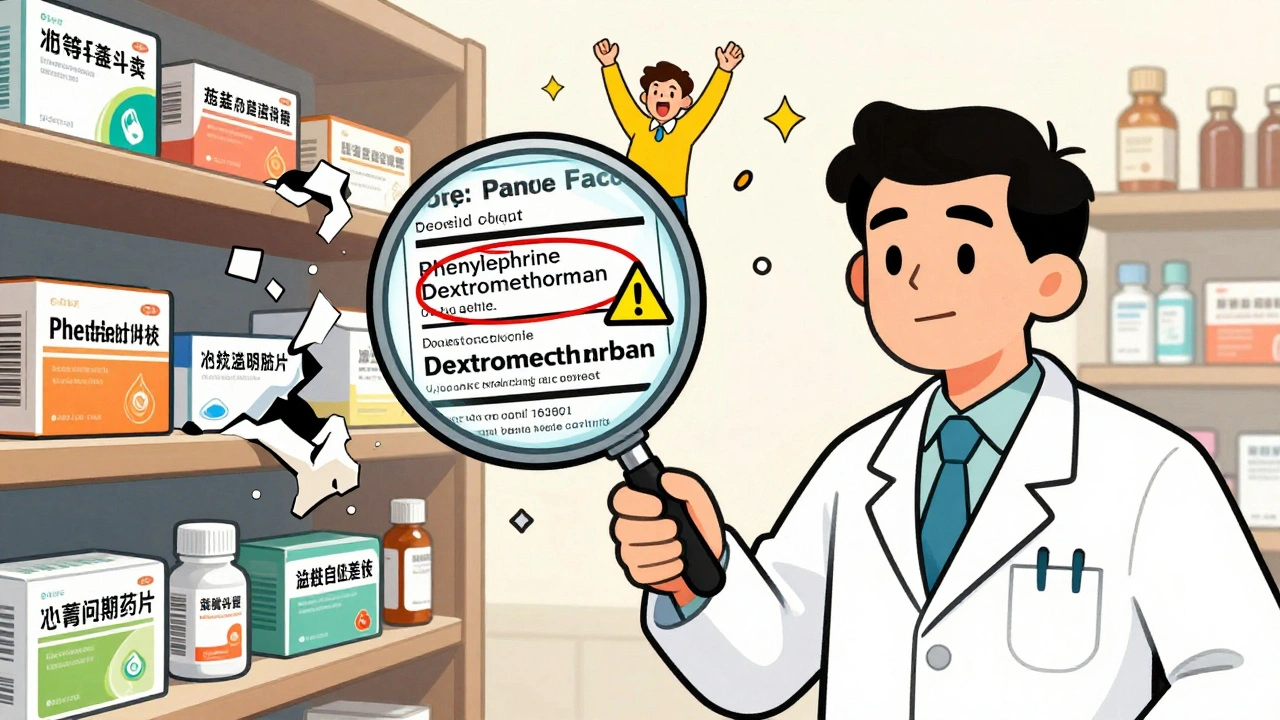
Even if you’re tempted to try an OTC product, read the label like a detective. Here’s what to check:
- Active ingredients-if it says phenylephrine, skip it. If it says pseudoephedrine, it works-but you’ll need ID to buy it. That’s because it’s regulated.
- Multiple ingredients-don’t combine products. If you take DayQuil and then take a separate pain reliever, you might accidentally double up on acetaminophen. That can cause liver failure.
- Dosing instructions-never give adult doses to kids. Even if the bottle says “for children,” it’s still risky.
- Warnings-if it says “do not use if taking antidepressants,” take it seriously. Many people don’t realize their Zoloft or Wellbutrin can react badly.
Here’s the bottom line: if a product has more than one active ingredient, it’s probably not necessary. One symptom, one medicine. If you only have a cough, get plain honey or a single-ingredient cough suppressant. Don’t buy the “all-in-one” monster.
What’s Changing in 2025?
The FDA is moving to remove oral phenylephrine from the list of approved OTC ingredients. If finalized (expected by mid-2025), manufacturers will have to reformulate products. That means:
- DayQuil, Sudafed PE, and similar brands will either switch to pseudoephedrine (and become behind-the-counter) or remove decongestants entirely.
- Expect to see more products with honey, saline, or zinc as primary ingredients.
- Prices may rise as companies redesign packaging and formulas.
This is the biggest shift in OTC cold medicine since phenylpropanolamine was pulled in 2000 after causing strokes. We’re at a turning point. The era of ineffective, overpriced cold pills is ending.
What to Do Now
Don’t wait for the FDA to act. Take control now:
- Stop buying products with phenylephrine. Look for “pseudoephedrine” instead, or skip decongestants altogether.
- Keep honey on hand for kids over 12 months. Use 2.5mL (half a teaspoon) before bedtime.
- For adults with congestion, try a saline nasal spray or a short-term oxymetazoline spray (no more than 3 days).
- For coughs, try warm tea with lemon and honey. It’s soothing and safe.
- Never mix cold medicines. Always check the active ingredients on every bottle.
And if you’re unsure? Talk to your pharmacist. They’re trained to spot dangerous combinations. Don’t assume the label is enough. Many people don’t realize they’re taking acetaminophen in three different products at once.
Final Thought: You Don’t Need a Pill to Feel Better
Colds are viral. They run their course. No pill can speed that up. What you need is rest, fluids, and comfort-not a chemical cocktail with unproven benefits and hidden risks.
The next time you feel a cold coming on, skip the pharmacy aisle. Grab a glass of warm water. Add honey. Turn on the humidifier. Rest. Your body already knows how to heal itself. You just need to give it a chance.
Is phenylephrine safe for kids?
Phenylephrine isn’t dangerous at recommended doses, but it doesn’t work. For children under 6, the FDA advises against all OTC cough and cold medicines because they offer no benefit and carry risks like rapid heart rate, drowsiness, and accidental overdose. Even if it’s labeled "children’s," skip it. Use honey (for kids over 12 months), saline drops, and a humidifier instead.
Can I take OTC cold medicine with my antidepressant?
Some OTC cold medicines can be dangerous with antidepressants. Decongestants like pseudoephedrine and dextromethorphan can interact with MAOIs and tricyclic antidepressants, leading to dangerously high blood pressure or irregular heart rhythms. Always check the Drug Facts label for warnings, and when in doubt, ask your pharmacist or doctor before taking anything.
What’s the best OTC cold medicine for adults?
There’s no single "best" product. For congestion, try a saline nasal spray or a short-term oxymetazoline spray (Afrin). For cough, try honey or plain dextromethorphan-avoid combination products. For pain or fever, use acetaminophen or ibuprofen alone. Never combine multiple cold medicines. The safest approach is to treat one symptom at a time with the fewest ingredients possible.
Why do pharmacies still sell these medicines if they don’t work?
Because they’re profitable. OTC cold medicine sales hit $6.2 billion in the U.S. in 2023. Manufacturers make these products cheaply, market them heavily, and rely on consumer habits. The FDA only recently started taking action-removing phenylephrine is expected by 2025. Until then, the system still rewards selling ineffective products. But awareness is growing. More people are switching to honey, saline, and rest.
Is honey really as good as cough medicine for kids?
Yes. Multiple studies, including one published by the American Medical Association in 2023, show that a half-teaspoon of honey before bed reduces cough frequency and severity in children over 12 months as well as, or better than, dextromethorphan. Honey is natural, cheap, and safe for this age group. Just don’t give it to babies under 12 months-it can cause infant botulism.
What should I do if my child accidentally takes too much cold medicine?
Call Poison Control immediately at 1-800-222-1222 (U.S.) or your local emergency number. Do not wait for symptoms. Overdosing on acetaminophen, dextromethorphan, or decongestants can cause liver damage, seizures, or heart problems. Keep all medicines locked up and out of reach. Use child-resistant caps, and never refer to medicine as "candy."

Adrianna Alfano
I used to buy that damn DayQuil like it was holy water. My kid had a cold last winter and I gave him the kids' stuff-felt like a good mom. Then I read this and cried. Not because I'm guilty, but because I realized how easy it is to be manipulated by bright colors and the word 'gentle.' I threw out every bottle. Now we use honey, saline drops, and a humidifier. My son actually sleeps through the night now. No more 3am coughing fits. Why did it take a 12-page essay to make me question a drug aisle?
Casey Lyn Keller
Phenylephrine doesn't work? Yeah right. That's what they want you to think. The FDA's been corrupted by Big Pharma. Pseudoephedrine was taken off the shelf because it's too effective-it cuts into their profits. They replaced it with a placebo so you keep buying. And now they're gonna make you buy it behind the counter? That's just a tax on the working class. Next they'll charge you for breathing.
Jessica Ainscough
My mom used to swear by Robitussin. I thought she was just old-fashioned. But after reading this, I checked my cabinet-three bottles with phenylephrine, two with dextromethorphan, and one with both. I feel like I’ve been running a pharmacy in my kitchen. I’m switching to honey tonight. And maybe a warm bath. And sleep. Radical, I know.
May .
Honey works better than syrup? Weird but makes sense. No more buying crap. Just honey. Water. Rest. Who knew the cure was in your pantry all along.
Sara Larson
YES YES YES 🙌 I’ve been saying this for YEARS. Honey for coughs? YES. Saline for babies? YES. No more chemical cocktails for my toddler. I’m telling everyone. My cousin just gave her 3-year-old a full dose of NyQuil and I had to talk her down. This post is a lifeline. Thank you. 🙏
Josh Bilskemper
The fact that you need a study to prove honey works is embarrassing. Ancient civilizations knew this. The FDA is a bureaucratic circus. And you people are shocked? You really think marketing doesn’t manipulate you? You’re the product. The real tragedy isn’t phenylephrine-it’s your willingness to believe anything labeled 'OTC' and 'safe.'
Storz Vonderheide
I’m a pharmacist and I see this every day. Parents come in asking for 'the strongest stuff' for their 4-year-old. I have to explain that stronger doesn’t mean better. Sometimes the best medicine is nothing at all. I keep a jar of honey behind the counter for kids over 12 months. I also keep a list of active ingredients printed out. I hand it to people. Most don’t read it. But some do. And those are the ones who come back months later saying thank you. This post? It’s the kind of thing that changes behavior. Keep doing this.
dan koz
Back home in Nigeria we use ginger tea and steam from boiling eucalyptus leaves. No pills. No labels. Just heat and plant. You think this is new? We’ve known for centuries. The West buys pills because it’s easier than listening to its body. You pay for convenience and get nothing. I’m not surprised. But I’m glad someone finally said it out loud.