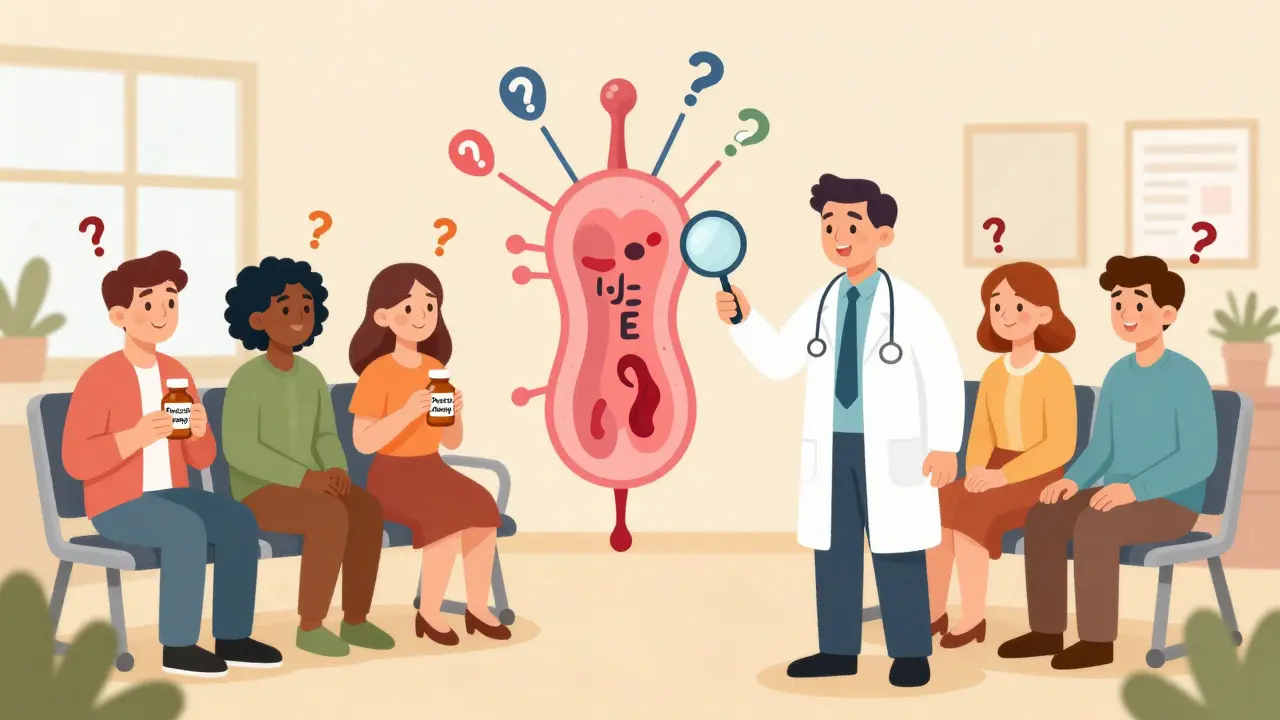
More than 10% of people in the U.S. say they’re allergic to penicillin. But here’s the catch: up to 90% of them aren’t. Many people outgrow their allergy, or they never had one to begin with. They might have had a rash after taking the drug as a kid, or a family member told them they were allergic, and the label stuck. The problem? That label leads to bigger risks. When doctors avoid penicillin because of a suspected allergy, they often turn to stronger, more expensive antibiotics - drugs that can cause more side effects, lead to longer hospital stays, and even contribute to antibiotic resistance. The real issue isn’t the allergy itself - it’s the misunderstanding around it.
What Makes a Drug Allergy Real?
A true drug allergy is an immune system reaction. It’s not just a stomach ache or a headache. It’s your body mistaking a medication for a threat and launching an attack. Symptoms can show up within minutes or hours after taking the drug. Think: hives, swelling, trouble breathing, a drop in blood pressure, or even anaphylaxis. These are immediate-type reactions, usually driven by IgE antibodies. That’s the classic allergic response.
But not every bad reaction is an allergy. Nausea, dizziness, or a mild rash could be a side effect - not an immune response. That’s why proper diagnosis matters. Skin testing is the gold standard for penicillin. A small amount of penicillin and its breakdown products is placed on the skin, then lightly scratched. If the skin reddens or swells, it suggests an IgE-mediated allergy. But here’s the twist: the old test used a compound called PPL (Prepared Penicillin Polylysine). Studies now show up to 70% of people who react to PPL don’t react to actual penicillin. That means many people were wrongly labeled allergic. Today, testing uses more accurate components like penicillin G and amoxicillin.
Penicillin Allergy: The Most Common Mislabeling
Penicillin is the most common drug allergy reported. But the numbers don’t add up. About 10% of Americans say they’re allergic. Yet when tested properly, fewer than 10% of those people actually have a true allergy. Most people lose their sensitivity over time. Even if you had a reaction 20 years ago, your body might not react anymore.
The process to confirm you’re not allergic is simple. First, a skin test. If it’s negative, you get a supervised dose of amoxicillin - a full therapeutic dose. If you don’t react, you’re cleared. That’s called a drug challenge. It’s the final step. And it’s safe when done under medical supervision. This isn’t just about comfort - it’s about better care. Patients who are correctly cleared from a penicillin allergy have shorter hospital stays, lower costs, and better outcomes. One study found that avoiding penicillin adds about $500 per hospital admission due to the use of broader-spectrum drugs.
NSAID Allergies: A Different Kind of Reaction
NSAIDs - like aspirin, ibuprofen, and naproxen - cause a different kind of reaction. It’s not IgE-driven. Instead, it’s often related to how these drugs affect the body’s inflammatory pathways. People with asthma or chronic hives are more likely to have these reactions. Symptoms can include wheezing, nasal congestion, or a flare-up of skin rashes. Unlike penicillin, there’s no reliable skin test for NSAID allergy. Diagnosis is based on history and, sometimes, a controlled challenge in a clinic.
For those who truly react, desensitization can be an option. It’s not done to cure the allergy - it’s done to let you take the drug when you need it. For example, if someone with arthritis needs daily aspirin for heart protection but has a history of reaction, a desensitization protocol can help. The process starts with a tiny dose - 30 mg of aspirin - and slowly increases every few hours over a day or two. The goal is to get you to a maintenance dose where your body doesn’t react. Once you’re desensitized, you need to keep taking the drug daily. Stop it, and the tolerance fades. Restarting the drug after a break means starting over.
How Desensitization Works - Step by Step
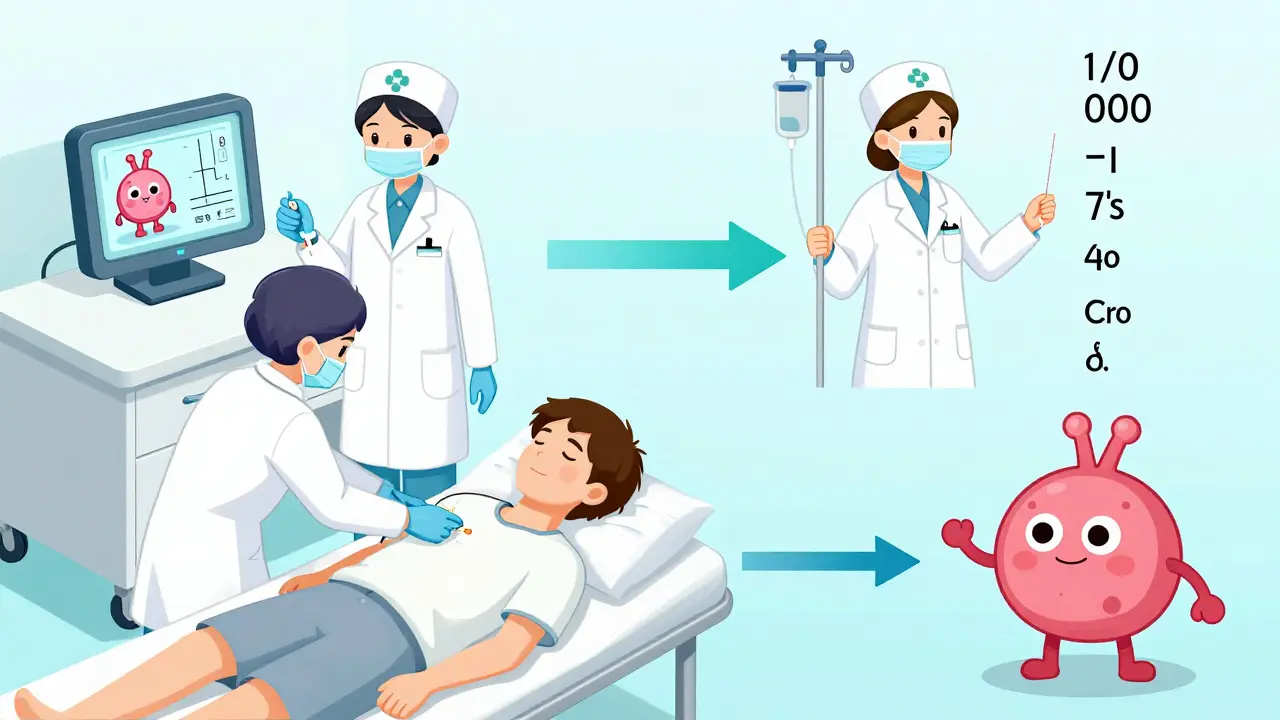
Desensitization isn’t magic. It’s science. The idea is simple: flood your immune system with tiny, controlled amounts of the drug. Start so low that your body doesn’t react. Then, slowly increase the dose. Over hours, you build temporary tolerance. It’s not permanent. You’re not cured. But for the length of that treatment - whether it’s a single IV dose or a week of antibiotics - your body won’t react.
The most common protocol is the 12-step method. It uses three solutions:
- Solution 1: 100 times weaker than the full dose
- Solution 2: 10 times weaker
- Solution 3: Full therapeutic strength
You start with a dose 1/10,000th of the target. Then you double the dose every 15 to 20 minutes. It can take 4 to 8 hours to reach the full dose. For some antibiotics like cefazolin or ceftriaxone, a faster version exists - 15-minute intervals with tripling doses. That can be done in under 2.5 hours. The route can be IV, oral, or even under the skin. And yes - you can start with IV and switch to pills later. That’s normal.
Every step is monitored. Nurses watch for signs of reaction: flushing, itching, coughing, low blood pressure. If things get serious - like trouble breathing or a sudden drop in pressure - they stop and give epinephrine. That’s why these procedures happen in a hospital or allergy clinic with full emergency equipment on hand.
Who Gets Desensitized - And Who Doesn’t
Not everyone qualifies. Desensitization is only done when:
- You have a confirmed immediate-type reaction (within 1 hour)
- There are no safe or effective alternatives
- You need the drug for a life-threatening or serious condition
That’s why it’s common for cancer patients needing chemotherapy, people with severe infections who can’t take other antibiotics, or those with heart disease who need daily aspirin. It’s also used for monoclonal antibodies and antifungals like fluconazole.
But it’s not for everyone. If you had a delayed rash that showed up days later - like a drug reaction from a week ago - desensitization won’t help. Those reactions aren’t IgE-driven. And if you’ve had a severe reaction before - like anaphylaxis with low blood pressure - the risk is higher. Still, many of those patients can be safely desensitized with extra care.
Children are trickier. Most protocols were designed for adults. Pediatric use is growing, but it’s still based on adult data. Kids with cancer, cystic fibrosis, or chronic infections are increasingly being treated this way. But there’s no official pediatric guideline yet. That’s a gap.
The Big Catch: It’s Only Temporary
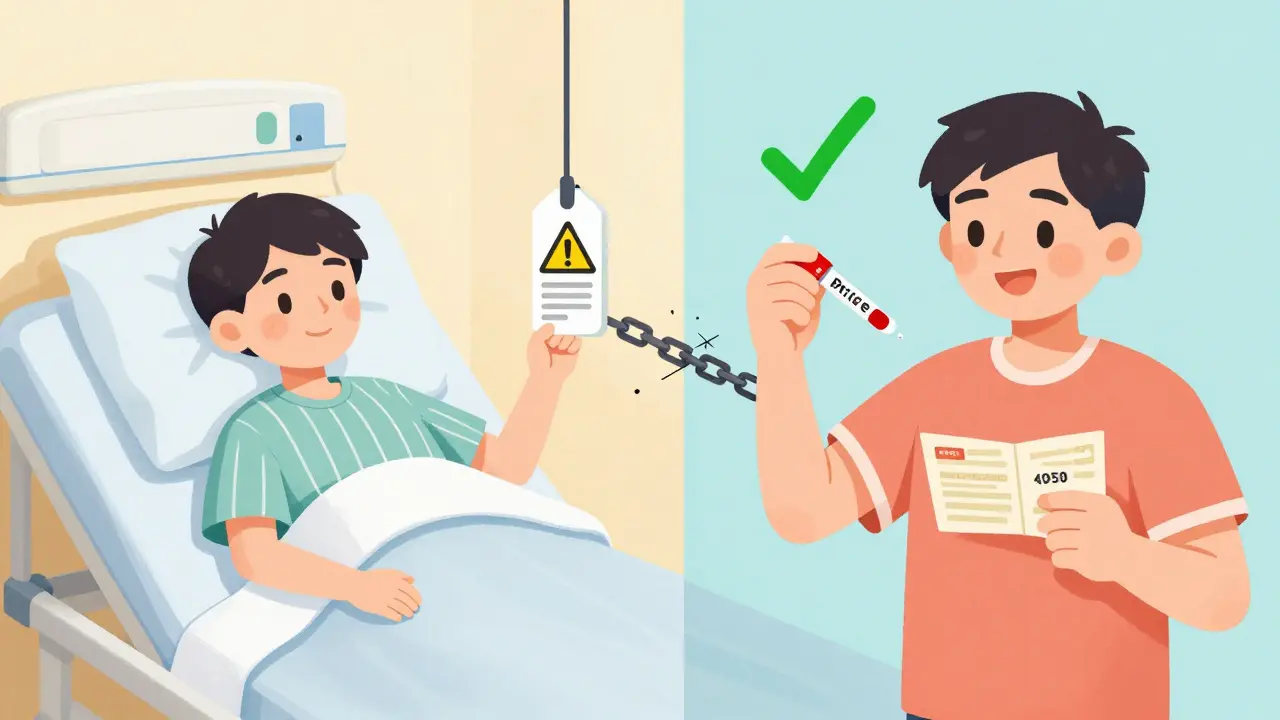
This is the part most people miss. Desensitization doesn’t change your immune system permanently. It only works during the treatment. If you need the drug again next year - say, for another infection - you’ll need to go through the whole process again. That’s why it’s not a cure. It’s a bridge.
And there’s another risk. In about 2% of people who were once allergic to penicillin and later re-exposed, the allergy comes back. That’s called resensitization. It’s rare, but more likely if the drug was given by IV. That’s why some experts recommend retesting with skin tests before re-desensitizing, especially after a severe reaction.
Why This Matters Beyond the Lab
Behind every desensitization protocol is a real person. A mother whose child needs antibiotics but can’t take penicillin. A cancer patient whose chemo drug triggers a reaction. A diabetic with a serious infection who’s stuck with drugs that cause kidney damage. Desensitization gives them options.
But it’s underused. Most hospitals don’t have dedicated allergy teams. Many doctors don’t know the protocols. And patients? They’re often told, “Don’t take penicillin,” and never get tested. That’s a missed opportunity. Better diagnosis means better care. Fewer unnecessary antibiotics. Lower costs. Fewer side effects.
The future? More collaboration. Allergists working with infectious disease doctors. Oncologists teaming up with pediatric specialists. Standardized protocols across countries. And more research - especially for kids.
One thing is clear: if you think you’re allergic to penicillin or NSAIDs, don’t just accept it. Ask for testing. Ask about desensitization. It could change your treatment - and maybe even save your life.
Can I outgrow a penicillin allergy?
Yes. Up to 90% of people who were once labeled penicillin-allergic lose their sensitivity over time. Many reactions occur in childhood and fade with age. The only way to know for sure is through skin testing and a supervised drug challenge.
Is skin testing for penicillin allergy reliable?
When done correctly, yes. Modern skin tests use penicillin G and amoxicillin, not the outdated PPL compound. A negative test means you’re very unlikely to have a true allergy. But a positive test doesn’t always mean you’ll react - that’s why a drug challenge is the final step.
Can I be desensitized to NSAIDs like ibuprofen?
Yes, but it’s different than for penicillin. There’s no skin test for NSAID allergies. Desensitization starts with a very low dose of aspirin (30 mg) and slowly increases over hours or days. Once desensitized, you must take the drug daily to maintain tolerance. Stopping means you’ll need to restart the process.
How long does a desensitization last?
It lasts only for the duration of that treatment course. If you need the same drug again in the future - even weeks later - you’ll need to go through desensitization again. It’s not permanent. Your immune system resets once the drug is stopped.
Are there risks during desensitization?
Yes. Reactions can happen - including hives, low blood pressure, or breathing trouble. That’s why the procedure must be done in a hospital with emergency equipment and trained staff. If a severe reaction occurs and doesn’t respond to epinephrine, the process is stopped immediately.
Can children be desensitized?
Yes, especially children with cancer, chronic infections, or cystic fibrosis who need critical medications. But most protocols were designed for adults. Pediatric use is growing, though standardized guidelines for children are still lacking.
Why do doctors avoid penicillin if someone says they’re allergic?
Because they don’t know if the allergy is real. Without testing, they assume the worst. But that leads to using broader-spectrum antibiotics, which cost more, cause more side effects, and contribute to antibiotic resistance. Proper testing can safely restore penicillin use for most patients.
What happens if I stop taking the drug after desensitization?
Your tolerance fades. If you need the drug again later, you’ll have to go through the full desensitization process again. It’s temporary by design. For drugs like aspirin, daily use maintains tolerance. For antibiotics, it only lasts as long as you’re on the course.

Korn Deno
So we're just going to ignore the fact that Big Pharma pushed penicillin as a miracle drug for decades while quietly burying the data on cross-reactivity? People aren't allergic because they're dumb - they're allergic because they got burned by a system that doesn't care if you live or die as long as the next prescription gets filled.
Desensitization? Sure. But why not just fix the damn system instead of teaching people how to dance around it?
Natasha Rodríguez Lara
I had a rash at 8 after taking amoxicillin. Got tested last year - negative. Now I take penicillin like it's water. My doctor said I saved like $3,000 in hospital costs just by not being labeled 'allergic'.
Why isn't this routine? Why do we still treat drug allergies like ancient curses instead of medical facts?
Kevin Siewe
I work in a hospital pharmacy. We see this every day. Someone comes in with a penicillin allergy label, and we have to use vancomycin or clindamycin - both more expensive, more toxic, and more likely to cause C. diff.
It's not just about cost. It's about survival. If you think you're allergic, ask for a test. Don't assume. Don't guess. Get checked.
Chris Farley
This whole thing is a scam. The FDA, AMA, and Big Pharma all profit when you're scared of penicillin. They sell you the 'safe' alternatives - the ones that cost 10x more and have worse side effects.
Desensitization? Sounds like a way to make you dependent on clinics. You think they really want you to be cured? Nah. They want you to keep coming back.
Darlene Gomez
I'm a nurse and I've seen patients die because they were given the wrong antibiotic due to an unverified allergy label. This isn't theoretical. It's life or death.
And honestly? The fact that we don't have universal testing protocols is insane. We test for everything else - why not this? It's not rocket science. Skin test + challenge. Done.
Someone's kid could be saved tomorrow if we just stopped being lazy.
Katie Putbrese
I'm sorry but I'm not trusting this. If it were that simple, why aren't doctors doing this everywhere? Why are we still hearing stories of people having anaphylaxis after being told they were 'allergy-free'? This feels like a cover-up for bad medicine.
Also - who funds this research? Pharma? Of course they do. They make billions off the 'alternative' antibiotics.
Donna Fogelsong
You think this is about science? Nah. It's about control. The government and pharma want you to believe you're allergic so you'll keep taking their drugs. The real allergy? To truth.
They don't want you to know that the skin test was designed to fail. That PPL was a decoy. That desensitization is a trap - you have to keep paying for it forever.
Wake up. This is all a psyop.
Sean Bechtelheimer
I got desensitized to penicillin last year 😅 turned out I was never allergic. Now I take it like it's vitamin C. My doc said I saved $5k in hospital bills. Life changing. 🙌
rebecca klady
My sister was told she was allergic as a kid. Got tested at 28 - negative. Now she's on penicillin for her UTI and it worked like magic. Why did no one tell us this before?
Namrata Goyal
Lmao this is so basic. Everyone knows penicillin is overused. The real issue is that we're not teaching people to use natural remedies instead. Why not turmeric? Why not garlic? Why do we always go for the chemical solution? This is just more pharmaceutical brainwashing.