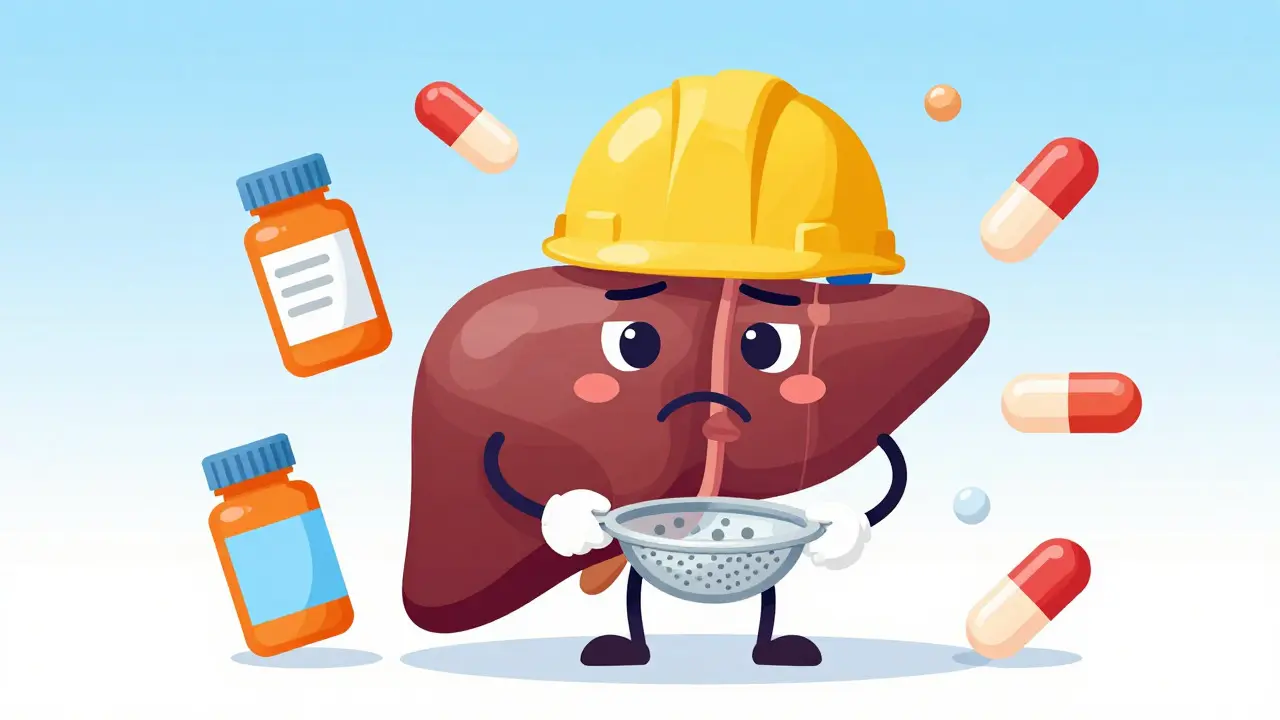
Your liver works silently in the background, filtering toxins and metabolizing everything from food to medication. But sometimes, the very drugs meant to heal you can turn against your liver. This condition, known as Drug-Induced Liver Injury (DILI), is a serious but often overlooked cause of liver damage. It accounts for up to 20% of all acute liver failure cases in the United States, yet many patients don't realize their symptoms are linked to a prescription or supplement they started weeks ago.
Understanding which medications carry the highest risk and how to monitor your liver health can be the difference between a manageable side effect and a medical emergency. Whether you're managing chronic conditions like tuberculosis or epilepsy, or simply taking over-the-counter pain relievers, knowing what to watch for is essential.
Key Takeaways
- DILI is liver damage caused by medications, supplements, or other substances, split into predictable (intrinsic) and unpredictable (idiosyncratic) types.
- Acetaminophen is the leading cause of acute liver failure, responsible for nearly half of all such cases in the US.
- Antibiotics like amoxicillin-clavulanate and antiepileptics like valproic acid are major culprits for idiosyncratic injury.
- Monitoring typically involves baseline blood tests and regular check-ins, especially for high-risk drugs like isoniazid.
- Early detection and stopping the offending drug lead to recovery in about 90% of cases within weeks.
What Is Drug-Induced Liver Injury?
Drug-Induced Liver Injury (DILI) occurs when a medication, herbal product, or chemical causes abnormal liver function or tissue damage that isn't explained by other diseases like viral hepatitis or alcohol use. The liver processes most drugs, creating metabolic byproducts that can sometimes accumulate and harm liver cells (hepatocytes).
Doctors classify DILI into two main categories:
- Intrinsic (Predictable) Toxicity: This happens when a drug damages the liver in a dose-dependent way. Most people would experience this if they took enough of the drug. A classic example is acetaminophen (Tylenol). At therapeutic doses, it's safe, but exceeding 4 grams daily in adults can overwhelm the liver's ability to process its toxic metabolite, NAPQI, leading to cell death.
- Idiosyncratic (Unpredictable) Toxicity: This type affects only specific individuals due to genetic factors or immune responses. There’s no clear dose-response relationship; even standard doses can trigger severe injury in susceptible people. Antibiotics and antiepileptic drugs are common triggers here.
The unpredictability of idiosyncratic DILI makes it tricky. You might take a new antibiotic for a sinus infection and feel fine for two weeks, only to develop yellowing eyes and dark urine later. That delay is typical, with symptoms appearing anywhere from one to twelve weeks after starting the medication.
High-Risk Medications to Watch Out For
Not all drugs pose the same threat. Some have well-documented risks that require careful dosing, while others carry a lower but more sudden risk of severe injury.
Acetaminophen: The Silent Threat
Acetaminophen is everywhere. It’s in cold remedies, sleep aids, and dedicated painkillers. Because it’s sold over-the-counter, people often underestimate its potential for harm. In the US, acetaminophen overdose accounts for approximately 45.8% of acute liver failure cases. The danger lies in "therapeutic misadventure"-taking multiple products containing acetaminophen without realizing you’ve exceeded the safe limit. For elderly patients or those with pre-existing liver issues, the maximum recommended daily dose drops to 3 grams instead of the standard 4 grams.
Antibiotics: Amoxicillin-Clavulanate
If you’ve been prescribed antibiotics recently, pay attention. Amoxicillin-clavulanate (Augmentin) is one of the most frequent causes of idiosyncratic DILI, accounting for 11-17% of these cases. While the overall incidence is low (roughly 1 in 2,000 to 1 in 10,000 treatment courses), the reaction can be severe. Patients often report intense itching, jaundice, and fatigue that can persist for months even after stopping the drug. Genetic testing has identified HLA-DRB1*15:01 as a risk factor, though routine screening isn't yet standard practice.
Antiepileptic Drugs: Valproic Acid and Carbamazepine
For those managing seizures, certain anticonvulsants carry significant liver risks. Valproic acid can cause liver injury in about 0.5-1.0 per 10,000 treatment courses, but the fatality rate in severe cases is high, particularly in children under two years old who are on multiple seizure medications. Interestingly, valproic acid can also cause hyperammonemic encephalopathy-a condition where ammonia levels rise dangerously-without showing typical signs of liver enzyme elevation. Carbamazepine is another agent associated with DILI, often presenting with rash and fever alongside liver dysfunction.
Isoniazid: The TB Treatment Caution
Isoniazid, a cornerstone of tuberculosis treatment, is notorious for causing liver inflammation. Mild, asymptomatic elevations in liver enzymes occur in up to 1% of patients, but clinically significant injury rises to 2-3% in adults over 35. Because TB treatment requires long-term adherence, strict monitoring protocols are in place to catch issues early before they become critical.
Herbal Supplements and Statins
Don’t assume natural means safe. Herbal and dietary supplements now account for about 20% of DILI cases in the US, up from just 7% in the mid-2000s. Green tea extract, kava, and anabolic steroids are frequent offenders. Meanwhile, statins (cholesterol-lowering drugs) rarely cause serious liver damage, with severe hepatotoxicity occurring in fewer than 1 in 100,000 users. However, mild enzyme elevations happen in 0.5-2% of users, usually without symptoms.
| Medication Class | Specific Drug Example | Type of Injury | Incidence/Risk Factor | Typical Onset |
|---|---|---|---|---|
| Pain Relievers | Acetaminophen | Intrinsic (Dose-related) | ~45.8% of acute liver failure cases | Immediate to days |
| Antibiotics | Amoxicillin-Clavulanate | Idiosyncratic | 11-17% of idiosyncratic DILI cases | 1-8 weeks |
| Antiepileptics | Valproic Acid | Mixed/Idiosyncratic | 0.5-1.0 per 10,000 courses; high fatality in severe cases | Days to months |
| Anti-Tuberculosis | Isoniazid | Idiosyncratic/Metabolic | Significant injury in 2-3% of patients >35 yrs | 1-3 months |
| Statins | Atorvastatin/Simvastatin | Idiosyncratic (Rare) | Severe injury <0.002% of users | Variable |
How Doctors Diagnose DILI
Diagnosing DILI is largely a process of elimination. Since there’s no single blood test that says "this is drug-induced," doctors must rule out viral hepatitis, autoimmune liver disease, and other causes first. Once other possibilities are excluded, clinicians look at the timing of symptoms relative to starting the new medication.
The gold standard for assessing causality is the Roussel Uclaf Causality Assessment Method (RUCAM) score. This system assigns points based on:
- Timing of onset and dechallenge (improvement after stopping the drug).
- Exclusion of other liver diseases.
- Presence of previous similar reactions.
- Concomitant medications.
Blood tests are central to the diagnosis. Key markers include:
- ALT (Alanine Aminotransferase): An indicator of direct liver cell damage. Levels above 3 times the upper limit of normal (ULN) are a red flag.
- ALP (Alkaline Phosphatase): Elevated ALP suggests cholestasis, or impaired bile flow. Patterns dominated by ALP point toward different mechanisms than ALT-predominant patterns.
- Total Bilirubin: If both ALT and Bilirubin are elevated, it signals a more severe form of injury known as Hy's Law case, which carries a 10-50% risk of progressing to acute liver failure.
Monitoring Protocols: What to Expect
Monitoring isn't one-size-fits-all. It depends on the drug's risk profile and your personal health history.
Baseline and Routine Checks
Before starting high-risk medications like isoniazid, doctors typically order baseline liver function tests (LFTs). For isoniazid, the CDC recommends monthly LFTs for the first three months, then quarterly thereafter. If ALT exceeds 3-5 times the ULN, or if you develop symptoms like nausea or abdominal pain, the drug may need to be paused or stopped.
For statins, routine monitoring isn't always cost-effective given the low risk of severe injury. Instead, patients are educated to recognize symptoms. However, if you have a history of liver disease or drink heavily, your doctor might opt for more frequent checks.
When Symptoms Appear
If you suspect DILI, immediate discontinuation of the suspected drug is critical. About 90% of patients see improvement in liver enzymes within one to two weeks of stopping the medication. In cases of acetaminophen overdose, time is of the essence. N-acetylcysteine (NAC) treatment provides 100% protection against hepatotoxicity if given within 8 hours of ingestion, but efficacy drops to 40% if delayed beyond 16 hours.
The Role of Pharmacists
Pharmacists play a vital role in prevention. Studies show that medication therapy management services reduce DILI incidence by 23% in patients taking multiple medications. They can spot dangerous interactions, such as combining a new antibiotic with a seizure medication, before you even take the first dose. Always consult your pharmacist when adding a new prescription or supplement to your regimen.

Risk Factors and Who Is Most Vulnerable
While anyone can develop DILI, certain groups face higher risks:
- Age: Adults over 55 have a higher median age for DILI onset. Risk for isoniazid-induced injury increases significantly after age 35.
- Gender: Women account for 63% of DILI cases in population-based studies, though men are more likely to develop DILI from herbal supplements.
- Genetics: Specific HLA genes, like HLA-B*57:01 for flucloxacillin and HLA-DRB1*15:01 for amoxicillin-clavulanate, can dramatically increase susceptibility.
- Pre-existing Conditions: Having chronic liver disease, HIV, or diabetes can make the liver more vulnerable to drug toxicity.
- Polypharmacy: Taking five or more medications increases the complexity of interactions and monitoring needs.
Recovery and Long-Term Outlook
For most people, DILI is reversible. The average recovery time for moderate cases is three to six months. During this period, avoiding alcohol and other potentially liver-stressing substances is crucial. Permanent liver damage occurs in about 12% of cases, usually in those where the injury was severe or diagnosis was delayed.
Once recovered, re-challenging with the same drug is generally discouraged unless absolutely necessary and done under close supervision. Keeping a personal list of medications that caused issues is helpful for future healthcare providers.
Frequently Asked Questions
Can I take acetaminophen if I have liver disease?
Yes, but with caution. The maximum daily dose is typically reduced to 3 grams for those with pre-existing liver conditions. Always consult your doctor to determine the safest limit for your specific situation.
Are herbal supplements safer than prescription drugs for the liver?
Not necessarily. Herbal and dietary supplements now account for about 20% of DILI cases in the US. Products like green tea extract and kava have been linked to liver injury. Treat supplements with the same scrutiny as prescription medications.
How quickly should I stop a medication if I suspect DILI?
As soon as possible, but ideally after consulting your doctor. Early discontinuation leads to faster recovery. If you suspect acetaminophen overdose, seek emergency care immediately, as NAC treatment is most effective within 8 hours.
Do statins really cause liver damage?
Serious liver damage from statins is extremely rare, occurring in less than 1 in 100,000 users. Mild enzyme elevations are more common but usually harmless. Routine monitoring is not required for healthy individuals, but symptoms should prompt a visit to your doctor.
What is Hy's Law and why is it important?
Hy's Law describes a specific pattern of liver injury where ALT is more than 3 times the upper limit of normal AND total bilirubin is more than 2 times the upper limit of normal. This combination predicts a high risk (10-50%) of progression to acute liver failure, making it a critical warning sign for doctors.
