Drug Withdrawal Timeline Calculator
How Long Will It Take?
Calculate the estimated time between confirmatory study results and FDA withdrawal for drugs approved through the accelerated pathway.
Enter your details above to see how long it would take for a drug to be withdrawn and how many patients would be affected.
When a drug you’ve been taking suddenly disappears from pharmacy shelves, it’s not just a supply issue-it’s a safety alarm. Between 2010 and 2020, about 12.7% of drugs approved through the FDA’s accelerated pathway were eventually pulled from the market. That’s nearly one in eight. And for patients with cancer, the numbers get even starker: in some cases, over 40% of eligible patients received drugs later proven ineffective. Why does this happen? And why does it take so long?
How Drugs Get Approved-And Why That’s Not the End of the Story
The FDA doesn’t approve drugs because they’re perfect. It approves them because their benefits outweigh their risks-for now. For life-threatening conditions like cancer or rare diseases, the agency often uses what’s called “accelerated approval.” This lets drugs reach patients faster, based on early signs they might work-like shrinking tumors in a small group of people-rather than waiting years to prove they actually extend life or improve quality of life. But here’s the catch: when a drug gets accelerated approval, the manufacturer is supposed to follow up with a larger, longer study to confirm those early results. If they don’t-or if the follow-up shows the drug doesn’t work-then the FDA can withdraw approval. The problem? For years, that follow-up didn’t happen fast enough. Take Makena, a drug approved in 2011 to prevent premature birth. The initial data looked promising. But a confirmatory trial in 2020 showed it didn’t work. The FDA didn’t pull it until 2022. That’s over 1,500 days after the evidence came in. During that time, an estimated 150,000 women were still prescribed it-despite knowing it offered no benefit.The Two Types of Withdrawals: Voluntary and Mandatory
Not all drug removals are the same. There are two main paths:- Voluntary withdrawal: The drugmaker decides to stop selling it. This could be because sales are low, manufacturing is too expensive, or they’ve found a better alternative. But if they stop selling it for safety reasons, it’s still a withdrawal.
- Mandatory withdrawal: The FDA steps in and forces the drug off the market. This happens when safety data shows serious harm-like liver failure, heart attacks, or death-or when the drug simply doesn’t work as claimed.
Why It Took So Long to Fix the System
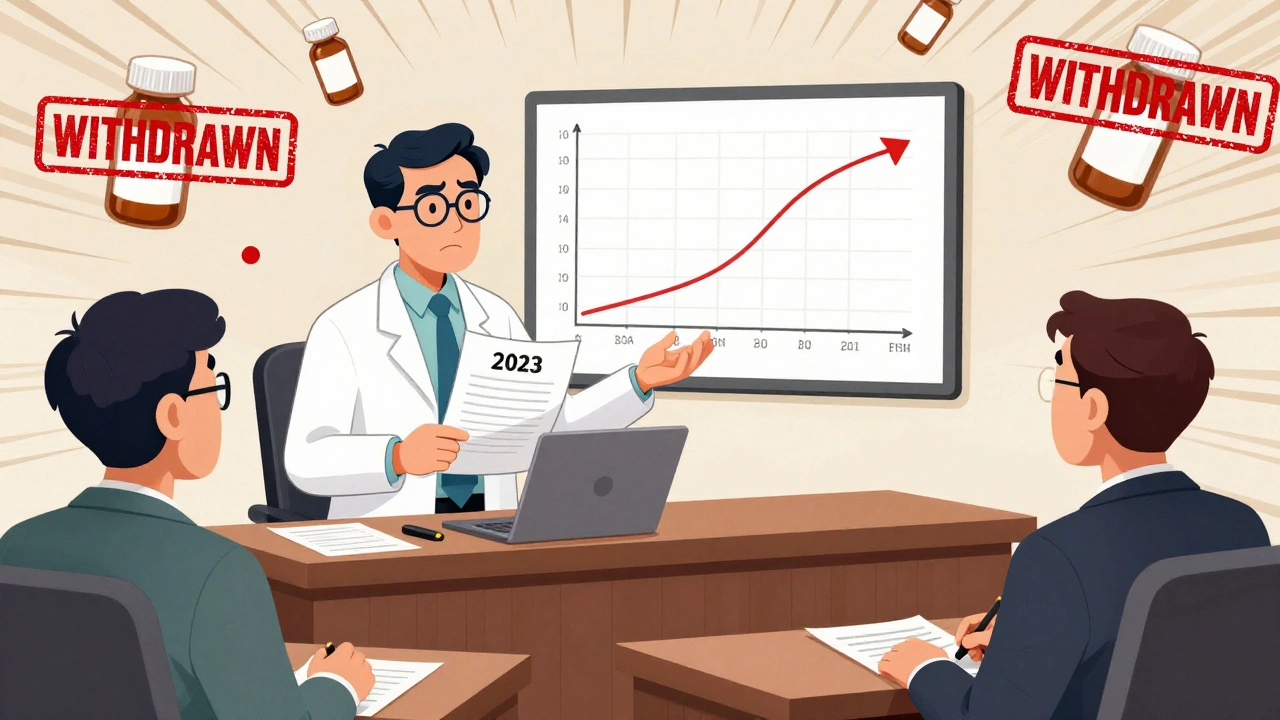
Before 2023, the FDA had no real power to speed up withdrawals. Even when evidence mounted that a drug was ineffective, the process was slow, vague, and often left patients exposed for years. A 2023 study from Penn LDI found that the average time between a confirmatory trial failing and the FDA pulling a drug was 46 months-almost four years. In oncology, that delay had real human costs. One study found that 30% of patients on accelerated approval cancer drugs between 2015 and 2020 were getting treatments later proven useless. Patients didn’t know. Doctors didn’t always know. Pharmacies kept filling prescriptions. One patient, diagnosed with metastatic breast cancer, told a support forum: “I was on [withdrawn drug] for 18 months. My oncologist said it was standard care. Now I’m told it didn’t help at all.” The system wasn’t broken because of bad intent-it was broken because of outdated rules. The FDA could request more studies, but it couldn’t force a drug off the market quickly, even when the science was clear.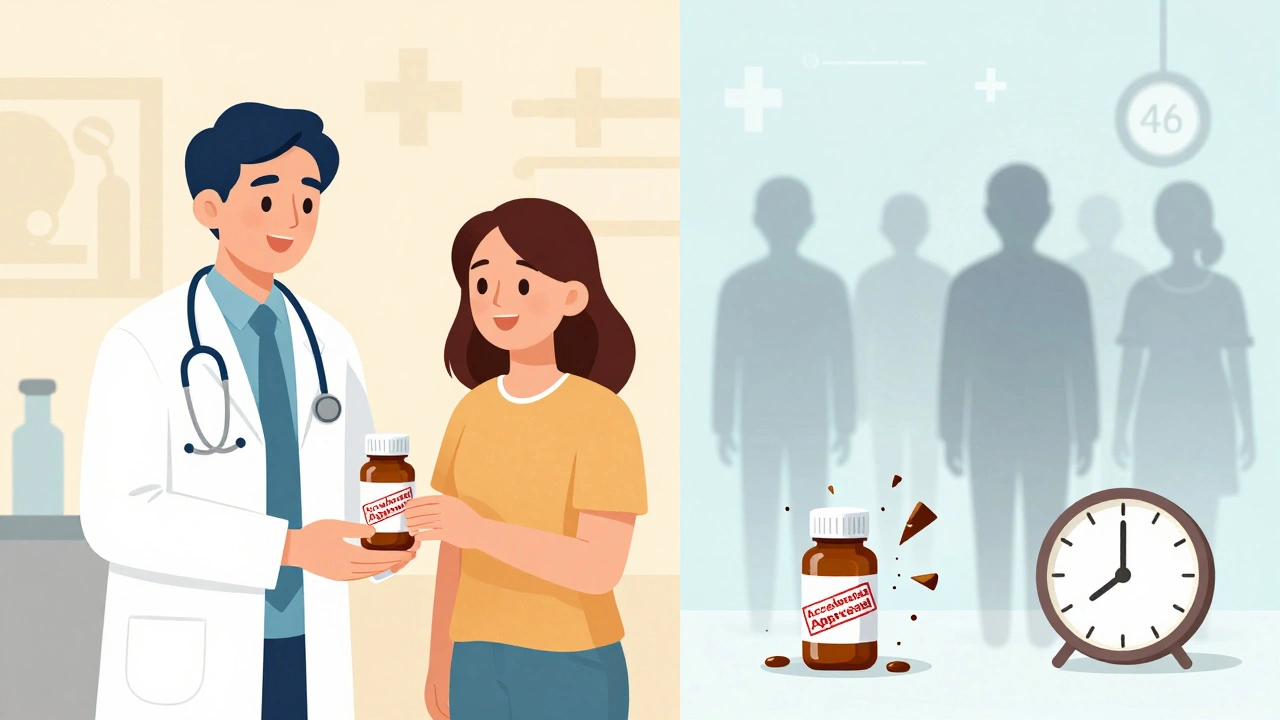
The 2023 Law That Changed Everything
The Consolidated Appropriations Act of 2023 gave the FDA new tools. For the first time, the agency can now act faster on drugs approved under accelerated pathways if:- The manufacturer doesn’t complete the required follow-up study
- The study proves the drug doesn’t work
- Independent data shows the drug is unsafe or ineffective
- The company promotes the drug with false or misleading claims
What Happens After a Drug Is Pulled?
Once a drug is withdrawn, it’s removed from the FDA’s “Orange Book”-the official list of approved drugs used by pharmacists and generic manufacturers. That means:- Generic versions can no longer be approved based on it
- Insurance companies stop covering it
- Doctors are supposed to switch patients to alternatives
How Patients and Doctors Can Protect Themselves
You can’t always prevent a drug from being withdrawn-but you can reduce your risk:- Ask your doctor: “Is this drug approved under accelerated approval?” If yes, ask if a confirmatory study is still pending.
- Check the FDA website: The agency publishes withdrawal notices in the Federal Register. You don’t need to be a scientist to read them-look for the words “withdrawn for lack of effectiveness” or “safety concerns.”
- Know your drug’s status: If you’re on a cancer drug, rare disease treatment, or something approved after 2010, check the Orange Book listing. If it says “withdrawn,” ask why.
- Join patient advocacy groups: Organizations like the Cancer Research Institute and Patient Advocate Foundation track withdrawn drugs and update their members.
The Bigger Picture: Innovation vs. Safety
Some drug companies warn that faster withdrawals could scare off innovation. Why invest in risky cancer drugs if the FDA might pull them after just a few years? The biotech industry argues that accelerated approval is the only way patients get access to life-saving drugs in time. That’s true. But the old system was a gamble with people’s lives. The 2023 reforms strike a better balance: they still allow fast approvals, but they demand faster accountability. The goal isn’t to stop innovation-it’s to stop pretending a drug works when it doesn’t. The real test won’t be how many drugs get pulled. It’ll be how fast the FDA acts when the evidence is clear. If the agency can cut withdrawal times from four years to under a year, as it’s aiming to do, then patients will finally be protected-not just from bad drugs, but from the system that let them stay too long.What’s the difference between a drug recall and a drug withdrawal?
A recall happens when a specific batch or lot of a drug has a problem-like contamination, mislabeling, or packaging errors. It’s usually limited and temporary. A withdrawal means the entire drug is pulled from the market because it’s unsafe or ineffective. Withdrawals are permanent and apply to all versions of the drug, regardless of batch.
Can a drug be withdrawn even if it’s still being sold?
Yes. The FDA considers a drug withdrawn if the manufacturer stops distributing it for safety or effectiveness reasons-even if some stock remains on pharmacy shelves. Pharmacies can still sell existing inventory, but they can’t reorder it. Once the supply runs out, it’s gone for good.
How do I know if my medication has been withdrawn?
Check the FDA’s Orange Book online, which lists approved drugs and their status. You can also sign up for FDA drug safety alerts or ask your pharmacist to verify the drug’s current approval status. If your prescription suddenly becomes unavailable and your doctor says it’s been withdrawn, request a written notice or official FDA link.
Why do some drugs stay on the market for years after being proven ineffective?
Before 2023, the FDA had no legal authority to force a fast withdrawal. The process was slow, bureaucratic, and required multiple rounds of notice, appeal, and public comment. Even when studies showed a drug didn’t work, the manufacturer could delay action. The new 2023 law fixes this by setting clear deadlines and giving the FDA the power to act without waiting for endless reviews.
Are generic versions of withdrawn drugs still available?
No. Once a brand-name drug is withdrawn for safety or effectiveness reasons, its status in the FDA’s Orange Book changes. Generic manufacturers can no longer use it as a reference product, so no new generics can be approved. Existing generics may still be sold until inventory runs out, but they cannot be reordered.
What should I do if I’m currently taking a drug that’s been withdrawn?
Don’t stop taking it without talking to your doctor. Some withdrawn drugs are still safe to use temporarily while you transition. Your doctor should have a replacement ready. If they don’t, ask for a referral to a specialist. You can also contact the FDA’s MedWatch program to report your experience-your input helps improve future safety decisions.
If you’re on a drug approved after 2010-especially for cancer, rare diseases, or serious conditions-ask your doctor if it’s still backed by solid evidence. The system is better now, but vigilance still saves lives.

Kurt Russell
This is the kind of systemic failure that gets people killed and nobody talks about it. I had a cousin on one of those accelerated drugs for pancreatic cancer-she was told it was 'the best option' until the FDA pulled it two years later. By then, her window was gone. They didn’t just fail her-they misled her with bureaucracy dressed up as hope. And now? They’re acting like this 2023 law is some kind of hero move. It’s not. It’s damage control. The real crime is how long it took to get here.
These aren’t just numbers. These are people who spent their last months believing in a lie. And the companies? They kept selling it. Profits over truth. Again.
Don’t let them rewrite this as progress. It’s just the bare minimum after too many bodies piled up.
Ashley Farmer
I’m a nurse in oncology, and I’ve seen this play out too many times. Patients come in with hope in their eyes, clutching their prescriptions like lifelines. Then one day, the pharmacy says, ‘Sorry, it’s been withdrawn.’ No warning. No transition plan. Just silence.
The 2023 law is a start, but hospitals still don’t have protocols to check drug statuses daily. We’re stuck relying on outdated databases and hoping the pharmacist catches it. I wish every patient got a printed handout with the drug’s approval status and whether follow-up data was pending. Simple. Human. Necessary.
And if you’re on one of these drugs? Ask your doctor: ‘Has the confirmatory trial finished?’ If they hesitate? That’s your red flag.
Stacy here
Okay but… what if this is all a distraction? 🤔
Think about it. The FDA didn’t ‘get smarter’-they got pressured. Who pressured them? Big Pharma’s competitors. The same companies that want to replace these drugs with their own $200K-a-year alternatives. The withdrawal timeline? A manufactured crisis to clear shelf space for the next ‘miracle drug.’
Remember Vioxx? Withdrawn for heart risks. Then the next ‘safer’ NSAID came out… and had the same side effects. Same script. Same players.
The real problem isn’t slow withdrawals-it’s the entire drug approval carousel. They’re just spinning faster now. And we’re still the ones getting dizzy.
Check the funding behind the ‘reform’ studies. You’ll find the same names. Coincidence? I think not. 🕵️♀️💊
Sam Mathew Cheriyan
bro i was on that makena thing for my wife’s pregnancy and then one day it was just gone. no explanation. pharmacy said ‘it’s not approved anymore’ and that was it. no one told us it never worked. we just wasted 6 months thinking we were doing right. dumb as hell.
Ernie Blevins
Wow. So what you’re saying is… drugs are sometimes bad? Shocking.
Let me guess-next you’ll tell me water can drown people if you drink too much. Or that cars kill people if you drive drunk.
Every single industry has flaws. This is just pharma. Big deal. People still live longer than ever. You’re acting like this is some kind of conspiracy, not medicine.
Also, why are you mad at the FDA? They’re not the ones selling the drugs. Go yell at the doctors who prescribed it.
Also also-why do you care so much? Are you on a drug you’re not supposed to be on? 😏
Nancy Carlsen
Thank you for writing this. 🙏 I’m so glad someone is finally talking about this in a way that doesn’t sound like a textbook.
My mom was on a withdrawn cancer drug for 14 months. We didn’t know. She thought it was working because her scans looked ‘stable.’ Turns out, stable just meant ‘not getting worse while the drug did nothing.’
I’m sharing this with every cancer support group I’m in. Please, if you’re reading this-ask your doctor the question. Don’t wait until it’s too late. You deserve to know the truth.
And to the FDA: thank you for finally stepping up. We’re watching. 🫶
Ted Rosenwasser
Let’s be clear: this isn’t about ‘patient safety.’ It’s about regulatory overreach masquerading as reform. The FDA has never been a neutral arbiter-it’s a bureaucratic behemoth that conflates speed with competence and oversight with control.
Accelerated approval was never meant to be a backdoor for lazy pharma. It was designed for rare diseases where clinical trials are nearly impossible. But now? It’s being weaponized to justify half-baked science because ‘patients are desperate.’
And now they’re giving the FDA a hammer? Great. Now they’ll pull drugs for political reasons next. Next up: ‘withdrawn for lack of diversity in trial demographics.’
Don’t mistake bureaucracy for progress. This isn’t reform. It’s centralization.
Also, the Orange Book? Still a mess. Even the FDA admits it. So why trust them to fix it? 🤷♂️
Helen Maples
Here’s what no one’s saying: the 2023 law is a band-aid. The real issue? Incentives. Drug companies get paid to get drugs approved, not to prove they work. They’re rewarded for speed, not rigor.
Fix that. Tie reimbursement to confirmatory trial completion. Penalize companies that delay. Make the FDA’s timeline legally binding-not a suggestion.
Also, pharmacists need real-time alerts, not PDFs buried in the Federal Register. Integrate withdrawal status into pharmacy management systems. Automate it.
And stop calling this ‘patient advocacy.’ It’s operational hygiene. If your hospital can’t track drug status in 2025, it’s not a failure of policy-it’s a failure of management.
Stop glorifying the law. Build the infrastructure to make it work.
Andrew Frazier
Why are we even letting the FDA run this? They’re a federal agency. They’re slow, corrupt, and politically influenced. The real solution? Let the market decide. If a drug doesn’t work, doctors won’t prescribe it. Patients won’t pay for it. No bureaucracy needed.
Also, why are we trusting American regulators? Europe pulls drugs faster. China doesn’t even bother with trials. Why are we the ones getting stuck with this mess?
And for the love of God, stop crying about ‘patients.’ Most of them are on these drugs because their doctors are lazy and the insurance won’t cover the real stuff anyway.
Just let people choose. If they die? That’s their fault. Not the FDA’s. Not the company’s. Theirs.
Freedom > bureaucracy. Always.