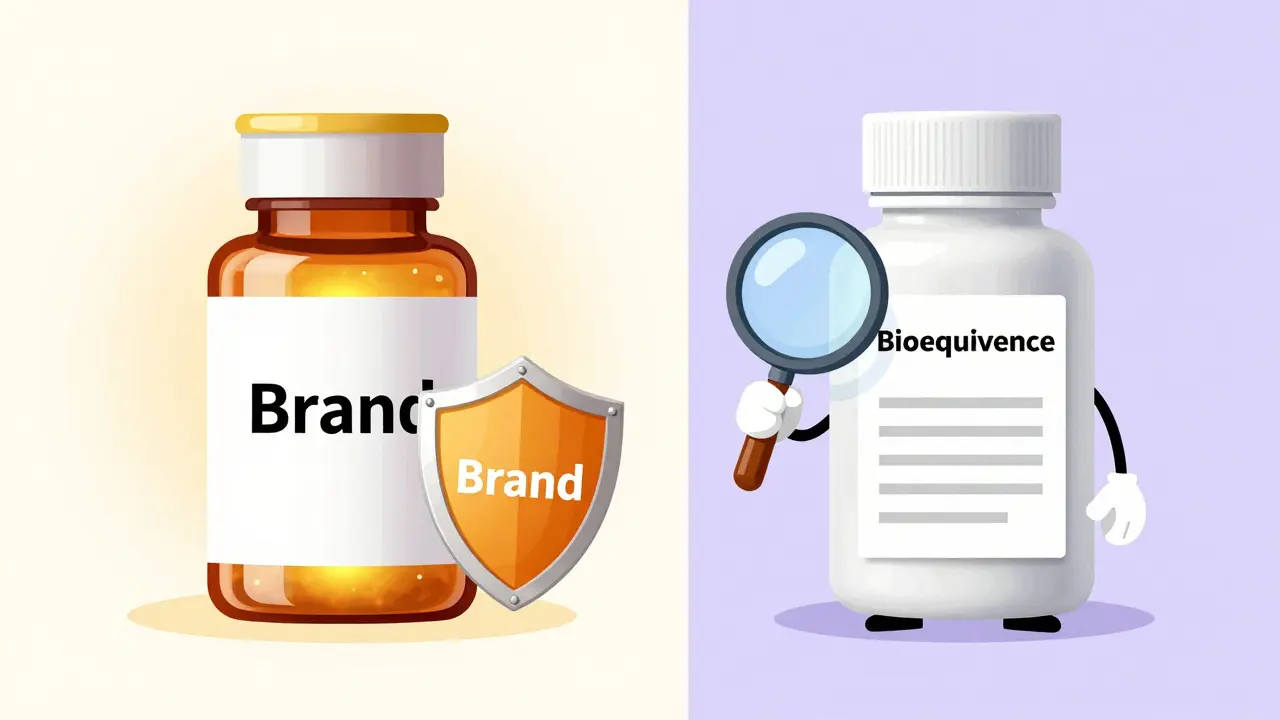
You see the ad. It looks like a commercial for a blockbuster brand-name drug, but it’s promoting a cheaper alternative. The voiceover promises identical results at half the price. But wait-does that generic actually work the same way? Is it truly "FDA Approved" or just cleared? In the $140 billion U.S. generic drug market, which accounts for 90% of all prescriptions dispensed, the line between aggressive marketing and illegal deception is thinner than you think.
False advertising in generic pharmaceuticals isn’t just about catchy slogans. It involves serious legal risks under federal and state laws. When companies misrepresent efficacy, safety, or regulatory status, they face massive penalties from the Food and Drug Administration (FDA), lawsuits under the Lanham Act, and fines from state consumer protection agencies. With new enforcement actions ramping up in late 2025, understanding these rules is critical for manufacturers, marketers, and legal teams.
The Regulatory Backbone: FD&C Act and Hatch-Waxman
To understand what makes an ad "false," you first need to know how generics are approved. Unlike brand-name drugs that require full clinical trials, generics enter the market through the Abbreviated New Drug Application (ANDA), a pathway established by the Hatch-Waxman Act of 1984. This act allows generic manufacturers to prove their product is bioequivalent to the reference listed drug (RLD), meaning it delivers the same amount of active ingredient into the patient's bloodstream within a specific timeframe.
The foundation of this regulation lies in the Federal Food, Drug, and Cosmetic Act (FD&C Act) of 1938. Specifically, 21 U.S.C. § 352 prohibits misbranding. If a generic drug advertisement implies therapeutic superiority without head-to-head clinical trial data, it violates this statute. The FDA mandates that generics demonstrate bioequivalence typically within 80-125% of the brand-name drug's pharmacokinetic parameters. Advertising must not blur this technical distinction. You cannot claim a generic is "better" unless you have the science to back it up, which is rare because generics are designed to be substitutes, not improvements.
Key Laws Governing Generic Drug Advertising
Three main legal frameworks police deceptive practices in this space. Knowing the difference between them helps clarify who can sue whom and for what.
- The FD&C Act (21 U.S.C. § 352): Enforced by the FDA, this law focuses on public health. It bans ads that are misleading about risks and benefits. Recent updates require a "fair balance" presentation, where major side effects are disclosed as prominently as benefits.
- The Lanham Act (§ 43(a), 15 U.S.C. § 1125(a)): This is a civil statute used primarily by competitors. If Company A sells a brand-name drug and Company B advertises its generic as "identical in every way" when there are minor formulation differences, Company A can sue for trademark infringement and false advertising. Damages here can be trebled (tripled).
- State Consumer Protection Statutes: States like New York and California have stricter rules. New York General Business Law § 349 allows for $10,000 per violation, while § 350 permits courts to award three times actual damages. These laws often catch issues the FDA misses, particularly regarding subtle consumer confusion.
The 2025 Enforcement Crackdown: What Changed?
If you thought the rules were static, think again. On September 9, 2025, the Department of Health and Human Services (HHS), directed by Secretary Robert F. Kennedy Jr., issued a presidential memorandum intensifying scrutiny on direct-to-consumer (DTC) prescription drug advertisements. The goal? To stop ads that "mislead the public about risks and benefits" and those that "advantage expensive drugs over cheaper generics" through deceptive comparisons.
This shift targets a specific loophole known as the "adequate provision" policy, created in 1997. Previously, broadcast ads could reference where viewers could find complete risk information rather than listing every side effect in the spot itself. The FDA announced rulemaking in September 2025 to close this gap, requiring all broadcast and digital ads to include complete risk disclosures directly in the content. This means no more fine-print disclaimers hidden in a URL; the risks must be clear, conspicuous, and neutral.
| Feature | Brand-Name Drugs | Generic Drugs |
|---|---|---|
| Efficacy Claims | Can claim unique benefits based on proprietary trials | Limited to bioequivalence; cannot claim superiority without head-to-head trials |
| Cost Messaging | Cannot emphasize low cost as primary benefit | Can state "lower cost" but cannot quantify savings without rigorous FTC substantiation |
| Visual Identity | Uses distinct branding and packaging | Must avoid visual elements that confuse consumers with the brand-name product |
| Risk Disclosure | Must disclose all major risks in DTC ads | Same requirement, plus must clearly state "This is a generic drug" |
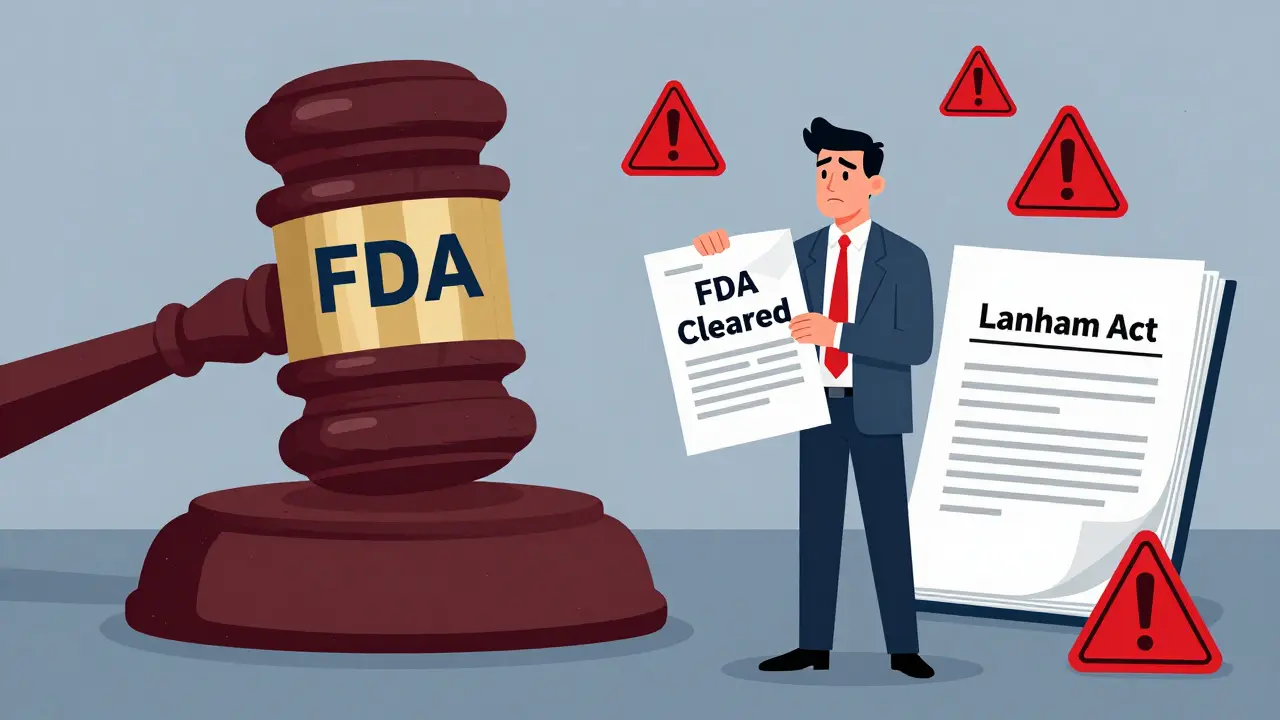
| Regulatory Status Language | "FDA Approved" is standard | Must distinguish between "FDA Approved" (full ANDA approval) and "FDA Cleared" (different pathway); misuse triggers liability |
Common Pitfalls in Generic Marketing
Even well-intentioned campaigns stumble. Here are the most frequent errors that trigger FDA warning letters or Lanham Act lawsuits.
1. Misusing "FDA Approved" vs. "FDA Cleared"
This is a technicality that carries heavy weight. "FDA Approved" applies to drugs going through the full ANDA process. "FDA Cleared" often refers to devices or products under different regulatory pathways. Using "Approved" for a product that was only "Cleared" creates a false impression of rigor. In multiple cases tracked by the National YSSTLC in 2025, this semantic error led to significant liability.
2. Implying Therapeutic Equivalence Where None Exists
Bioequivalence does not always mean therapeutic equivalence, especially for Narrow Therapeutic Index (NTI) drugs like levothyroxine or warfarin. For these medications, small variations in absorption can have serious clinical consequences. Advertising that suggests any generic can seamlessly replace a brand-name NTI drug without physician oversight is dangerous and illegal. The FDA issued a warning letter to Teva Pharmaceuticals in March 2024 for implying broad substitution capabilities where none were established.
3. Fearmongering and Unsubstantiated Safety Alerts
Some advertisers use "health alert" language to scare patients away from brand-name drugs or even other generics, pushing their own product. Florida’s H.B. 1205 specifically prohibits legal service ads from using government logos or terms like "health alert" if they are misleading. Similarly, the FDA found in a June 2024 report that 32% of patients discontinued necessary medications after seeing fear-based ads claiming generic drugs were "dangerous," despite no FDA recall being in place.
4. Quantifying Cost Savings Without Proof
Saying a generic is "cheaper" is fine. Saying it saves you "$50 a month" requires rigorous substantiation under Federal Trade Commission (FTC) guidelines. Without aggregated, verified pricing data across pharmacies and insurance plans, specific dollar amounts are considered deceptive. The FTC’s 2025 Advertising and Marketing Guidelines emphasize that cost claims must be transparent and verifiable.
Legal Risks and Financial Penalties
The cost of non-compliance is steep. Beyond reputational damage, companies face direct financial hits.
- FDA Warning Letters: While not immediate fines, these signal impending action. From 2023 to 2025, FDA warning letter frequency dropped 18%, but the severity of subsequent actions increased.
- Treble Damages under Lanham Act: Competitors can sue for lost profits, and courts may triple those damages. For a major manufacturer, this can run into millions.
- State Fines: New York’s General Business Law § 349 imposes $10,000 per violation. California’s Unfair Competition Law (Business & Professions Code § 17500) demands higher substantiation standards, leading to costly litigation.
- Historical Precedent: GlaxoSmithKline paid a $3 billion penalty in 2012 for miscommunicating drug information. While that case involved brand-name drugs, the precedent sets the tone for the industry: regulators will pursue maximum penalties for systemic deception.
Building a Compliant Advertising Strategy
So, how do you advertise generics safely? It requires a multidisciplinary approach. Major pharmaceutical companies employ regulatory affairs teams of 15-25 professionals to vet materials. For smaller firms, here is a practical checklist:
- Define Bioequivalence Clearly: Use precise language. State that the generic contains the same active ingredient and dosage form as the RLD. Avoid words like "identical" if excipients (inactive ingredients) differ significantly.
- Differentiate Visuals: Ensure your packaging and ad visuals do not mimic the brand-name product’s color scheme or logo style. Confusion is a key element in Lanham Act claims.
- Disclose Risks Prominently: Follow the FDA’s 2024 "clear, conspicuous, and neutral" rule (21 C.F.R. § 202.1). Risk information must appear in at least 14-point font or with minimum 50% contrast against the background. No hiding risks in small print.
- Avoid Comparative Superiority: Unless you have published, peer-reviewed head-to-head clinical trials, do not claim your generic works faster, longer, or better than the brand.
- Verify Cost Claims: If mentioning price, use ranges and cite sources. Avoid absolute statements about savings without accounting for insurance co-pays and pharmacy variances.
- Review NTI Drug Messaging: For narrow therapeutic index drugs, add disclaimers advising consultation with a healthcare provider before switching.
The Future of Generic Drug Advertising
The landscape is shifting toward greater transparency. Draft legislation like H.R. 4582, the "Transparency in Drug Advertising Act," proposes standardized risk disclosure requirements across all media platforms. Industry analysts at Evaluate Pharma project enforcement actions will increase 35% annually through 2027. Companies investing in robust compliance infrastructure-such as Pfizer’s $45 million advertising review system implemented in 2024-are positioning themselves for long-term viability. Those relying on loopholes will find them closing rapidly.
What is the difference between "FDA Approved" and "FDA Cleared" for generic drugs?
"FDA Approved" typically refers to drugs that have undergone the full Abbreviated New Drug Application (ANDA) process, proving bioequivalence to a reference listed drug. "FDA Cleared" is often used for medical devices or products approved under different regulatory pathways. Using "Approved" for a "Cleared" product is a common legal pitfall that can lead to Lanham Act liability for false advertising.
Can a generic drug company claim its product is cheaper than the brand-name version?
Yes, but with caution. You can state that the generic is "lower cost" or "more affordable." However, quantifying savings (e.g., "Save $50/month") requires rigorous substantiation under FTC guidelines. Without verified data covering various insurance plans and pharmacies, specific dollar claims are considered deceptive and risky.
What are the legal risks of advertising generic drugs without disclosing all risks?
Failing to disclose major risks violates the FD&C Act and FDA regulations. The 2025 crackdown eliminates the "adequate provision" loophole, requiring complete risk information in all broadcast and digital ads. Penalties include FDA warning letters, cease-and-desist orders, and potential lawsuits under state consumer protection laws like New York’s General Business Law § 349, which can impose $10,000 per violation.
How does the Lanham Act apply to generic drug advertising?
The Lanham Act allows competitors to sue for false advertising. If a generic manufacturer’s ad causes consumer confusion or misrepresents the product’s equivalence to a brand-name drug, the brand-name owner can file a lawsuit. Courts may award treble damages (three times actual losses) and legal fees, making this a significant financial risk for non-compliant advertisers.
Are there special rules for advertising Narrow Therapeutic Index (NTI) generic drugs?
Yes. NTI drugs, such as levothyroxine or warfarin, have a small margin between effective and toxic doses. Advertising must not imply seamless substitution without physician oversight. The FDA has warned companies against suggesting broad interchangeability for NTI drugs, as bioequivalence does not guarantee identical clinical outcomes for every patient. Disclaimers advising medical consultation are essential.
