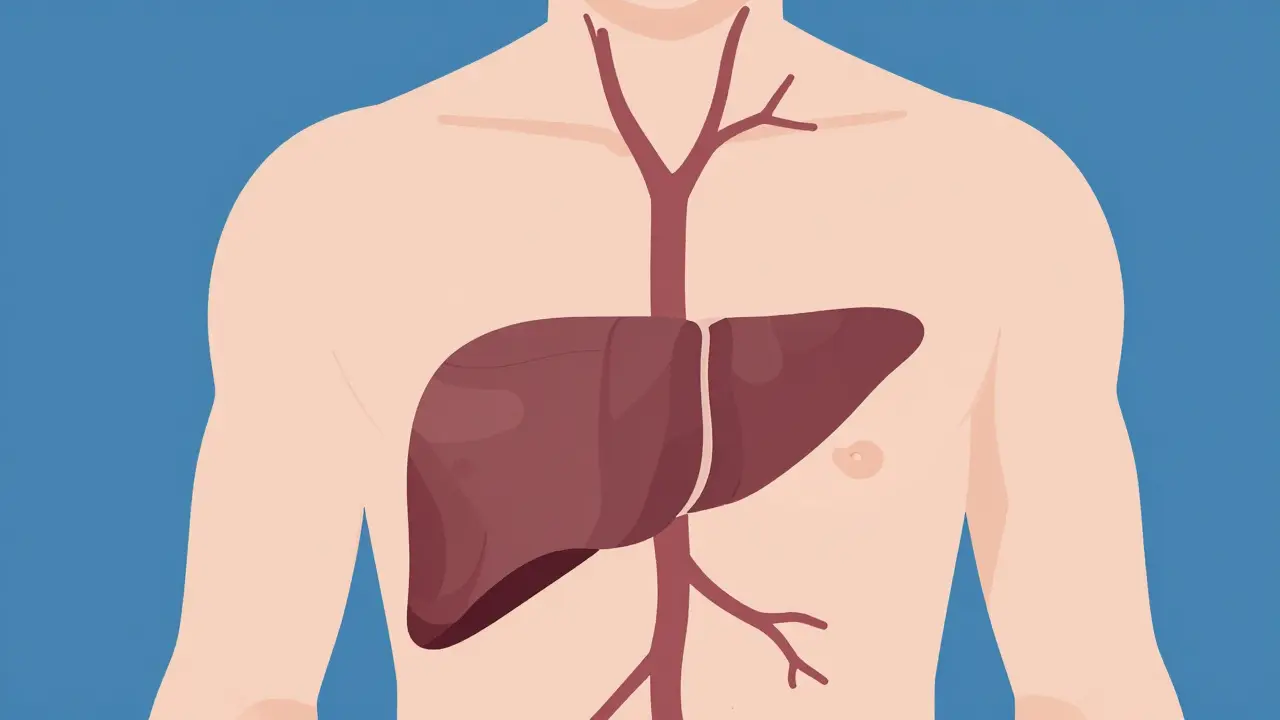
Did you know that 1 in 10 hospital admissions for seniors is due to bad reactions to medications? That's a staggering number. The reason often lies in how the liver and kidneys change as we age. These two organs play a huge role in processing drugs, but their ability to do so declines over time. Without understanding these changes, doctors might prescribe the same dose for an 80-year-old as for a 30-year-old-leading to dangerous side effects. This article breaks down exactly how aging affects these organs and what it means for medication safety.
How Aging Affects the Liver
As we age, the Liver An organ responsible for metabolizing drugs and filtering toxins in the body undergoes significant changes. Hepatic blood flow drops by about 40% compared to younger adults. That means less blood reaches the liver, slowing down drug processing. Liver mass also shrinks by roughly 30%. Think of it like a smaller factory with fewer workers. The liver's ability to break down drugs relies on enzymes like Cytochrome P450 Enzymes A family of enzymes that metabolize drugs in the liver. While some enzymes slow down, others stay stable. For example, phase I metabolism (which breaks down drugs) often decreases by 37-60% in older adults, but phase II (which makes drugs easier to excrete) remains mostly unchanged. This uneven change means some drugs build up in the body while others don't.
How Aging Affects the Kidneys
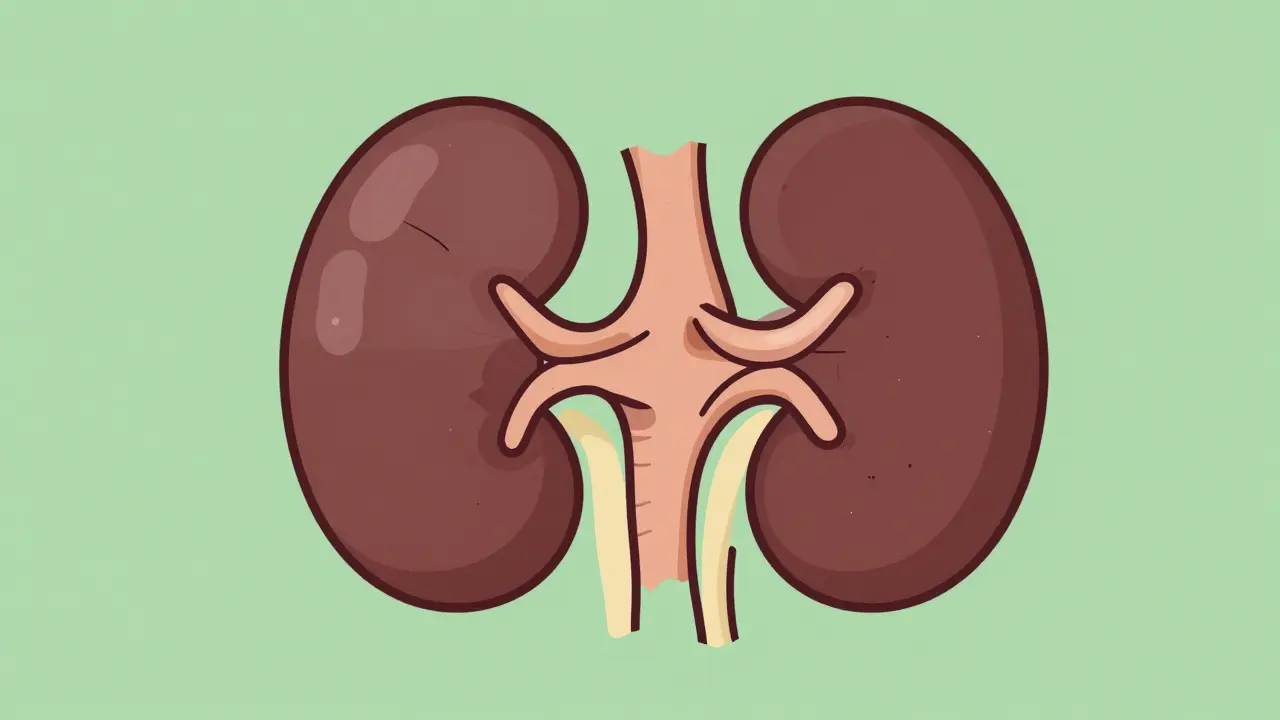
Kidney Organs responsible for filtering waste and regulating fluid balance function also declines with age. The Glomerular Filtration Rate A measure of how well kidneys filter blood (GFR)-a key indicator of kidney health-drops by 30-50% between ages 30 and 80. This is why doctors often check kidney function before prescribing certain drugs. But here's the catch: serum creatinine levels might stay normal even as kidney function declines. Why? Because older adults have less muscle mass, which lowers creatinine production. So a "normal" creatinine test might hide serious kidney issues. That's why using the Cockcroft-Gault Equation A formula to estimate kidney function for drug dosing or CKD-EPI formula is crucial for accurate dosing.
How Different Drugs Are Affected
Not all drugs are affected the same way. Drugs like Propranolol A beta-blocker used for high blood pressure (used for high blood pressure) are "flow-limited." Their metabolism depends heavily on blood flow. With 40% less blood flow to the liver, these drugs can have up to 40% lower clearance. That means they stay in the body longer, increasing overdose risk. On the other hand, drugs like Diazepam A sedative used for anxiety and seizures (a sedative) are "capacity-limited." Their metabolism relies more on enzyme activity than blood flow. Since enzyme activity for these drugs is often preserved, their clearance only drops by 10-15%. This difference is critical. Taking a standard dose of a flow-limited drug without adjustment could cause dizziness or falls in seniors.
| Drug Type | Examples | Clearance Change | Why It Matters |
|---|---|---|---|
| Flow-limited | Propranolol, Lidocaine, Morphine | Up to 40% reduction | Requires major dose adjustments |
| Capacity-limited | Diazepam, Phenytoin, Theophylline | 10-15% reduction | Usually needs minor dose adjustments |
Real-World Impact
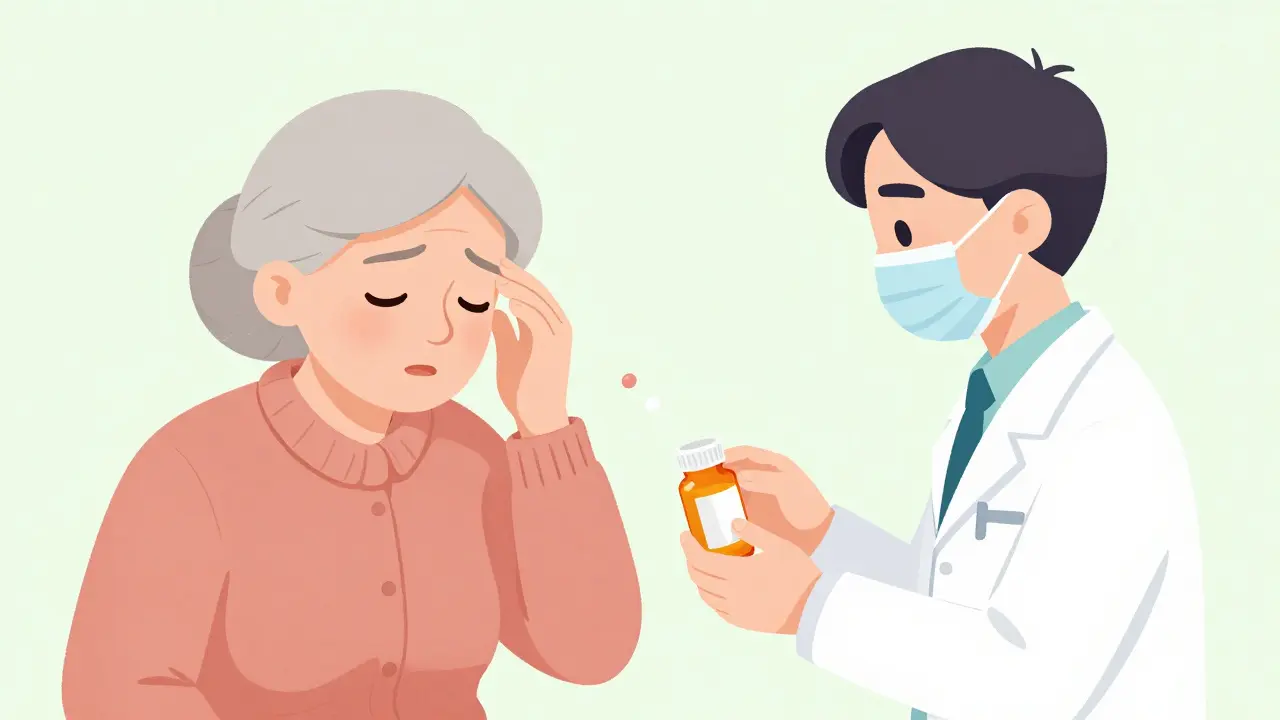
A real-life example shows why this matters. A 82-year-old woman started taking amitriptyline for depression. Her doctor didn't adjust the dose for her age. Within days, she experienced severe dizziness and falls. Testing revealed her liver couldn't process the drug properly. After reducing the dose by 50%, her symptoms disappeared. This is exactly why understanding liver changes matters. The FDA reports that drug metabolism in older adults is a leading cause of medication errors. In fact, 41% of seniors take five or more medications, increasing risks by 88%.
Practical Steps for Safer Medication Use
Doctors use tools like the Beers Criteria A list of medications potentially inappropriate for older adults to avoid unsafe drugs for seniors. For liver-metabolized drugs, they often start with 20-40% lower doses. For kidney-related drugs, they calculate creatinine clearance using the Cockcroft-Gault equation. But it's not just about prescriptions. Over-the-counter drugs like acetaminophen can cause liver failure in seniors. Always check with a pharmacist before taking new medications. And don't forget: polypharmacy (taking five or more drugs) increases risks by 88%. Simplifying medication regimens is just as important as adjusting doses.
Medication Safety Checklist for Seniors
- Always ask your doctor to review all medications, including supplements and OTC drugs.
- Request a kidney function test (GFR) and liver enzyme check before starting new drugs.
- Use the Beers Criteria to check if your medications are safe for seniors.
- Start with the lowest possible dose and increase slowly.
- Keep a detailed list of all drugs and share it with every healthcare provider.
- Monitor for side effects like dizziness, confusion, or nausea-these could signal a problem.
- Never stop or change doses without consulting your doctor.
Frequently Asked Questions
Why do older adults need lower doses of some medications?
Because liver blood flow and kidney function decline with age, slowing drug processing. A standard dose for younger people can lead to toxic buildup in seniors. For example, propranolol clearance drops by up to 40% in older adults, requiring dose adjustments to avoid side effects like dizziness or falls.
How can I tell if my medications are affecting my kidneys?
Symptoms like swelling in the legs, fatigue, or changes in urination may indicate kidney issues. But the best way is a blood test for creatinine and estimated GFR. Always ask your doctor for this test, especially before starting new medications. Remember, normal creatinine levels can hide kidney decline due to lower muscle mass in seniors.
Are there specific drugs seniors should avoid?
Yes. The Beers Criteria lists medications to avoid or use cautiously in seniors, like certain antihistamines, benzodiazepines, and NSAIDs. For example, diphenhydramine (Benadryl) can cause confusion and falls in older adults. Always check this list with your pharmacist before starting any new drug.
What is the Cockcroft-Gault equation?
It's a formula doctors use to estimate kidney function based on age, weight, and creatinine levels. It helps adjust drug doses for kidney health. Newer formulas like CKD-EPI are also used, but Cockcroft-Gault remains common for certain medications like vancomycin. Always confirm which formula your doctor uses for accurate dosing.
Can supplements affect how medications work?
Absolutely. St. John's Wort can speed up liver metabolism, reducing drug effectiveness. Others like garlic or ginkgo can interact with blood thinners. Even common supplements like calcium can interfere with antibiotics. Always discuss supplements with your doctor-they're not always safe when mixed with prescription drugs.
How does polypharmacy increase risks for seniors?
Taking five or more medications increases the risk of adverse drug reactions by 88%. Each additional drug adds complexity to how the body processes them. For example, multiple medications that affect the same liver enzyme can cause dangerous interactions. Simplifying your regimen-by removing unnecessary drugs-can prevent hospitalizations and improve quality of life.

Carol Woulfe
The medical establishment has systematically neglected the aging population. This is a clear example of institutional negligence. We must demand transparency.
It's not just about dosing; it's about the entire system being designed to exploit the elderly for profit.
They don't want us to know the truth about how drugs are tested.
Seniors deserve better than this.
It's time to hold them accountable.
Pharmaceutical companies have known about this for decades.
Yet they continue to push standard dosing without considering age-related changes.
This is a deliberate attempt to maximize profits at the expense of elderly lives.
We need to push for stricter regulations.
Doctors should be required to undergo specialized training in geriatric pharmacology.
It's not enough to just say 'be careful'-the system needs to change.
We cannot allow more seniors to suffer.
Every time a senior is hospitalized due to a drug reaction, it's a failure of the system.
It's time for real change.
Don't let them silence us anymore.
Danielle Vila
Big Pharma is hiding this information to keep seniors dependent on their drugs! They don't want us to know how dangerous it is.
It's all about the money-every time a senior gets hospitalized, it's another profit for them.
They're covering up the fact that standard doses are lethal for older adults.
They refuse to tell us the truth.
It's obvious they're in cahoots with the government.
They're using this to control us.
Seniors must wake up and demand answers!
This isn't just about medication-it's about a whole system designed to keep us sick.
I've been saying this for years.
They don't want seniors to be healthy and independent.
It's all part of the plan.
They want us to stay weak and dependent on their drugs.
It's time to expose them.
Don't believe the lies!
They're lying to us all.
Thorben Westerhuys
Oh my goodness! This is so important! I can't believe how dangerous this is! Someone should do something!
It's terrifying to think that our healthcare system is failing seniors like this!
We need to act immediately! Every second counts!
It's a national crisis!
I'm so upset about this!
We must find ways to help!
Let's make a change!
Together we can do this!
It's time to take action!
This is a tragedy!
We can't wait any longer!
Seniors are suffering!
It's time to act!
Let's do something!
Now!
Laissa Peixoto
It's fascinating how aging affects drug metabolism.
Our bodies change in ways we often overlook.
The liver and kidneys work differently as we get older.
This isn't just a medical issue-it's a human issue.
Understanding these changes can save lives.
But it requires a shift in how we approach healthcare.
Doctors need to listen more to their patients.
And patients need to be proactive.
It's not just about the science-it's about compassion.
We should treat seniors with dignity and care.
Let's not forget that behind every statistic is a person.
Every senior deserves safe, effective treatment.
This knowledge should be common knowledge.
We must spread the word.
We cannot let this continue.
Lana Younis
Yeah, the cytochrome P450 system is crucial but gets messed up with age.
Like, propranolol clearance drops by 40%-that's huge!
But doctors often don't check GFR properly.
They rely on creatinine, which can be misleading.
Older adults have less muscle mass, so creatinine looks normal even when kidneys are failing.
It's a trap!
Always ask for the Cockcroft-Gault equation.
And watch out for polypharmacy-5+ meds increases risks by 88%.
It's scary how many seniors are on too many drugs.
Pharmacist checks are a must.
Even OTC stuff like acetaminophen can be dangerous.
Always talk to a doc before starting anything.
It's not just about the science-it's about the people.
Let's make sure we're safe.
Healthcare should be person-centered, not one-size-fits-all.
Dr. Sara Harowitz
THIS IS WHY AMERICA NEEDS STRONGER LEADERSHIP!
Our healthcare system is failing because of weak policies!
Seniors deserve better than this!
It's time for action!
We need stricter regulations NOW!
It's not just about medication-it's about national security!
Our elderly are our greatest asset!
They deserve top-notch care!
Let's stop this nonsense!
It's time to take control!
Doctors must be held accountable!
Every hospitalization is a failure of the system!
We can't afford to wait!
Act now!
Protect our seniors!
Joyce cuypers
This is so important! Always check with your pharmacist!
I had a friend who had a bad reaction because they didn't adjsut the dose.
So important to get the right tests!
Don't be afraid to speak up!
Your health is worth it!
Let's work together to stay safe!
Small changes can make a big difference!
Always double-check your meds!
Pharmacists are there to help!
Don't hesitate to ask for a review!
It's okay to speak up!
We all deserve safe medication!
Let's be proactive!
Healthcare should be a team effort!
Together we can do this!
Georgeana Chantie
This is all overblown. Seniors are fine! 😒