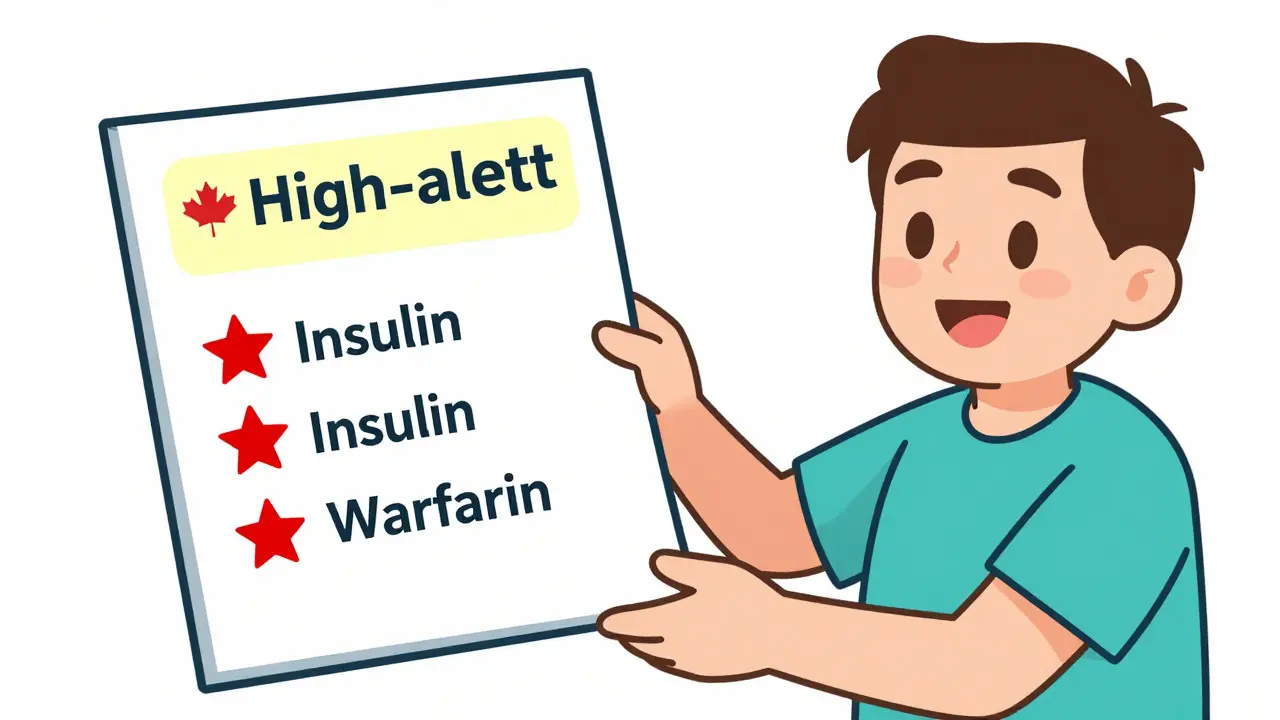
You have a folder in your kitchen drawer. Inside is a crumpled piece of paper with your current medications written down. It looks simple enough, but that list might be missing the most critical information you need to stay safe. Documenting safety alerts isn't just for hospital pharmacists or nurses; it is a vital skill for any patient managing complex prescriptions. When you understand which drugs carry higher risks and how to track warnings, you turn a passive list into an active shield against errors.
Many people think their medication list is complete once they write down the name and dosage. But what about the warnings? What about the interactions? High-alert medications are drugs that can cause serious harm if used incorrectly. The Institute for Safe Medication Practices (ISMP) defines these as medications with an increased risk of causing serious patient harm when used in error. For you, the patient, this means insulin, blood thinners like warfarin, and strong painkillers like opioids need extra attention on your personal records.
Identify High-Alert Medications on Your List
The first step in documenting safety alerts is knowing which drugs deserve them. You don't need to memorize the entire ISMP master list, which includes 19 categories of risky drugs. Instead, focus on the ones you actually take. Common high-alert medications include:
- Insulin: A hormone that regulates blood sugar. Errors in dosing can lead to dangerous highs or lows.
- Anticoagulants: Blood thinners such as warfarin, apixaban, or rivaroxaban. Mistakes here can cause severe bleeding or clots.
- Opioids: Pain relievers like morphine or oxycodone. Risks include respiratory depression and addiction.
- Chemotherapy agents: Drugs used to treat cancer. These are toxic and require precise handling and dosing.
- Neuromuscular blockers: Drugs that paralyze muscles. While less common at home, patients recovering from surgery should know if they were recently used.
If you see any of these on your prescription bottle, mark them clearly on your personal list. Use a highlighter or a red star. This visual cue tells you, "Pay attention to this one." It also signals to any doctor, nurse, or pharmacist who sees your list that you are aware of the risks.
Capture Official Safety Warnings
Where do you find the specific alerts to document? Start with the package insert-the long, boring paper inside your medicine box. Look for sections titled "Warnings," "Precautions," or "Black Box Warnings." A Black Box Warning is the strongest alert the FDA requires for prescription drugs. It usually indicates a risk of death or serious injury.
For example, if you take oral methotrexate for arthritis, the warning might specify that it must be taken weekly, not daily. Taking it daily by mistake can be fatal. Write this explicitly on your list: "Methotrexate: WEEKLY ONLY. Do not take daily." This simple note bridges the gap between professional medical knowledge and your daily routine.
You can also check reliable online resources. The ISMP website provides patient-friendly guides. Additionally, your pharmacist is an underutilized resource. Ask them, "Are there any specific safety alerts I should write down for this medication?" They often know about recent recalls or interaction issues that haven't made it into the general news yet.
Track Drug Interactions and Allergies
Safety alerts aren't just about single drugs; they are about how drugs talk to each other. Documenting potential interactions is a key part of your safety strategy. If you take a blood thinner and start taking aspirin for a headache, that combination increases bleeding risk. Note this on your list: "Aspirin + Warfarin = Increased Bleeding Risk. Consult Doctor before use."
Allergies are another form of safety alert. Don't just write "Penicillin allergy." Be specific. Did you get a rash? Did your throat swell? Severe reactions like anaphylaxis need prominent documentation. Write: "Penicillin: Anaphylaxis (throat swelling). Avoid all penicillins." This level of detail helps healthcare providers make faster, safer decisions in emergencies.
| Information Type | Why It Matters | Example Entry |
|---|---|---|
| High-Alert Status | Flags drugs with narrow therapeutic windows | *Warfarin: High Alert. Monitor INR regularly.* |
| Dosing Frequency Warnings | Prevents accidental overdose | Methotrexate: Take 10mg ONCE per week (Sundays). |
| Major Interactions | Highlights dangerous combinations | Do not mix with grapefruit juice or St. John's Wort. |
| Side Effect Monitoring | Encourages early detection of problems | Lisinopril: Call MD if cough persists > 1 week. |
| Allergy Severity | Guides emergency treatment | Sulfa Drugs: Hives and swelling. EpiPen required. |
Update Regularly and Share Widely
A static medication list is a dangerous one. Your health changes, and so do your medications. The Joint Commission requires hospitals to maintain up-to-date lists, and you should hold yourself to a similar standard. Update your list every time you:
- Start a new medication.
- Stop a medication.
- Change a dose.
- Receive a new diagnosis that affects your drug choices.
Set a reminder on your phone for the first day of every month to review your list. Check for expired bottles. Remove old entries. Add new warnings you've learned about. Consistency is key. Research shows that facilities with regular documentation updates see significantly fewer errors. The same applies to your home.
Share this updated list with everyone involved in your care. Give a copy to your primary care physician, your specialist, your pharmacist, and even a trusted family member. In an emergency, paramedics won't have time to dig through your digital health record. A physical, highlighted list in your wallet or on your fridge can save your life.
Use Technology Wisely
Technology can help, but it has limits. Many pharmacies now provide apps that track your medications. Some even send push notifications for refills or interactions. However, don't rely solely on an app. Apps can glitch, batteries die, and interfaces change. Always keep a hard copy.
When using digital tools, look for features that allow custom notes. If your app lets you add a comment to a medication entry, use it. Write "Take with food to avoid nausea" or "Check blood pressure before taking." These personalized alerts mimic the structured safety protocols used in hospitals, adapting them for your home environment.
Be cautious of "alert fatigue." If your app sends you a notification for every minor interaction, you'll stop reading them. Curate your alerts. Focus on the high-risk items. Quality over quantity. Dr. Robert Wachter warns that too many alerts lead to compliance dropping. Keep your list clean and focused on real dangers.
Advocate for Yourself in Healthcare Settings
When you visit a doctor or hospital, bring your documented list. Don't assume their computer system has everything. Systems differ, and data transfer errors happen. Say, "Here is my current medication list. I have noted some safety alerts here. Please verify these against your records."
This proactive approach puts you in control. It forces a moment of pause for the clinician to double-check. It aligns with the ISMP best practices that emphasize independent double-checks for high-alert medications. You become part of the safety loop. Studies show that patient engagement reduces medication errors by up to 50%. Your documented list is your tool for engagement.
If a doctor prescribes something new, ask, "Does this interact with anything on my list?" If they say yes, ask them to explain the risk and how to mitigate it. Then, immediately update your list. Make this a habit. It takes only two minutes but adds layers of protection around your health.
Common Pitfalls to Avoid
Even well-intentioned patients make mistakes in documentation. Here are common pitfalls to watch out for:
- Vague language: Writing "take as needed" without defining "needed." Specify triggers, e.g., "Take ibuprofen only if fever exceeds 101°F."
- Ignoring OTC drugs: Over-the-counter medicines like antacids or supplements can interact with prescription drugs. Include them on your list.
- Outdated information: Keeping a list from six months ago. Review it monthly.
- Hiding side effects: Not documenting mild side effects that could worsen. Track how you feel after starting new meds.
Avoiding these traps keeps your list accurate and useful. Remember, the goal isn't perfection; it's awareness. Every alert you document is a barrier against error.
What exactly is a high-alert medication?
A high-alert medication is a drug that carries a heightened risk of causing serious patient harm when used in error. Examples include insulin, chemotherapy drugs, anticoagulants (blood thinners), and opioids. These drugs require extra caution in prescribing, dispensing, and administration.
How often should I update my medication list?
You should update your medication list immediately whenever you start, stop, or change the dose of any medication. Additionally, conduct a full review of your list at least once a month to remove expired drugs and ensure all safety alerts are current.
Where can I find official safety warnings for my drugs?
Official warnings are found in the package insert (the paper leaflet inside your medication box), specifically in the "Warnings" or "Black Box Warning" sections. You can also consult your pharmacist, the FDA website, or the Institute for Safe Medication Practices (ISMP) patient resources.
Should I include over-the-counter (OTC) drugs on my list?
Yes, absolutely. OTC drugs, vitamins, and herbal supplements can interact with prescription medications. Including them ensures that healthcare providers have a complete picture of what you are taking, reducing the risk of adverse interactions.
Can technology replace a handwritten medication list?
Technology is helpful but should not be the sole source. Apps can fail or be inaccessible during emergencies. Always keep a physical, printed copy of your medication list with safety alerts highlighted. Carry this copy in your wallet or purse for immediate access by emergency responders.
