Medication Sweat Symptom Checker & Guide
Analyze your symptoms to prepare for your doctor's visit.
Step 1: Symptom Analysis
Step 2: Results & Strategy
Fill out the analysis on the left to see your results.
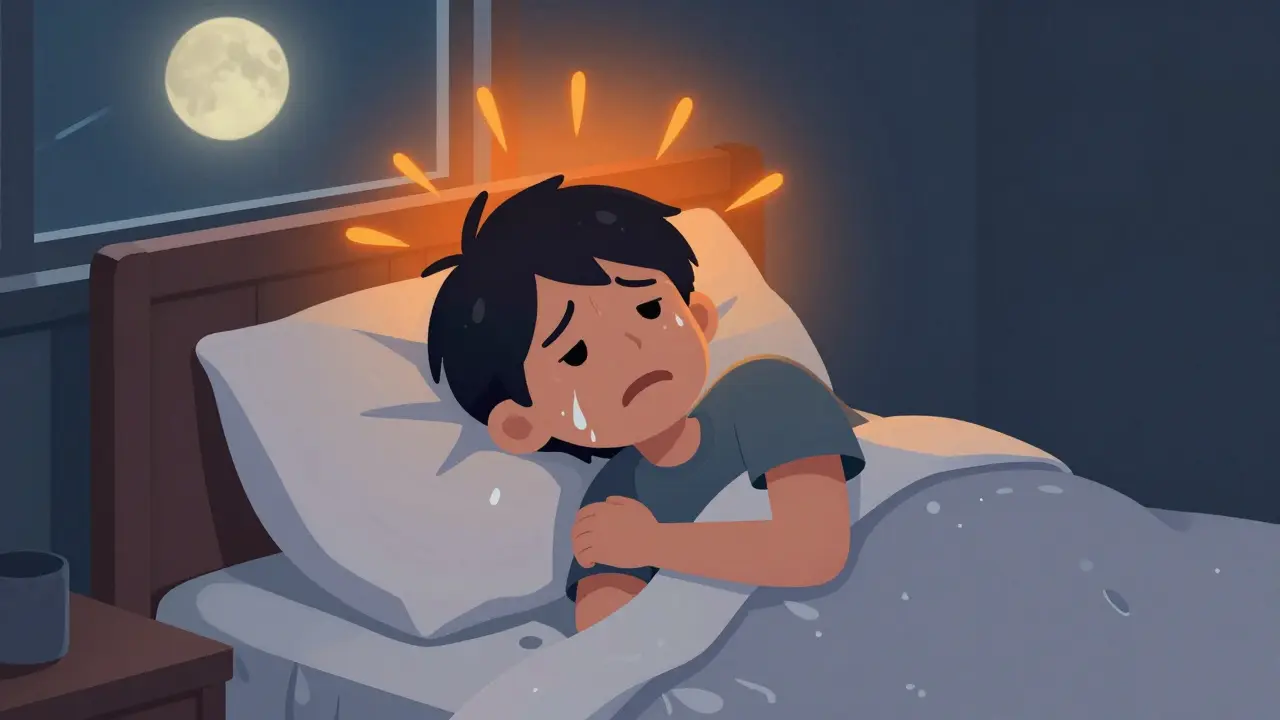
When a drug interferes with your body's thermoregulatory system-the internal thermostat in your brain-it can trigger excessive sweating or sudden heat spikes. This isn't just a minor inconvenience; nearly 29% of people have actually stopped taking necessary medications because the sweating became intolerable. Whether it's a flare-up of night sweats or a sudden hot flash in the middle of a meeting, the goal is to find a balance where your treatment works without ruining your quality of life.
Which Medications Trigger Sweating?
Not all drugs cause this reaction, but a surprising number of common prescriptions do. The way they trigger sweat depends on how the drug interacts with your brain and nervous system. For example, SSRIs is a class of antidepressants, such as sertraline and escitalopram, that increase serotonin levels. Since serotonin helps regulate body temperature in the hypothalamus, an imbalance can trick your brain into thinking you're overheating, leading to sweat in about 22% of users.
Other common culprits include:
- ADHD Stimulants: Drugs like Methylphenidate or amphetamines kick the sympathetic nervous system into "fight or flight" mode, which naturally ramps up sweat production.
- Opioid Painkillers: Medications like oxycodone can cause mast cell activation, releasing histamine that triggers a sweat response in over 40% of patients.
- Corticosteroids: Prednisone alters the hypothalamic-pituitary-adrenal axis, which often manifests as increased perspiration.
- Cancer Treatments: Aromatase inhibitors (like anastrozole) suppress estrogen. Since estrogen is key to temperature regulation, nearly 78% of patients on these drugs experience severe hot flashes.
Spotting the Difference: Drug-Induced vs. Primary Sweating
It's important to know if your sweat is coming from your medication or something else. Primary hyperhidrosis usually affects specific "focal" areas-like your palms, the soles of your feet, or your armpits. Drug-induced sweating, however, is typically generalized. You'll feel it across your entire body, and it frequently happens at night regardless of the room temperature.
| Feature | Medication-Induced | Primary Hyperhidrosis |
|---|---|---|
| Location | Generalized (whole body) | Focal (palms, feet, pits) |
| Timing | Linked to dose/nightly | Constant or stress-triggered |
| Primary Cause | Thermoregulatory interference | Overactive sweat glands |
| Typical Fix | Dose change or drug switch | Topicals or surgical (sympathectomy) |

Proven Strategies for Immediate Relief
You don't always have to switch medications to find relief. Sometimes, a few strategic tweaks can make a massive difference. If you're struggling with night sweats, try changing your dose timing. According to clinical data, moving an antidepressant dose from evening to morning can reduce night sweats by over 50% for some users.
For those who can't change their medication (like breast cancer patients), focusing on the environment is key. Keep your bedroom temperature below 65°F (18°C) and use layered clothing made of natural, breathable fabrics. Many people find that moisture-wicking undershirts-the kind athletes wear-are a lifesaver for daily activities.
If over-the-counter deodorants aren't cutting it, ask your doctor about Aluminum Chloride. This is a prescription-strength antiperspirant (often found in brands like Drysol) that contains 12-20% aluminum chloride hexahydrate. To make it work, apply it to completely dry skin at bedtime, just 2-3 times a week. You'll usually notice a difference in about a week.
Medical Interventions for Severe Cases
When lifestyle changes and topicals aren't enough, medical professionals have several "heavy-duty" options. For those with severe generalized sweating, doctors may prescribe Glycopyrrolate, an anticholinergic medication that blocks the signals telling your sweat glands to activate. In clinical trials, this has reduced sweat episodes by over 70%.
For hot flashes specifically, Cognitive Behavioral Therapy (CBT) is surprisingly effective. By spending 6-8 weeks in structured sessions, patients have reported a 50-60% reduction in the severity of their flashes. It doesn't stop the biological trigger, but it changes how your brain and body react to the heat spike, making it much more manageable.
In recent developments, the FDA has approved Brimonidine Gel (Mirvaso) for generalized hyperhidrosis, which has shown a significant reduction in sweat episodes. There is also emerging research into the HLA-DQB1 gene, which may explain why some people are three times more likely to sweat from medications than others.
Talking to Your Doctor: The Right Approach
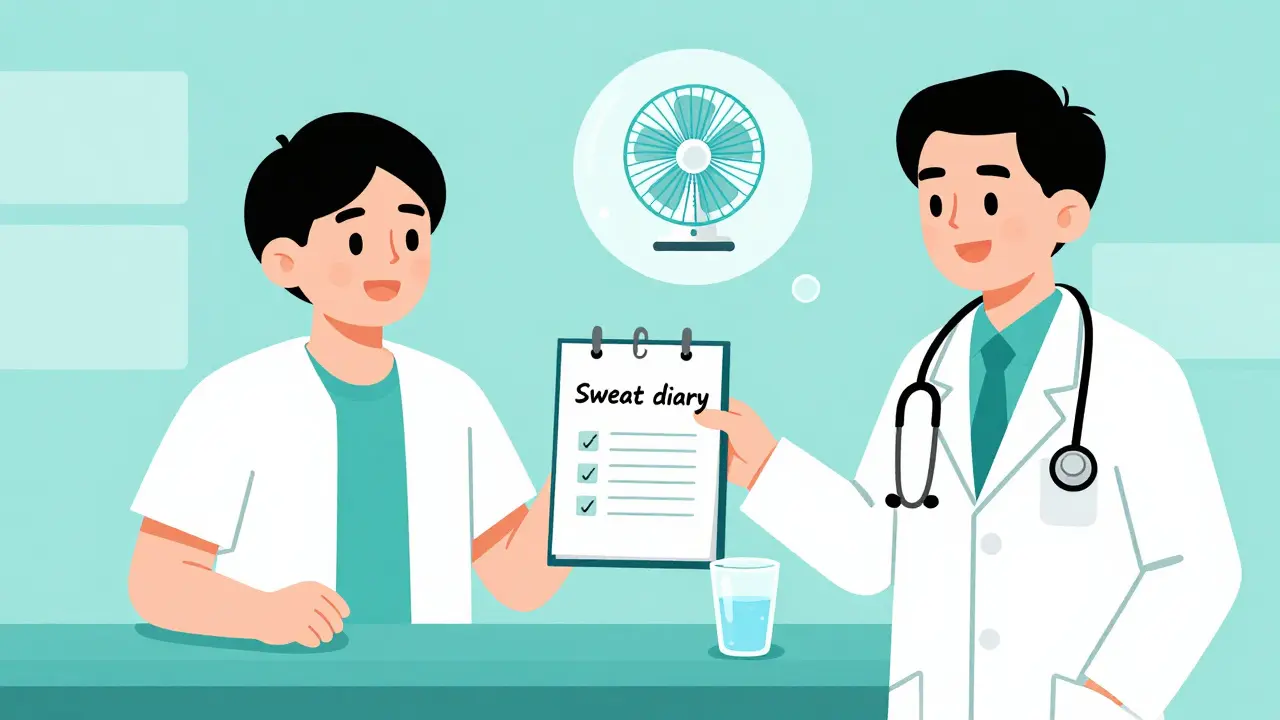
One of the biggest hurdles is that many doctors don't automatically screen for sweating during follow-up visits. You have to be the advocate for your own comfort. When you bring this up, don't just say "I'm sweating a bit." Be specific. Use a sweat diary for one week to track when the episodes happen, how long they last, and if they correlate with your dose timing.
Ask your provider about these three options specifically:
- Dose Adjustment: Can we lower the dose by 25% and see if the therapeutic benefit remains while the sweating decreases?
- Alternative Medication: Is there a drug in the same class with a lower reported rate of hyperhidrosis?
- Additive Treatment: Can we add a low-dose anticholinergic or a non-hormonal option (like low-dose paroxetine) to counteract the flashes?
Will the sweating stop if I stop taking the medication?
Generally, yes. Drug-induced hyperhidrosis is typically an adverse reaction to the chemical presence of the drug. Once the medication is cleared from your system, the thermoregulatory system usually returns to normal. However, you should never stop a prescription medication abruptly without consulting your doctor, as this can cause dangerous withdrawal symptoms or a relapse of your condition.
Why does my medication make me sweat at night but not during the day?
Night sweats often happen because of a combination of the drug's peak concentration in your bloodstream and the natural drop in core body temperature that occurs during sleep. When the medication interferes with your brain's ability to regulate that temperature drop, your body overcompensates by sweating profusely to cool down.
Are there any safe natural remedies for medication-induced hot flashes?
While herbal supplements are popular, be cautious. Some can interfere with your primary medication. The most effective "natural" strategies are non-pharmacological: keeping your environment cool (below 65°F), wearing moisture-wicking fabrics, and practicing CBT to manage the psychological distress and physical sensation of the flash.
How long does it take for prescription antiperspirants to work?
Most patients see a noticeable reduction in sweating within 7 to 10 days of consistent use. Remember to apply them to completely dry skin at night to avoid irritation and maximize the blocking effect of the aluminum chloride.
Can I use a cooling vest if I'm at work?
Yes, cooling vests can be worn under loose clothing. Research shows that wearing these for about two hours during your peak heat periods can reduce sweat episodes by over 40%, making them a practical choice for office or outdoor environments.
Next Steps and Troubleshooting
If you've tried the tips above and you're still drenched, consider these scenarios:
- If you're on a life-saving drug (like chemotherapy): Don't stop the drug. Instead, ask for a "symptom management" referral. Oncology nurses often have a deeper toolkit for hot flashes than general practitioners.
- If you're experiencing a rash with your antiperspirant: Stop using it immediately. Prescription aluminum chloride is strong; try applying a thin layer of petroleum jelly to sensitive areas first or switch to a different concentration.
- If you feel dizzy or faint along with the sweating: This could be a sign of something more serious than a side effect. Contact your doctor immediately to ensure you aren't experiencing an allergic reaction or a blood pressure drop.

Kevin Taggart
didnt know bout the morning dose thing... might try that tomorrow :)
Stephen Johnson
It is interesting how the body tries to find equilibrium even when we introduce these chemical interventions. We often forget that our biology is a delicate balance and these side effects are just the body's way of reacting to an external shift in its internal environment. Just a reminder that everyone's chemistry is unique, so what works for one might not work for another, but the effort to find a balance is where the real growth happens.
Jarrett Jensen
The premise of this discourse is fundamentally simplistic. While the provided suggestions are adequate for the layman, they fail to address the underlying pharmacological nuances of receptor saturation and the pharmacokinetic profiles of the mentioned agents. One would expect a more rigorous analysis of the titration process rather than suggesting a mere 'dose change' as if it were a trivial adjustment to a thermostat. It is quite pedestrian to assume that a simple shift in timing would resolve a complex systemic thermoregulatory failure in a significant percentage of the population without considering the half-life of the specific compound involved.
Justin Crice
The mention of the HLA-DQB1 gene is particularly intriguing from a genomic perspective. I wonder if the polymorphism in this region correlates with a higher density of muscarinic receptors in the eccrine glands, thereby exacerbating the anticholinergic response. It would be prudent to investigate whether the pharmacogenomic profile could be used to predict patient response to Glycopyrrolate prior to administration to avoid unnecessary systemic side effects like xerostomia.
Kat G
I appreciate the tips about the room temperature. Keeping the bedroom cool really helps.
Michael Yoste
Honestly, most people just don't have the discipline to track their symptoms like this. It's so easy to just complain and do nothing, but if you actually follow the diary method, you'll see you're probably just not managing your stress well. I'm always happy to help people realize they're the ones holding themselves back from feeling better, but you have to be willing to actually do the work!
Peter Minto
Why do we even use these drugs anymore? Back in the day we just toughed it out. Now everyone needs a pill for everything and then they whine when they sweat. This is what happens when you let foreign medcines run your life. Just stop taking the stuff and go back to basics!
Jenna Riordan
I've seen people try the aluminum chloride and they just end up with chemical burns because they didn't dry their skin. You have to be incredibly careful or you'll end up with a rash that's worse than the sweating.