
Imagine waking up and feeling like your joints have been glued shut. For millions of people, this isn't a bad dream-it's the daily reality of Rheumatoid Arthritis is a chronic, systemic autoimmune disease where the immune system mistakenly attacks the synovium, the lining of the joints. Also known as RA, it doesn't just cause a bit of stiffness; it's a relentless attack on your own body that can lead to permanent joint deformity if left unchecked.
The real danger with RA is that it's insidious. It doesn't usually hit you all at once. Instead, it creeps in over weeks or months, often starting in the small joints of your fingers and toes. But here is the critical part: there is a "window of opportunity." Experts suggest that the first 3 to 6 months after symptoms appear are the most vital. If you can get the inflammation under control during this period, you can potentially stop irreversible bone erosion before it starts.
What Exactly Is Happening in Your Joints?
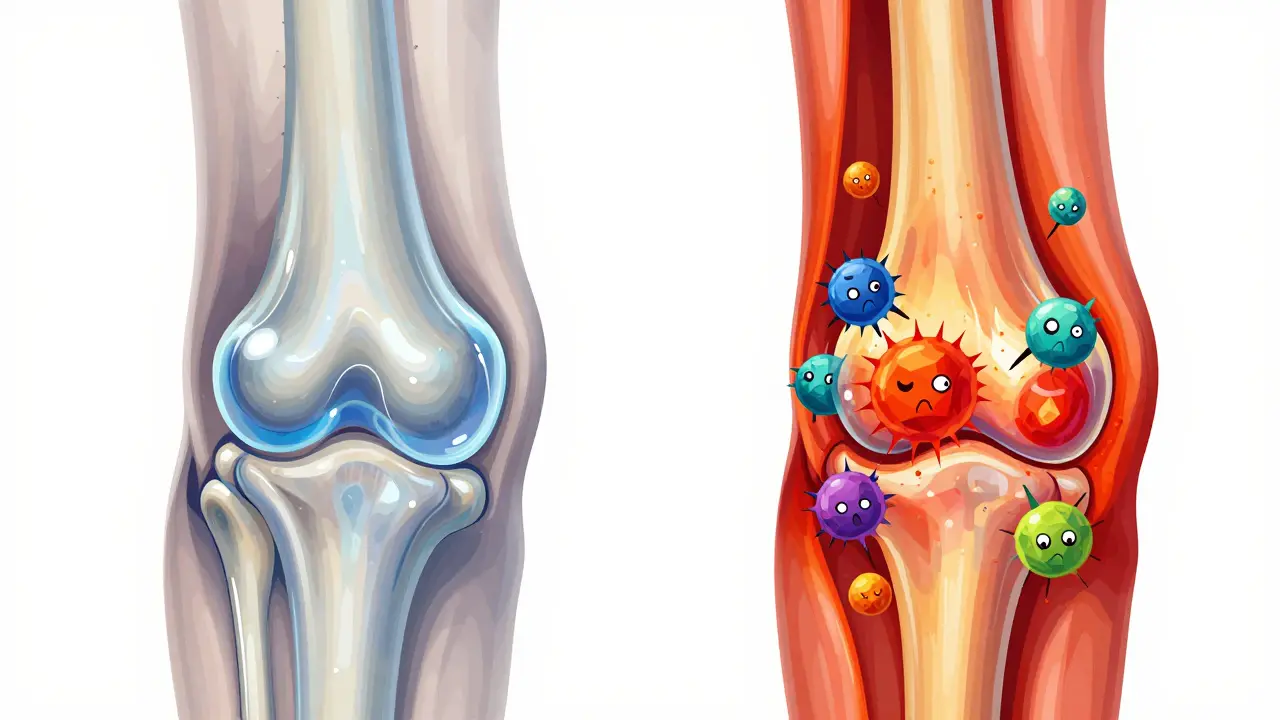
In a healthy joint, the synovium produces a fluid that keeps everything moving smoothly. In someone with RA, the immune system sends antibodies to this lining, causing it to thicken and inflame. This process leads to pain and swelling, but the long-term damage is more severe. Over time, this inflammation eats away at the cartilage and eventually the bone itself.
Unlike osteoarthritis, which is essentially "wear and tear" from years of use, RA is a systemic failure. This means it can affect more than just your joints. About 10-15% of people with RA also develop Sjogren's syndrome, which causes painfully dry eyes and mouth. Because it's a whole-body disease, it can also cause lung inflammation, anemia, and a higher risk of heart disease. It's not just about aching knuckles; it's about managing your total health.
Recognizing the Red Flags
How do you know if it's RA or just a temporary ache? One of the biggest clues is symmetry. If your left wrist is swollen and painful, your right wrist likely is too. Another hallmark is morning stiffness. While a bit of stiffness is common as we age, RA stiffness usually lasts 45 minutes to over an hour. If you find it takes an entire morning just to be able to button your shirt or open a jar, that's a significant warning sign.
Doctors typically use a combination of tools to confirm a diagnosis. They'll look for Rheumatoid Factor (RF) and anti-cyclic citrullinated peptide (anti-CCP) antibodies in your blood. These markers, combined with imaging like X-rays or ultrasounds, help determine if the joint space is narrowing or if bone erosions have already begun.
Understanding Your Treatment Options
The goal of modern treatment is "treat-to-target." This means your doctor doesn't just want you to "feel better"; they want to reach clinical remission or very low disease activity. The first line of defense is usually methotrexate, a traditional biologic therapy precursor known as a conventional DMARD (Disease-Modifying Antirheumatic Drug). It works by suppressing the overactive immune system to slow the disease down.
However, traditional drugs don't work for everyone. That's where biologics come in. Biologics are engineered proteins that act like precision missiles, targeting specific parts of the immune system rather than suppressing the whole thing. While they are more expensive, they can be life-changing. For example, combining a biologic with methotrexate can reduce disease activity by 50% or more in about 60% of patients, compared to only 40% with methotrexate alone.
| Class | How It Works | Common Examples |
|---|---|---|
| TNF Inhibitors | Blocks Tumor Necrosis Factor (inflammation protein) | Adalimumab, Etanercept, Infliximab |
| IL-6 Inhibitors | Blocks Interleukin-6 signaling | Tocilizumab |
| B-cell Inhibitors | Targets and depletes B-lymphocytes | Rituximab |
| T-cell Blockers | Prevents T-cell activation | Abatacept |
The Trade-offs: Benefits vs. Risks
Biologics aren't a magic bullet; they come with real trade-offs. Because they dampen your immune response, you are more susceptible to serious infections. In fact, the risk is roughly 1.5 to 2 times higher than with conventional drugs. There are also concerns about long-term safety, including a slight increase in the risk of lymphoma.
Then there is the financial burden. Annual costs for these drugs can range from $15,000 to $60,000. This creates a massive gap in care, where patients in rural areas or those without comprehensive insurance are far less likely to receive these advanced therapies. The arrival of biosimilars-essentially "generic" versions of biologics-has started to lower costs by 15-20%, but the price tag remains a hurdle for many.

Living with RA: Beyond the Medication
Medicine is only half the battle. Managing RA requires a lifestyle shift. Physical activity is non-negotiable, though it has to be the right kind of activity. The general recommendation is 150 minutes of moderate exercise per week to keep joints flexible and muscles strong. Interestingly, weight management plays a huge role; losing just 5-10% of body weight can drop disease activity by as much as 30% in overweight patients.
The psychological toll is also heavy. Dealing with a chronic illness that steals your ability to do simple tasks-like playing the piano or gardening-can lead to depression and isolation. This is why support networks are so important. Whether it's a local support group or digital communities, sharing strategies for managing "flares" (periods where symptoms worsen) helps patients stay adherent to their medication and maintain a positive outlook.
What the Future Holds
We are moving toward a world of personalized medicine. Instead of the current "trial and error" approach where you try one drug for months to see if it works, researchers are identifying genetic biomarkers. Some new models can predict with 85% accuracy whether a patient will respond well to methotrexate before the first dose is even given.
Newer classes of drugs, like JAK inhibitors (e.g., upadacitinib), are providing options for those who don't respond to biologics. With the push toward early diagnosis and "treat-to-target" strategies, there is a realistic goal to reduce RA-related disability by 40% by 2030. The focus is shifting from simply treating the pain to preserving the joint for a lifetime.
Is rheumatoid arthritis the same as osteoarthritis?
No. Osteoarthritis is a degenerative joint disease caused by the wearing down of cartilage over time (wear and tear). Rheumatoid arthritis is an autoimmune disease where the body's immune system attacks the joint lining, causing inflammation and potential bone destruction regardless of the joint's usage.
How long does morning stiffness last in RA?
In RA, morning stiffness typically lasts 45 minutes or longer, and in many cases, can last over an hour. This is a key diagnostic marker that distinguishes it from non-inflammatory joint pain, which usually resolves more quickly with movement.
What are the side effects of biologic therapies?
The most significant risk is an increased susceptibility to serious infections because these drugs suppress the immune system. Other common side effects include injection site reactions (redness or itching) and, in rare cases, a higher risk of developing certain types of lymphoma.
Can RA be cured?
There is currently no cure for RA, but it can be managed effectively. The goal is to reach clinical remission, where there is no detectable inflammation and the patient feels normal. While the disease is chronic, the right combination of DMARDs and biologics can prevent joint damage and allow patients to lead active lives.
Why are biologics so expensive?
Biologics are complex proteins grown in living cells, making them far more expensive to manufacture than chemically synthesized drugs like methotrexate. The high cost of research, development, and specialized production leads to the steep price tags, though biosimilars are helping to lower these costs.
