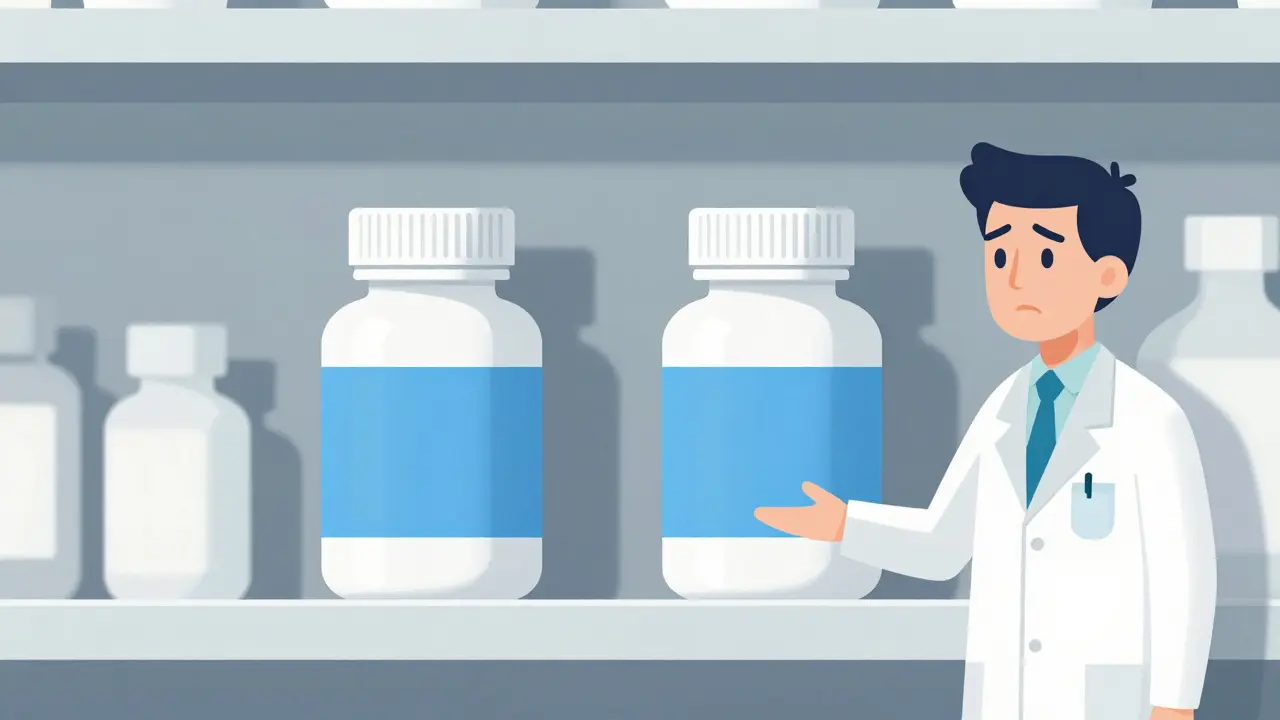
Imagine you are in a busy hospital ward. The nurse picks up a small white bottle. It looks just like the one on the shelf next to it. The label is similar. The name sounds almost identical when spoken quickly over the radio. This isn't a scene from a movie; it is a daily reality for healthcare workers dealing with Look-Alike, Sound-Alike (LASA) medications, which are drugs that share visual or phonetic similarities, leading to potential prescription and dispensing errors. These errors are not just minor mistakes. They represent a significant portion of preventable harm in modern medicine.
You might assume that switching to generic drugs eliminates brand-name confusion. In reality, generics often introduce new risks. When multiple manufacturers produce the same active ingredient, packaging designs can converge. Bottles look alike. Colors match. Names shorten. This creates a perfect storm for error, especially when combined with the inherent similarity of many drug names themselves. Understanding these risks is the first step toward stopping them.
The Hidden Danger of Generic Drug Packaging
We often think of generic drugs as simply cheaper versions of brand-name medicines. While they contain the same active ingredients, their physical presentation varies wildly. Brand-name drugs have distinct, trademarked packaging. Generics, however, must follow regulatory guidelines that prioritize cost-efficiency over unique identification. This leads to what experts call "orthographic similarity"-visual resemblance in shape, color, size, and labeling.
Consider the case of hydroxyzine and hydralazine. Both are common medications. Hydroxyzine treats anxiety and itching. Hydralazine treats high blood pressure. Their names start with "hydro-". Their generic capsules often come in similar-sized bottles with comparable label layouts. A pharmacist scanning a list or a nurse grabbing a bottle in low light might easily mix them up. The consequences? Giving a sedative instead of a blood pressure med, or vice versa, can lead to dangerous drops in blood pressure or unexpected sedation.
This issue is compounded by the sheer volume of generics on the market. With fewer restrictions on packaging aesthetics for generics, different manufacturers may choose similar colors or font styles. A study published in *Pharmacy Practice* in 2021 found that nearly 11% of medication errors were directly attributed to the similar appearance of medications. That is more than one in ten errors caused simply because two drugs looked too much alike.
Why Names Matter: The Phonetic Trap
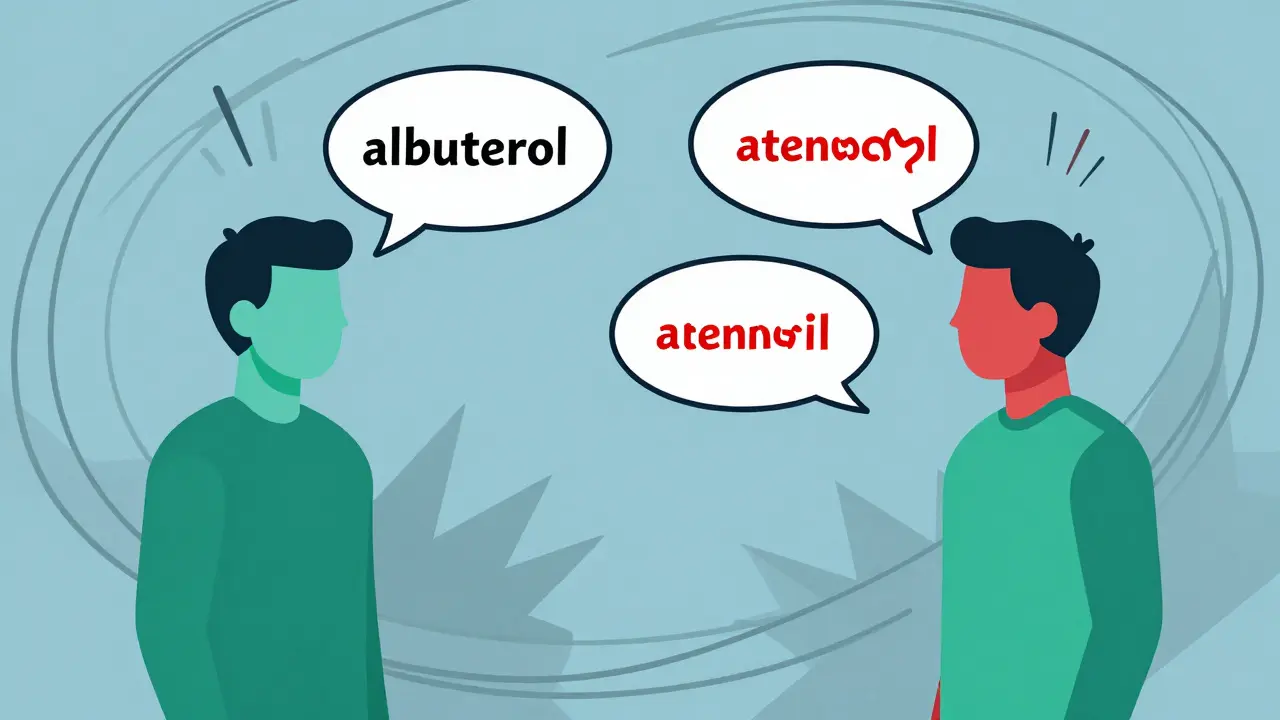
If visual similarity is half the problem, phonetic similarity is the other half. "Sound-alike" errors happen when drug names sound identical or nearly identical when spoken aloud. This is particularly dangerous in verbal orders, phone consultations, or noisy clinical environments.
Take albuterol and atenolol. Albuterol opens airways for asthma patients. Atenolol slows the heart rate for hypertension. Say them out loud quickly. They both end in "-ol". They both have three syllables. In a fast-paced emergency room, a doctor might say "Give me the al-but-ER-ol," and a distracted nurse might hear "ate-NOL-ol." The result? An asthmatic patient receives a beta-blocker, which can constrict airways and worsen breathing. Conversely, a hypertensive patient gets a bronchodilator, which might raise their heart rate dangerously.
Another notorious pair is Valtrex and Valcyte. Both start with "Val-". Both are used for viral infections in immunocompromised patients. But Valtrex (valacyclovir) treats herpes viruses, while Valcyte (valganciclovir) treats cytomegalovirus (CMV). Confusing these two can lead to ineffective treatment or unnecessary side effects. The Institute for Safe Medication Practices (ISMP) maintains a list of nearly 1,000 such confused drug name pairs. These aren't rare anomalies; they are systemic vulnerabilities built into how we name and communicate about drugs.
Where Do Errors Happen?
Medication errors don't happen in a vacuum. They occur at specific points along the "medication use continuum." Understanding where these breaks happen helps us fix them.
- Prescribing: Doctors may type the wrong name into an electronic health record (EHR), especially if auto-complete suggests a similar-sounding drug. Or, they may write a handwritten prescription that is misread. Data from Merative’s 2023 analysis shows that 24% of medication errors originate here.
- Dispensing: Pharmacists pull the wrong bottle from the shelf due to similar packaging or name placement. This is where visual similarity plays its biggest role.
- Administration: Nurses give the wrong drug to the patient. This is the most common point of failure, accounting for 68% of errors according to recent studies. Verbal orders and bedside checks are critical here.
In each stage, human fatigue, distraction, and environmental noise amplify the risk. A tired pharmacist working a double shift is more likely to grab the wrong generic bottle. A stressed nurse in a chaotic ER is more likely to mishear a drug name. These are not failures of individual competence; they are failures of system design.
Strategies That Actually Work
So, how do we stop this? Blaming individuals doesn’t work. We need structural changes. Here are evidence-based strategies that healthcare systems are implementing with success.
Tall Man Lettering
This simple typographic trick saves lives. Instead of writing "prednisone" and "prednisolone" in all lowercase or standard caps, hospitals use mixed case to highlight differences: predniSONE vs. predniSOLONE. By capitalizing the differing letters, the eye catches the distinction faster. A 2020 study in the *Journal of Patient Safety* showed this method reduced LASA errors by 67% across a 12-hospital network. It’s cheap, easy to implement, and highly effective.
Physical Separation
Don’t put LASA drugs next to each other on the shelf. If hydroxyzine and hydralazine are stored side-by-side, the chance of error skyrockets. Pharmacies now intentionally separate these drugs by several feet or even different shelves. Some facilities use colored bins or labels to create visual barriers between high-risk pairs.
Barcode Scanning and AI Alerts
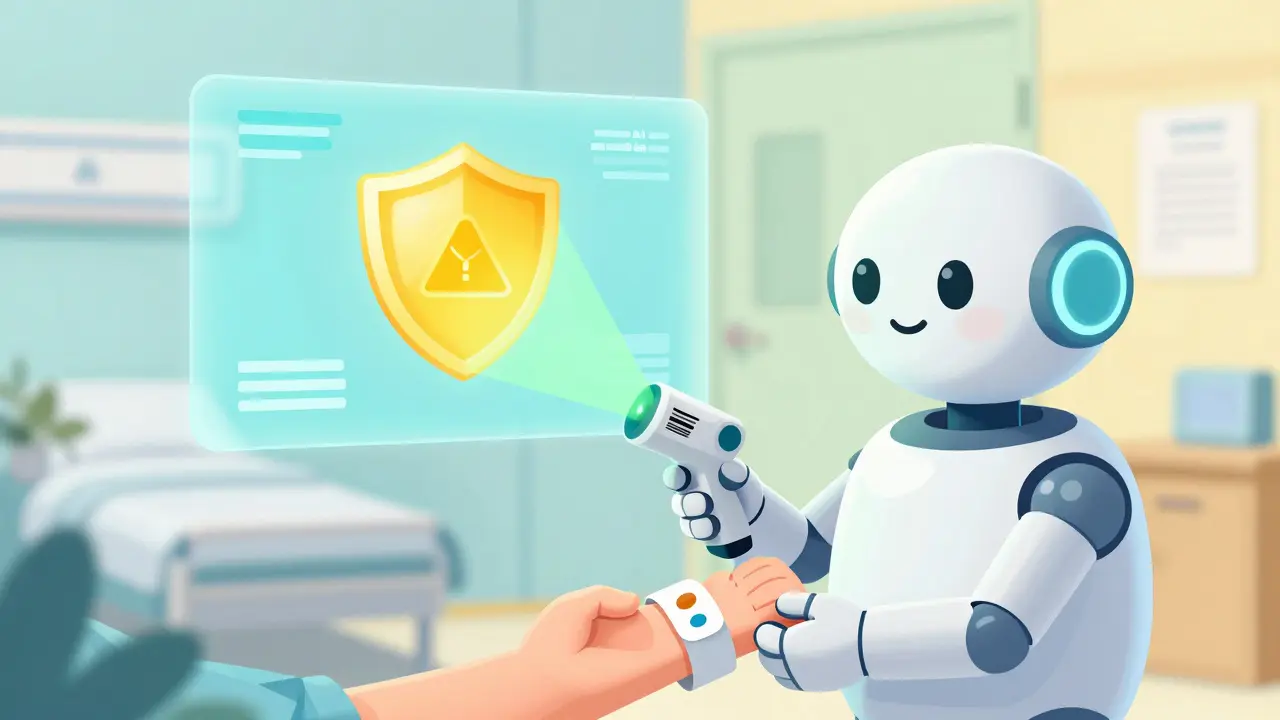
Technology is our best defense. Barcode scanning at the bedside ensures the right drug goes to the right patient at the right time. More advanced systems use Artificial Intelligence within Electronic Health Records (EHRs) to flag potential LASA conflicts before a prescription is even finalized. A 2023 study in the *Journal of the American Medical Informatics Association* found that AI-powered decision support reduced LASA errors by 82% in a six-month trial. The system flagged 98.7% of potential errors with very few false alarms.
Standardized Communication
Hospitals are adopting "read-back" protocols. When a doctor gives a verbal order, the nurse repeats it back verbatim. For high-risk drugs, some institutions require using the full generic name plus the brand name, or adding the indication (e.g., "albuterol for asthma"). This extra second of verification prevents catastrophic misunderstandings.
| Strategy | How It Works | Effectiveness | Implementation Cost |
|---|---|---|---|
| Tall Man Lettering | Capitalizes differing letters in drug names (e.g., dexamethasone vs. dexamETHAsone) | Reduces errors by ~67% | Low (software update) |
| Physical Separation | Moves LASA drugs apart on shelves | Significant reduction in dispensing errors | Low (rearranging stock) |
| AI Clinical Decision Support | EHR flags potential LASA matches during prescribing | Reduces errors by ~82% | High (software integration) |
| Barcode Scanning | Verifies drug-patient match at administration | Catches most administration errors | Medium (hardware + training) |
The Role of Regulatory Bodies
Prevention isn't just up to hospitals. Governments and agencies play a crucial role. The World Health Organization (WHO) launched the "Global Patient Safety Challenge: Medication Without Harm" to tackle these issues head-on. Their 2022 guidelines emphasize designing systems that intercept errors before they reach the patient.
In the United States, the Food and Drug Administration (FDA) has become stricter. In 2021, they rejected 34 drug name applications specifically because of LASA concerns. That was 18% of all rejections that year. Similarly, the European Medicines Agency introduced mandatory name similarity assessments in 2019, which cut new LASA pairs entering the market by 22%. These regulatory hurdles force pharmaceutical companies to think about safety during the naming process, not after launch.
However, challenges remain. Generic manufacturers are not always required to change packaging if a drug is reformulated. And global standards for drug naming are still fragmented. Until we have universal rules for both naming and packaging, LASA errors will persist.
What Patients Can Do
You are part of the safety chain too. Never assume your medication is correct without checking. Ask your pharmacist to explain what each pill does. If you get a new generic that looks different from your previous supply, ask why. Is it the same strength? Same manufacturer? Keep a current list of your medications and share it with every provider you see. If something feels off-if a pill looks smaller, larger, or a different color-call your pharmacy immediately. Your vigilance can catch what the system misses.
Looking Ahead
The future of LASA error prevention lies in smarter technology and stronger culture. AI will become more sophisticated, predicting errors before they happen. Blockchain could track drug packaging from factory to pharmacy, ensuring authenticity and consistency. But technology alone isn't enough. We need a cultural shift where healthcare providers feel safe reporting near-misses without fear of blame. Only then can we build systems that learn from every mistake and protect every patient.
What are look-alike, sound-alike (LASA) drugs?
LASA drugs are medications that have names or packaging that are visually or phonetically similar to other drugs. This similarity can cause healthcare providers to confuse them, leading to prescription, dispensing, or administration errors. Examples include hydroxyzine/hydralazine (look-alike) and albuterol/atenolol (sound-alike).
Are generic drugs more prone to LASA errors?
Yes, generics can be more prone to visual LASA errors because multiple manufacturers may produce similar-looking packaging for the same active ingredient. Unlike brand-name drugs with unique trademarks, generic packaging often prioritizes cost-efficiency, leading to convergence in bottle shape, color, and label design.
How common are LASA medication errors?
LASA errors account for approximately 25% of all medication errors globally. According to the WHO and ISMP, they are one of the leading causes of preventable patient harm, with thousands of incidents reported annually in healthcare systems worldwide.
What is Tall Man Lettering?
Tall Man Lettering is a safety strategy where differing letters in similar drug names are capitalized to enhance visual distinction. For example, predniSONE and predniSOLONE. Studies show it can reduce LASA errors by up to 67% by helping staff quickly spot the difference between drug names.
Can technology prevent LASA errors?
Yes, technology plays a major role. Barcode scanning at the point of administration verifies the right drug and patient. AI-powered clinical decision support systems in Electronic Health Records (EHRs) can flag potential LASA conflicts during prescribing, reducing errors by up to 82% in some studies.
What should I do if my generic medication looks different?
If your generic medication looks significantly different in size, shape, or color from your previous supply, contact your pharmacist immediately. They can verify if it is the same active ingredient and strength, or if there has been a substitution error. Never ignore physical changes in your medication.

KESHAV KUMAR
Another day, another generic bottle that looks like its twin brother from hell. 😒
ankit agarwal
The epistemological crisis inherent in Look-Alike Sound-Alike (LASA) nomenclature is not merely a logistical inconvenience but a profound failure of semiotic clarity within the healthcare apparatus. When we consider the ontological status of a drug name as a signifier for a specific pharmacological intervention, the collapse of distinction between 'hydroxyzine' and 'hydralazine' represents a catastrophic breakdown in the symbolic order. This is exacerbated by the commodification of pharmaceuticals, where generic manufacturers, driven by capitalist imperatives of cost-efficiency, erode the unique visual identity of brand-name entities, leading to a homogenization of packaging that invites error. The systemic negligence here is palpable; we are essentially gambling with human lives due to an inability or unwillingness to enforce rigorous orthographic and phonetic differentiation protocols. It is imperative that we recognize this not as individual malpractice, but as a structural violence embedded in our regulatory frameworks. We must advocate for a paradigm shift where safety supersedes profit, utilizing Tall Man Lettering and AI-driven decision support not as optional enhancements, but as non-negotiable standards of care. Until then, we remain complicit in a system that prioritizes convenience over cognition.
Stephanie Cree
It is absolutely scandalous!!! 🤬 How can anyone be so careless?!? I cannot believe that hospitals are still making these basic errors in 2024!!! It is literally negligence on a massive scale!!! People are dying because of laziness!!! You should all be ashamed of yourselves!!! 😡💀
Bruno Sarri
I hear your frustration, and it’s completely valid to feel angry about this. However, it’s important to remember that most of these errors aren’t caused by malicious intent or pure laziness, but rather by systemic fatigue and design flaws that affect everyone involved. Nurses and pharmacists are often working under immense pressure, and blaming them individually doesn’t solve the root cause. Instead, we should focus on supporting these healthcare workers by advocating for better systems, like the barcode scanning and AI alerts mentioned in the post. By shifting the blame from individuals to the system, we create a safer environment where mistakes can be caught before they reach patients. Let’s work together to push for these changes rather than tearing down the people trying their best in difficult conditions.
Amy Bogdahn
You sound naive. They know exactly what they are doing. Stop coddling them.
Dez Johnston
I appreciate the perspective on systemic issues. It’s easy to overlook how environmental factors contribute to these mistakes. I’ve seen firsthand how chaotic ER environments can lead to miscommunication, even among experienced staff. Implementing standardized communication protocols like read-backs seems crucial. It’s a small step, but it adds a layer of verification that can catch errors before they become critical. I think more facilities need to adopt this without hesitation.
Ashley Jacelyn
This article is such a relief to read! 🌟 It gives me hope that there are actual solutions being implemented. I always worry when I pick up my prescriptions, especially since my last generic looked totally different from the previous one. Knowing that things like Tall Man Lettering and AI alerts are helping reduce errors makes me feel much safer. Thank you for sharing this informative piece! 💖
Sonam Norbu
Why are we relying on foreign studies and global guidelines? Our domestic regulations are sufficient if properly enforced. The FDA has already rejected numerous drug names for LASA concerns. We need to stop looking to the WHO and other international bodies for answers. American healthcare providers are competent; the issue is lack of accountability, not lack of technology. Focus on enforcing existing laws rather than importing bureaucratic red tape from overseas. 🇺🇸
Koushiki Behera
While national pride is understandable, medical safety is a universal human right that transcends borders. 🌍 The fragmentation of global standards is precisely why LASA errors persist across countries. Collaborating with international bodies like the WHO allows us to share best practices and learn from each other’s successes and failures. For instance, the European Medicines Agency’s mandatory name similarity assessments have proven effective, and adopting similar measures globally could significantly reduce harm. We should embrace a collective approach to patient safety, recognizing that health challenges do not respect political boundaries. Unity in healthcare innovation benefits everyone, regardless of nationality. ✨🙏