Every year, millions of Americans take generic drugs. They’re cheaper, widely available, and approved by the FDA. But when something goes wrong - a strange side effect, a drug that just doesn’t seem to work like it used to - who hears about it? That’s where MedWatch comes in. It’s the U.S. Food and Drug Administration’s main system for collecting safety reports on medicines, including generics. And while it’s been around since 1993, its role in tracking generic drug safety has become more critical than ever.
What Is MedWatch, Really?
MedWatch isn’t a fancy lab or a government database you can’t access. It’s a simple, online reporting tool anyone can use. Doctors, pharmacists, nurses, and even patients can report problems with medications - including generic ones. The system collects reports of side effects, allergic reactions, therapeutic failure, and even product defects like pills that crumble or tablets that look different.
The data flows into the FDA’s Adverse Event Reporting System (FAERS), which holds over 9 million reports as of 2023. Each report includes details like the drug name, what happened, when it happened, and who reported it. For generics, this is where things get tricky.
Why Generics Are Hard to Track
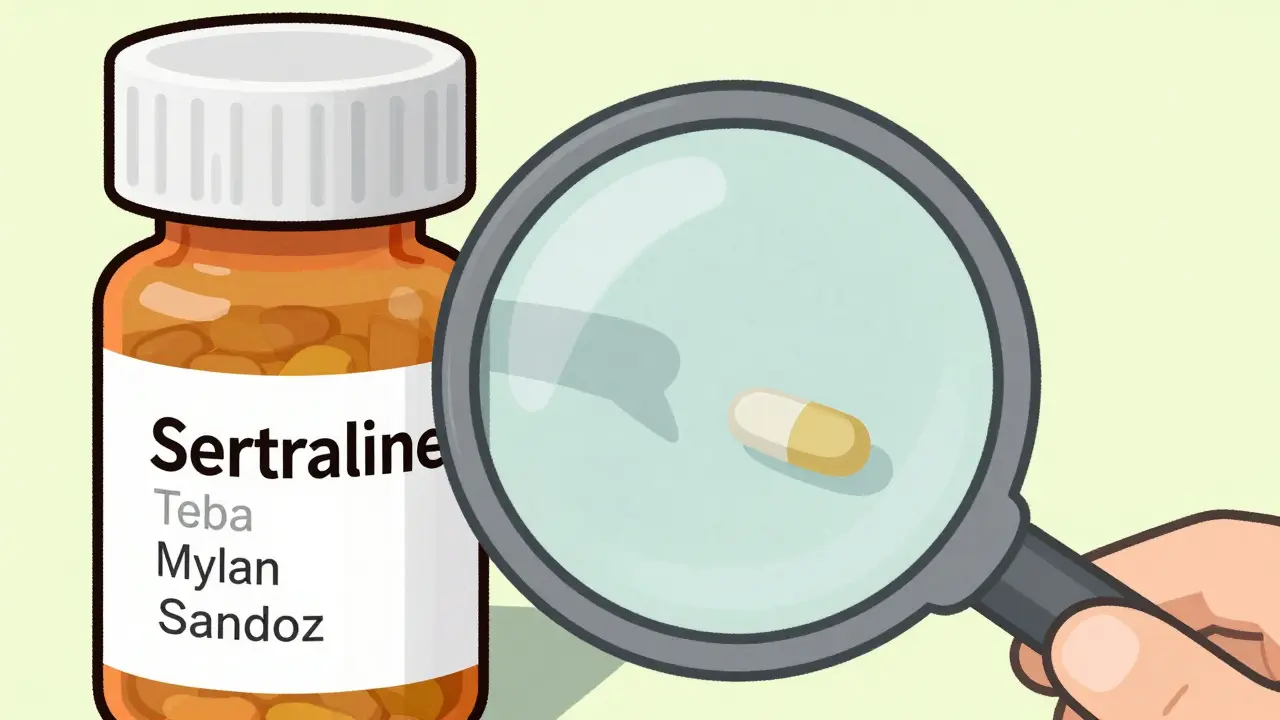
Generics make up about 90% of all prescriptions filled in the U.S. But in MedWatch reports, only about one in three includes the name of the actual manufacturer. Why? Because most people don’t know it. When you pick up a bottle of generic sertraline at the pharmacy, the label says "sertraline hydrochloride" - not "Made by Teva" or "Produced by Mylan."
This creates a blind spot. If 50 different companies make generic levothyroxine, and patients report that one version causes heart palpitations, the FDA can’t tell which one unless the reporter writes down the National Drug Code (NDC) - a 10-digit number on the packaging. Only 28% of consumer reports include this. Even many healthcare workers skip it because they’re rushed or assume the generic name is enough.
That’s a problem because not all generics are the same. While they must meet FDA bioequivalence standards (80-125% of the brand drug’s absorption), differences in inactive ingredients - like fillers, dyes, or coatings - can affect how a drug works for some people. A 2022 study found that patients often report "therapeutic inequivalence" - meaning the generic just doesn’t feel the same as the brand they used to take.
How Reports Are Made - And Why They Fall Short
There are two ways to report: online at www.fda.gov/MedWatch or by filling out Form FDA 3500. The online form is simple. You pick "Drug" as the product type, then type in the name. But here’s the catch: if you type "generic sertraline," the system doesn’t ask you which company made it. There’s no dropdown. No field. Just a blank space.
According to FDA data from 2020-2024, only 32.7% of reports involving generics included the manufacturer name. Compare that to brand-name drugs: 89.4% of reports named the maker. That gap isn’t because people don’t care - it’s because the system doesn’t make it easy.
Pharmacists know this. A 2024 survey found that 78% of them find it difficult to distinguish between generic manufacturers in the reporting system. One pharmacist in Ohio submitted 17 reports over three years about generic levothyroxine causing fatigue. Only two got a response. But one of those led to a label change. That’s the power of a good report - if it gets through.
What Gets Reported - And What Doesn’t
The FDA breaks reports into categories. For generics, the most common issues are:
- Therapeutic failure - the drug doesn’t control symptoms like it used to (e.g., seizures returning after switching to a new generic epilepsy drug)
- Unexpected side effects - new nausea, dizziness, or rash that wasn’t listed
- Product quality - pills that look different, don’t dissolve, or have an odd smell
- Switching reactions - symptoms appear after switching from one generic to another
But here’s the thing: if you’re a patient and you feel off after switching to a generic, you might not think to report it. You might blame stress, aging, or bad luck. You might not even know you’re allowed to report it. That’s why experts estimate that less than 1% of adverse events are ever reported.
And even when reports come in, the FDA can’t always connect the dots. A 2023 analysis showed that only 4.7% of all drug-related reports mentioned "generic" as a factor. But we know generics are used in nearly every prescription. That gap suggests a massive underreporting problem.
How the FDA Is Trying to Fix It
The FDA isn’t ignoring this. In 2024, they rolled out a new algorithm to better identify generic drugs in FAERS. It uses patterns in drug names, manufacturer codes, and even spelling variations to guess which company made the drug - even if the reporter didn’t say. Early tests showed it was 92% accurate.
They’ve also updated their reporting instructions. Now, if you’re reporting a generic, they tell you to write: "generic sertraline (Teva)" - not just "sertraline." They’ve added Spanish-language forms and training modules for pharmacists. And in 2023, the Generic Drug User Fee Amendments (GDUFA) III plan pledged to improve generic safety tracking.
The biggest change is coming by 2026. The FDA plans to link MedWatch directly to electronic health records. That means when a doctor prescribes a generic, the system could automatically pull the NDC and manufacturer from the pharmacy’s digital record. No more guessing. No more missed details.
What You Can Do - Even If You’re Not a Doctor
You don’t need a medical degree to help. If you’ve had a bad reaction to a generic drug, here’s how to report it right:
- Check the bottle. Find the 10-digit NDC number. It’s usually on the side or bottom.
- Write down the manufacturer name - it’s often printed right next to the NDC.
- Go to www.fda.gov/MedWatch and click "Report a Problem."
- In the drug name field, type: generic [drug name] ([manufacturer]). Example: "generic sertraline (Teva)"
- Describe exactly what happened: "After switching from brand Zoloft to generic sertraline, I developed severe headaches and insomnia within 48 hours. I’ve been on this dose for 6 years with no issues before."
- Include dates: when you started the new generic, when symptoms began, and when they ended.
Don’t worry if you don’t know the manufacturer. Just write "generic sertraline" - it’s better than nothing. But if you can get the name, you’re helping the FDA find patterns.
What Happens After You Report
Reports go into FAERS. They’re not investigated right away. But if 10 or 20 people report the same issue with the same generic - say, a sudden drop in thyroid levels after switching to a new batch - the FDA starts looking. They might request data from the manufacturer. They might test the product. They might update the label to warn about the risk.
That’s what happened with a specific generic version of bupropion XL in 2022. Multiple reports of reduced effectiveness led to an FDA investigation. By late 2023, the label was changed to include a warning about possible therapeutic failure in some patients.
It takes time. But every report counts.
Why This Matters
Generics save the U.S. healthcare system billions. But safety isn’t optional. If we treat generics as "just as good" without tracking their real-world performance, we risk letting hidden problems slide. The system isn’t perfect. The data is messy. But with better reporting - from both professionals and patients - we can make sure generics are not just affordable, but safe for everyone.
Can I report a side effect from a generic drug even if I’m not a healthcare professional?
Yes. Anyone - patients, family members, caregivers - can report adverse events through MedWatch. You don’t need to be a doctor or pharmacist. The FDA encourages patient reports because they often capture real-world experiences that clinicians might miss.
Why doesn’t the MedWatch form ask for the generic manufacturer name?
The online form was designed for simplicity, not specificity. It assumes users will type the manufacturer in the drug name field. The FDA recommends writing "generic [drug name] ([manufacturer])" in the drug name box. A 2024 update to their guidance clarified this, but the form itself hasn’t been redesigned yet. The upcoming integration with electronic health records will fix this automatically.
Do all generic versions of a drug have the same safety profile?
By law, generics must be bioequivalent to the brand drug - meaning they deliver the same active ingredient at the same rate. But inactive ingredients (like fillers, dyes, or coatings) can vary between manufacturers. For most people, this doesn’t matter. But for some - especially those with allergies, sensitivities, or narrow therapeutic windows - these differences can cause side effects or reduced effectiveness.
How long does it take for the FDA to act on a MedWatch report?
There’s no fixed timeline. Most reports are reviewed within weeks, but action takes longer. If a pattern emerges - say, 50+ reports linking a specific generic to a rare side effect - the FDA may investigate further. Label changes, like those for bupropion XL in 2023, can take 6-18 months after the first reports are collected.
Are there other countries with better systems for tracking generic drug safety?
Yes. The European Medicines Agency’s EudraVigilance system, updated in 2022, requires mandatory manufacturer identification in every report. This makes it easier to trace safety signals to specific generic producers. The U.S. MedWatch system is still voluntary and lacks that level of detail - though the FDA is working to close the gap.

Chima Ifeanyi
The FDA's MedWatch system is a classic example of regulatory capture masquerading as public safety. You're telling me we're relying on a voluntary, non-structured, non-standardized reporting mechanism for 90% of pharmaceutical consumption? This isn't pharmacovigilance-it's a statistical black hole. The bioequivalence paradigm is fundamentally flawed when applied to complex pharmacokinetic profiles. Inactive ingredients aren't inert; they're pharmacodynamic modulators. And yet, the system doesn't even capture batch numbers. This is institutional negligence dressed up as bureaucratic efficiency. We need mandatory NDC embedding at the EHR level, not some half-baked 2026 patch. We're playing Russian roulette with public health.
Jonah Mann
I just reported a weird reaction to my generic metformin last week-like, i was feelin’ dizzy and kinda nauseous after switiching. i didnt even know you could report this stuff. the form was kinda confusing, and i just typed "generic metformin" cause i didnt know the maker. but i found the ndc on the bottle! its mylan. so i went back and edited it. i think i did it right? anyone else have this happen? lol
THANGAVEL PARASAKTHI
Hey, just wanted to say thank you for writing this. I'm a pharmacist in Chennai, and we see this every day. Patients come in saying, 'This generic doesn't work like the last one.' We don't have MedWatch here, but we log everything manually. The key is training. If the patient knows to look for the NDC and the manufacturer name-printed small, but there-it changes everything. We teach them: 'It's not the drug. It's the maker.' And yes, sometimes the coating on the pill changes how fast it dissolves. That's not a myth. It's chemistry.
Frank Baumann
I can't believe this is still a thing. I've been on generic levothyroxine for 12 years. I switched from one brand to another last year-same dose, same label-and suddenly I was in bed for three weeks. Fatigue. Brain fog. My heart was racing. I went to my endocrinologist and she said, 'It's probably just stress.' STRESS? I was fine on the last version. I reported it. I got an auto-reply. No follow-up. I called the FDA hotline. They transferred me to voicemail. This isn't healthcare. This is a lottery where your life is the ticket. And the FDA is the guy who lost the ticket and says, 'I'm sure it was a winner.'
Chelsea Deflyss
So let me get this straight-you’re telling me people just type "generic sertraline" and expect the FDA to magically know which company made it? Like, are we really this clueless? I mean, if you can’t read a pill bottle, maybe you shouldn’t be taking meds at all. And don’t get me started on the 78% of pharmacists who can’t figure it out. That’s not incompetence, that’s negligence. You want safety? Start by making manufacturers put the NDC on the front of the bottle in neon green. And maybe stop letting Walmart run pharmacies.
Tricia O'Sullivan
Thank you for this thorough and meticulously researched exposition. The systemic underreporting of generic adverse events is indeed a critical public health vulnerability. I concur with the assertion that the absence of mandatory manufacturer identification in the reporting interface constitutes a structural flaw. The European EudraVigilance model, with its embedded pharmacovigilance codes and real-time manufacturer linkage, offers a compelling template. The U.S. system, by contrast, operates on an antiquated assumption of patient literacy and recall accuracy-both of which are demonstrably unreliable. I hope the EHR integration in 2026 is implemented with rigorous validation protocols.
Scott Conner
I read this whole thing. Honestly, I didn’t know any of this. I just take my generic meds and assume they’re the same. But now I’m wondering-how many people have had bad reactions and just thought it was them? I switched to a new generic of my blood pressure med last month and I’ve been lightheaded. I thought I was dehydrated. Maybe I should report it? But I don’t even know who made it. The bottle just says 'teva' in tiny letters. Is that enough?
Alex Ogle
I’ve been tracking this for years. I work in clinical data analysis. The FAERS database is a mess. You’ve got 9 million reports, but 60% of them are duplicates, incomplete, or misclassified. The FDA’s new algorithm? It’s a band-aid. It guesses manufacturers based on spelling variants-'Teva' vs 'TevaPharma' vs 'Teva, LLC'-but what about the 30% of reports that just say 'generic'? They’re invisible. And here’s the kicker: the system doesn’t correlate with pharmacy dispensing logs. So if 500 people in Ohio get the same generic from the same batch, and 30 report palpitations, the algorithm won’t connect the dots because the pharmacy data is siloed. We need integrated national pharmacovigilance. Not a website. A network.
Marie Fontaine
YESSSS this is so important!! 😊 I switched to a new generic of my anxiety med and started having panic attacks outta nowhere. I thought I was losing my mind. Then I remembered the bottle had 'Actavis' on it. I reported it on MedWatch and got an email back in 2 days saying 'thank you for your feedback'-but I also posted on a patient forum and 12 other people had the SAME EXACT reaction! We all had the same manufacturer. I’m telling you-your voice MATTERS. Don’t be shy! Just write 'generic sertraline (Actavis)' and describe what happened. The FDA listens when enough people talk. 💪❤️
Tatiana Barbosa
The structural bias in MedWatch is systemic. The assumption that patients can identify manufacturers ignores socioeconomic and literacy disparities. Many don’t have access to the packaging after leaving the pharmacy. Others can’t read the fine print. The system is designed for the middle-class, English-speaking, tech-literate patient. That’s not equity. That’s exclusion. We need a parallel reporting channel via community pharmacies, community health centers, and telehealth platforms-with automated NDC extraction. The technology exists. The will doesn’t. And until we acknowledge this, we’re not fixing safety-we’re just collecting data from the privileged.
Susan Kwan
Oh, so now we’re blaming patients for not reading the tiny print on the pill bottle? That’s rich. You think a 72-year-old on fixed income, who gets their meds from a 99-cent store, is going to memorize NDC codes? The FDA could’ve built this system right in 2005. They didn’t. Now they’re asking for 'better reporting' like it’s a public service announcement. Meanwhile, the generic manufacturers lobby against mandatory labeling. This isn’t a reporting problem. It’s a corruption problem. Fix the system. Don’t lecture the people who just want to get better.