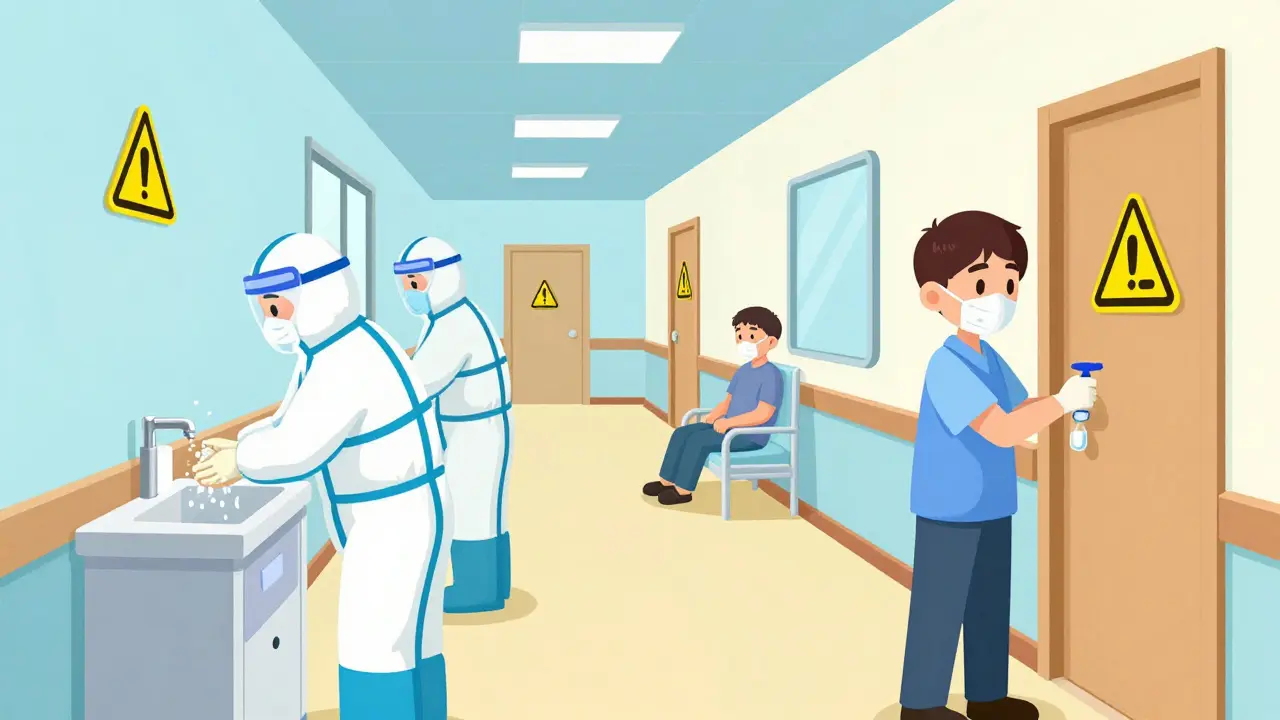
When a norovirus outbreak hits a nursing home, hospital, or even a school cafeteria, things can spiral fast. One person gets sick. Then two. Then ten. Within hours, the halls are filled with the sound of vomiting, the smell of bleach, and the quiet panic of staff trying to keep up. This isn’t a scene from a movie. It’s happening right now, every winter, in places like Brisbane, Melbourne, and beyond. Norovirus doesn’t care if you’re young or old, healthy or frail. It just wants to spread - and it’s terrifyingly good at it.
Why Norovirus Is So Dangerous
Norovirus isn’t just a bad stomach bug. It’s one of the most contagious viruses on the planet. You only need 18 viral particles to get infected. That’s less than a grain of salt. One person with norovirus can shed up to 10 billion virus particles in a single bowel movement. And once it lands on a doorknob, a countertop, or a salad bowl, it can survive for up to 12 days - even after cleaning.
It’s not just about vomiting and diarrhea. The real danger is what happens next: dehydration. Especially in older adults, babies, and people with weak immune systems. Their bodies can’t hold onto fluids the way a healthy adult’s can. A 75-year-old with norovirus might go from feeling fine to needing an IV in less than 12 hours. And if they’re in a long-term care facility? That’s when outbreaks turn into tragedies. A single outbreak can cost a nursing home between $5,000 and $15,000 in extra staffing, cleaning, and lost revenue. Some patients don’t just get sick - they die from complications.
How It Spreads (And Why Your Hand Sanitizer Won’t Help)
Norovirus doesn’t need to be sneezed or coughed. It spreads through contact. Sixty-two percent of outbreaks happen because someone touched a surface - or a person - who was infected. Twenty-three percent come from food, especially ready-to-eat items like salads, sandwiches, or shellfish. Ten percent spread from dirty surfaces. Five percent from contaminated water.
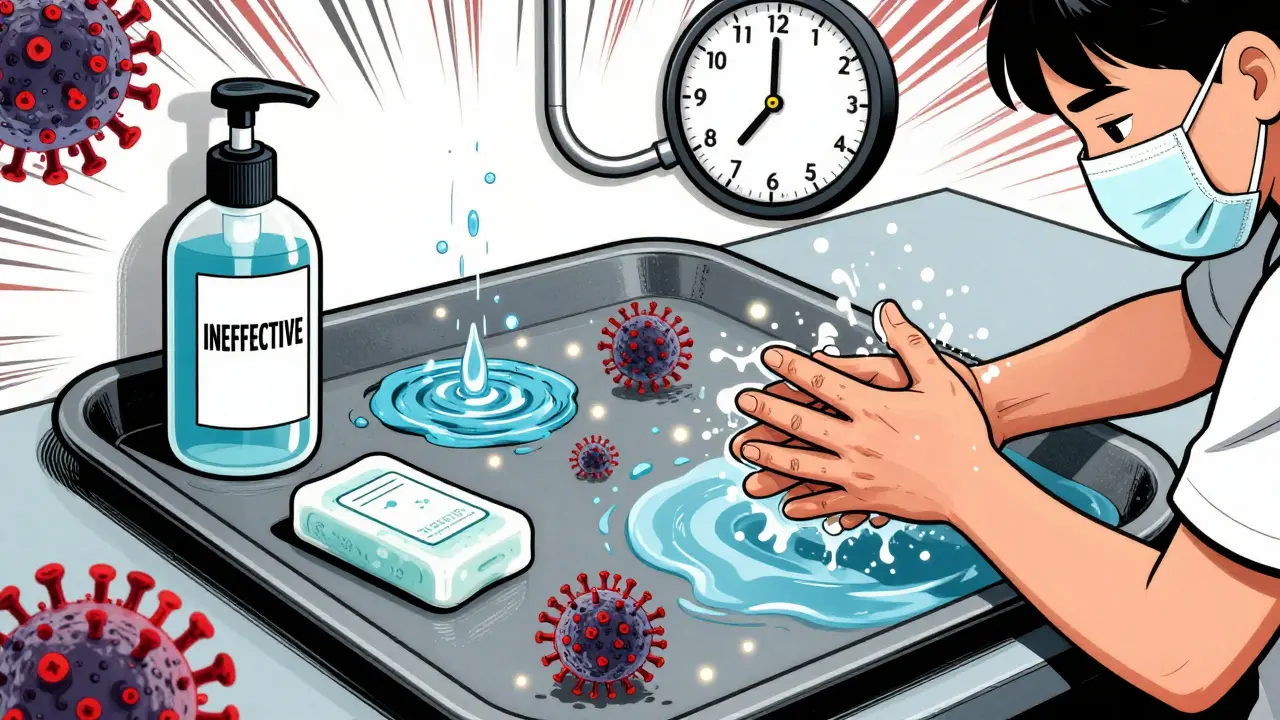
Here’s the part most people get wrong: alcohol-based hand sanitizers don’t kill norovirus. That’s not a myth. That’s science. The CDC has been clear since 2011: soap and water are the only reliable defense. You need to wash your hands for at least 20 seconds - the time it takes to sing "Happy Birthday" twice. And you need to do it after using the bathroom, before eating, and after cleaning up vomit or diarrhea. No shortcuts.
Even if you feel fine, you might still be spreading it. Research shows that 30% of infected people never show symptoms - but they’re still shedding the virus. That’s why, during an outbreak, you can’t just wait for sick people to get better. You have to assume everyone exposed is a potential carrier.
What to Do When an Outbreak Starts
If you’re in charge of a facility - whether it’s a hospital, aged care home, or daycare - here’s what you must do immediately:
- Isolate anyone with vomiting or diarrhea. Put them in a single room if possible. If not, group them together away from others. Don’t move asymptomatic people - they might already be infected.
- Stop all group activities. No dining halls, no group therapy, no bingo. Cancel everything until 48 hours after the last person’s symptoms end.
- Exclude food handlers. Anyone who handles food must stay home for at least 48 hours after symptoms stop. In healthcare settings, extend that to 72 hours. No exceptions.
- Restrict visitors. Only allow essential visitors - and make sure they wash their hands before entering and leaving. Educate them on symptoms. A visitor who doesn’t know they’re sick can start a whole new chain of infection.
And don’t forget the staff. During outbreaks, handwashing compliance drops by 25-30% because everyone’s overwhelmed. Place handwashing stations outside every affected unit. Put up signs. Make it easy. Because if your staff can’t wash their hands properly, the outbreak won’t stop.
Cleaning Isn’t Enough - You Need the Right Cleaner
Most commercial cleaners don’t touch norovirus. You need something stronger. The CDC recommends a bleach solution: 5 to 25 tablespoons of household bleach per gallon of water. That’s not a suggestion. That’s the minimum. Spray it on door handles, bed rails, toilet seats, sinks, and any surface that might have been touched. Let it sit for at least 10 minutes before wiping. Don’t just wipe - disinfect.
For terminal cleaning after an outbreak, some facilities now use hydrogen peroxide vapor systems. These machines fog an entire room with vapor and kill 99.9% of the virus. They’re expensive, but in high-risk settings, they’re worth it. And if you’re cleaning up vomit? Wear gloves. Wear a mask. Cover the mess with paper towels before cleaning. Don’t sweep or vacuum - that just spreads the virus into the air.
Hydration: The Lifesaving Step Everyone Forgets
When someone has norovirus, they lose fluids fast. Vomiting. Diarrhea. Sweating. Fever. If they’re not drinking, they’ll dehydrate. And dehydration can kill.
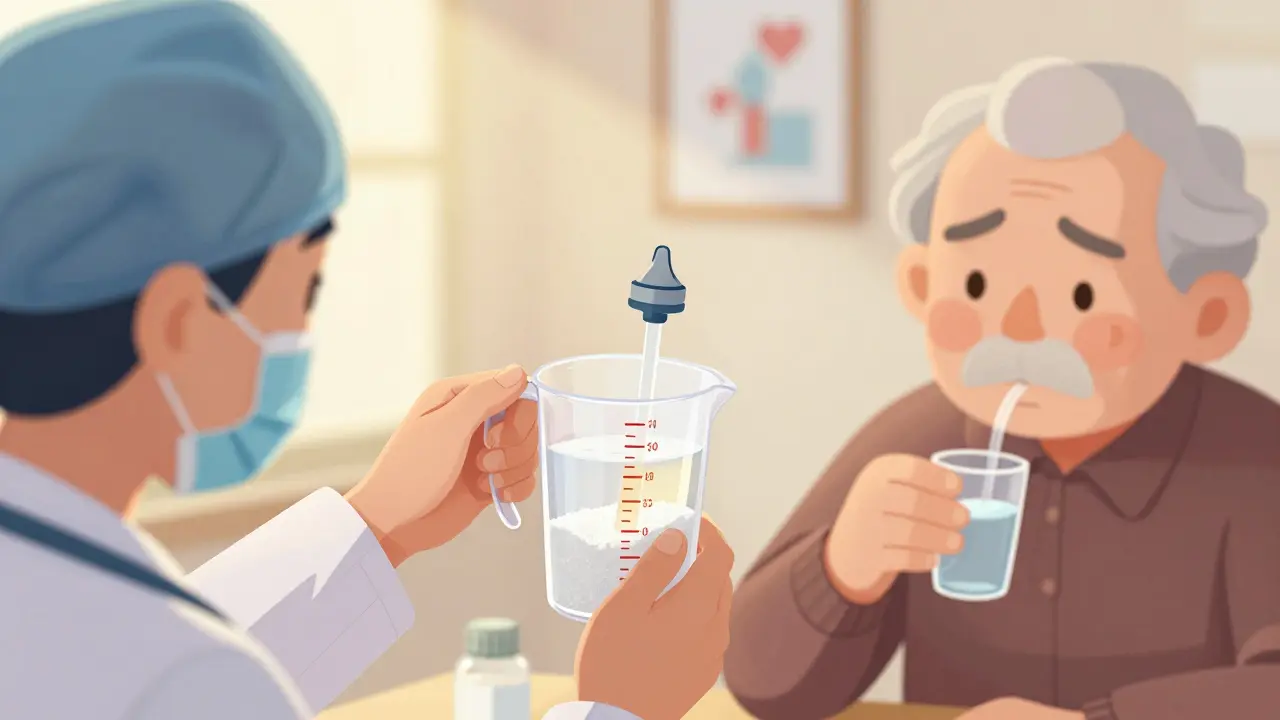
The first line of defense? Oral rehydration solution (ORS). It’s not just water. It’s a mix of salt, sugar, and potassium - exactly what your body loses. WHO standards say it should have 50-90 mmol/L sodium, 75-100 mmol/L glucose, and 20-25 mmol/L potassium. You can buy pre-made ORS packets at pharmacies. Or make your own: 1 liter of clean water, 6 teaspoons of sugar, and half a teaspoon of salt. Stir well. Give small sips every 10 minutes.
For babies: Give 50-100 mL after each episode of vomiting or diarrhea. For elderly patients: Check for dry mouth, sunken eyes, low urine output, or confusion. These are red flags. Don’t wait for them to say they’re thirsty - older adults lose their thirst sense. Check every 4-6 hours.
If someone can’t keep fluids down, or they’re showing signs of severe dehydration - dizziness, rapid heartbeat, no urine for 12 hours - get them to a hospital. IV fluids with normal saline or lactated Ringer’s are needed. Start with a 20 mL/kg bolus. That’s about 1.5 liters for an average adult. Don’t delay. Every hour counts.
What’s Coming Next
There’s hope on the horizon. Takeda’s norovirus vaccine showed 46.7% effectiveness in phase 2 trials in 2022. It’s not perfect - but it’s a start. FDA approval could come by 2025. Until then, we’re stuck with the basics: wash hands, clean surfaces, hydrate patients, and isolate the sick.
And remember: no single fix works. Not hand sanitizer. Not disinfectant wipes. Not even bleach alone. You need all of it - together. That’s the only way to stop it.
How long does norovirus last in a person?
Symptoms usually last 12 to 60 hours, but people can keep spreading the virus for at least 48 hours after they feel better. In some cases - especially in young children, the elderly, or those with weak immune systems - the virus can be shed for weeks or even months.
Can you get norovirus more than once?
Yes. There are many strains of norovirus, and immunity after infection is short-lived - often just a few months. So even if you’ve had it before, you can get sick again. That’s why outbreaks keep happening year after year.
Should I use hand sanitizer during a norovirus outbreak?
No. Hand sanitizers, even those labeled "antiviral," do not kill norovirus. The only reliable method is washing hands with soap and water for at least 20 seconds. Use sanitizer only as a backup if soap and water aren’t available - but never rely on it alone.
What’s the best way to clean up vomit?
Wear gloves and a mask. Cover the vomit with paper towels. Spray with a bleach solution (1,000-5,000 ppm chlorine). Let it sit for 10 minutes. Carefully pick up the towels and dispose of them. Then clean the surface again with the same solution. Never use a vacuum or broom - that spreads virus particles into the air.
When can someone return to work or school after norovirus?
They should stay home for at least 48 hours after symptoms stop. For food handlers, healthcare workers, or childcare staff, wait 72 hours. This is not optional - it’s the only way to prevent spreading the virus to others.
Is norovirus more common in winter?
Yes. In places like Australia and the U.S., outbreaks peak between November and March. This is often called "winter vomiting bug" season. But outbreaks can happen any time of year - especially in closed environments like hospitals, cruise ships, and nursing homes.

Stephen Rudd
This post is textbook panic-driven misinformation. Norovirus isn't some supernatural plague-it's a common gastrointestinal virus that's been around for centuries. The CDC guidelines are overblown. In my 15 years in aged care, I've seen outbreaks fizzle without bleach fogging or 72-hour staff lockdowns. You don't need to cancel bingo. You need better ventilation and less fearmongering. And for god's sake, stop telling people to wash hands for 20 seconds like it's a religious ritual. A solid 10 seconds with soap works fine if you're not touching your face afterward. Stop treating patients like walking petri dishes.
Erica Santos
Oh wow. So let me get this straight: we're now treating a virus that causes vomiting like it's the Black Death? And the solution is bleach baths and banning human contact? This isn't medicine. This is institutional hysteria wrapped in CDC jargon. You know what's worse than norovirus? The people who treat it like a zombie apocalypse and turn hospitals into quarantine zones. I've seen patients die from isolation-induced delirium more often than from dehydration. Maybe the real outbreak is our collective panic.
George Vou
i read this whole thing and im just like… why are we so scared of vomit? like its a demon or something. i had norovirus in 2019 and i just laid on the floor for a day and drank gatorade. no bleach. no masks. no 72 hour quarantine. just me, my cat, and a bucket. now they want us to fog rooms with hydrogen peroxide? bro. its a stomach bug. not a bioweapon. also hand sanitizer works fine if you dont touch your face. why are we acting like this is the end of the world?
Scott Easterling
I'm not saying this is wrong... but I'm also not saying it's right. Look. I work in a hospital. I've seen the charts. I've seen the spreadsheets. The $15,000 cost? That's real. The 10 billion particles? That's from the CDC. But here's what they don't tell you: 80% of outbreaks start because someone came to work sick. And we let them. We have no enforcement. We have no accountability. And now we're throwing bleach at the problem instead of firing the people who show up with diarrhea. Fix the people. Not the surfaces. The surfaces don't care. People do.
Mantooth Lehto
I just want to say thank you for writing this. I lost my grandma last winter because they didn't isolate her fast enough. They thought she had food poisoning. She was in room 312. They didn't even test her. I'm crying as I type this. Please. If you work in healthcare. If you have a loved one in a nursing home. READ THIS. Hydration isn't optional. Isolation isn't cruel. It's love. I'm so grateful someone finally said it out loud. 🙏
Melba Miller
This is why America is falling apart. We're so obsessed with 'science' that we forget common sense. You think a 75-year-old in a nursing home needs a bleach solution sprayed on their bed rails? Or do they need someone to sit with them, hold their hand, and give them sips of water? We turned healthcare into a biohazard protocol and forgot that humans need compassion. Stop treating people like contamination risks. They're dying. Not because of the virus. Because we stopped being human.
Katy Shamitz
I'm a nurse in rural Ohio. I read this and felt like someone finally got it. The ORS mix? I make it every day. I show families how to do it. It's not fancy. It's just salt, sugar, and water. But it saves lives. And I've watched people die because they thought Gatorade was enough. Or because they were too scared to give their grandpa fluids. Don't overcomplicate it. Just be consistent. Just be kind. And yes-wash your hands. Not because of fear. Because love.
Nicholas Gama
The vaccine is coming. The data is clear. The CDC guidelines are outdated. You don't need bleach fogging. You need surveillance. You need genomic sequencing. You need to track strains. Not scrub toilets like it's 1918. This is 2025. We're treating a virus like a medieval plague. It's embarrassing.