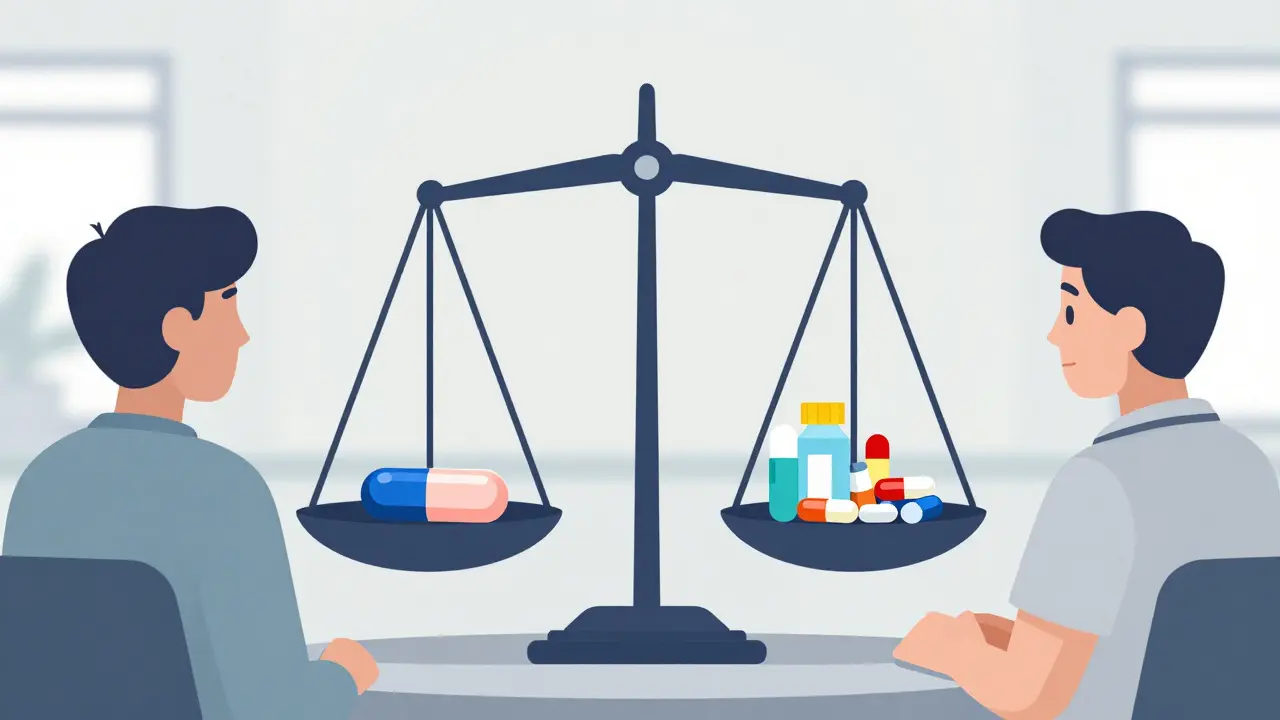
When you’re in severe pain - after surgery, a broken bone, or a flare-up of chronic back pain - opioids can feel like a lifeline. They work fast. They take the edge off. But for many people, what starts as short-term relief turns into something far more complicated: dependence, tolerance, or worse. The truth is, opioids aren’t the go-to solution for most pain. And using them longer than needed carries real, measurable risks - ones that doctors are now trained to take seriously.
When Opioids Might Actually Help
Opioids aren’t banned. They’re not evil. They’re powerful tools - but only for specific situations. The CDC’s 2022 guidelines make it clear: opioids should never be the first thing you reach for for chronic pain. That means pain lasting more than three months. For that kind of pain, physical therapy, cognitive behavioral therapy, acetaminophen, or NSAIDs like ibuprofen come first. Opioids are reserved for when those options fail.
For acute pain - say, after a dental procedure or a car accident - opioids can be appropriate, but only if the pain is severe and other painkillers aren’t cutting it. Even then, the goal is to use the lowest dose for the shortest time. Most guidelines suggest no more than three to seven days for acute pain. Anything longer? That’s a red flag.
There are exceptions. Cancer patients, people in palliative care, and those with sickle cell disease are not covered by the same rules. Their pain is different. Their needs are different. For them, opioids remain a vital part of care.
The Numbers Behind the Risk
Here’s what most people don’t realize: your risk of overdose doesn’t just go up a little when you take more opioids - it jumps. For every extra 10 morphine milligram equivalents (MME) per day you take between 20 and 50 MME, your risk of overdose increases by 8%. Between 50 and 100 MME? It goes up by 11% per 10 MME. That’s not a small bump. That’s a steep climb.
And it’s not just about dose. Mixing opioids with benzodiazepines - like Xanax or Valium - is one of the most dangerous combinations. Studies show this combo makes overdose 3.8 times more likely. In some cases, the risk jumps as high as 10.5 times. That’s why doctors now screen for this before prescribing.
People with a history of substance use disorder are at 3.5 times higher risk of developing opioid use disorder. Older adults - especially those over 65 - are more vulnerable too. Their bodies process drugs slower. Liver and kidney function decline. A dose that was fine at 40 might be dangerous at 70.
And here’s the hard part: about 8 to 12% of people prescribed opioids for chronic pain end up with opioid use disorder. That number climbs to 26% if they’re on 100 MME or more daily. That’s not a rare outcome. That’s a common one.
How Doctors Monitor You
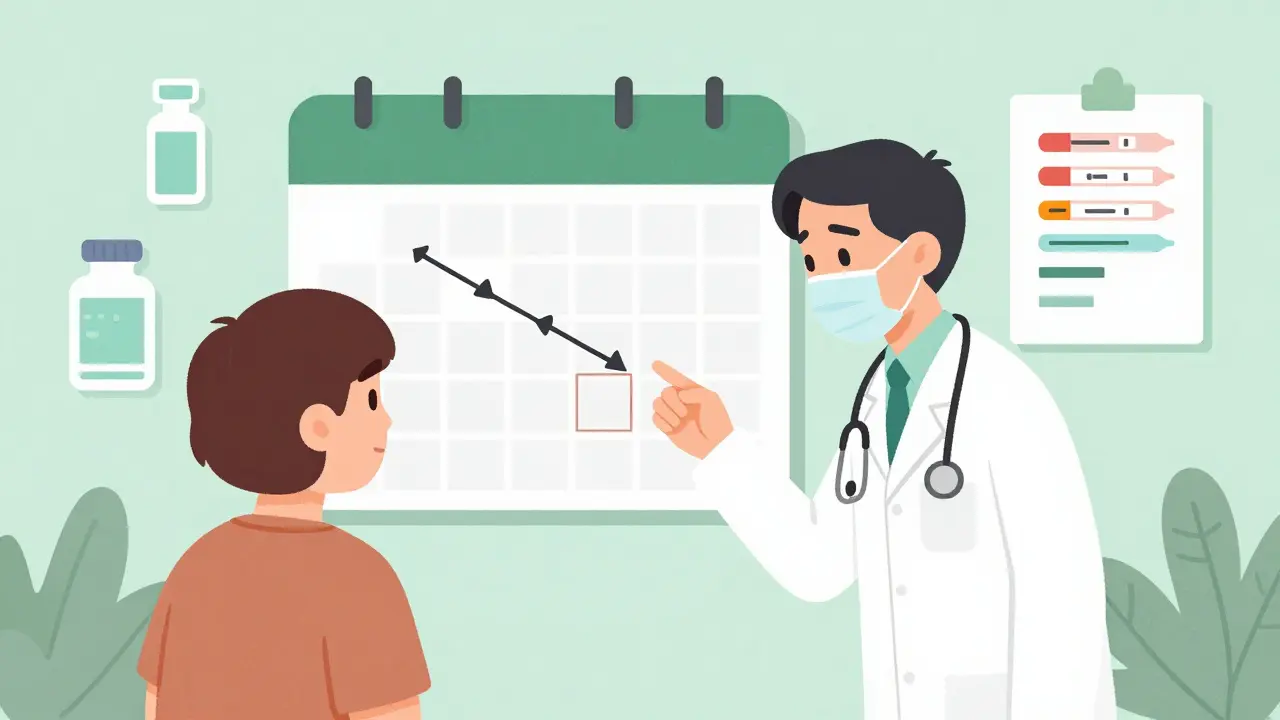
If you’re on opioids long-term, your doctor isn’t just writing a prescription and calling it a day. They’re supposed to check in regularly. The VA/DoD guidelines say stable patients should be reviewed at least every three months. High-risk patients? Monthly.
These check-ins aren’t casual. They’re structured. Doctors look at:
- How your pain is doing - on a scale of 0 to 10
- Whether you’re moving better, sleeping better, working more - functional improvement
- Urine drug tests to confirm you’re taking what’s prescribed and nothing else
- Tools like the Current Opioid Misuse Measure to spot warning signs - hoarding pills, running out early, doctor shopping
If your pain hasn’t improved after a few months, or if you’re showing signs of dependence, tapering begins. Not abruptly. Not cruelly. But slowly. A 2-5% reduction every four to eight weeks is standard for stable users. If you’re on over 90 MME a day and not improving? A faster taper - up to 10% per week - might be needed.
Stopping cold turkey? That’s dangerous. Withdrawal can be brutal. And it can push people back toward illegal opioids. That’s why tapering is always a conversation - not a command.
What’s Being Done to Fix the Problem
Prescriptions have dropped. A lot. In 2012, doctors wrote 81.3 opioid prescriptions for every 100 people in the U.S. By 2020, that number had fallen to 46.7. That’s a 42.5% drop - and it’s not because people are in less pain. It’s because guidelines changed.
Prescription Drug Monitoring Programs (PDMPs) are now used in 49 states. Before writing a script, doctors are expected to check the database to see if you’re getting opioids from other providers. In 2022, 87% of opioid prescriptions were checked against these systems.
Naloxone - the overdose-reversing drug - is now available in half of U.S. hospitals through standing orders. That means if you’re high-risk, you’re offered naloxone before you even leave the clinic. In 2016, that was true in only 18% of hospitals.
And research is moving fast. The NIH’s HEAL Initiative has poured $1.5 billion into finding non-addictive pain treatments. As of late 2023, 37 new non-opioid drugs were in late-stage clinical trials. Some target nerve pain differently. Others use the body’s own pain-relief systems. The goal? Replace opioids, not just reduce them.
The Real Problem: Underuse and Overuse
Here’s the contradiction: too many people get opioids they don’t need. Too many others who could benefit don’t get them at all.
A 2021 study found only 37% of primary care doctors regularly used risk assessment tools like the Opioid Risk Tool - even though nearly all guidelines say they should. Why? Lack of time. Lack of training. Fear of being seen as “too strict.”
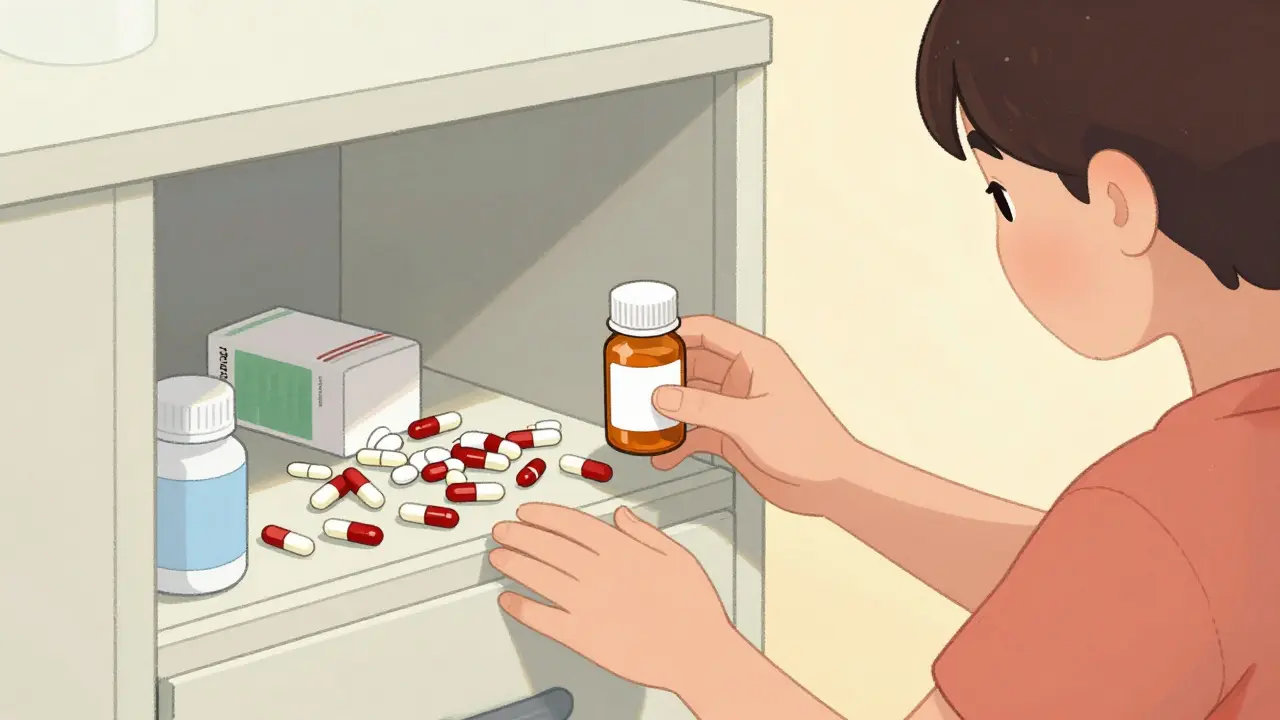
Meanwhile, 43% of patients prescribed opioids for acute pain get more pills than they need. And 76% of those unused pills stay in their medicine cabinets. That’s a ready supply for teens, visitors, or someone struggling with addiction. It’s not just about the person taking the pills - it’s about the ones who find them.
And then there’s the flip side: patients on stable, long-term therapy who are suddenly cut off. The American Medical Association warned that forced tapers - especially rapid ones - cause more harm than good. People lose trust. They stop seeing doctors. Some turn to street drugs. That’s not harm reduction. That’s harm creation.
What You Should Ask Your Doctor
If you’re being offered opioids, here’s what to ask:
- Is this the best option for my type of pain? What else have I tried?
- How many pills am I really going to need? Can we start with a smaller supply?
- What’s my daily dose in MME? Is it below 50? Above 90?
- Am I on any other sedatives? Could that make this riskier?
- Will you check the state’s prescription database before writing this?
- Do you recommend naloxone? Can I get it now?
- How will we know if this isn’t working? When will we re-evaluate?
If your doctor doesn’t ask you these questions first - or if they push you toward opioids without discussing alternatives - it’s time to ask for a second opinion.
It’s Not About Fear. It’s About Balance.
Opioids aren’t the enemy. But they’re not magic either. They’re a tool with sharp edges. Used right, they can restore function and dignity. Used wrong, they can destroy lives.
The goal isn’t to eliminate opioids from medicine. It’s to use them wisely. To match the right patient with the right drug for the right amount of time - and to have a plan for what comes next.
For most people, that plan starts with something simpler: movement, therapy, sleep, and non-opioid pain relief. Save the opioids for when you really need them. And never, ever take more than prescribed.
Are opioids ever safe for long-term pain?
Yes - but only after non-opioid treatments have failed and under strict monitoring. Long-term opioid therapy is considered only when the benefits for pain relief and improved function clearly outweigh the risks. Most patients on long-term opioids are on doses below 50 MME per day, with regular check-ins every 3-6 months. Doses above 90 MME require special justification and risk mitigation.
Can I become addicted even if I take opioids as prescribed?
Yes. Addiction - or opioid use disorder - isn’t just about misuse. It’s a brain condition that can develop even when taking medication exactly as directed. About 8-12% of people on chronic opioid therapy develop it. Risk factors include a personal or family history of substance use, mental health conditions, and higher daily doses. It’s not weakness. It’s biology.
Why do doctors now avoid prescribing opioids for back pain?
Because studies show opioids offer only small, short-term pain relief for back pain - often less than 1 point on a 10-point scale - and come with high risks of dependence, side effects, and overdose. Physical therapy, exercise, and cognitive behavioral therapy have been proven just as effective, if not better, over time. Guidelines now recommend these as first-line treatments.
What should I do with leftover opioid pills?
Never flush them or throw them in the trash. Take them to a pharmacy with a drug take-back program, or use a DEA-authorized collection site. If those aren’t available, mix them with coffee grounds or cat litter in a sealed container before throwing them away. Unused pills are a major source of diversion - especially among teens and young adults.
Is it true that naloxone is now routinely offered with opioid prescriptions?
Yes - for high-risk patients. That includes people on 50+ MME per day, those taking benzodiazepines, those with a history of substance use disorder, or anyone over 65. Many clinics now offer naloxone for free or at low cost. It’s not a sign you’re at risk - it’s a safety net. Just like a fire extinguisher in your home.
What if I’ve been on opioids for years and want to stop?
Don’t quit cold turkey. Work with your doctor on a personalized taper plan. Most people reduce by 5-10% every 4-8 weeks. If you’ve been stable for years, you may not need to taper at all - unless your pain has improved or side effects have worsened. Forced tapers can lead to relapse, depression, and even suicide. Your safety and comfort matter.

lisa Bajram
Opioids aren't evil-they're like a chainsaw: terrifying if you don't know how to use it, but absolutely lifesaving when you do. I’ve seen people go from bedridden to hiking again after a careful, monitored taper and PT. The real tragedy? People get cut off cold turkey because some doctor’s scared of paperwork. That’s not harm reduction-that’s abandonment.
Paul Bear
Let’s be precise: the CDC’s MME thresholds aren’t arbitrary-they’re derived from population-level overdose risk curves with 95% CI. A 10 MME increment between 50–100 carries an HR of 1.11 (95% CI: 1.07–1.15) for overdose mortality. When you combine that with benzodiazepines, the interaction isn’t additive-it’s synergistic, via GABAergic potentiation and respiratory depression. This isn’t fearmongering; it’s pharmacokinetics.
Jaqueline santos bau
Okay but can we talk about how some people are just… addicted to pain? Like, they get a little twinge and immediately text their doctor like it’s a 911 call? I had a cousin who’d call for oxycodone every time she stubbed her toe. And then she’d be mad when they said no. Like, honey, your pain isn’t a personality trait. 🙄
Kunal Majumder
From India, I’ve seen this play out differently. In rural areas, opioids are almost never prescribed-but pain is just… accepted. People sit with it. In cities, it’s the opposite: everyone wants a quick fix. But here’s the truth: physical therapy works. My uncle did 12 weeks of PT for his back, no pills. Now he teaches yoga. It’s not magic. It’s discipline.
Aurora Memo
I appreciate how this post acknowledges both sides. I’m a nurse who’s seen patients taper successfully-and others who were left stranded. The key isn’t just the dose. It’s the relationship. If your doctor treats you like a statistic, you’ll feel like one. But if they listen? That’s when real healing begins.
chandra tan
Back home, we say: "Pain is a teacher, not a punishment." Opioids silence the lesson. But PT? Therapy? Sleep? Those teach you how to live with your body-not fight it. I wish more doctors here would say that instead of just handing out scripts.
Dwayne Dickson
It is, of course, profoundly ironic that the very institutions tasked with mitigating the opioid crisis have, in many cases, exacerbated it through institutional inertia, diagnostic inflation, and the commodification of pain management. The 42.5% reduction in prescriptions? A statistical artifact of liability aversion-not clinical wisdom. We must move beyond binary thinking: not "opioids bad," but "context matters."
And yes-I am aware that this is a nuanced position in an era of performative outrage.
Ted Conerly
Just wanted to say: if you’re on opioids and you’re scared to talk to your doctor about tapering-you’re not alone. I was there. Took me 18 months to cut down from 80 MME to zero. Slow steps. Weekly check-ins. And yes, I cried a lot. But I’m sleeping through the night now. No pills. No guilt. Just me. You can do this.
Faith Edwards
It is lamentable that the medical establishment has allowed itself to be co-opted by pharmaceutical marketing, resulting in a generation of patients who believe that pharmaceutical intervention is the only legitimate form of therapeutic engagement. The fact that 76% of unused pills remain in medicine cabinets is not merely a public health failure-it is a moral one. One must ask: who benefits from this systemic negligence?
Jay Amparo
My sister was on 120 MME for five years. They tried to cut her off in 2021-no plan, no support. She ended up in the ER with panic attacks and suicidal ideation. Then they gave her a new doctor who said, "Let’s slow this down." Two years later, she’s at 30 MME, in therapy, and working part-time. It’s not about taking away meds-it’s about giving people time, dignity, and a path forward.