When a limb is gone, the brain doesn’t always get the memo. For 60% to 85% of amputees, the sensation of pain in the missing limb doesn’t vanish with the limb itself. This is phantom limb pain (PLP)-a real, measurable neurological condition, not a psychological one. People describe it as burning, stabbing, cramping, or tingling deep in the part of the limb that’s no longer there. It starts quickly-often within days or weeks after surgery-and if it sticks around past six months, it rarely goes away on its own. The good news? We now have tools that actually work.
Why Phantom Limb Pain Happens
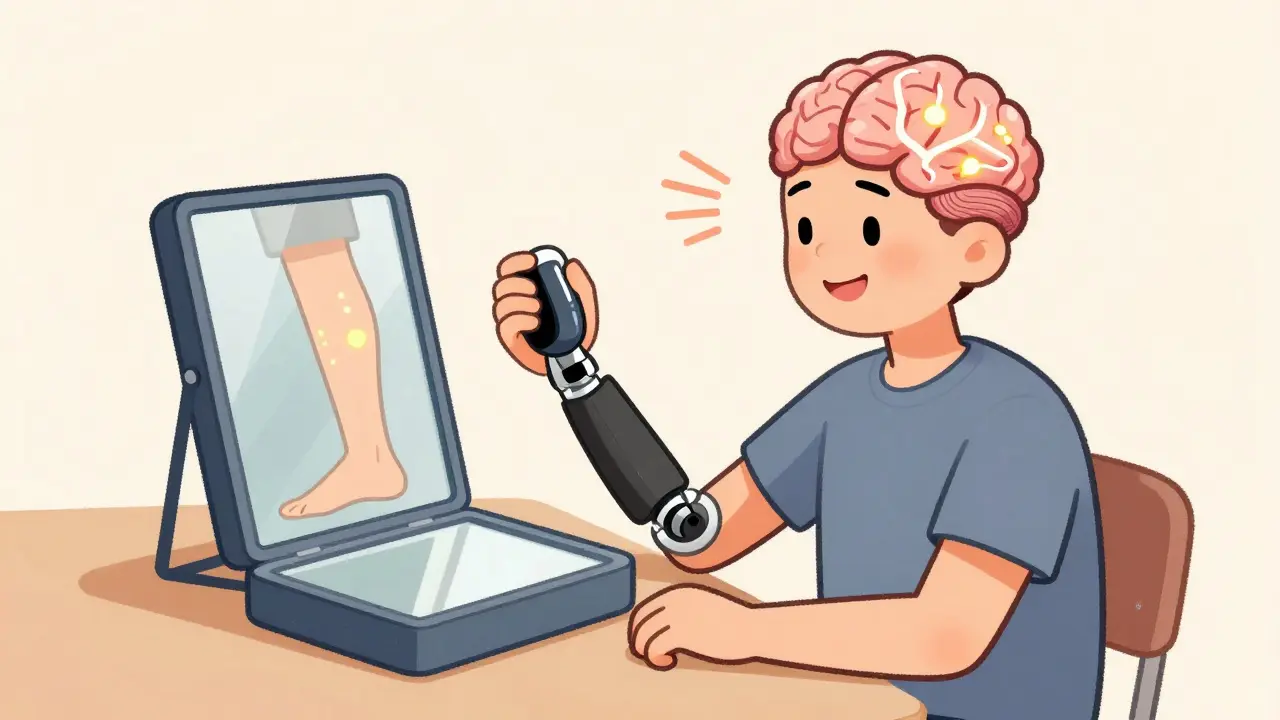
Phantom limb pain isn’t in the stump. It’s in the brain. After an amputation, the nerves that once sent signals from the missing limb to the brain don’t just shut off. They keep firing. The brain, still expecting input from that area, misinterprets the noise as pain. Neuroimaging studies show the same parts of the brain light up during phantom pain as they did when the limb was still there. This is called cortical remapping: the brain rewires itself, and nearby areas-like the face or torso-start taking over the space once used by the missing limb. Touch your cheek, and suddenly your phantom foot tingles. It’s not in your head-it’s in your brain’s wiring.Medications: What Actually Works
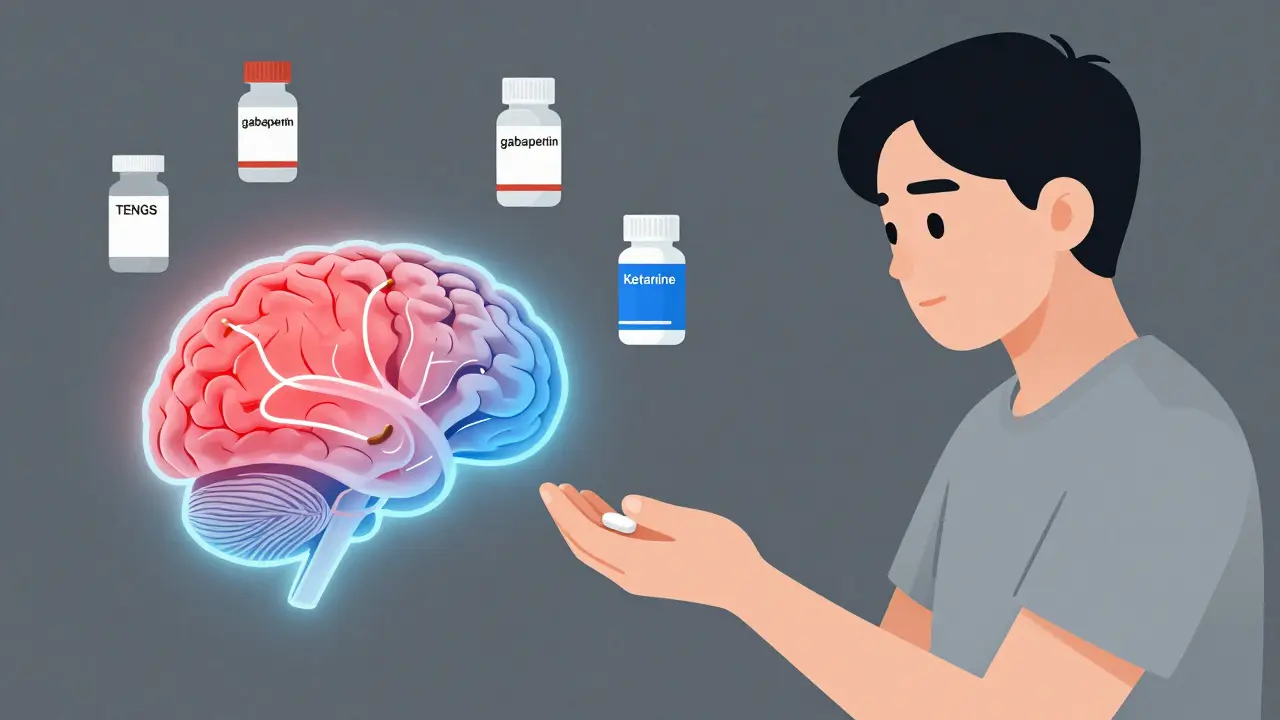
Most people start with medication. But not all drugs are equal. Some help a little. Others can be game-changers.Tricyclic antidepressants like amitriptyline and nortriptyline are the first-line choice. They’re not for depression here-they work on nerve pain. Doctors usually start with 10 mg at bedtime and slowly increase over weeks. About 45% of users report moderate relief, but drowsiness hits 60% of people. It’s a trade-off, but for many, it’s worth it.
Anticonvulsants like gabapentin and pregabalin are next. Gabapentin starts at 300 mg a day and can go up to 3,600 mg. In Reddit’s r/amputee community, 72% of 147 users found it helpful, but 58% quit because of dizziness or brain fog. Pregabalin works faster but can cause weight gain in 40% of users. These aren’t painkillers like opioids-they calm overactive nerves.
NSAIDs like ibuprofen and naproxen? They help a little at first. About 65% of patients feel some relief early on, but for 80% of them, it fades after three to six months. They’re not the answer for chronic pain, but they can help with swelling or soreness around the stump.
For stubborn cases, ketamine-given intravenously-is an option. It blocks NMDA receptors, which play a big role in chronic pain. Doses are low (0.1-0.5 mg/kg), and it’s used in clinics under supervision. It’s not for home use, but it can break the cycle when other drugs fail.
Opioids like oxycodone or morphine? They’re controversial. Yes, they work. But the risk of dependence is real. The American Pain Society recommends staying under 50 morphine milligram equivalents (MME) per day. Long-term use leads to addiction in about 35% of users, according to PainManagement.org. Most doctors avoid them unless everything else has failed.
There’s also botulinum toxin (Botox) injections. Not what you’d expect, but it’s been used successfully for neuromas-tangled nerves at the stump end. A 2023 case study showed pain dropping from 8/10 to 3/10 for 12 weeks after injections. It’s not widely used yet, but it’s promising.
Mirror Therapy: Seeing Is Believing
Mirror therapy is one of the most elegant treatments for phantom limb pain. It doesn’t cost much. No pills. No needles. Just a simple mirror box.You sit with your intact limb in front of a mirror, and your stump behind it. The mirror reflects the good limb, making it look like the missing one is still there. Then you move both limbs in sync-flex your real foot, and you see your phantom foot move too. Your brain sees the movement and starts to unlearn the pain signal. It’s like giving your brain a new, pain-free memory.
Studies show it works best when done daily for 15-30 minutes. But here’s the catch: 40% of people quit within eight weeks. It’s boring. It feels silly. It takes discipline. But for those who stick with it, relief can be dramatic. One 2021 study found 60% of patients had at least 50% pain reduction after six weeks.
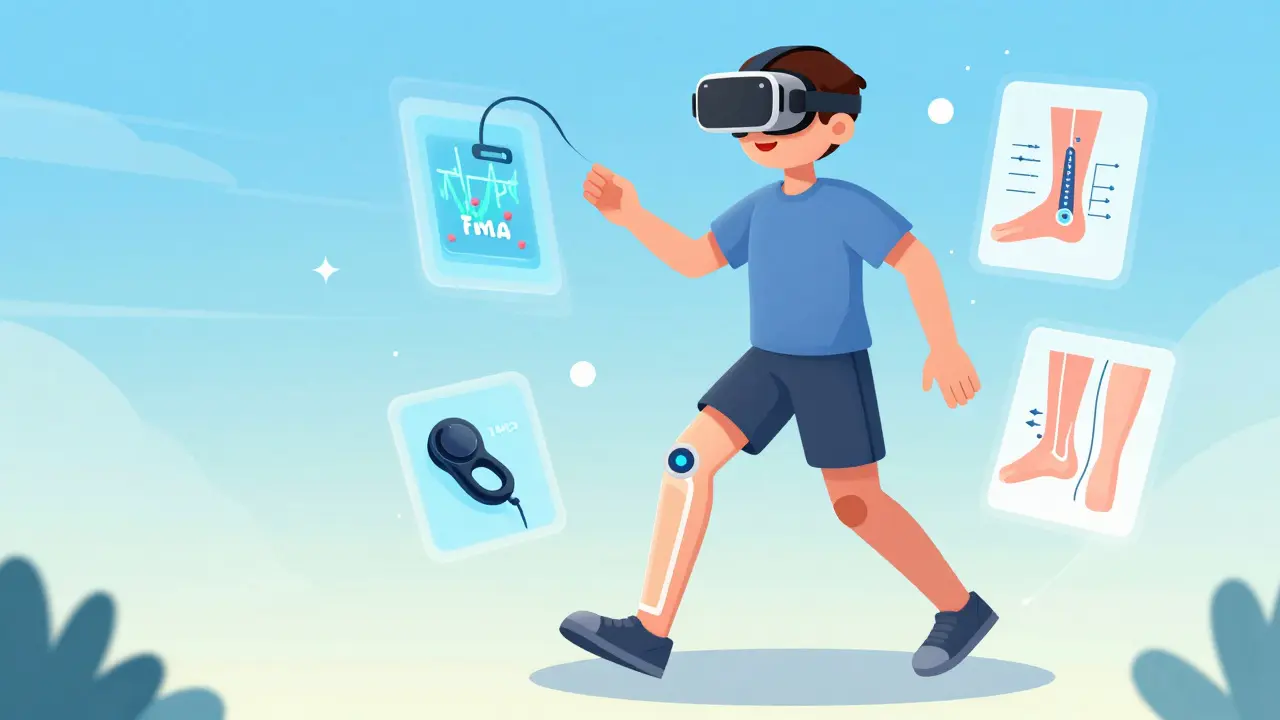
Now, virtual reality is taking mirror therapy further. Instead of a mirror, patients wear a headset and see a digital version of their missing limb moving in response to their real limb’s motion. Early trials show this boosts adherence-people stick with it longer. By 2027, experts predict VR-enhanced mirror therapy will help 85% of users stay consistent, compared to just 60% with traditional mirrors.
Other Non-Medication Options
If pills and mirrors aren’t enough, there are more tools:- TENS (Transcutaneous Electrical Nerve Stimulation): Electrodes on the stump deliver tiny electrical pulses. It’s like a mild tingling massage. About 30-50% of users get moderate relief. It’s FDA-cleared, safe, and can be used at home after a quick training session.
- Spinal cord stimulation: A small device is implanted near the spine. It sends electrical pulses that block pain signals before they reach the brain. Success rates are 40-60%. The FDA approved a new closed-loop system called Evoke in January 2024-it adjusts automatically based on your pain levels-and early results show 65% average pain reduction.
- Biofeedback: You learn to control your body’s responses-heart rate, muscle tension-with real-time feedback. It helps about 25-40% of users, especially those whose pain spikes with stress.
- Targeted muscle reinnervation (TMR): A surgical option where nerves from the amputated limb are rerouted to nearby muscles. When you think about moving your missing hand, the new muscle contracts. Combined with osseointegration (a metal implant in the bone), this has led to 70% pain reduction in small 2024 trials.
What Doesn’t Work (And Why)
Some things you hear about just don’t hold up. Epidural anesthesia during amputation was once thought to prevent phantom pain. But research shows it doesn’t. Neither does routine use of opioids right after surgery. And while some swear by acupuncture or herbal remedies, there’s no solid evidence they help PLP specifically.The biggest mistake? Waiting. If pain lasts more than six months, the brain locks in the pattern. Early intervention-within the first three months-is the key to stopping it before it becomes chronic.
Putting It All Together: A Realistic Plan
There’s no one-size-fits-all. Most people need a mix. Here’s what works in practice:- Start with a low-dose tricyclic antidepressant (like amitriptyline 10 mg at night).
- Begin mirror therapy the same day-15 minutes daily, even if it feels weird.
- If pain doesn’t improve in four weeks, add gabapentin.
- If that fails, try TENS or ask about a referral to a pain clinic with a neuromodulation team.
- Never skip physical therapy. Keeping the stump mobile and strong reduces triggers like pressure and poor circulation.
Success isn’t about total pain elimination. It’s about reducing pain from 8/10 to 4/10-enough to sleep, walk, or hug your kids without flinching. And for many, that’s enough.
Where to Get Help
You don’t have to figure this out alone. The Amputee Coalition supports over 12,000 people a year with peer groups and resources. Major hospitals now have specialized PLP clinics with neurologists, pain specialists, and physical therapists working together. Ask your surgeon for a referral. If your doctor doesn’t know about mirror therapy or TENS, bring the info. You’re not being difficult-you’re being informed.The number of Americans living with limb loss is projected to double by 2050. That means more people will face phantom pain. But with better tools, better science, and better awareness, we’re finally getting ahead of it.
Is phantom limb pain real, or is it all in my head?
It’s real-and it’s not psychological. Brain scans show clear activity in areas that once controlled the missing limb. The pain comes from rewiring in the spinal cord and brain, not from emotions or stress. It’s a neurological condition, not a mental one.
How long does phantom limb pain last?
For some, it fades within weeks or months. But if it lasts longer than six months, the chance of it disappearing on its own is slim to none. That’s why early treatment matters. The longer you wait, the harder it is to reverse the brain’s pain patterns.
Can mirror therapy really help, or is it just a gimmick?
It’s not a gimmick. Mirror therapy has been studied for over 20 years. It works by tricking the brain into seeing movement in the missing limb, which helps undo the faulty pain signals. About 60% of people who stick with it for six weeks see at least half their pain reduced. The challenge isn’t the method-it’s staying consistent.
Why do doctors prescribe antidepressants for pain?
They’re not treating depression. Drugs like amitriptyline and nortriptyline affect nerve signaling, not mood. They slow down the overactive pain signals traveling from the nerves to the brain. They’re one of the most effective tools we have for nerve-related pain, including phantom limb pain.
Are opioids safe for long-term phantom pain?
Not really. While they can reduce pain in the short term, long-term use carries a high risk of dependence and addiction. About 35% of long-term users develop dependency. Experts recommend opioids only when all other options have failed-and even then, at the lowest effective dose for the shortest time possible.
What’s new in phantom pain treatment?
In early 2024, the FDA approved a new spinal cord stimulator called Evoke that adjusts automatically to your pain levels. It’s showing 65% average pain reduction. Also, virtual reality versions of mirror therapy are boosting patient adherence. And new drugs targeting NMDA receptors are in trials-aiming for ketamine’s benefits without the side effects.

Cheryl Griffith
I never realized how much the brain rewires itself after amputation-this post made me cry. My uncle lost his leg in a car crash, and for years he swore he could feel his toes curling. Mirror therapy didn’t work for him at first, but he stuck with it for six months and now says he feels ‘whole’ again, even if it’s just in his mind. That’s powerful.
Kasey Summerer
So let me get this straight… we’re treating phantom pain with a $5 mirror and calling it science? 😏
Nicholas Gabriel
Actually, Kasey-it’s not just a mirror. It’s neuroplasticity in action. The brain’s somatosensory cortex is literally being retrained. And yes, it’s backed by fMRI studies. I’ve seen it in rehab clinics: patients who couldn’t sleep, who flinched at the sight of a sock, suddenly laughing because they ‘saw’ their foot move. It’s not magic-it’s medicine. And yes, it’s cheap. Sometimes the best treatments are.
Bobbi-Marie Nova
Also-Botox for neuromas? I mean… wow. I thought that was just for wrinkles and migraine headaches. Now I’m imagining someone saying, ‘I got Botox for my phantom foot pain’ and people just nodding like it’s normal. Which, I guess, it is now. 😅
Isabella Reid
As someone who’s watched a friend go through this, I want to say: please don’t dismiss the emotional toll. Even if the pain is neurological, the isolation, the frustration, the feeling that no one believes you-it’s real too. The fact that this post lists peer groups and clinics? That’s the part that matters most. Knowledge is power, but connection is healing.
swarnima singh
they say its neurological but what if its the spirits? my cousin lost leg and he said he feels cold hand touching him at night... doctors dont know everything. maybe its not brain... maybe its soul? i read on forum from india... many say same thing. why dont they test this? why only pills and mirrors? they scared of truth...
Jody Fahrenkrug
I’ve used TENS for years after my below-knee amputation. It doesn’t kill the pain, but it makes it bearable. I keep it on while I’m cooking or watching TV. No side effects, no pills, just a little buzz. If you’re skeptical, try it for two weeks. You might be surprised.
Allen Davidson
People say ‘start with amitriptyline’ like it’s a vitamin. Try taking 10mg at night when you’re 72 and already on three other meds. The drowsiness isn’t ‘a trade-off’-it’s a life sentence. I slept for 14 hours straight for a week. My wife had to wake me for dinner. That’s not treatment-that’s chemical sedation. I switched to TMR surgery. Now I can feel my phantom fingers move when I think about typing. It’s like my hand came back. No pills. Just nerves rerouted. This isn’t a drug story-it’s a hardware upgrade.
john Mccoskey
Let’s be honest-this entire field is a mess of placebo effects, overpriced gadgets, and pharmaceutical lobbying. Mirror therapy? It’s a 1990s fad repackaged with TikTok videos. Ketamine? A party drug with a medical veneer. Spinal stimulators cost $50k and have a 40% failure rate. And yet, we act like this is cutting-edge science. The truth? We don’t understand phantom pain. We just have tools that sometimes distract the brain long enough for people to forget they’re in pain. That’s not a cure. That’s a Band-Aid on a severed artery. And now we’re selling VR headsets as the next miracle? Wake up. We’re treating symptoms while ignoring the root cause: the brain’s refusal to accept loss. No device, no drug, no mirror can fix grief. We’re just medicating mourning.
kanchan tiwari
THEY’RE HIDING THE TRUTH!! WHY ISN’T ANYONE TALKING ABOUT THE 5G TOWERS?! I SAW A VIDEO-WHEN THE NEUROLOGIST WALKED INTO THE CLINIC, HIS PHONE FLASHED ‘NEURAL INTERFERENCE DETECTED’!! THEY’RE USING MIRROR THERAPY TO DISTRACT YOU WHILE THEY PROGRAM YOUR BRAIN WITH MICROWAVES!! MY COUSIN’S PHANTOM LEG STARTED SHAKING AFTER THE NEW CELL TOWER WAS BUILT!! THEY WANT YOU TO THINK IT’S ‘NEUROLOGICAL’ SO YOU WON’T QUESTION THE GOVERNMENT’S NEURAL CONTROL PROJECT!!
Allen Davidson
John, you’re right that we’re treating symptoms. But here’s what you’re missing: for someone who can’t sleep, can’t walk, can’t hug their kid because their phantom foot feels like it’s on fire-getting that pain down from 9 to 4 isn’t a Band-Aid. It’s a return to life. I don’t care if it’s a ‘hardware upgrade’ or ‘neurological placebo’-if it lets me pick up my daughter without screaming, then it’s worth every dollar, every hour, every weird mirror box. Science doesn’t have to be perfect to be powerful.