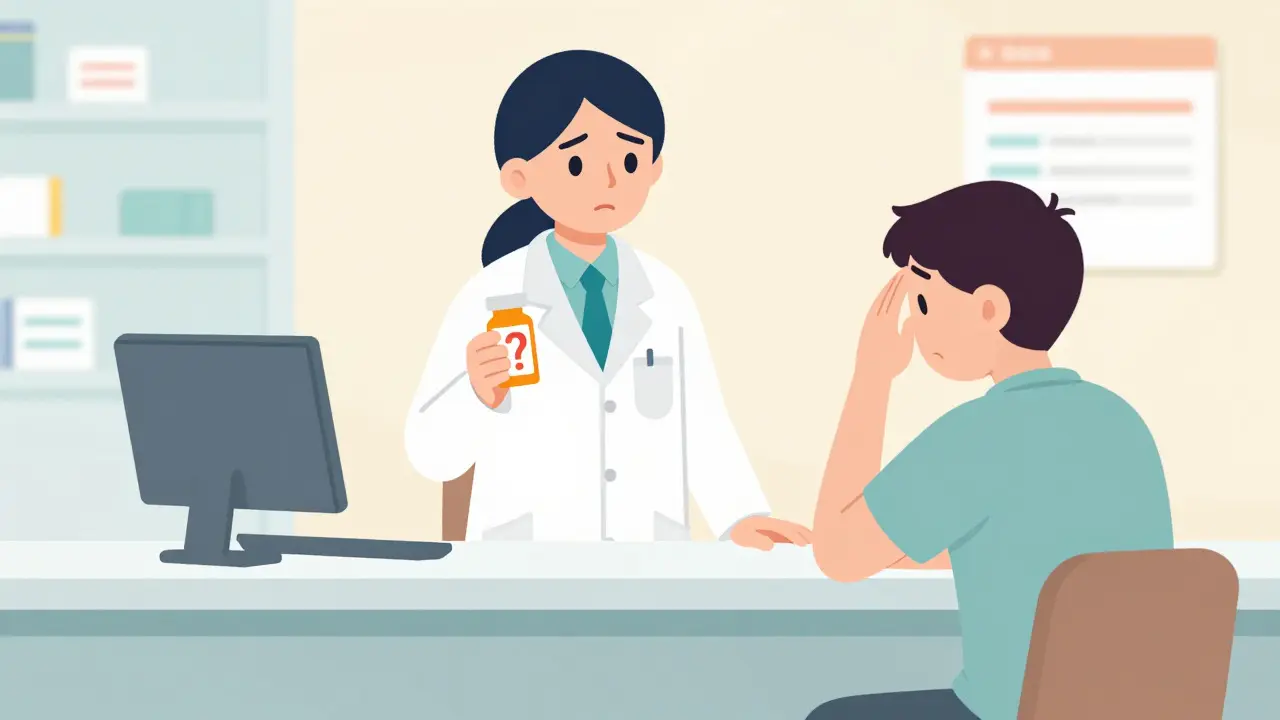
Imagine a patient comes to you after switching from a brand-name medication to a generic equivalent. They report feeling dizzy, experiencing unexpected fatigue, or simply not getting the relief they used to get. You know generics are supposed to be bioequivalent, but this real-world reaction tells a different story. What do you do? The answer lies in your professional responsibility to report these issues, even though federal law doesn't strictly force you to.
As pharmacists, we sit at the front lines of medication safety. We dispense roughly 75% of all prescriptions as generics, yet we contribute less than 3% of the adverse event reports sent to the U.S. Food and Drug Administration (FDA). This gap is dangerous. When pharmacists fail to report generic drug problems, potential safety signals go undetected, leaving other patients at risk. Understanding your role, the barriers you face, and the exact steps to take can transform how we protect public health.
The Legal Landscape: Voluntary but Vital
Let’s clear up a common misconception right away: there is no federal legal mandate requiring pharmacists to report adverse drug events (ADEs) to the FDA. The Federal Food, Drug, and Cosmetic Act and the 2013 FDA Safety and Innovation Act established enhanced postmarketing safety requirements, but they kept reporting voluntary for healthcare professionals. However, "voluntary" does not mean "optional" in terms of professional ethics.
The American Society of Health-System Pharmacists (ASHP) Guidelines on the Pharmacist's Role in Providing Drug Information, published in April 2022, explicitly state that medication safety monitoring and adverse event reporting are "fundamental professional responsibilities." While the federal government encourages reporting through the MedWatch program, some states have taken stricter stances. For instance, California, Illinois, Massachusetts, and New York have implemented mandatory reporting requirements for serious adverse events. Even if you aren’t in one of these states, failing to report can be seen as falling short of the standard of care expected by boards of pharmacy across the nation.
Is it legally required for pharmacists to report generic drug problems?
At the federal level, no. The FDA encourages reporting through the MedWatch program, but there is no federal law compelling pharmacists to submit adverse event reports. However, four states-California, Illinois, Massachusetts, and New York-have mandatory reporting laws for serious adverse events. Professionally, organizations like ASHP consider it a fundamental duty.
What Exactly Should You Report?
Not every minor side effect needs a formal report, but knowing the difference is crucial. The FDA defines "serious" adverse events as those that are fatal, life-threatening, require hospitalization, result in permanent disability, cause congenital anomalies, or necessitate intervention to prevent permanent impairment. If you suspect a generic drug caused any of these, you must report it within 15 calendar days.
But what about non-serious issues? This is where Therapeutic Inequivalence is a situation where a generic product fails to demonstrate bioequivalence in clinical practice despite meeting regulatory standards comes into play. Since 2015, the FDA has explicitly listed therapeutic inequivalence as a reportable issue. If a patient experiences a clinical response different from what was expected with a generic substitution, that’s a red flag. These reports provide "real-world evidence" that might have been missed during the initial abbreviated new drug application (ANDA) review process.
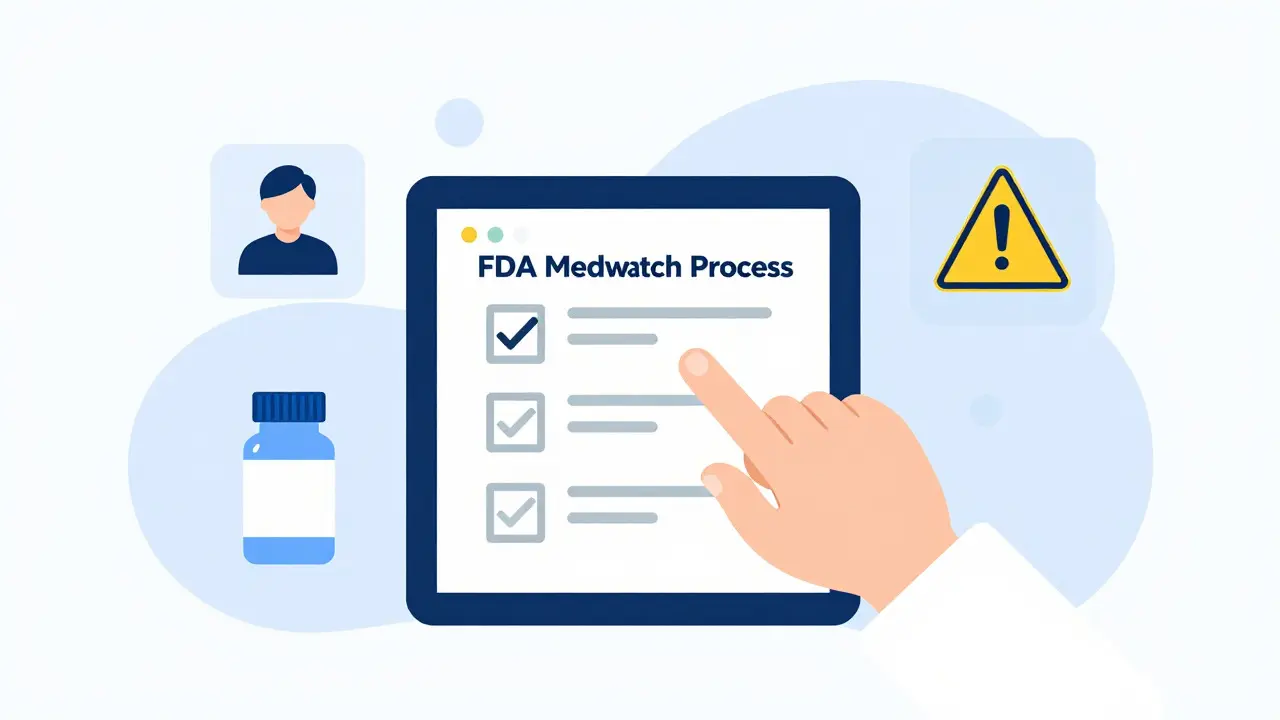
To file a valid report, you need four key data elements:
- An identifiable patient (you don’t need their name, but you need enough info to contact them if needed).
- A suspect drug (include the National Drug Code, manufacturer name, and lot number).
- An adverse event (specific details, not just "patient felt bad").
- An identifiable reporter (your contact information).
Vague reports like "a patient experienced an injury" are often discarded because they lack the specificity needed for investigation. Be concrete. Describe the symptoms, the timeline, and the context.
The Attribution Challenge: Brand vs. Generic
One of the biggest hurdles pharmacists face is figuring out who to blame-or rather, who to notify. Due to the 1984 Hatch-Waxman Amendments, generic manufacturers must keep their labeling identical to the reference listed drug (the brand name). This creates a complex web of liability. The Supreme Court’s 2011 decision in PLIVA v. Mensing ruled that generic manufacturers cannot be held liable in state courts for failure to warn because federal law preempts their ability to change labels independently.
This legal framework means that brand manufacturers often receive and report adverse events for products that were actually dispensed as generics. This data attribution problem complicates safety signal detection. As a pharmacist, when you see a problem, you should report it to the FDA regardless of whether you’re certain which manufacturer is responsible. The FDA’s Office of Generic Drugs, established in 2015 under the Generic Drug User Fee Amendments (GDUFA), specifically investigates these reports to determine if the issue lies with the generic product itself.
| Aspect | Brand Name Drugs | Generic Drugs |
|---|---|---|
| Labeling Authority | Can update warnings independently | Must match reference listed drug; limited independent updates |
| Liability for Failure to Warn | High (subject to state lawsuits) | Limited (federal preemption per PLIVA v. Mensing) |
| Reporting Volume | Higher (manufacturers report more) | Lower (attribution confusion reduces reports) |
| Pharmacist Role | Identify and report specific brand issues | Critical for identifying therapeutic inequivalence |
Overcoming Barriers to Reporting
We all know reporting takes time, and time is scarce in community pharmacy. A 2023 Pharmacy Times survey found that 68.4% of pharmacists cite lack of time as the primary barrier. Another 52.1% feel uncertain about whether an event meets reporting criteria, and 41.7% struggle to determine if a brand or generic product was involved.
Here’s how to make it easier:
- Use the Online Portal: The FDA’s MedWatch online portal, updated to version 3.2 in April 2023, includes a specific "generic drug concern" category. This allows you to quickly indicate if the issue relates to therapeutic inequivalence, manufacturing quality, or labeling discrepancies. It’s faster than filling out the paper Form 3500.
- Document Routine Checks: Incorporate a quick safety check into your dispensing workflow. If a patient mentions a new symptom after a switch, document it immediately. This makes pulling the data for a report much faster later.
- Focus on Patterns: You don’t need to report every single headache. But if three patients mention dizziness after switching to the same generic antihypertensive, that’s a pattern. The FDA’s FAERS database analysis showed that 63% of unique generic drug safety signals were initially identified by pharmacists noticing such patterns.
Remember, you don’t need to be 100% certain that the drug caused the event. The FDA’s July 2023 guidance clarifies that "reports should be submitted even where the healthcare provider completing the report is not certain the product caused the event." Your job is to report the suspicion; the FDA’s job is to investigate the causality.
Why Your Reports Matter More Than You Think
Data shows that reports mentioning generic drug issues increased by 131% between 2015 and 2022. Yet, pharmacists remain significantly underrepresented among reporters. This is a missed opportunity. Dr. Jerry Phillips, former Associate Director of the FDA’s Division of Medication Error Prevention and Analysis, has stated that pharmacist reports of therapeutic inequivalence are "particularly valuable" because they represent real-world evidence.
In 2022 alone, the FDA’s Office of Generic Drugs received 1,842 reports specifically mentioning therapeutic inequivalence concerns. Of those, 387 came from pharmacists. Based on these reports, the FDA subjected 147 generic drug products to additional review, resulting in 12 product-specific communications to healthcare providers. That means your single report could have contributed to a nationwide alert that protects thousands of patients.
The Institute for Safe Medication Practices (ISMP) includes adverse event reporting as a core component of their Medication Safety Self Assessment. Pharmacies scoring below 75% on reporting practices are flagged for "significant safety concerns." This isn’t just about compliance; it’s about proving your value as a clinical resource in your community.
Steps to Take Today
If you want to improve your reporting habits, start small. Here is a practical checklist:
- Bookmark the MedWatch Portal: Keep the link handy. The new interface is designed for speed.
- Train Your Staff: Ensure technicians know how to capture the NDC, lot number, and manufacturer name at the point of sale. This data is critical for accurate reporting.
- Review State Laws: Check if your state board of pharmacy has specific documentation requirements. For example, California requires a system for identifying and documenting adverse reactions.
- Join Professional Networks: Engage with groups like ASHP or the American Pharmacists Association (APhA). Their resources, including the 2023 Practice Advancement Initiative, highlight reporting as an undervalued clinical service.
Don’t wait for a disaster to happen. Proactive reporting builds trust with patients and strengthens the entire medication safety net. When you speak up, you’re not just filling out a form-you’re advocating for safer medicines for everyone.
How long do I have to report a serious adverse event?
For serious adverse events, the FDA requires submission within 15 calendar days of your initial receipt of the information. Non-serious events should still be reported as soon as possible, but there is no strict deadline.
What information is absolutely required for a MedWatch report?
You must include an identifiable patient, a suspect drug (with NDC, manufacturer, and lot number), a specific description of the adverse event, and your contact information as the reporter. Vague descriptions without clinical details are often insufficient for investigation.
Does the FDA really use pharmacist reports?
Yes. In 2022, the FDA’s Office of Generic Drugs reviewed 147 generic products based partly on pharmacist reports, leading to 12 specific safety communications. Pharmacists provide unique real-world data that manufacturers and physicians may miss.
What is therapeutic inequivalence?
Therapeutic inequivalence occurs when a generic drug fails to perform as expected in clinical practice, despite meeting regulatory bioequivalence standards. Symptoms might include reduced efficacy or unexpected side effects compared to the brand-name version.
Why is it hard to attribute adverse events to generic manufacturers?
Due to the Hatch-Waxman Amendments and the PLIVA v. Mensing court decision, generic manufacturers must keep labels identical to brand names and have limited liability for failure to warn. This often leads to brand manufacturers receiving reports for generic products, creating data confusion.

Padraic Cepek
Typical bureaucratic nonsense designed to keep us busy while the real issues fester. We are drowning in paperwork and these suits want more? Let the free market handle it, if a drug is bad, people stop buying it. But no, we need another layer of government oversight because they can't trust anyone else.
Kieran Healy
I actually find this really interesting! :) It’s scary to think that generics might not always work the same way for everyone. I had a friend who switched meds and felt terrible, so knowing there is a process to report this gives me some peace of mind. Thanks for sharing this info!
Trey Newkerk
You speak of 'responsibility' as if it is a virtue, yet you ignore the systemic rot that makes reporting futile. The FDA is a toothless tiger, paid off by the very manufacturers they claim to regulate. Your 'practical guide' is a band-aid on a gunshot wound. The illusion of safety is what keeps the masses docile while their bodies betray them. Wake up!
Charles PINSON
The average pharmacist lacks the intellectual capacity to discern therapeutic inequivalence from patient non-compliance. This article assumes a level of clinical acumen that simply does not exist in community settings. It is pretentious to suggest that retail clerks with degrees can contribute meaningfully to pharmacovigilance when they cannot even manage basic inventory without error. The data is noise.
John Anderson
Just do it. Stop complaining about time. If you care about patients, you make the time. It’s simple.
Patrick Plummer
But wait...; surely the generic drugs are just as good?; Why would anyone doubt the science?; It seems like fear-mongering to me.; Are we really so gullible?; To believe that one pill is different from another?; When the ingredients are the same?; It is absurd.; Truly absurd.; And dangerous.; For public health.; To spread such doubt.; Among the populace.; Who already suffers enough.; From misinformation.; And panic.; And hysteria.; Over nothing.; Essentially nothing.
neal vince
The legal framework cited here is outdated. The PLIVA v. Mensing decision has been effectively circumvented by recent state laws allowing failure-to-warn suits against generic makers under specific conditions. Furthermore, the attribution problem is largely a result of poor record-keeping by pharmacies, not federal preemption. Pharmacists must update their knowledge base rather than relying on stale interpretations of liability.
Sinead Doyle
Big Pharma wants you to think generics are safe but its all a lie!! They switch the fillers to control your mind!!! The NDC numbers are tracking devices!!! You need to look into the deep state connection to the FDA!!! Its obvious if you read between the lines!!! No vaccine adjuvates involved tho??? Just kidding but seriously check the lot numbers!!!
Samuel Friday
Oh, how quaint. Another attempt to elevate the status of the dispensing clerk to that of a clinician. In Canada, we recognize that our system is superior precisely because we don't have this chaotic, unregulated patchwork of state laws. The emotional toll on pharmacists is palpable, yet they remain silent slaves to the corporate machine. A tragedy of epic proportions, played out behind every counter. :)
Emily Schor
This is a helpful summary. It clarifies the distinction between serious and non-serious events which is often overlooked. The checklist at the end is particularly useful for implementation in a busy workflow.
Mildred Fierce
Your analysis is superficial at best. You fail to account for the socioeconomic disparities in access to brand-name medications, forcing vulnerable populations to rely on potentially substandard generics. The 'voluntary' nature of reporting is a euphemism for negligence. Until mandatory reporting is enforced nationwide with severe penalties for non-compliance, this discussion is merely academic posturing by those who benefit from the status quo. The suffering continues unabated.
Kevin Burke
We must question the very nature of 'bioequivalence.' Is it not possible that the body's response is holistic, influenced by factors beyond mere chemical composition? The reductionist view of medicine ignores the spiritual and energetic aspects of healing. Yet, we cling to these forms and reports, seeking validation in a system that denies the complexity of human existence. Perhaps the true adverse event is the loss of wisdom in favor of data.