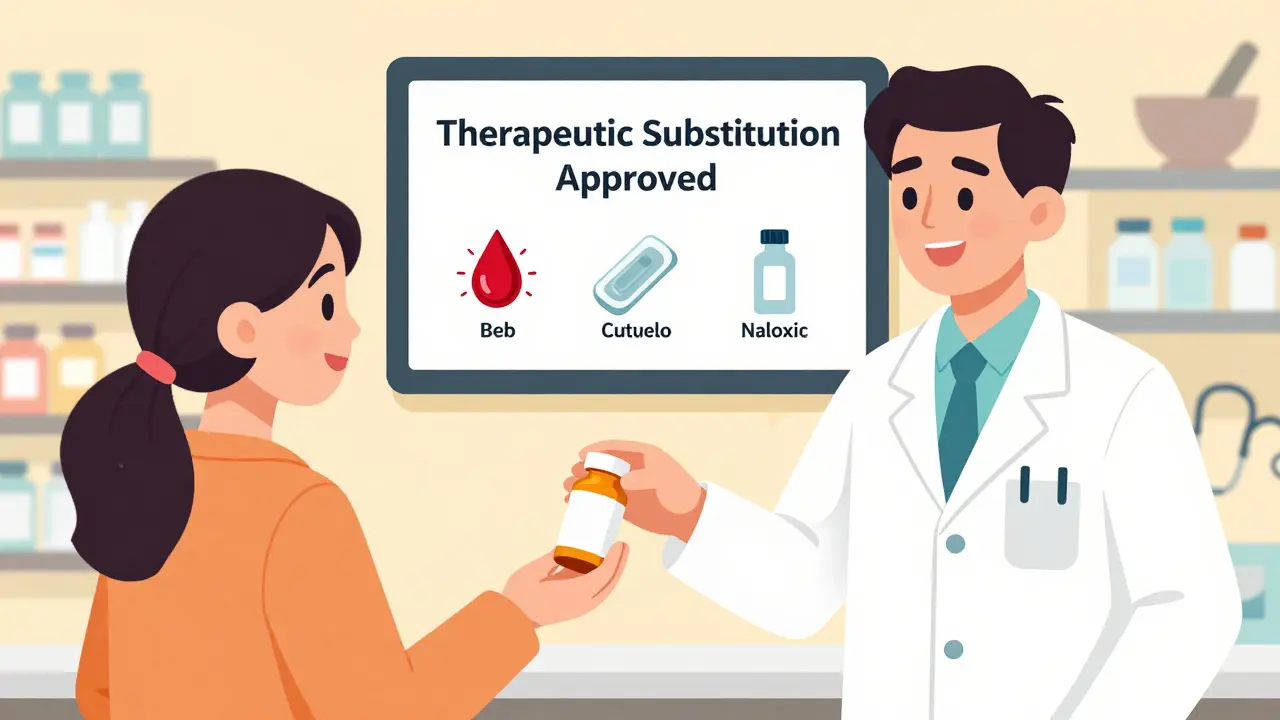
For decades, pharmacists were seen as the people who handed out pills - count them, label them, and remind you not to mix them with alcohol. But that’s not the job anymore. Across the U.S., pharmacists are now legally allowed to do much more: swap out medications, write prescriptions for birth control, test for strep throat, and even adjust chronic disease drugs - all without a doctor’s signature. This shift isn’t just about convenience. It’s about filling gaps in care, especially in places where doctors are hard to find.
What Exactly Is Pharmacist Substitution Authority?
Pharmacist substitution authority means a pharmacist can legally change or replace a prescribed medication under specific rules. It’s not a free-for-all. Every change has to follow state laws, protocols, and sometimes, the doctor’s original instructions.
The most common form is generic substitution. In every state, if a doctor prescribes, say, Lipitor, and a generic version of atorvastatin is available and approved, the pharmacist can give you the cheaper version - unless the doctor writes “dispense as written.” That’s been standard since the 1980s. But now, states are going further.
Therapeutic Interchange: When Pharmacists Swap Drugs Within a Class
Therapeutic interchange takes it a step further. Instead of swapping a brand for a generic, the pharmacist can switch to a different drug in the same class - like swapping one statin for another, or one blood pressure pill for a different one. This isn’t allowed everywhere. As of 2025, only Arkansas, Idaho, and Kentucky have laws that explicitly permit it.
In Kentucky, the doctor has to write “formulary compliance approval” on the prescription. In Arkansas and Idaho, they must check a box saying “therapeutic substitution allowed.” Even then, the pharmacist can’t just swap without telling the patient. In Idaho, they must clearly explain the difference and get the patient’s consent. And the original prescriber must be notified afterward. That’s not just policy - it’s law.
Why does this matter? Because not all drugs in the same class work the same for everyone. One might cause less dizziness. Another might be cheaper. A pharmacist who reviews your full medication list every day can spot these nuances - something a doctor who sees you once a year might miss.
Prescription Adaptation: Fixing Prescriptions Without a Doctor Visit
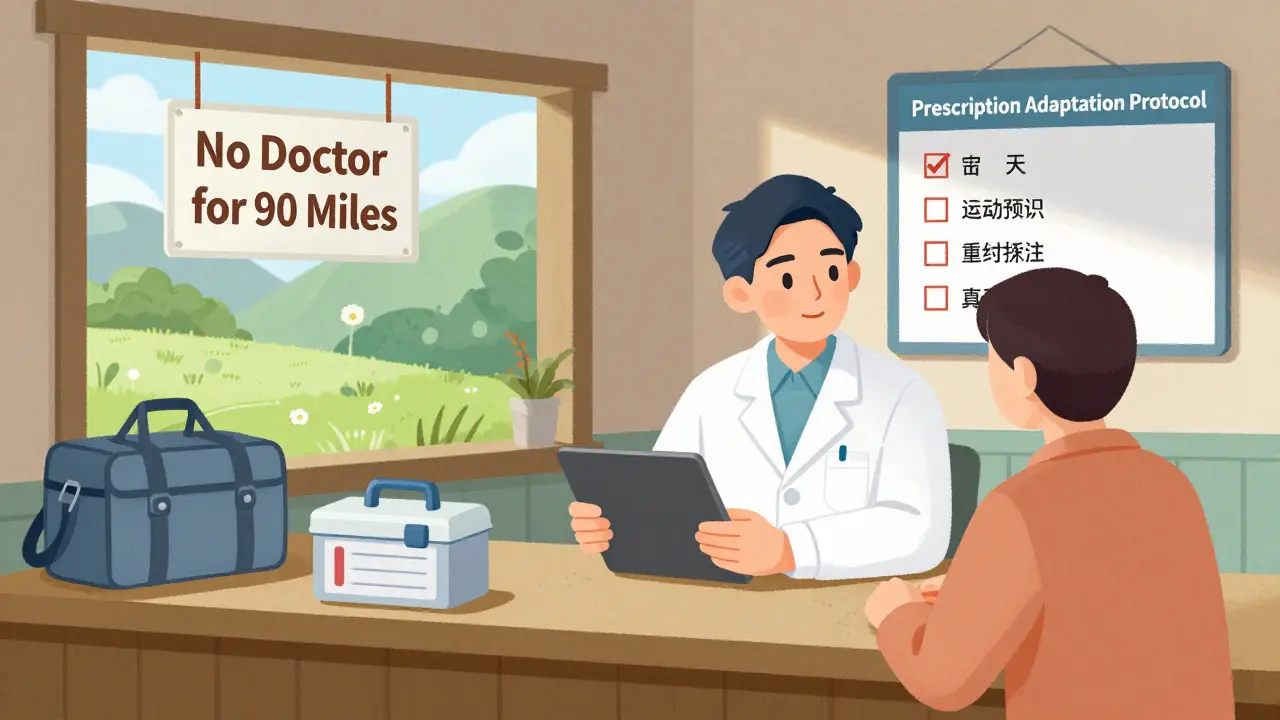
Imagine you’re in a small town in West Virginia. Your blood pressure medication ran out. Your doctor is 90 miles away. You can’t take time off work. You can’t afford the gas. In states that allow prescription adaptation, your pharmacist can adjust your dose, refill a prescription, or switch to a similar drug - all without calling the doctor first.
This isn’t about replacing doctors. It’s about removing barriers. The National Conference of State Legislatures reports this is especially common in rural areas, where 60 million Americans live in areas with too few doctors. Prescription adaptation lets pharmacists act quickly - adjusting doses for kidney function, removing allergens, or switching to a more affordable option - all within their training.
Collaborative Practice Agreements: The Bridge Between Pharmacist and Doctor
Every state lets pharmacists enter into collaborative practice agreements (CPAs) with physicians. These are written, legal documents that outline exactly what the pharmacist can do - like starting a diabetes med, ordering lab tests, or adjusting warfarin doses.
But here’s the catch: CPAs vary wildly. In some states, the doctor has to sign off on every decision. In others, the pharmacist runs the protocol with minimal oversight. Recent trends show a clear shift: pharmacists are getting more autonomy. More states are letting pharmacists design their own protocols, not just follow doctor-approved ones.
These agreements are how pharmacists in Minnesota can test for flu and prescribe Tamiflu. How they in California can give you a nicotine patch without a prescription. How they in New Mexico can manage thyroid levels under a statewide protocol - no doctor needed.
Independent Prescribing: The New Frontier
The most advanced states are moving toward full independent prescribing. That means pharmacists can initiate, change, or stop certain medications - all on their own, without any doctor’s input.
California calls it “furnishing.” Maryland says pharmacists are “providers.” Maine lets them prescribe nicotine replacement. New Mexico and Colorado use statewide protocols that can be updated by the board of pharmacy - no new law needed. All 50 states now allow some form of independent prescribing for at least one condition, usually for things like birth control, emergency contraception, or opioid overdose reversal.
Why these drugs? Because they’re safe, effective, and time-sensitive. Waiting days to see a doctor for Plan B isn’t just inconvenient - it’s medically risky. Pharmacists can give it to you in minutes. Same with naloxone. In 2023, over 100,000 people died of opioid overdoses. Pharmacists handing out naloxone without a prescription saved lives.

Why the Push for More Authority?
The numbers don’t lie. The Association of American Medical Colleges predicts a shortage of 124,000 doctors by 2034. Rural areas are already in crisis. Meanwhile, there are over 300,000 licensed pharmacists in the U.S. - most of them in community pharmacies, within walking distance of most people.
Expanding their authority isn’t about replacing physicians. It’s about using the right professional for the right job. Pharmacists spend years learning drug interactions, side effects, and dosing. They’re the only ones who see your full medication list every single day. They catch errors doctors miss.
States are responding. In 2025 alone, 211 bills were introduced across 44 states to expand pharmacist scope. Sixteen of them became law. The federal Ensuring Community Access to Pharmacist Services Act (ECAPS) is now pending in Congress. If it passes, Medicare would have to pay pharmacists for services like testing and treatment - the same way it pays doctors. That’s a game-changer.
The Pushback: Who’s Against It?
Not everyone agrees. The American Medical Association still says pharmacists aren’t trained like doctors. They worry about patient safety and professional boundaries. Some fear corporate pharmacies - like CVS or Walgreens - are pushing these changes to increase profits, not improve care.
There are real concerns. Training varies. Not every pharmacist has the same experience with chronic disease management. That’s why protocols matter. Written guidelines, documentation standards, and mandatory referral rules are non-negotiable. In states that do it right, outcomes improve. Blood pressure control goes up. Diabetes complications go down. Hospital visits drop.
The real issue isn’t training - it’s reimbursement. Even in states where pharmacists can prescribe, insurance companies often won’t pay. They don’t classify pharmacists as “providers.” Without payment, these services don’t last.
What’s Next?
The next five years will define the future of pharmacy. More states will adopt therapeutic interchange. More will allow independent prescribing for common conditions. Federal reimbursement under ECAPS could unlock nationwide change.
But success depends on three things: clear rules, consistent training, and fair pay. Pharmacists aren’t trying to become doctors. They’re trying to do what they’re trained to do - manage medications safely, effectively, and accessibly.
If you’ve ever waited days to refill a prescription, or skipped a dose because you couldn’t get to a doctor - this change matters. It’s not about titles. It’s about getting the right care, at the right time, from the right person.
Can a pharmacist change my prescription without telling my doctor?
No, not without following state rules. In most cases, pharmacists must notify your prescriber after making any substitution, especially with therapeutic interchange or prescription adaptation. Some states require written documentation in your medical record. The goal is to keep your care coordinated, not siloed.
Do I have to accept a drug substitution from my pharmacist?
Absolutely not. You have the right to refuse any substitution - generic or therapeutic. In states like Idaho, pharmacists are legally required to explain the difference and ask for your consent before swapping. If you’re unsure, ask: “Is this the same as what my doctor ordered?” They’ll explain.
Can my pharmacist prescribe birth control?
Yes, in 24 states and Washington, D.C., pharmacists can prescribe hormonal birth control to people over 18 without a doctor’s script. They’ll ask about your health history, check your blood pressure, and make sure it’s safe. It’s a proven, safe service that’s helped millions avoid unintended pregnancies.
Why don’t insurance companies pay pharmacists for these services?
Because most insurance systems still classify pharmacists as dispensers, not providers. Even if a state lets them prescribe, Medicare and private insurers often won’t reimburse unless federal law changes. That’s why the ECAPS Act is so important - it would force insurers to pay for pharmacist services just like they pay doctors.
Are pharmacists trained enough to do this?
Yes. Pharmacists now earn a Doctor of Pharmacy (Pharm.D.) degree, which takes six to eight years after high school - including clinical rotations in hospitals and clinics. They’re experts in drug interactions, dosing, and side effects. Their training is focused on medication use - the exact area where most medical errors happen.
