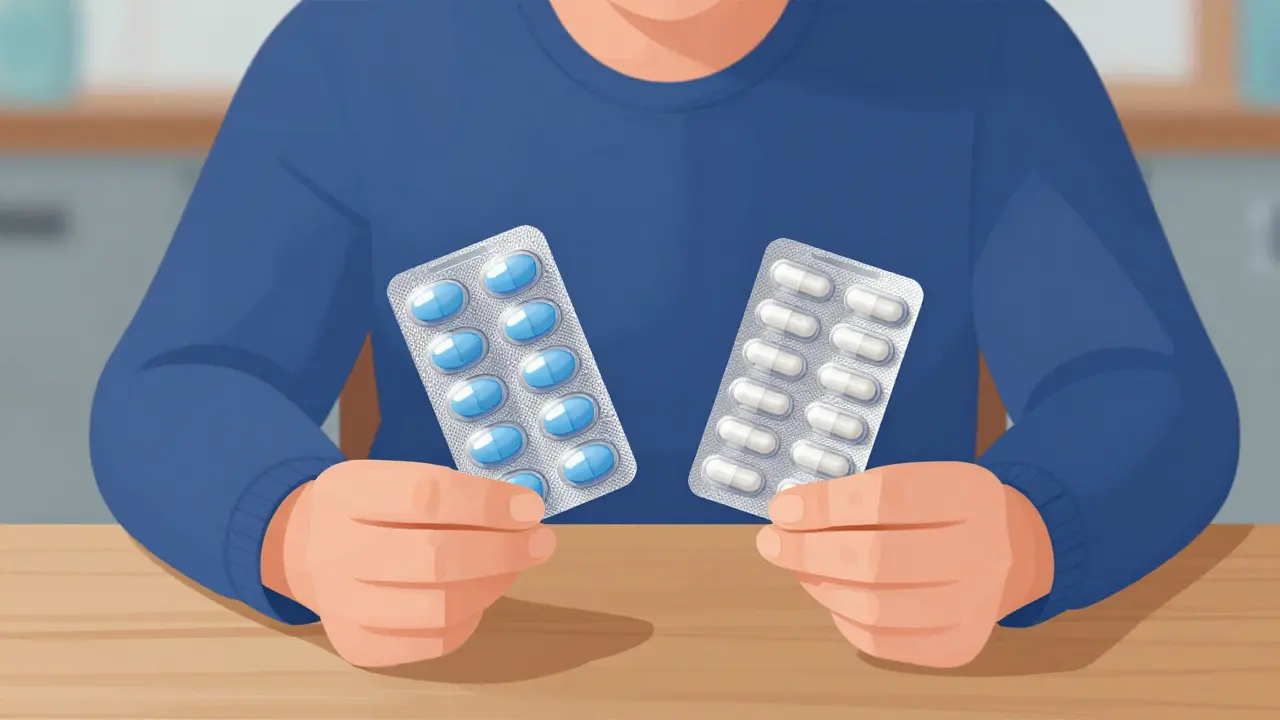
Imagine walking into your local pharmacy expecting the same blue pill you've taken for five years, only to be handed a white capsule by a different manufacturer. You take it home, swallow it, and suddenly your side effects change. This isn't paranoia; it's a documented reality for millions of patients relying on generic medications, which make up nearly 90% of all prescriptions filled today. While these affordable alternatives save healthcare systems billions of dollars annually, they introduce unique safety risks that often get overlooked in standard training.
The core problem lies in the assumption that "generic equals identical." In reality, while the active ingredient matches the brand-name drug, the inactive ingredients-known as excipients-can vary significantly between manufacturers. These differences can alter how quickly the body absorbs the medicine, potentially leading to under-dosing or toxicity. Understanding the specific vulnerabilities of generic medications is the first step toward stopping patient harm before it occurs.
Why Generic Substitutions Cause More Errors
You might wonder why a switch in manufacturer matters if the chemical formula is the same. The issue arises from physical variations. Different factories produce pills with different colors, shapes, and imprints. For elderly patients with declining vision, these changes are confusing and dangerous. When a patient sees a differently colored tablet, they may suspect fraud or accidental dispensing errors, leading to non-adherence where they simply refuse to take the new version.
Beyond appearance, there is the concept of bioequivalence. Regulatory bodies allow a range of 80% to 125% absorption compared to the brand name. For most drugs, this variance is harmless. However, for narrow therapeutic index drugs-like warfarin or levothyroxine-even slight shifts in absorption rates can push a patient out of their safety window. Research indicates that inadequate drug information contributes to roughly 35% of preventable adverse drug events, many occurring right at the prescribing stage because doctors aren't tracking which generic manufacturer is being used.
Where Most Mistakes Actually Happen
To fix a problem, you need to know exactly where it breaks down in the workflow. Data shows that prescription corrections occur at a rate of roughly 23 per 10,000 prescriptions in community settings. Interestingly, the biggest culprits aren't always what we expect.
- Dosage Errors (37.4%): Often caused by confusion over frequency instructions, such as mixing up twice-daily with twice-weekly schedules.
- Strength Discrepancies (19.2%): Selecting the wrong milligram strength during data entry.
- Dispensing Form Issues (14.4%): Confusing tablets for capsules due to manufacturer switches.
- Quantity Mistakes (11.3%): Ordering the wrong supply count based on verbal orders.
About half of these errors stem from administrative causes, like typing typos or outdated database references. The other half comes from clinical factors, where the pharmacist or prescriber misunderstands the specific requirements of a generic formulation.
Technology: Friend or Foe?
We rely heavily on software to catch these mistakes, but technology has its own quirks. Computerized Physician Order Entry (CPOE) systems have been proven to reduce medication errors by 55% in hospitals. They force electronic selection of drugs, removing handwriting misinterpretations. However, they struggle with generic specificity. If the system defaults to a specific generic manufacturer without checking the patient's history of tolerance, it misses the mark.
Clinical Decision Support Systems (CDSS) offer another layer of safety. These tools flag potential interactions or dosing errors before the prescription leaves the computer. Despite their power, they suffer from "alert fatigue." When a system buzzes for every minor interaction, pharmacists begin ignoring the warnings. A study noted that while CDSS helps, it doesn't fully address the physical variability of generic supplies, meaning a silent error can still slip through the screen.
The Human Safety Net: Reconciliation and Counseling
When machines fail, human vigilance must step in. The "8 R's" of medication safety provide a solid framework: right patient, right drug, right time, right dose, right route, right documentation, right reason, and right response. Implementing this protocol takes about 8 to 12 hours of team training, but it pays off in reduced incident rates.
A critical moment for catching generic errors is medication reconciliation. This process involves reviewing a patient's complete list of medicines against what they are actually taking. Pharmacists spending 15-20 minutes per patient can identify an average of 2.3 medication discrepancies. It's particularly vital when a patient switches providers or facilities, as generic substitutions might have happened behind the scenes without the patient's knowledge.
Mandatory counseling for first-fill medications acts as the final checkpoint. Even with automation, speaking to the patient catches about 12-15% of potential errors. During these brief sessions, pharmacists confirm understanding: "Does this blue pill look the one you took last month?" If the answer is no, it triggers a review of the supply chain to see why the manufacturer changed unexpectedly.
Correcting Errors: Protocols and Transparency
No system is perfect. When a dispensing error occurs involving a generic swap, the immediate priority is patient safety, followed by transparency. The correction process begins with verifying the inventory. Was it a stock rotation error? Did the technician grab the wrong bottle because two generics looked similar?
If a patient ingested the wrong medication, clinical assessment is required immediately. You must document the event thoroughly. Underreporting is common-only 28% of community pharmacies maintain formal error tracking-but reporting feeds the larger safety network. By analyzing trends, pharmacies can spot patterns, such as a specific manufacturer producing confusing packaging, and request replacements from the supplier.
| Tool | Effectiveness | Limitations |
|---|---|---|
| CPOE Systems | Reduces errors by 55% | Fails on manual generic overrides |
| BCMA | Reduces adverse events by 50% | Requires barcode labels on all generics |
| CDSS Alerts | Substantial reduction in interactions | High alert fatigue reported |
| Medication Reconciliation | Finds 2.3 discrepancies per patient | Time-consuming for high volume |
Future Safety Standards
Looking ahead, the industry is moving toward better standardization. The World Health Organization has updated guidelines to combat look-alike and sound-alike names, directly helping to clear up generic confusion. Additionally, Artificial Intelligence-driven decision support is emerging as a game-changer. New pilot programs suggest AI could predict patient-specific reactions to generic formulations based on genetics, potentially cutting remaining errors by another 22%.
However, real progress depends on data quality. With 42% of pharmacists reporting outdated formulation details in reference databases, updating drug compendiums remains a top priority. Ensuring that your digital libraries reflect current manufacturing realities is just as important as installing new scanners.
Frequently Asked Questions
Are all generic drugs exactly the same as brand names?
Legally, generics must match the active ingredient and fall within a specific bioequivalence range (80-125%). However, inactive ingredients like fillers and dyes can differ, which sometimes affects how the drug is absorbed or tolerated by sensitive individuals.
How do I spot a look-alike sound-alike error?
Compare the abbreviation or name on the label against your order carefully. If two drugs start with the same letters, verify the spelling fully. Always cross-reference the National Drug Code (NDC) rather than relying solely on the product name.
What is the best way to report a generic medication error?
Most regions require reporting through official health authority channels or internal quality assurance forms. Document the specific batch number, manufacturer, and clinical outcome to assist in tracking recalls or systemic issues.
Why does manufacturer switching matter?
Switching manufacturers can change the pill's appearance, size, or taste. For patients dependent on routine, these changes cause confusion and non-adherence. Patients may stop taking the drug thinking they have received the wrong medication.
Can technology prevent generic substitution errors?
Yes, technologies like CPOE and bar code verification significantly reduce errors. However, they must be configured to recognize multiple generic suppliers for the same drug, and users must stay vigilant against system alerts becoming too frequent.

dPhanen DhrubRaaj
people forget how much trust we put in these systems when we get the pills home its scary to see the packaging change so often even the doctors dont seem to track which manufacturer sent it over sometimes you feel like nothing matches what you expected back then
Victor Ortiz
You sound paranoid but actually the data backs this up completely regarding the excipients. Most patients ignore the label changes until they feel sick which is terrible.
Amber Armstrong
I read through this whole guide and I have to say it really hits home for many families dealing with chronic care. When my grandmother first started getting her meds filled online she always checked the color carefully before opening the bottle. She was terrified that the white capsule looked different than the blue one she had trusted for years. It is honestly terrifying to think that innocent looking differences could mean toxicity for older adults. We really rely on these pharmacists to catch those small discrepancies before we take them home. I remember one time she missed two doses because the pill looked wrong to her eyesight. The stress of not knowing if it is safe to swallow adds so much burden to their daily routine. Healthcare providers rarely explain why the manufacturer changed during the visit either which leaves us guessing. We need better counseling sessions where they ask us if the new pill looks okay before we leave. Safety nets are great but human connection matters more when machines fail us completely. My own dad asked me once if the doctor tried to switch his insurance plan secretly by changing the brand. I told him that generic drugs save money but safety shouldn't be the tradeoff for saving cash. It is crucial that we advocate for our parents to ask questions about active ingredients too. These excipients really do matter for absorption rates in sensitive bodies. Everyone should carry their own medication card to track exactly which company made the batch last time. The peace of mind is worth the extra effort involved in checking every box.
Cameron Redic
Stop obsessing over colors when the real issue is dosage calculations in the backend software. Your anecdotal evidence means nothing against the statistical safety margins provided here.
Dan Stoof
This is such fantastic information!!! Why haven't more people shared this sooner!!!! I hope pharmacies adopt these protocols immediately!!!
Kendell Callaway Mooney
Adoption takes funding and training hours which many smaller shops do not have right now. The tech works best when updated regularly though.
RONALD FOWLER
We should focus on solutions rather than blaming the system entirely. Reconciliation works well if done correctly.
Biraju Shah
Solutions are already ignored by lazy pharmacists who rush the count instead of caring.
William Rhodes
The nature of generic drugs is capitalism meeting biology and the result is often messy. We accept risk but call it savings instead.
Marwood Construction
Your statement touches on systemic inefficiencies present in supply chain management. Further investigation into procurement standards is required.
Vikash Ranjan
I disagree with the assumption that generics cause harm more than brands do. Brands also have errors and high prices limit access which kills patients indirectly.