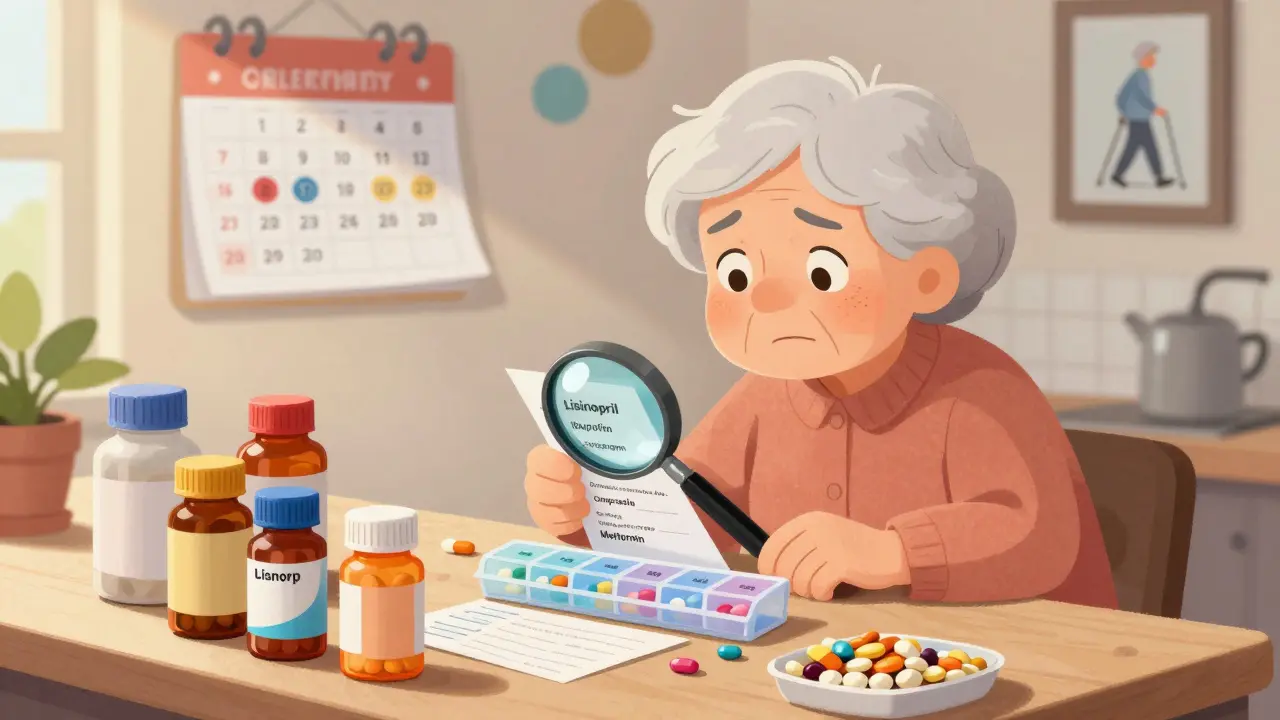
Imagine waking up every morning to a small mountain of pills. Five, seven, even ten different medications, each with its own time, dose, and purpose. For many older adults, this isn’t unusual-it’s routine. But what happens when some of those pills do more harm than good? That’s the quiet crisis behind polypharmacy in elderly patients.
Polypharmacy isn’t just about taking too many drugs. It’s defined as the regular use of five or more medications at the same time. And while some of those drugs are essential, a startling number aren’t. Studies show that nearly 40% of adults over 65 are taking medications that may no longer be helping them-and could even be hurting them. The result? More falls, more hospital trips, more confusion, and a lot less quality of life.
Why Older Adults End Up With So Many Medications
It’s not because seniors are careless. It’s because the system is fragmented. A person might see a cardiologist for heart disease, a rheumatologist for arthritis, a neurologist for memory issues, and a primary care doctor for general checkups. Each specialist adds a new prescription to treat their specific condition-often without knowing what the others have prescribed.
Take a typical case: Mrs. Chen, 78, takes lisinopril for high blood pressure, metformin for diabetes, ibuprofen for knee pain, lorazepam for anxiety, and omeprazole for acid reflux. Her doctor didn’t realize the ibuprofen was raising her blood pressure and making her kidneys work harder. The lorazepam was making her dizzy, and the omeprazole was lowering her vitamin B12 levels, which worsened her memory. No one had sat down and asked: "What are you trying to achieve here?"
These kinds of overlaps are common. Research from the National Institute on Aging shows that 42% of seniors get prescriptions from three or more different doctors. And with each new prescription, the chance of a dangerous drug interaction grows. By age 80, the body’s ability to process medications drops sharply. Liver function declines by 30-50%, and kidneys clear drugs 1% slower every year after 40. That means a dose that was safe at 65 can become toxic at 80.
The Hidden Dangers of Common Prescriptions
Not all medications are created equal-especially for older adults. The American Geriatrics Society’s Beers Criteria, updated in 2019, lists 56 medications and drug classes that are risky for seniors. Some are so dangerous they should be avoided entirely.
- Benzodiazepines (like lorazepam or diazepam): These are often prescribed for anxiety or sleep, but they increase fall risk by 50%. Falls are the leading cause of injury-related hospital visits in seniors.
- NSAIDs (like ibuprofen or naproxen): Used for pain, but they raise the risk of stomach bleeding by 2.5 times and can worsen kidney function.
- Anticholinergics (like diphenhydramine or oxybutynin): Found in allergy meds, bladder pills, and sleep aids. Long-term use is linked to a 1.5-fold increase in dementia risk over seven years.
- Opioids: Even low doses can triple the risk of falls in older adults. They also cause constipation, confusion, and breathing problems.
- Proton pump inhibitors (like omeprazole): Used for heartburn, but taking them longer than a year increases fracture risk by 26% and can lead to nutrient deficiencies.
What’s worse? Many of these drugs are still being prescribed because they’re easy to write. A doctor doesn’t always know what’s in the patient’s medicine cabinet. Over-the-counter meds, supplements, and herbal products often fly under the radar. One study found that seniors take an average of 2.3 non-prescription drugs alongside their prescriptions-and nearly half of those have unknown interactions.
Deprescribing: The Right Way to Stop Taking Meds
The solution isn’t just adding more drugs. It’s removing the ones that don’t belong. This is called deprescribing. It’s not about quitting meds cold turkey. It’s a careful, step-by-step process of stopping or lowering doses when the risks outweigh the benefits.
Studies show that when deprescribing is done right, it cuts adverse drug events by 22% and hospital admissions by 17%. One program at UCI Health called HAPS (Health Assessment Program for Seniors) reviews an average of 4.2 inappropriate medications per patient. After deprescribing, 37% of patients reported better energy, fewer falls, and clearer thinking.
Successful deprescribing follows three rules:
- Start with the highest-risk drugs. Focus on benzodiazepines, anticholinergics, opioids, and NSAIDs first.
- Ask the patient what matters most. Is it sleeping through the night? Walking without pain? Avoiding hospital visits? Treatment goals should match what the person values-not just what the chart says.
- Go slow. Taper one drug at a time. Monitor for withdrawal symptoms or return of original symptoms. Don’t rush.
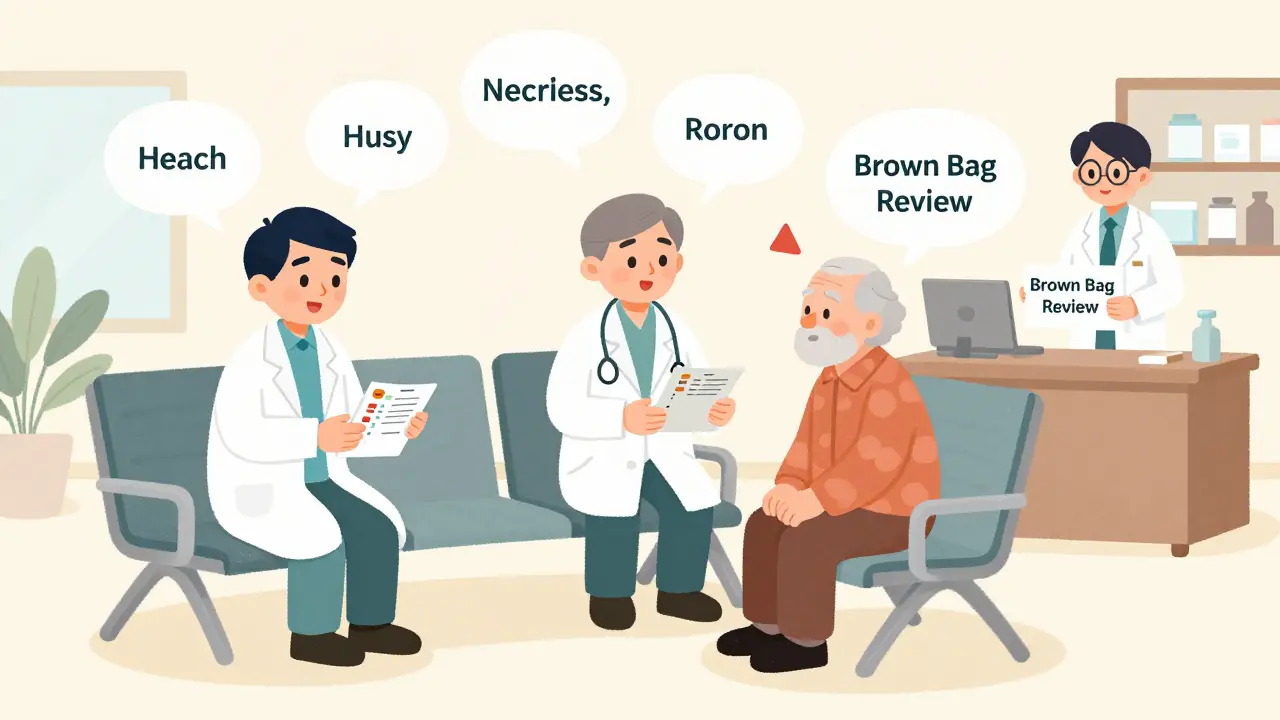
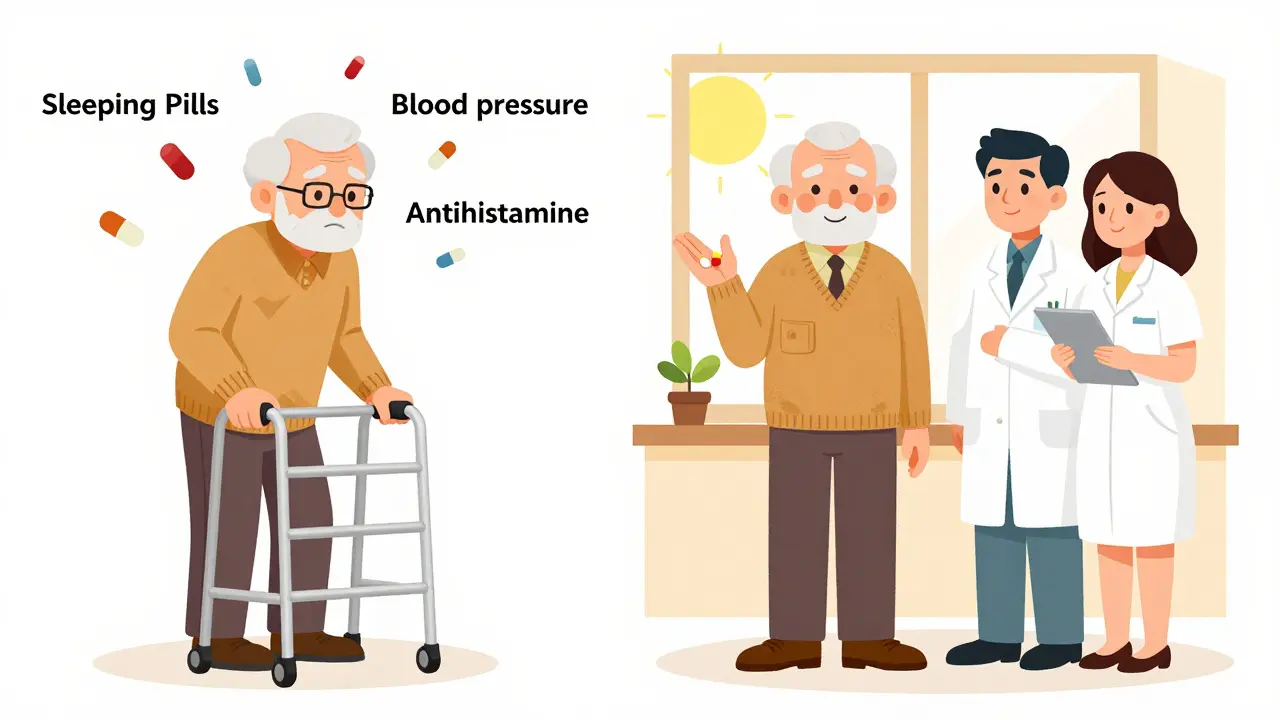
One man in Brisbane, 82, had been taking six medications for years. His daughter noticed he was falling more often and seemed confused. During a brown bag review (where he brought all his pills to the appointment), the pharmacist found he was on two different sleeping pills, two blood pressure drugs with the same effect, and an antihistamine for allergies that was making him drowsy. Within three months, three drugs were stopped. His balance improved. His memory cleared. He stopped needing a walker.
How to Manage Medications Better
There are proven strategies that work-whether you’re a patient, caregiver, or clinician.
1. The Brown Bag Review
Bring every pill, capsule, patch, and supplement to your next doctor’s visit. This includes aspirin, vitamins, herbal teas, and CBD oil. Studies show this simple step uncovers 2.8 unnecessary or duplicate medications per person. Pharmacists are especially good at spotting these.
2. Medication Reconciliation
Every time you move from hospital to home, or from one care facility to another, your meds should be reviewed. Over half of post-discharge complications happen because of mismatched prescriptions. Ask: "What did I take before? What am I taking now? Why did it change?"
3. Use a Pill Organizer
Simple, yes-but effective. A weekly pill box with morning, afternoon, and evening slots reduces missed doses by 40%. Pair it with a written list that says: "This is for blood pressure. This is for sleep. This was stopped last month."
4. Ask About Alternatives
Not every condition needs a pill. Can pain be managed with physical therapy instead of NSAIDs? Can anxiety be eased with mindfulness or routine instead of benzodiazepines? Can heartburn be reduced with diet and posture changes instead of PPIs? These alternatives often work better and safer for older adults.
5. Involve the Pharmacist
Pharmacists are medication experts-and they’re underused. In Medicare patients, pharmacist-led reviews cut hospital readmissions by 24%. Ask your doctor if you can schedule a medication therapy management session. It’s often covered by insurance.
The Bigger Picture: Why This Is a System Problem
Polypharmacy isn’t a personal failure. It’s a system failure. Doctors are pressured to check boxes: "Did you manage diabetes? Did you control blood pressure? Did you treat depression?" But no one asks: "Are all these drugs still helping?"
Even with electronic health records, alerts for drug interactions are wrong 78% of the time. That means clinicians ignore them. And without a clear goal-like "I want to live independently for the next year"-treatment becomes a checklist, not a plan.
The U.S. spends over $30 billion a year treating complications from inappropriate polypharmacy. Medicare now requires a medication review for all Part D beneficiaries, but only 15% actually get one. Meanwhile, new tools are emerging: platforms like MedWise use genetic data to predict how a person will react to a drug, cutting adverse events by 41% in trials.
Looking ahead, the focus is shifting from "how many pills" to "which pills matter." The National Institute on Aging is funding $42 million in research to build personalized medication plans based on biological age-not just chronological age. The goal? To stop prescribing by disease and start prescribing by person.
What You Can Do Today
If you or someone you care for is on five or more medications:
- Do a brown bag review this month.
- Ask: "Which of these are I really need? Which ones might be doing more harm than good?"
- Bring up deprescribing. Say: "I’d like to see if we can reduce some of these meds safely."
- Get a pharmacist involved. They can help you understand what each pill does-and if it’s still needed.
- Track side effects: dizziness, confusion, fatigue, falls, constipation. These aren’t "just aging." They might be drug-related.
Medications aren’t bad. But more isn’t always better. Sometimes, less is exactly what the body needs to heal, rest, and thrive.
What is polypharmacy, and how is it defined?
Polypharmacy is the regular use of five or more medications at the same time. It’s not just about the number-it’s about whether those medications are still necessary, safe, and aligned with the patient’s goals. While some older adults need multiple drugs for serious conditions, many take medications that no longer benefit them-or even cause harm.
Is taking multiple medications always dangerous for seniors?
Not always. Some seniors need several medications to manage chronic conditions like heart disease, diabetes, or hypertension. The danger comes when medications are prescribed without review, when they overlap, or when they’re no longer needed. The real issue is inappropriate polypharmacy-where the risks of side effects, interactions, and falls outweigh the benefits.
What are the most dangerous medications for elderly patients?
According to the American Geriatrics Society’s Beers Criteria (2019 update), high-risk medications include benzodiazepines (increase fall risk by 50%), non-steroidal anti-inflammatory drugs (doubling risk of stomach bleeding), anticholinergics (linked to higher dementia risk), opioids (triple fall risk), and long-term proton pump inhibitors (increase fracture risk by 26%). These should be reviewed carefully and deprescribed when possible.
What is deprescribing, and how does it help?
Deprescribing is the planned, gradual reduction or stopping of medications that are no longer beneficial or are causing harm. It’s not about quitting all drugs-it’s about removing the ones that don’t belong. Studies show deprescribing reduces adverse drug events by 22% and hospital admissions by 17%. It often improves energy, balance, and mental clarity.
How can I start a medication review with my doctor?
Bring all your medications-including over-the-counter drugs, supplements, and herbal remedies-to your appointment. Ask: "Which of these are still necessary? Are any of them causing side effects? Can we safely reduce or stop any?" Request a pharmacist-led medication review if available. Many insurance plans, including Medicare Part D, cover this service.

Steven Pam
Been there. My dad was on 11 meds before we did the brown bag review. Turned out two were for the same thing, one was for a condition he didn’t even have anymore, and the sleep aid was making him shuffle like a zombie. Cut him down to four. Now he’s gardening again. No magic, just common sense.
Also, pharmacists are unsung heroes. Stop treating them like pill dispensers.
Michael FItzpatrick
Let’s be real-polypharmacy isn’t a medical issue, it’s a capitalist one. Pharma reps show up at clinics with free lunches and shiny brochures. Docs get pressured to ‘check the boxes’ because reimbursement hinges on it. Meanwhile, grandma’s kidneys are screaming, but the form says ‘hypertension managed.’
It’s not ignorance. It’s incentivized negligence. We’ve turned healing into a spreadsheet.
Nandini Wagh
Oh wow, so you mean… doctors don’t actually know what they’re doing? Shocking. 🙃
Next you’ll tell me water is wet and gravity exists.
Lillian Knezek
They’re putting drugs in the water. Seriously. I read a whistleblower report-big pharma lobbies to keep seniors on meds so they keep paying. That’s why they won’t let you stop. That’s why they ignore the Beers Criteria. That’s why your ‘doctor’ won’t listen.
They don’t want you healthy. They want you hooked. 💊👁️
Maranda Najar
My mother. Eighty-three. Five medications. One of them was for ‘anxiety’-but she was never anxious. She was lonely. The pills made her forget her own name. I cried for three days. Then I took her to a pharmacist. We cut three. She remembered my birthday. She remembered my voice. I will never forgive the system for letting this happen.
It’s not medicine. It’s abandonment with a prescription pad.
Sanjaykumar Rabari
This whole thing is a scam. Doctors just give pills to shut people up. No one checks if it works. They just write more. My uncle died because of this. No one cared. Just numbers. Just papers. Just money.
Valerie Letourneau
As someone who works in elder care in Canada, I can confirm: deprescribing is underutilized, underfunded, and often misunderstood. We have protocols, yes-but without proper time, training, and interdisciplinary collaboration, they gather dust.
What’s needed isn’t just better guidelines-it’s cultural change. We must stop treating aging as a condition to be managed with pills, and start treating it as a life stage to be honored with dignity.
Lou Suito
Actually-deprescribing is dangerous. You can’t just stop meds. What if the condition comes back? What if they die? You’re playing Russian roulette with someone’s life. And who’s to say what’s ‘inappropriate’? One man’s ‘harm’ is another’s ‘lifesaver.’ You’re oversimplifying complex medicine with feel-good slogans.
Also-pharmacists? They’re not doctors.
Lisandra Lautert
The term 'polypharmacy' is misleading. It implies quantity alone is the issue. The real problem is 'inappropriate polypharmacy.' Precision matters. And yes-pharmacists are the unsung heroes. But let’s not forget: the system is broken because we treat aging like a disease. It’s not.
Cory L
Look-I’m not a doctor, but I’ve watched my grandma go from ‘I’m fine!’ to ‘I can’t walk without help’ in two years. Then we did the brown bag. Two meds cut. One was a sleeping pill she’d been on since 2008. She started remembering my dog’s name again.
Stop thinking pills = care. Sometimes care is just listening. And saying: ‘Let’s try without this.’
Bhaskar Anand
America is falling apart because they give pills to old people like candy. In India, we respect elders. We use turmeric. We use yoga. We use family. No pills. No hospitals. Just love. Why do you need 10 pills when one spoon of ginger tea works? This is why your healthcare is bankrupt.
Stephen Archbold
My mum’s pharmacist did a med review last year. Turned out she was on two different blood pressure meds that did the same thing. One was a ghost prescription from 2015. She’s been walking without her cane since. Honestly? I didn’t even know she was on it.
Pharmacists should be mandatory in every GP visit. Like a seatbelt. Just… do it.
Gabrielle Conroy
Just did this with my 80-year-old aunt! 🙌
She had: 1. Lisinopril (good) 2. Metformin (good) 3. Ibuprofen (bad) 4. Diphenhydramine (VERY bad) 5. Omeprazole (maybe bad) 6. Melatonin (unnecessary)
We cut #4, #5, and #6. She slept better, stopped falling, and now remembers where she put her glasses. 🥹
Also-she cried. Said she felt like herself for the first time in years.
Pharmacists. Are. Magic. 💫