Rifampin Birth Control Calculator
Contraceptive Risk Calculator
Rifampin can reduce hormonal birth control effectiveness by up to 67%. This tool calculates your backup contraception timeline based on when you start rifampin treatment.
When to start
When to stop
Why 28 days? Rifampin's enzyme effects last 2-4 weeks after stopping. Hormone levels need time to return to normal.
Recommended Backup Methods
Copper IUD
Hormone-free, lasts up to 10 years
Gold standard for rifampin users
Condoms + Spermicide
Effective when used correctly every time
Must use consistently
Not Recommended
Hormonal methods (implants, patches, rings)
May be broken down by rifampin
When you’re prescribed rifampin for tuberculosis or a stubborn staph infection, the last thing you’re thinking about is birth control. But if you’re on hormonal contraception, this antibiotic could be putting you at serious risk - not of side effects, but of unintended pregnancy.
Why Rifampin Is Different From Other Antibiotics
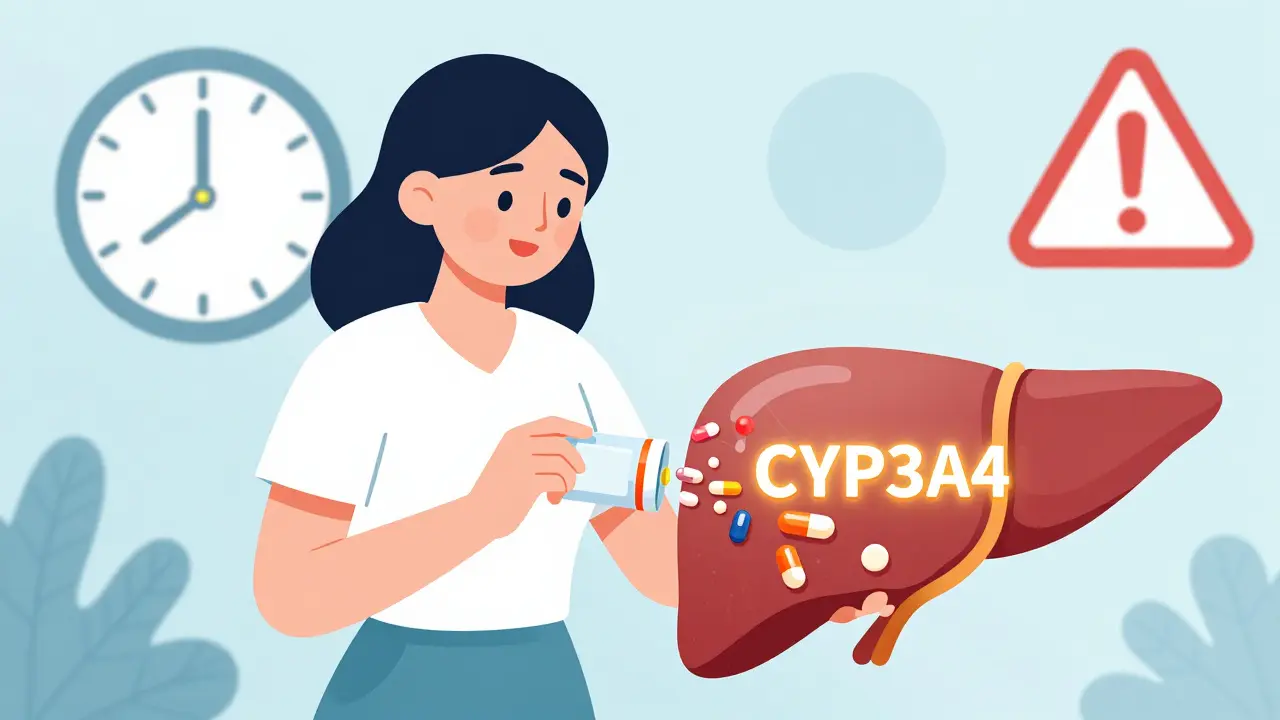
Most antibiotics don’t mess with birth control. Penicillin? Fine. Amoxicillin? Safe. Azithromycin? No problem. But rifampin is the exception. It’s the only antibiotic with solid, proven evidence of making hormonal contraceptives fail. This isn’t a rumor or an old wives’ tale. It’s been documented since the 1970s. Women on the pill, patch, or ring who took rifampin have gotten pregnant - even when they took their birth control exactly as directed. The reason? Rifampin doesn’t just kill bacteria. It turns your liver into a hormone-disposing machine. Rifampin forces your liver to crank up production of enzymes called CYP3A4. These enzymes break down estrogen and progestin - the two hormones in most birth control - way faster than normal. Studies show rifampin can slash the levels of these hormones in your blood by up to 67%. That’s not a small drop. That’s enough to stop ovulation from being blocked.How Fast Does It Happen?
You don’t have to be on rifampin for weeks for this to kick in. Within 24 to 48 hours of your first dose, your liver starts overproducing those enzymes. By day 7, you’re at peak enzyme activity. And here’s the part most people miss: the effect doesn’t stop when you stop taking the drug. Rifampin’s impact lingers. Even after you finish your course, your liver keeps producing those extra enzymes for 2 to 4 weeks. That means if you stop rifampin on day 20 but go off backup contraception after just a week, you’re still at risk. Many women get pregnant because they assume the danger ends when the antibiotic does.What Counts as Backup Contraception?
Not all backup methods are equal. If you’re on rifampin, condoms alone aren’t enough if you’re relying on them as your only protection. You need something that doesn’t depend on your hormones. The gold standard is a copper IUD. It’s hormone-free, lasts up to 10 years, and works perfectly even while you’re on rifampin. Condoms (male or female) are also safe - but only if used correctly every single time. If you’re not confident about that, pair them with spermicide. Hormonal IUDs? Not reliable. The progestin in Mirena or Kyleena gets broken down just like the pill. Implants like Nexplanon might be safer - one small 2023 study showed no pregnancies in 47 women using them with rifampin - but the sample size was too small to call it definitive. Until more data comes in, experts still recommend non-hormonal options.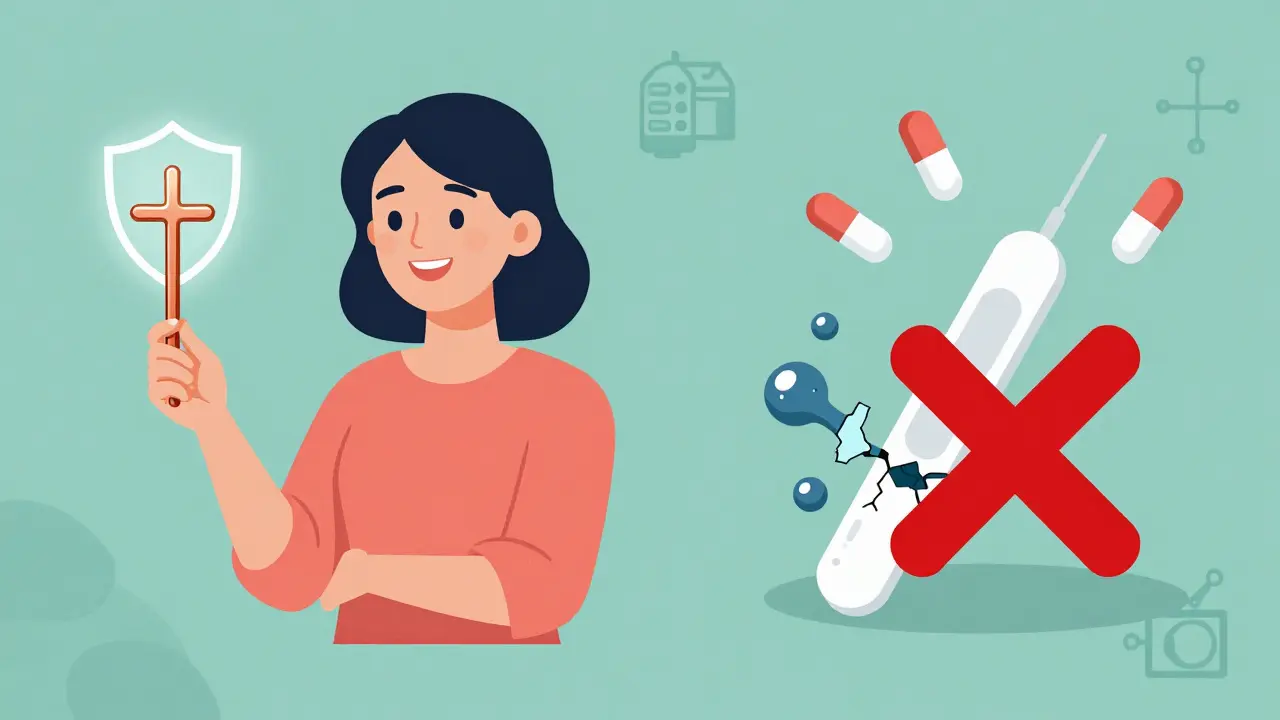
What About Rifabutin? Is It Safer?
Rifabutin is a cousin of rifampin, often used for MAC (Mycobacterium avium complex) infections in people with HIV. It’s weaker at inducing liver enzymes. Studies show it cuts hormone levels by only 20-30%, not the 50-67% that rifampin does. That doesn’t mean it’s safe. Some women on rifabutin still got pregnant. The American College of Obstetricians and Gynecologists says you should still use backup contraception with rifabutin - just for the full 28 days after stopping. Don’t assume it’s harmless because it’s "milder."Why Other Antibiotics Are Fine
You’ve probably heard stories about amoxicillin or doxycycline causing birth control to fail. That’s a myth. Between 1970 and 1999, the UK received 117 reports of contraceptive failure linked to penicillin or tetracycline antibiotics. But when scientists looked closer, they found no real link. In controlled studies, women taking these antibiotics didn’t ovulate more. Their hormone levels stayed stable. The reports were likely coincidences - missed pills, vomiting, diarrhea - not drug interactions. The same goes for azithromycin, clarithromycin, and metronidazole. None of them have been proven to interfere with hormonal contraception. If your doctor tells you to use backup contraception for any antibiotic besides rifampin or rifabutin, they’re giving outdated advice.What the Guidelines Say
The CDC, ACOG, and WHO all agree: if you’re taking rifampin, combined hormonal birth control (pill, patch, ring) is category 4 - meaning it’s unsafe. You must switch to a non-hormonal method. The recommendation isn’t vague. You need backup contraception for the entire time you’re on rifampin plus 28 days after your last dose. That’s non-negotiable. Even if you’re only on it for 2 weeks, you still need 28 days of backup after. The FDA and EMA require every hormonal contraceptive package to include a warning about rifampin. That’s how serious this is.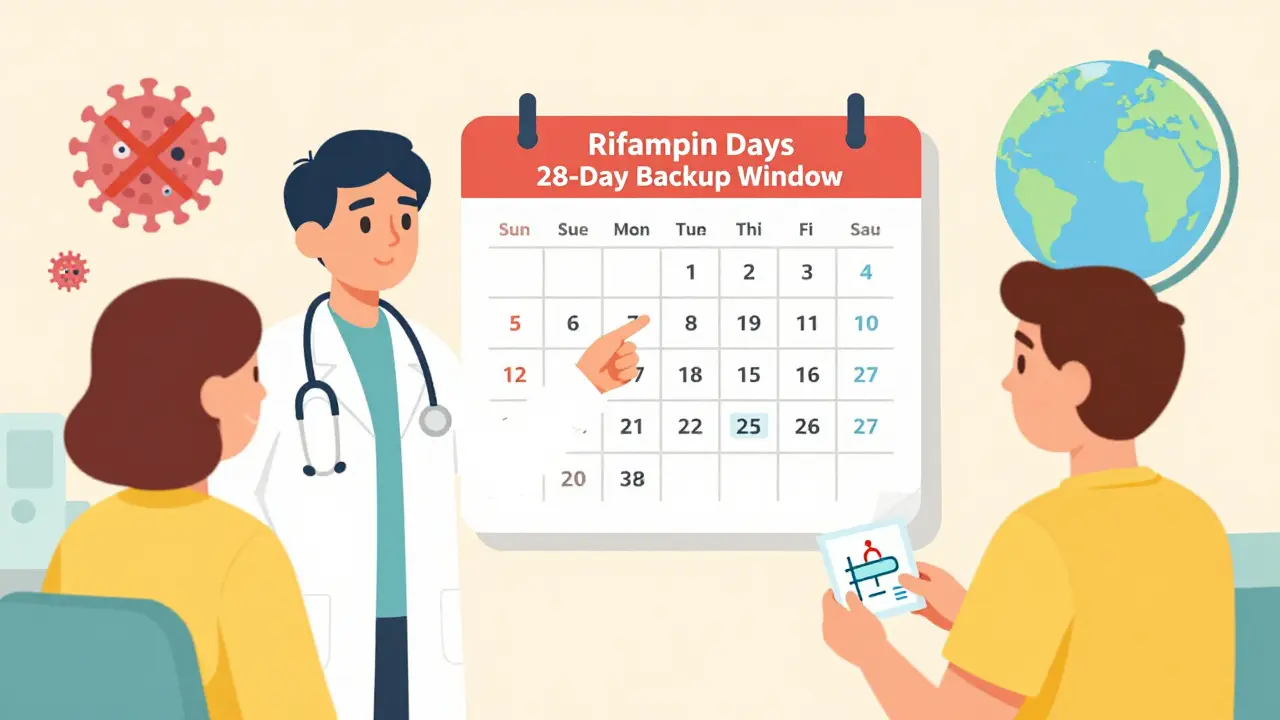
Why So Many Doctors Get It Wrong
A 2017 survey found that only 42% of primary care doctors consistently warn patients about rifampin’s interaction with birth control. Another 28% told patients to use backup contraception for all antibiotics. Part of the problem? It’s complicated. Doctors are busy. They’re focused on treating TB or infection, not reproductive health. And many still believe the old myth that "all antibiotics ruin the pill." But the consequences are real. A 2022 study found that 63% of women prescribed rifampin received no proper counseling about contraception. That’s not negligence - it’s a system failure. Women in high-TB areas like sub-Saharan Africa are especially vulnerable, where access to IUDs or condoms is limited.What You Should Do Right Now
If you’re on rifampin and using hormonal birth control:- Stop relying on the pill, patch, or ring immediately.
- See your doctor or gynecologist within 48 hours to get a copper IUD or start using condoms + spermicide.
- Keep using backup contraception for 28 days after your last rifampin dose.
- Don’t assume you’re safe just because you feel fine or didn’t bleed.
- Ask your doctor: "Is this antibiotic rifampin or rifabutin?"
- If yes, ask: "What’s my backup plan?"
- Don’t wait until you’re already taking it to ask.
What’s Changing in the Future?
Researchers are looking for TB treatments that don’t use rifamycins. One promising 4-month regimen using rifapentine and moxifloxacin finished its trial in 2022. Results are expected in 2024. If it works, it could replace rifampin in many cases - and eliminate this risk entirely. Meanwhile, newer long-acting contraceptives like implants and IUDs are becoming more common in TB-endemic regions. The WHO now recommends copper IUDs or implants as first-line options for women needing rifampin. That’s a step forward. But until we have better TB drugs, this interaction remains a silent threat. It’s not about being careful. It’s about knowing the facts - and acting on them before it’s too late.Can rifampin cause birth control to fail even if I take it exactly as prescribed?
Yes. Rifampin reduces hormone levels in your blood by up to 67%, regardless of how perfectly you take your pill. Even one missed dose isn’t the issue - it’s the drug changing how your body processes the hormones. This isn’t user error. It’s a chemical interaction.
Do I need backup contraception if I’m taking rifampin for only 7 days?
Yes. The enzyme-inducing effect lasts 2-4 weeks after your last dose. You must use backup contraception for the entire time you’re on rifampin plus 28 days after. Even a short course carries the same risk.
Is the copper IUD safe to use while on rifampin?
Yes. The copper IUD is hormone-free, so rifampin has no effect on it. It’s the most reliable backup method and can stay in place for up to 10 years. It’s recommended by the CDC and WHO for women on rifampin.
Can I switch to a higher-dose birth control pill instead of using backup?
No. There’s no evidence that increasing the dose of estrogen or progestin prevents failure with rifampin. The liver still breaks down the hormones too fast. Higher doses also increase your risk of blood clots and other side effects. Backup contraception is the only safe option.
What if I got pregnant while on rifampin and birth control?
This is rare but documented. If you become pregnant, stop rifampin and contact your doctor immediately. Rifampin is not known to cause birth defects, but tuberculosis itself can be dangerous during pregnancy. You’ll need a coordinated plan between your OB-GYN and infectious disease specialist.
Are there any antibiotics that make birth control work better?
Ketoconazole, an antifungal, can inhibit the same liver enzymes that rifampin activates. This can cause hormone levels to rise, potentially increasing side effects like nausea or blood clots. But it’s not used for infections like TB - and never recommended as a way to "boost" birth control. Never mix antibiotics or antifungals with birth control without medical advice.

Kelly McRainey Moore
This blew my mind. I had no idea rifampin could mess with birth control like that. I thought it was just a myth like the amoxicillin thing. Guess I’m lucky I never got prescribed it, but now I’m telling every friend on the pill to read this.
Thanks for laying it out so clearly.
Amber Lane
So many women don’t know this. I’m glad someone finally spelled it out without jargon.
Ashok Sakra
Wait wait wait so you're saying the government knows this but still lets doctors prescribe it?? This is a plot. They want us to have babies so they can control us with daycare costs. I saw a video about this on TikTok and it all connects. The pharmaceutical companies are in cahoots with the WHO. I'm not even kidding.
Also I got pregnant once on azithromycin and they lied to me about it.
Coral Bosley
I had a friend who got pregnant on rifampin. She thought she was safe because she never missed a pill. She cried for days. We had to help her navigate the whole thing - the guilt, the fear, the doctor who acted like it was her fault. No one warned her. Not even the pharmacist.
It’s not just about the science. It’s about the silence. And that silence kills.
I’m screaming this from the rooftops now. If you’re on this drug, don’t trust your gut. Trust the data. Always.
Steve Hesketh
This is one of those posts that makes me feel hopeful about humanity. You took the time to explain this like someone who actually cares - not just dumping facts, but showing how real people get hurt because of gaps in care.
I’m from Nigeria, and I’ve seen too many women here get told ‘just use condoms’ without any access to IUDs or even proper counseling. This isn’t just a medical issue - it’s a justice issue.
Please keep spreading this. We need more voices like yours.
And if you’re reading this and you’re a doctor? Stop assuming. Start educating.
shubham rathee
Why do people always assume rifabutin is safer when the studies are so small? I mean look at the sample size 47 women really? And you say it’s not definitive but then you recommend it like its gospel? This is why science is broken. You need 10000 subjects minimum. Also I read on a forum that rifampin is actually a mind control agent implanted by aliens to reduce population growth. The 28 day thing is just a distraction.
Also I don’t believe in IUDs they are made of satan
MAHENDRA MEGHWAL
It is of paramount importance to acknowledge the clinical significance of this pharmacokinetic interaction. The induction of hepatic cytochrome P450 3A4 enzymes by rifampin results in accelerated metabolism of ethinyl estradiol and progestogens, thereby compromising contraceptive efficacy. The recommendation for a 28-day post-treatment window is empirically supported by pharmacodynamic modeling and clinical case series. It is imperative that healthcare providers adhere to these guidelines to prevent unintended pregnancy, which carries significant psychosocial and obstetric implications. Thank you for this meticulously researched exposition.
Kevin Narvaes
bro i just took rifampin for 10 days and i was on the pill and nothing happened so maybe this is just fearmongering? like why do we always think the worst of medicine? also i think the pill is kinda dumb anyway why not just like... not have sex? 🤔
Dee Monroe
There’s something deeply human about how we treat medical knowledge like it’s a checklist instead of a living conversation. We get a prescription, we take the pill, we assume safety - but biology doesn’t care about our assumptions. Rifampin doesn’t just interfere with hormones, it interrupts the quiet trust we place in our own bodies. We think we’re in control - we time our pills, we track our cycles, we follow instructions - but when a drug reprograms our liver, it’s not a mistake, it’s a revelation. We’re not failing. Our systems are just speaking a language we forgot how to listen to.
Maybe the real failure isn’t the lack of backup contraception - it’s the lack of compassion in how we teach this. We don’t say ‘this drug can change your body in ways you can’t see’ - we say ‘use condoms.’ And that’s not enough. We need to talk about power, about autonomy, about how medicine often speaks to women in whispers when it should be screaming.
Thank you for screaming.
Jerry Rodrigues
Good post. I’ve seen this go wrong too. Just make sure your doctor knows. That’s all.
Jarrod Flesch
Just had to share this with my sister - she’s on rifampin right now and didn’t know any of this. Thanks for writing this so clearly. I’m sending it to every OB/GYN I know. 🙏
Also copper IUDs are life-changing. I got one last year and I’m never going back. No more daily pills, no stress, no interactions. Just peace.