
Selegiline (EMSAM) Safety & Interaction Checker
Select your current EMSAM patch dose to view specific safety profiles and restrictions.
6 mg
Lowest Dose9 mg
Medium Dose12 mg
High DoseSafety Profile: 6 mg
Risk remains high at all doses due to brain MAO-A inhibition.
Search for a medication name to check if it is safe to take with Selegiline Transdermal.
- Ibuprofen / Acetaminophen (Pain) Generally Safe
- Loratadine / Cetirizine (Allergies) Generally Safe
- Guaifenesin (Cough Mucus) Safe
Calculate the mandatory waiting period when switching between Selegiline and other antidepressants.
Current Status
Target Medication
Wait Period Required: 14 Days
You must wait at least 14 days after removing the patch before starting the new SSRI/SNRI to allow your body to regenerate monoamine oxidase enzymes.
New Clinical Guidelines (2023)
Recent consensus suggests extending the standard 14-day washout to 21 days for added safety, as enzyme recovery can take up to 28 days in some individuals. Always consult your doctor for personalized advice.
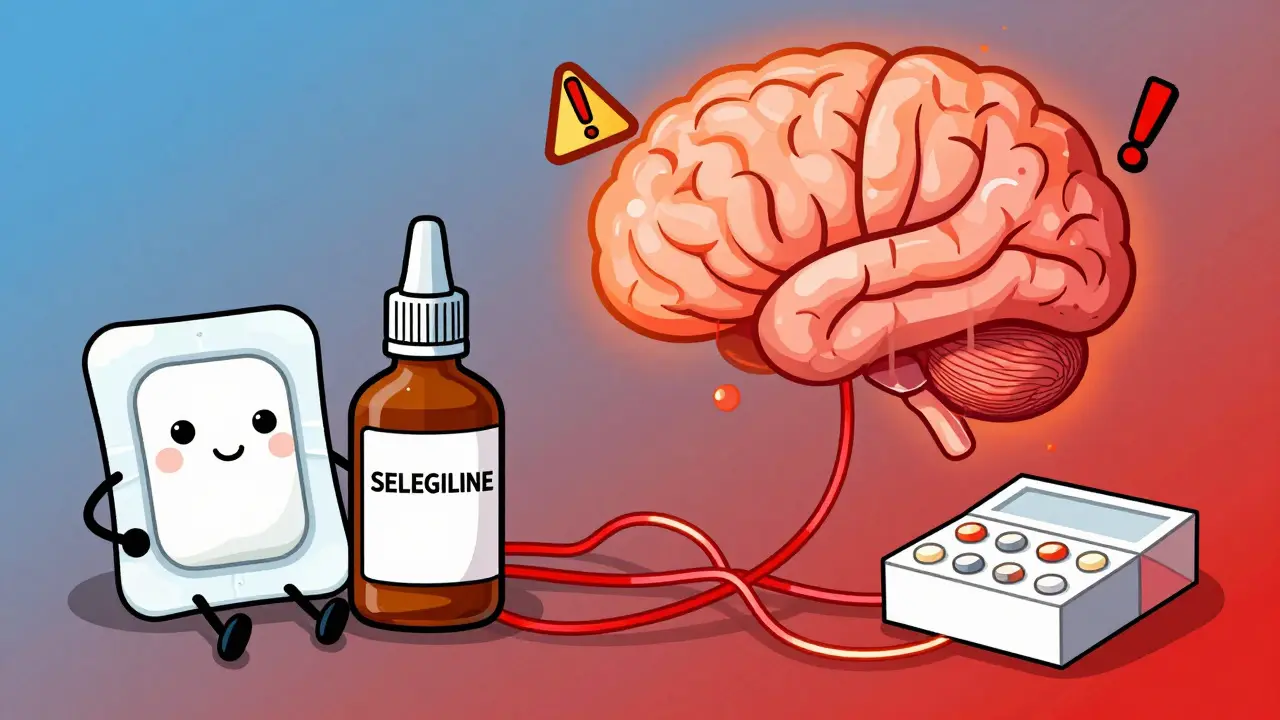
Imagine you are prescribed a new antidepressant patch that promises relief without the strict dietary rules of older drugs. It sounds like a miracle, right? But if you combine this patch with common medications for pain, nausea, or even colds, you could trigger a life-threatening condition called serotonin syndrome. This isn't just theoretical fear-mongering; it is a documented medical emergency that sends patients to the ICU every year.
The drug in question is Selegiline Transdermal System, often known by its brand name EMSAM. It is a monoamine oxidase inhibitor (MAOI) delivered via a skin patch. While it offers unique benefits for treatment-resistant depression, it carries a black box warning from the FDA regarding interactions with serotonergic drugs. Understanding these risks is not optional-it is essential for your safety.
How Selegiline Patches Work Differently
To understand the danger, you first need to understand how the drug works. Traditional oral MAOIs block enzymes in your gut and brain that break down neurotransmitters. This causes two problems: high blood pressure spikes when eating aged cheeses (the "cheese effect") and dangerous buildup of serotonin when taking other meds.
The transdermal patch bypasses the gut. At the lowest dose of 6 mg per day, it primarily affects the brain while leaving the gut enzymes largely untouched. This is why you don't have to avoid tyramine-rich foods at this specific dose. However, this distinction creates a false sense of security. The patch still inhibits monoamine oxidase-A (MAO-A) in the central nervous system. When MAO-A is blocked, serotonin accumulates. If you add another drug that increases serotonin, you flood your system.
| Dose (mg/day) | Gut MAO-A Inhibition | Brain MAO-A Inhibition | Dietary Restrictions | Serotonergic Drug Risk |
|---|---|---|---|---|
| 6 mg | Minimal | Moderate | None required | High |
| 9 mg | Significant | High | Required | Very High |
| 12 mg | Significant | High | Required | Very High |
The critical takeaway here is simple: No dietary restrictions does not mean no drug interactions. Even at the safest dose for food, the risk of serotonin syndrome remains severe if you mix it with the wrong medications.
Drugs That Trigger Serotonin Syndrome
You might think you know all the medications you take. But many over-the-counter (OTC) drugs and herbal supplements contain serotonergic agents. Combining these with selegiline transdermal is strictly contraindicated. Here is what you must avoid:
- SSRIs and SNRIs: Common antidepressants like fluoxetine (Prozac), sertraline (Zoloft), and venlafaxine (Effexor).
- Tricyclic Antidepressants (TCAs): Older antidepressants such as amitriptyline or nortriptyline.
- Opioid Pain Relievers: Specifically tramadol and meperidine. Note that most opioids are safe, but these two affect serotonin reuptake.
- Migraine Medications: Triptans like sumatriptan (Imitrex) and rizatriptan.
- Cough Suppressants: Dextromethorphan, found in Robitussin, Mucinex DM, and many generic cough syrups.
- Nausea Medications: Ondansetron (Zofran) and granisetron. These are frequently given in hospitals after surgery or chemotherapy.
- Herbal Supplements: St. John’s Wort and tryptophan.
- Other Agents: Buspirone (for anxiety) and linezolid (an antibiotic).
A case report published in Anesthesia & Analgesia in 2021 highlighted a terrifying scenario: a patient on a 9 mg EMSAM patch developed severe serotonin syndrome after receiving ondansetron for post-operative nausea. The patient was stable until the anti-nausea drug was administered. This proves that even short-acting drugs used in acute settings can be fatal when combined with MAOIs.
The Hidden Danger of Over-the-Counter Meds
The biggest gap in patient safety isn't prescription errors; it's self-medication. A discussion on the mental health forum Talkiatry revealed that 68% of respondents felt they received inadequate warnings about drug interactions when prescribed EMSAM. Worse, 22% experienced adverse effects later linked to undisclosed interactions with OTC products.
Consider dextromethorphan. It is in almost every store-brand cough syrup. If you have a cold and pop a pill for your cough while wearing your selegiline patch, you are mixing two serotonergic agents. The result can range from mild agitation to hyperthermia (dangerously high body temperature), muscle rigidity, and coma. Always check the "Active Ingredients" label on any OTC product. If you see dextromethorphan, do not take it.
Washout Periods: Timing Is Everything
Switching between antidepressants requires precision. You cannot simply stop one drug and start another the next day. The enzymes inhibited by selegiline are irreversibly bound. Your body must synthesize new enzymes, which takes time. Rushing this process is the most common cause of accidental serotonin syndrome.
Here are the mandatory washout periods based on FDA labeling and clinical guidelines:
- Stopping Selegiline Patch to Start an SSRI/SNRI: Wait at least 14 days after removing the last patch before starting the new serotonergic drug.
- Starting Selegiline Patch After an SSRI/SNRI: Wait at least 2 weeks after stopping most SSRIs/SNRIs.
- The Fluoxetine Exception: Fluoxetine has a very long half-life. You must wait 5 weeks after stopping fluoxetine before starting the selegiline patch. Conversely, if you are switching from the patch to fluoxetine, the standard 14-day wait applies, but caution is advised due to residual metabolites.
- New Clinical Guidelines (2023): Recent consensus guidelines in the American Journal of Psychiatry suggest extending the washout period to 21 days for added safety, as preliminary data suggests MAO-A recovery may take up to 28 days in some individuals.
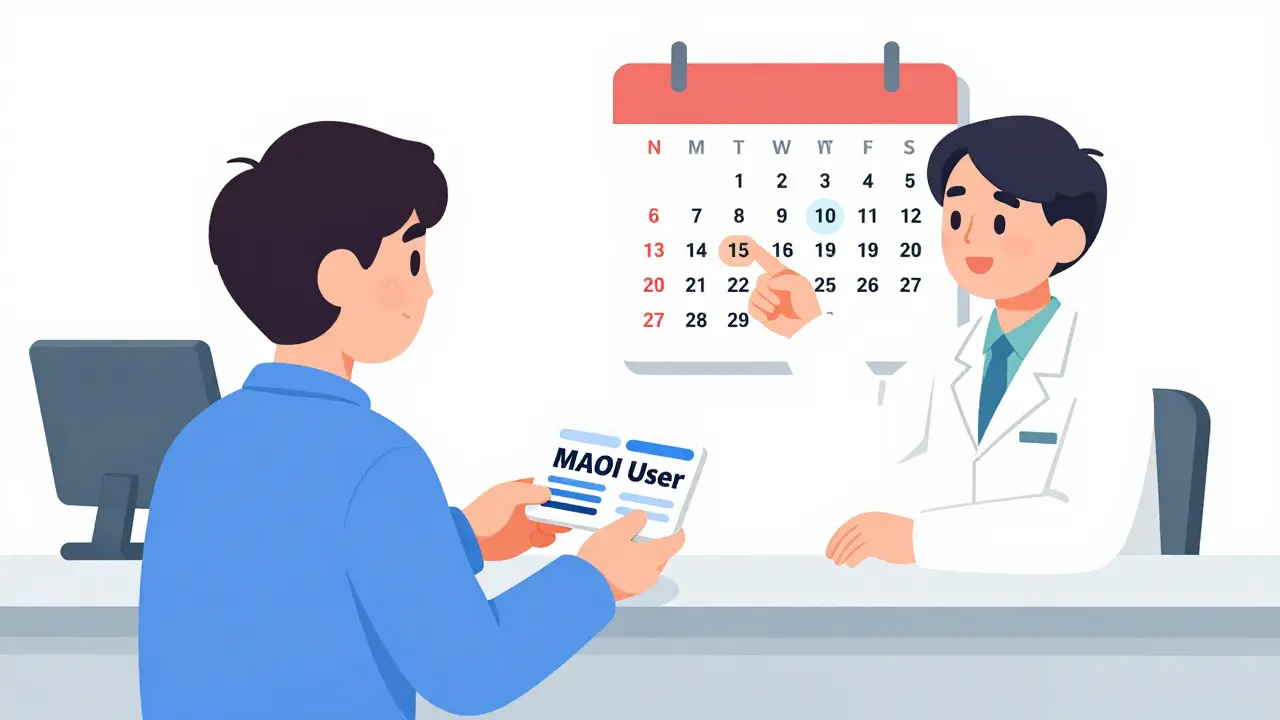
Do not rely on memory. Write these dates down. Set a calendar reminder. If your doctor says you can switch in one week because "clinical studies showed some did," remember that those were outliers, not the standard of care. The shortest interval in studies was one week, but the FDA explicitly states this does not represent a safe transition period for general use.
Recognizing Serotonin Syndrome Early
If you suspect an interaction, act immediately. Serotonin syndrome can escalate rapidly. Use the mnemonic HAT to remember the key symptoms:
- H - Hyperthermia: High fever, sweating, hot skin.
- A - Autonomic Instability: Rapid heart rate, fluctuating blood pressure, dilated pupils.
- T - Tremors and Rigidity: Muscle stiffness, twitching, jerking movements, diarrhea.
Mental status changes are also critical. Look for agitation, confusion, hallucinations, or extreme anxiety. If you experience these symptoms within 72 hours of starting a new medication or supplement while on EMSAM, seek emergency medical attention. Tell the ER staff immediately: "I am on a selegiline transdermal patch." This information changes their diagnosis and treatment plan instantly.
Practical Steps for Safe Management
Managing selegiline transdermal safely requires a proactive approach. Here is your checklist for every medical encounter:
- Carry a Medication Card: Keep a card in your wallet stating you are on an MAOI. Include the dose and the list of contraindicated drugs.
- Inform All Providers: Tell your dentist, surgeon, and specialist about the patch before any procedure. Anesthesiologists need to know to avoid certain sedatives and anti-nausea drugs.
- Use EHR Caution: While electronic health records should flag interactions, a 2020 study found only 43% of systems accurately flagged all critical selegiline interactions. Do not trust the computer alone. Verbally confirm with your pharmacist.
- Review OTCs: Before buying anything for a headache, cough, or allergy, ask a pharmacist: "Is this safe with an MAOI?"
- Monitor Weekly: During the first few weeks of therapy or any dose change, monitor yourself daily for subtle signs of serotonin toxicity like jitteriness or insomnia.
The misconception that transdermal selegiline is "safer" regarding interactions has led to dangerous prescribing practices. As Dr. Charles L. Raison noted, treating the 6 mg dose as having no interaction risks is a critical error. The absence of dietary restrictions does not equate to the absence of drug-drug interaction risks. Stay vigilant, communicate clearly with your healthcare team, and never assume a drug is safe just because it is available over the counter.
Can I take ibuprofen or acetaminophen with selegiline transdermal?
Yes, generally speaking. Ibuprofen (Advil, Motrin) and acetaminophen (Tylenol) do not significantly affect serotonin levels and are considered safe to use with selegiline transdermal patches. However, always consult your doctor to ensure there are no other underlying conditions that would make these NSAIDs or analgesics unsafe for you personally.
What happens if I accidentally take a prohibited medication?
If you accidentally take a serotonergic drug like dextromethorphan or an SSRI while on the patch, monitor yourself closely for symptoms of serotonin syndrome (agitation, rapid heartbeat, tremors, fever). If any symptoms appear, seek emergency medical care immediately. Do not wait for symptoms to worsen. Inform the medical staff about both the patch and the ingested medication.
Is the 6 mg dose completely free of drug interaction risks?
No. The 6 mg dose eliminates the need for dietary tyramine restrictions because it minimally affects gut enzymes. However, it still inhibits MAO-A in the brain. Therefore, the risk of serotonin syndrome when combined with other serotonergic drugs remains high at all doses, including 6 mg. Never mix EMSAM with SSRIs, SNRIs, triptans, or dextromethorphan regardless of the patch strength.
How long does it take for the selegiline patch to leave my system?
While the drug itself has a short half-life (about 1.4 hours), its effect on monoamine oxidase enzymes is irreversible. Your body must create new enzymes to restore normal function, which typically takes about 14 days. This is why a minimum 14-day washout period is required before starting other serotonergic medications. Some recent guidelines suggest waiting up to 21-28 days for complete safety.
Can I use St. John's Wort with selegiline transdermal?
Absolutely not. St. John's Wort is a potent serotonergic agent. Combining it with selegiline transdermal significantly increases the risk of serotonin syndrome. Many people view herbal supplements as "natural" and therefore safe, but in the context of MAOIs, St. John's Wort acts similarly to a strong prescription antidepressant and must be avoided entirely.

Ramanath Rao
This article is dangerously misleading. You claim the 6mg dose has 'no dietary restrictions' but then admit it still carries a HIGH risk of serotonin syndrome. This contradiction creates a false sense of security that could kill someone. I have seen too many patients in India ignore warnings because doctors say 'it's just a patch.' The transdermal route does NOT eliminate MAO inhibition in the brain. Stop downplaying the risks to make the drug seem palatable. People need to understand that ANY serotonergic agent combined with EMSAM is a potential death sentence, regardless of the dose.
irine sabrina
Oh my goodness, thank you so much for sharing this detailed guide! 🌟 It is truly frightening how easy it is to accidentally mix these medications, especially with over-the-counter cough syrups like Robitussin. I always tell my friends to double-check everything with their pharmacist because our health is precious. It’s wonderful to see such clear information about washout periods-knowing that fluoxetine requires a 5-week wait is crucial knowledge that many might miss. Let’s all stay vigilant and look out for one another! 💖
Gary Helminiak
Hey everyone! 👋 Just wanted to chime in here because this topic is super important and often overlooked by both patients and sometimes even healthcare providers who are busy rushing through appointments. 😅 The key takeaway, as the article states, is that the absence of dietary tyramine restrictions at the 6mg dose does NOT mean the absence of drug-drug interaction risks. 🚫💊 Many people think, 'Well, if I don't have to avoid cheese, I'm safe,' but that is a massive misconception. The MAO-A enzyme in the brain is still inhibited, which means serotonin levels can skyrocket if you add something like dextromethorphan (common in cold meds) or an SSRI. 📈🧠 Please, please read the labels on your OTC meds! And remember those washout periods-14 days minimum, but up to 21-28 days according to newer guidelines! ⏳✅ Stay safe out there! 🙌
dane thorp
The distinction between gut and brain MAO inhibition is critical here. At 6mg, the patch spares the gut enzymes, hence no dietary tyramine restriction, but it significantly inhibits central MAO-A. This means the pharmacological risk for serotonin syndrome remains high. Patients must be educated that 'safe for food' does not equate to 'safe for other drugs.' Clear boundaries in medication management are necessary to prevent adverse events.
Michael Schurmann
It is frankly astonishing that we still need to write articles explaining basic pharmacology to the general public. The idea that a layperson would understand the difference between irreversible MAO binding and reversible SSRI inhibition without a degree in medicine is laughable. Yet here we are, dealing with preventable deaths due to ignorance. The 6mg dose is not a 'miracle'; it is a calculated compromise that removes dietary burdens while retaining significant neurological activity. If you cannot comprehend that bypassing first-pass metabolism does not negate central enzyme inhibition, perhaps you should reconsider self-medicating. The medical community is tired of cleaning up after patients who treat black box warnings as suggestions.
Christina Mitchell
There is a profound philosophical lesson here about the nature of safety and perception. We often equate 'less restrictive' with 'safer,' but in pharmacology, as in life, constraints often serve as protective barriers. The removal of dietary restrictions for the 6mg EMSAM patch removes a visible barrier, leading many to believe the invisible dangers have also vanished. This is a cognitive bias we must overcome. True safety comes from awareness and vigilance, not from the absence of rules. We must respect the complexity of our biology and the potency of these agents.
Christopher Laver
Too long. Didn't read. But yeah, don't mix drugs. Common sense really isn't common anymore. The whole 'washout period' thing sounds like a hassle. Why can't they just make a pill that doesn't interfere with anything? Anyway, good luck to everyone trying to navigate this mess.
Russell Russell
Let us empower ourselves with knowledge. Understanding the mechanism of action behind Selegiline Transdermal is not just academic; it is a matter of survival. The fact that MAO-A inhibition in the CNS persists even when gut enzymes are spared at lower doses highlights the importance of precise medical adherence. We must advocate for better patient education systems. Do not rely solely on electronic health records, as studies show they fail to flag all critical interactions. Take charge of your health: carry a medication card, inform every provider, and never assume an OTC drug is benign. Your well-being depends on your proactive engagement with your treatment plan.
Naresh Chandra
This is very important information!! Everyone needs to know about the HAT symptoms!!! Hyperthermia, Autonomic instability, Tremors!!! Please check your cough syrups for Dextromethorphan!!! It is hidden in so many brands!!! And do not forget the washout periods!!! 14 days minimum!!! 5 weeks for Fluoxetine!!! Safety first!!! Always consult your doctor!!!
Cyburg Adeoye
Indeed, the pharmacokinetic profile of transdermal selegiline presents a unique clinical challenge!! The dissociation between peripheral (gut) and central (brain) MAO-A inhibition at the 6mg dosage level necessitates a nuanced understanding of contraindications!! It is imperative that patients recognize that the absence of tyramine-related dietary restrictions does not mitigate the risk of serotonin syndrome when co-administered with serotonergic agents such as SSRIs, SNRIs, or even OTC dextromethorphan!! Furthermore, the irreversible nature of MAO binding underscores the critical importance of adhering to extended washout periods, potentially up to 21-28 days, to ensure complete enzymatic recovery!! Patient education must emphasize this distinction to prevent catastrophic adverse events!!
Joseph Teichman
just keep it simple. dont mix emsam with ssris or cold meds. wait 2 weeks after stopping. if u feel hot or shaky go to er. its not hard. stop making excuses for bad habits. ur health is ur responsibility. talk to doc before taking anything new. thats it.