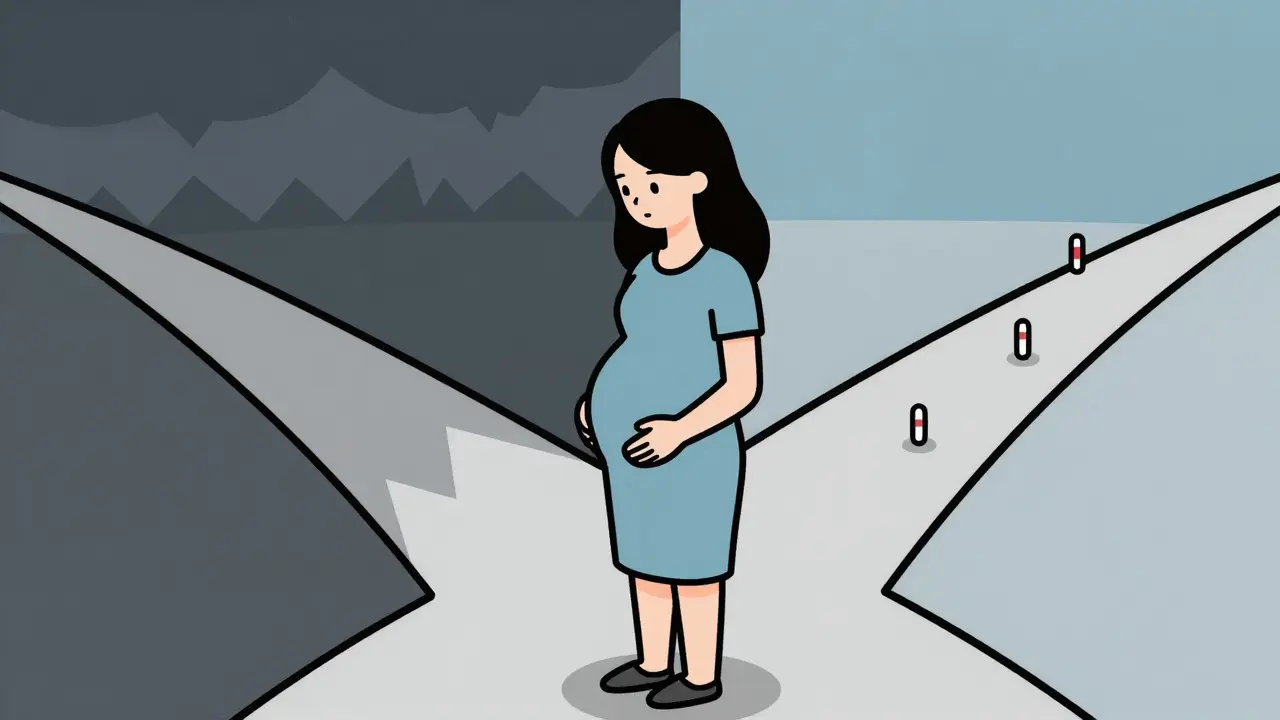
Imagine standing at a crossroads where every path seems to carry weight. You are pregnant, you have been managing depression or anxiety with medication, and now you face a decision that feels impossible: do you keep taking your SSRI (Selective Serotonin Reuptake Inhibitor), or do you stop to protect your baby? It is a question that keeps many expectant mothers awake at night. The fear of harming your child is powerful, but so is the reality of living with severe mental illness. This is not just a medical debate; it is a deeply personal choice that requires clear, honest information.
The short answer from major health organizations is that for most women with moderate to severe depression, the benefits of staying on SSRIs outweigh the risks. Untreated depression poses serious dangers to both mother and baby, including preterm birth and suicide. However, there are specific risks associated with these medications, particularly in the third trimester. Understanding the exact numbers behind these risks can help you make a decision that feels right for your family.
Why Untreated Depression Is Not a Safe Option
Before looking at the drug labels, we need to look at the condition itself. Depression during pregnancy is not just feeling sad; it is a clinical disorder that affects your body and your ability to care for yourself and your growing child. Many people assume that stopping medication is the safest route, but data shows otherwise.
According to the Centers for Disease Control and Prevention (CDC), suicide accounts for 20% of all pregnancy-related deaths in the United States. That is one in five maternal deaths. When you leave depression untreated, you are not just risking your mood; you are risking your life. Furthermore, untreated depression increases the likelihood of substance use as a coping mechanism, occurring in 25% of untreated depressed pregnant women compared to only 8% of those who receive treatment.
There is also a physical toll on the pregnancy. Women with untreated depression are 2.2 times more likely to experience preterm birth than those who are treated. Preterm babies often face respiratory issues, feeding difficulties, and longer hospital stays. Additionally, depression is the strongest predictor of postpartum depression. If you go into labor without support, you are far more likely to struggle after the baby arrives, which can impair bonding and attachment. Studies show that 14.5% of women with untreated antenatal depression develop postpartum depression, compared to just 4.8% of those who received treatment.
Understanding SSRI Risks: What the Data Says
Selective Serotonin Reuptake Inhibitors like sertraline, fluoxetine, and citalopram work by increasing serotonin levels in the brain. While they are generally considered safe, they do cross the placenta. The key is understanding that "risk" does not mean "guaranteed harm." It means a slight statistical increase in probability.
| Risk Factor | General Population / Non-Exposed | SSRI-Exposed Pregnancies | Note |
|---|---|---|---|
| Persistent Pulmonary Hypertension of the Newborn (PPHN) | 1-2 per 1,000 births | 3-6 per 1,000 births | Primary concern in 3rd trimester |
| Preterm Birth (<37 weeks) | 9.5% | 12.5% | Risk drops when controlling for depression severity |
| Low Birth Weight (<2,500g) | 6.2% | 8.7% | Slight increase observed |
| Major Congenital Malformations | 2.5% | 2.8% | No substantial difference found in large studies |
The most discussed risk is Persistent Pulmonary Hypertension of the Newborn (PPHN). This is a condition where the baby’s blood vessels remain constricted after birth, making it hard for them to get enough oxygen. In the general population, this happens in 1 to 2 out of 1,000 babies. With SSRI exposure in the third trimester, that number rises to 3 to 6 out of 1,000. While this sounds like a big jump, remember that 994 out of 1,000 babies will not have this issue. Most cases of PPHN in exposed infants are mild and resolve quickly with standard neonatal care.
Another area of concern has been birth defects. Early studies suggested a link between certain SSRIs and heart defects. Specifically, paroxetine (Paxil) was found to carry a 1.5 to 2.0-fold increased risk of cardiac septal defects if taken during the first trimester. Because of this, paroxetine is generally avoided today. For other SSRIs, massive studies involving millions of births, such as the 2020 JAMA Psychiatry analysis of 1.8 million Nordic births, found no substantial increase in major congenital malformations. The absolute risk remained nearly identical between exposed and non-exposed groups (2.8% vs 2.5%).
Choosing the Right Medication
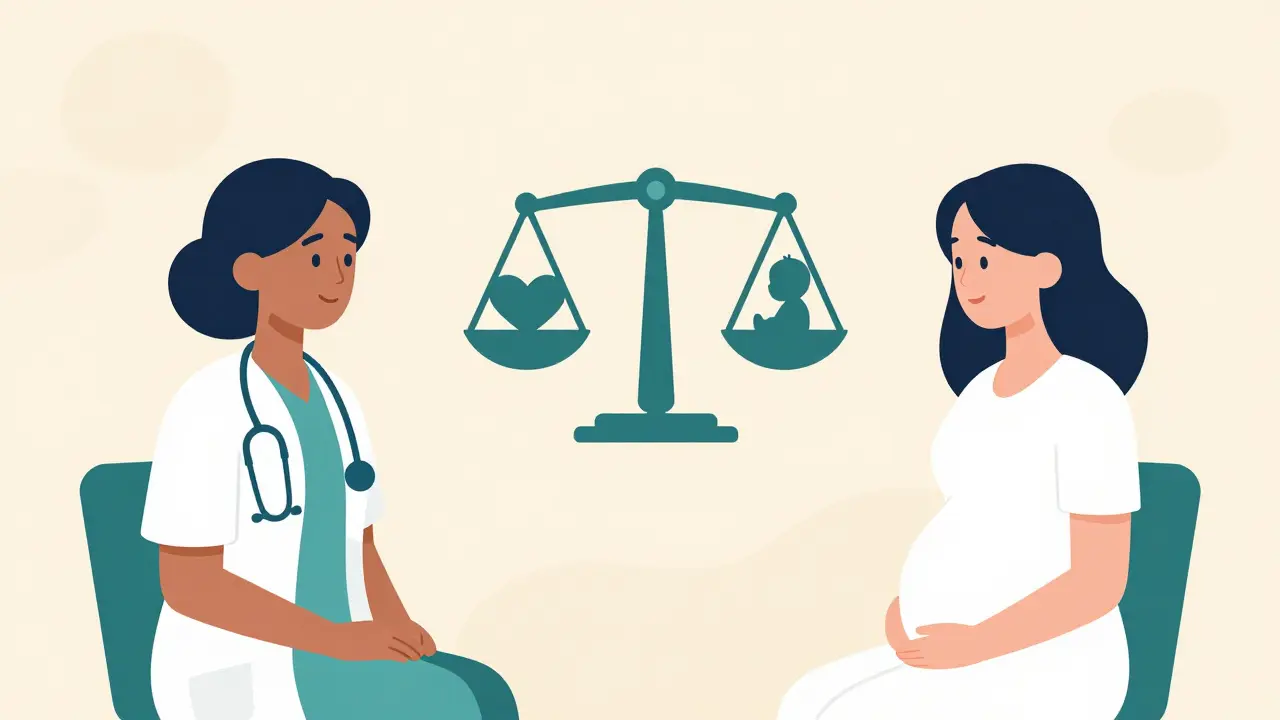
Not all SSRIs are created equal when it comes to pregnancy. Your doctor will likely recommend sticking with what works, but if you are starting treatment or switching, some options are preferred over others.
- Sertraline (Zoloft): Often considered the first-line choice. It has a long track record of safety and lower rates of PPHN compared to other SSRIs. It also has less interaction with other drugs.
- Citalopram (Celexa) and Escitalopram (Lexapro): These are also commonly used and considered safe alternatives.
- Fluoxetine (Prozac): Effective, but it stays in the body longer due to its active metabolite. This can sometimes lead to more noticeable withdrawal symptoms if stopped abruptly.
- Paroxetine (Paxil): Generally avoided, especially in the first trimester, due to the higher risk of heart defects mentioned earlier.
If you are already stable on a medication before getting pregnant, doctors usually advise against switching unless necessary. Switching introduces new variables and the risk of relapse. Stability is key.
The Debate Over Long-Term Development
Recent years have seen heated debates about whether SSRIs affect a child’s brain development later in life. Some research, including studies from Columbia University, suggested that children exposed to SSRIs in the womb might have higher rates of depression or autism by adolescence. One study showed depression rates of 28% by age 15 in exposed children compared to 12% in non-exposed children with maternal depression.
However, these findings are controversial. Critics point out that these studies often fail to account for "confounding by indication." This means that the mothers who take SSRIs often have more severe, genetic, or chronic depression themselves. Since mental health disorders run in families, it is difficult to separate the effect of the drug from the effect of genetics and environment. Large studies that adjust for familial confounding, such as a 2021 Lancet study, found no significant association between SSRI exposure and autism (OR 1.02, 95% CI 0.95-1.10).
The National Institutes of Health (NIH) concluded in their 2023 review that while there is mixed evidence, the current data does not justify stopping medication. They noted that animal studies cannot replicate the complex interplay of human genetics and mental health. For now, the consensus is that the immediate risk of untreated maternal depression is far greater than any potential long-term developmental risk.
Practical Steps for Managing Treatment
If you decide to continue your SSRI, there are steps you can take to minimize risks and ensure a smooth pregnancy.
- Use the Lowest Effective Dose: Work with your psychiatrist to find the minimum dose that keeps your symptoms under control. Avoid doubling up on doses "just in case."
- Monitor Blood Pressure: SSRIs can slightly increase the risk of gestational hypertension. Weekly blood pressure checks after 20 weeks are recommended.
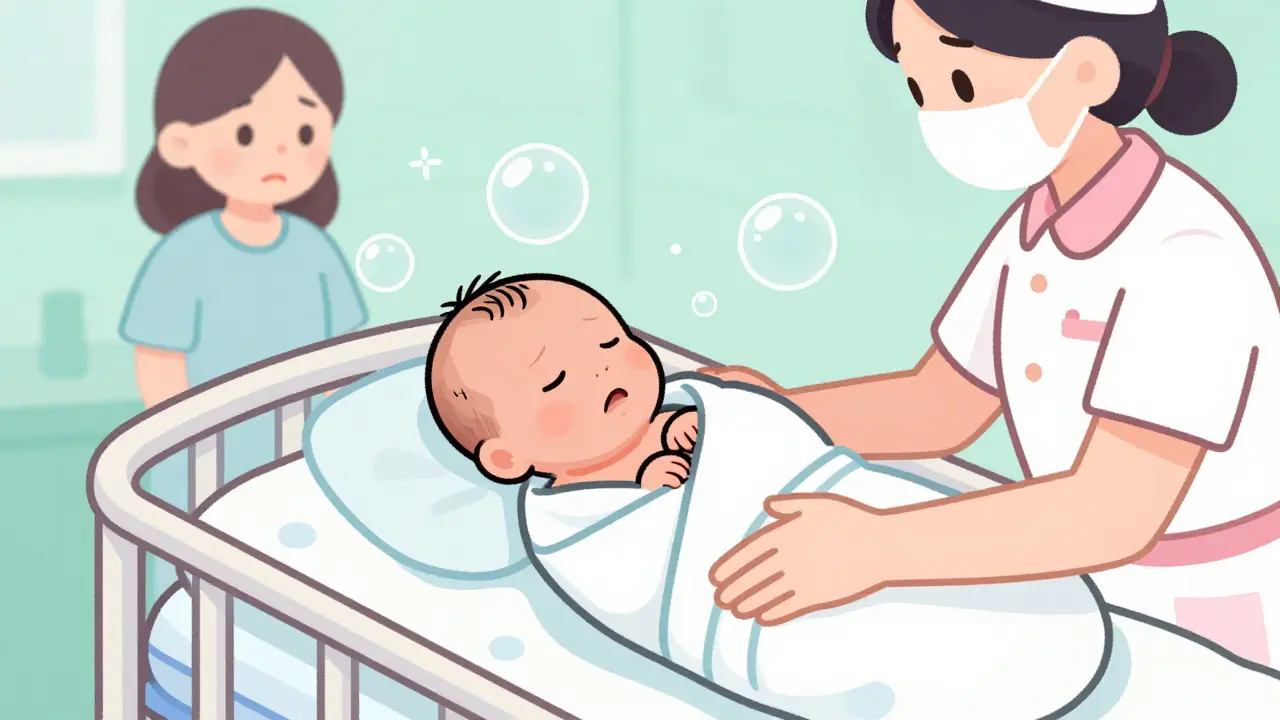
- Prepare for Neonatal Adaptation Syndrome: About 30% of babies exposed to SSRIs near birth may experience temporary symptoms like jitteriness, mild breathing issues, or feeding problems. This is known as Neonatal Adaptation Syndrome. It is not permanent and usually resolves within two weeks with supportive care. Knowing this ahead of time can prevent panic if your baby needs a few days in the NICU for observation.
- Avoid Abrupt Discontinuation: If you and your doctor decide to stop the medication, do it slowly. A stepwise taper over 4 to 6 weeks is standard. Stopping cold turkey leads to withdrawal symptoms in 73% of women, including dizziness, nausea, and "brain zaps," which can be dangerous during pregnancy.
Navigating the Decision with Your Doctor
This conversation should not happen in a vacuum. Bring a list of your symptoms, how they affect your daily life, and your fears about medication. Ask your provider to explain risks in absolute terms (e.g., "1 in 1,000") rather than relative terms (e.g., "double the risk"), which can sound scarier than they are.
Remember that guidelines from the American College of Obstetricians and Gynecologists (ACOG) and the Society for Maternal-Fetal Medicine (SMFM) emphasize individualized care. There is no one-size-fits-all answer. For a woman with mild, situational anxiety, therapy alone might be sufficient. For a woman with a history of severe bipolar depression or suicidal ideation, medication is likely essential for survival and healthy parenting.
The goal is not perfection; it is balance. You are doing the best you can with the information available. By staying informed and maintaining open communication with your healthcare team, you can navigate this challenging time with confidence and clarity.
Can I switch from my current antidepressant to sertraline if I find out I am pregnant?
Switching medications during pregnancy carries the risk of destabilizing your mental health. Most experts recommend continuing the medication that is currently working for you, unless it is paroxetine (which has higher cardiac risks) or you are experiencing severe side effects. Any change should be done gradually under close supervision.
What is Neonatal Adaptation Syndrome, and is it dangerous?
Neonatal Adaptation Syndrome refers to temporary symptoms in newborns exposed to SSRIs near delivery, such as jitteriness, mild respiratory distress, or poor feeding. It occurs in about 30% of exposed infants but is rarely dangerous. Symptoms typically resolve within 1 to 2 weeks with supportive care like swaddling and frequent feeding.
Does taking SSRIs cause autism in children?
Large-scale studies that control for genetic factors and family history have found no significant link between SSRI use during pregnancy and autism. Earlier studies suggesting a link were likely influenced by "confounding by indication," meaning the parents' own genetic predisposition to mental health issues played a larger role than the medication.
Is it safer to stop SSRIs in the third trimester to avoid PPHN?
Stopping SSRIs in the third trimester significantly increases the risk of depressive relapse, which can be severe. The absolute risk of PPHN remains low (increasing from 1-2 to 3-6 per 1,000 births). Most doctors advise against stopping medication solely to avoid PPHN because the risk of maternal mental health crisis outweighs the small increase in pulmonary hypertension risk.
How does untreated depression affect the baby?
Untreated depression is linked to higher rates of preterm birth, low birth weight, and impaired mother-infant bonding. It also increases the mother's risk of suicide, which is a leading cause of pregnancy-related death. The stress hormones associated with severe depression can also impact fetal development.
