
Most people don’t realize that tuberculosis can live inside them for years without causing any harm. It’s not always the coughing, weight loss, or night sweats you hear about in the news. Sometimes, it’s silent. Hidden. But still there. That’s the reality of latent tuberculosis infection - and why it’s just as important to understand as the active, contagious form.
What Is Latent TB Infection?
Latent TB infection means the bacteria that cause tuberculosis - Mycobacterium tuberculosis - are in your body, but they’re not doing anything. They’re asleep. Your immune system has them locked down in tiny clusters called granulomas, mostly in your lungs. You feel fine. You don’t cough. You don’t spread it to anyone. And your chest X-ray looks normal. You might never know you have it unless you get tested. The two standard tests are the tuberculin skin test (TST) and the interferon-gamma release assay (IGRA). Both detect your body’s immune response to the bacteria, not the bacteria themselves. About 30% of people exposed to TB end up with a positive result on one of these tests. But only 5 to 10% of those people will ever develop active disease in their lifetime. The risk goes up sharply if your immune system weakens. People with untreated HIV, those on immunosuppressants for organ transplants or autoimmune diseases, and people with diabetes or kidney failure are at much higher risk. The Georgia Department of Public Health found that someone with HIV and latent TB is 20 to 30 times more likely to develop active TB than someone with a healthy immune system.When Latent TB Becomes Active Disease
Active tuberculosis is when the bacteria wake up, multiply, and start damaging tissue. This usually happens when your immune system can’t keep up - because of age, illness, stress, or malnutrition. The bacteria break out of the granulomas and spread through your lungs or even to your spine, brain, or kidneys. Symptoms don’t come on suddenly. They creep in over weeks. A cough that won’t quit - lasting more than three weeks - is the biggest red flag. You might also lose weight without trying, feel constantly tired, have fevers that come and go, or wake up drenched in sweat at night. Some people cough up blood. Chest pain can happen too. These aren’t just annoying symptoms. They’re signs your lungs are being destroyed. Diagnosis isn’t just about the test results. It’s about connecting the dots. A positive TST or IGRA alone doesn’t mean you have active TB. You need symptoms and proof the bacteria are active. That means finding them in your sputum - through a culture (which takes weeks) or a faster molecular test like nucleic acid amplification (NAAT). A chest X-ray usually shows damage: spots, cavities, or haze in the lungs. If all of that lines up, you have active TB.How TB Spreads - And Why Latent TB Doesn’t
Only people with active pulmonary TB (in the lungs) can spread the disease. When they cough, sneeze, or even talk loudly, they send tiny droplets into the air. Someone nearby breathing those in can get infected. That’s how it spreads in crowded homes, shelters, or prisons. Latent TB? No risk. You can hug your kids, share a meal, sleep in the same bed. You won’t infect anyone. That’s why public health efforts focus on finding latent infections in high-risk groups - immigrants from countries with high TB rates, healthcare workers, people living with HIV - and treating them before they turn active. It’s prevention at its most effective.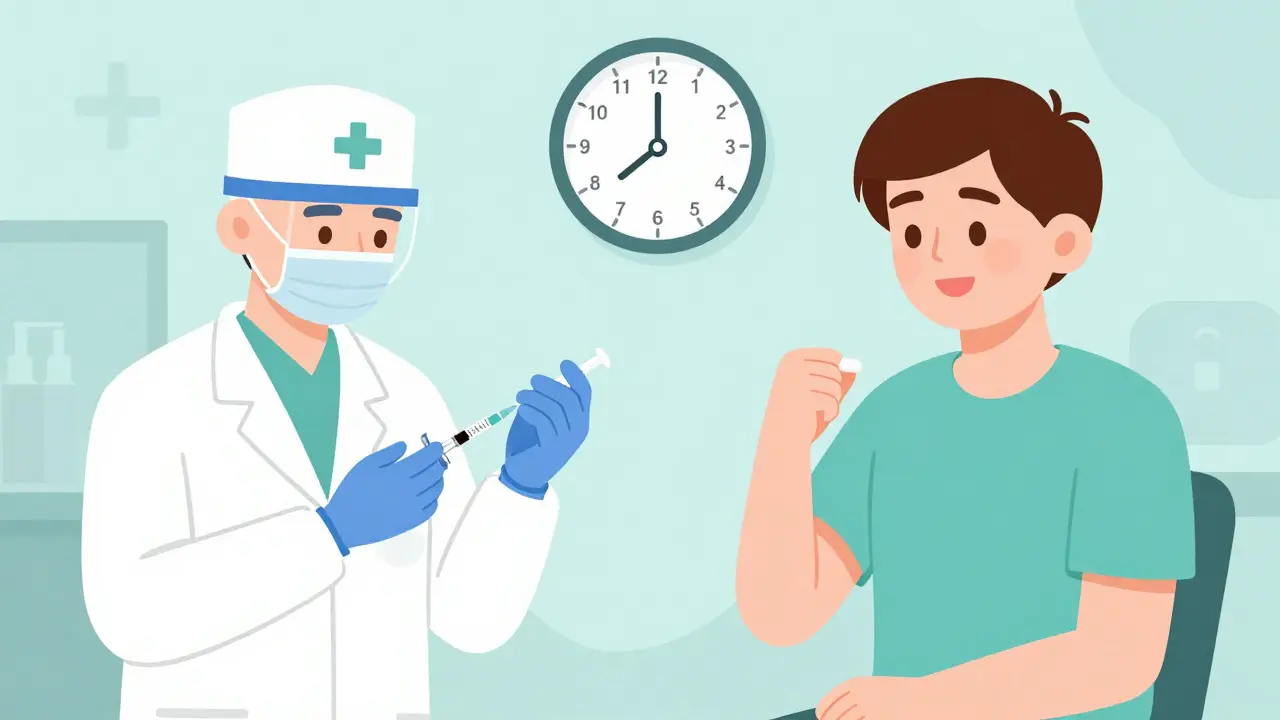
Drug Therapy for Latent TB
Treating latent TB isn’t about curing symptoms. It’s about stopping a future disease. The goal is to kill those dormant bacteria before they wake up. The oldest and most common treatment is nine months of daily isoniazid. It works, but sticking with it for that long is hard. Side effects like nausea, fatigue, or liver issues can make people quit. That’s why newer regimens were developed. Now, the CDC and WHO recommend shorter options:- Three months of once-weekly isoniazid and rifapentine (taken under direct observation)
- Four months of daily rifampin
Drug Therapy for Active TB
Active TB is a medical emergency. Left untreated, it can kill. And if treatment isn’t completed properly, it can lead to drug-resistant strains that are much harder - and more expensive - to treat. Standard treatment starts with four drugs for two months: isoniazid, rifampin, pyrazinamide, and ethambutol. This is called the intensive phase. It hits the bacteria hard from multiple angles to prevent resistance. Then comes the continuation phase: isoniazid and rifampin for another four to seven months. Total treatment time? Six to nine months. That’s a long time to take pills every day, especially if you feel better after a few weeks. But stopping early is the #1 reason drug-resistant TB develops. Directly observed therapy (DOT) is standard for active TB. A healthcare worker watches you swallow each dose. This isn’t about control - it’s about saving lives. In the U.S., DOT has helped reduce treatment failure rates by more than 50% in high-risk populations. Liver damage is a real risk with these drugs. That’s why regular blood tests are required. If you’re on treatment, you need to report any yellowing of the skin, dark urine, or severe nausea immediately.What About Drug-Resistant TB?
Multidrug-resistant TB (MDR-TB) means the bacteria don’t respond to at least isoniazid and rifampin - the two most powerful first-line drugs. Extensively drug-resistant TB (XDR-TB) adds resistance to even more drugs. These forms are rare in places like the U.S., but common in parts of Eastern Europe, Asia, and Africa. Treating MDR-TB takes 9 to 20 months. It uses second-line drugs that are less effective, more toxic, and cost up to 100 times more than standard treatment. Some regimens involve daily injections for months. Recovery is possible, but the physical and emotional toll is heavy. That’s why preventing resistance matters so much. Taking your full course of treatment, even when you feel fine, isn’t optional. It’s the only way to stop the next superbug from emerging.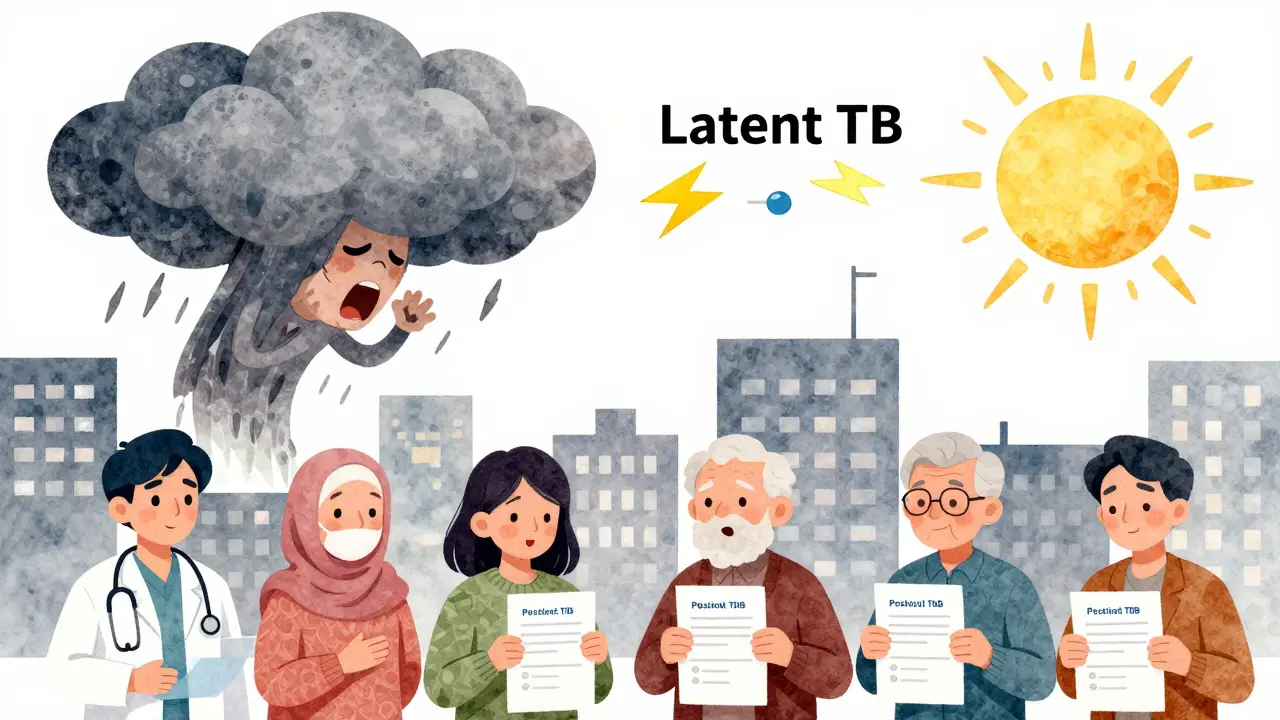
Who Gets Tested and Treated?
Not everyone needs testing. Public health guidelines target specific groups:- People who came from countries where TB is common (like India, Philippines, Nigeria, or Vietnam)
- Healthcare workers in high-risk settings
- People living with HIV
- Residents or employees of homeless shelters, prisons, or nursing homes
- People who’ve been in close contact with someone with active TB
What’s New in TB Care?
Science is catching up. New tests are being developed to tell the difference between latent and active infection using blood markers - not just immune response. Researchers are also testing shorter regimens for active TB, like four-month drug combinations, to improve adherence. A new vaccine candidate, M72/AS01E, showed 50% effectiveness in preventing active TB in a 2023 trial in Africa. It’s not ready yet, but it’s the most promising candidate in decades. Meanwhile, host-directed therapies - drugs that boost your own immune system to fight TB - are being tested in clinical trials. Instead of just attacking the bacteria, these treatments help your body do a better job of controlling it.Bottom Line: Silent Threat, Clear Solution
Tuberculosis isn’t gone. It’s just quieter. Most cases today come from latent infections that were never treated. The tools to stop it exist: simple tests, effective drugs, and proven treatment plans. What’s missing is awareness. If you’ve lived in or traveled to a high-risk area, or if you’ve been around someone with TB, get tested. If you’re told you have latent TB, take the treatment. Don’t wait until you start coughing. Don’t assume you’re fine because you feel okay. The bacteria don’t care how you feel. They’re just waiting. Active TB is dangerous. But latent TB? It’s the quiet storm that can become a hurricane. Treat it now - before it’s too late.Can you have latent TB without knowing it?
Yes. Most people with latent TB have no symptoms and feel perfectly healthy. The only way to know is through a TB skin test or blood test (IGRA). Without testing, you won’t know you’re infected - even if you’ve been exposed for years.
Is latent TB contagious?
No. People with latent TB cannot spread the bacteria to others. Only those with active pulmonary TB - where the infection is in the lungs and symptoms are present - can transmit the disease through airborne droplets when coughing or sneezing.
How long does TB treatment take?
For latent TB, treatment lasts 3 to 9 months depending on the drug regimen. For active TB, treatment is at least 6 months, often 7 to 9 months. Skipping doses or stopping early can lead to drug-resistant TB, which takes up to 20 months to treat and is far more dangerous.
Can TB come back after treatment?
Yes, but it’s rare if treatment was completed correctly. Recurrence usually happens because the original treatment wasn’t finished, leading to drug-resistant strains. It can also happen if a person’s immune system becomes severely weakened later - for example, by HIV or chemotherapy.
Are TB drugs safe?
Most people tolerate TB drugs well, but liver damage is a known risk, especially with isoniazid and rifampin. Regular blood tests are required during treatment. Signs of liver problems include yellow skin, dark urine, nausea, or severe fatigue. Report these immediately to your doctor.
Why is DOT (directly observed therapy) used for TB?
DOT ensures patients take every dose of their medication. TB treatment is long and complex. Missing doses can lead to drug resistance. DOT improves cure rates, reduces transmission, and prevents the spread of deadly drug-resistant strains. It’s a public health tool, not a punishment.
Can you get TB again after being treated?
Yes, but reinfection is uncommon in places with low TB rates. More often, what looks like a new infection is actually a relapse from incomplete treatment. If you’ve had TB before and develop symptoms again, you need immediate testing - especially if you’re immunocompromised.
Does the BCG vaccine prevent TB?
The BCG vaccine is used in many countries to protect babies from severe forms of TB, like TB meningitis. But it doesn’t reliably prevent lung TB in adults. That’s why testing and treating latent infection is more effective in countries like the U.S., Australia, and Canada, where BCG isn’t routinely given.

Erika Putri Aldana
tb is so wild rn like why are we still fighting this in 2025? 😑
Meina Taiwo
Latent TB testing is critical in high-risk communities. Many don’t realize they’re carriers until it’s too late.
Jon Paramore
The shift from 9-month isoniazid to 3-month INH-RPT is a game-changer for adherence. DOT isn’t paternalistic-it’s epidemiological insurance.
John Hay
I’ve seen people quit treatment after 2 months because they 'felt fine.' Then they come back with MDR-TB. It’s heartbreaking.
Swapneel Mehta
In India, we see a lot of latent cases go undetected because of stigma and lack of access. Testing should be free and routine.
Teya Derksen Friesen
The M72/AS01E vaccine data is genuinely promising. If this scales, it could shift global TB control from treatment to prevention.
Southern NH Pagan Pride
You ever wonder why the CDC pushes DOT so hard? It’s not just about compliance. It’s about control. They track every pill. Every breath. Every case. And they don’t tell you why.
Orlando Marquez Jr
While I appreciate the public health rationale behind DOT, we must also acknowledge the dignity of the individual. Trust-based care, paired with incentives, can be equally effective without the surveillance undertones.
Dan Adkins
The assertion that latent TB is 'silent' is technically accurate but misleading. It is not silent to the immune system. Granuloma formation is an active, dynamic process involving macrophages, T-cells, and cytokine cascades. To call it dormant is a gross oversimplification of immunological equilibrium.
Cameron Hoover
This post changed my whole perspective. I used to think TB was a thing of the past. Now I’m getting tested. And I’m telling everyone I know to do the same. We can end this. Just not by ignoring it.
Jackie Be
Dont wait till you start coughing up blood bro seriously just get tested its not that hard and if youve been around someone with it or lived overseas you owe it to yourself and your family to check