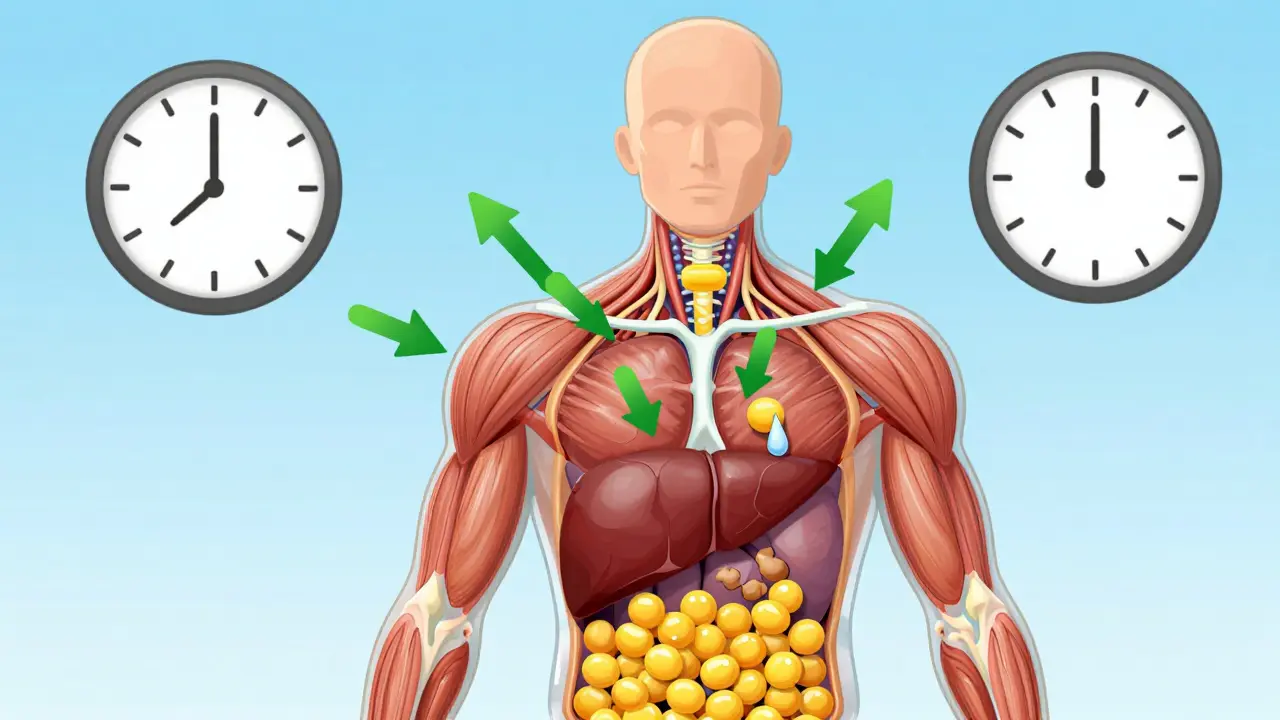
When your body stops responding to insulin like it used to, something deeper is going on than just eating too much sugar. Type 2 diabetes isn’t simply about high blood sugar-it’s the end result of a slow, silent breakdown in how your body handles energy. At the heart of it all are two closely linked problems: insulin resistance and metabolic syndrome. These aren’t just medical terms. They’re the hidden drivers behind why millions of people wake up tired, struggle to lose weight, and end up with diabetes despite doing everything "right".
What Really Happens When You’re Insulin Resistant?
Insulin is the hormone your pancreas makes to tell your cells: "Take in glucose. Now." But when you’re insulin resistant, your muscle, fat, and liver cells stop listening. It’s not that they’re broken-they’re overwhelmed. Years of eating more calories than your body can handle, especially from refined carbs and fats, flood your system with glucose and fatty acids. These excess molecules start interfering with insulin’s signaling pathway. The result? Glucose stays in your bloodstream instead of fueling your muscles or storing as energy.
Your pancreas notices. So it pumps out more insulin-over and over. This is called hyperinsulinemia. For years, it keeps your blood sugar under control. But eventually, the beta cells in your pancreas get worn out. They can’t keep up. That’s when fasting blood sugar climbs above 126 mg/dL (7.0 mmol/L), and you cross the line into type 2 diabetes. Research from the University of Texas Health Science Center shows that 80-90% of people with type 2 diabetes had insulin resistance before they were ever diagnosed. It’s not a coincidence. It’s the rule.
Metabolic Syndrome: More Than Just a List of Numbers
Metabolic syndrome used to be called "Syndrome X." Now, experts are pushing to rename it "metabolic dysfunction syndrome"-because it’s not just a collection of symptoms. It’s a breakdown in how your body processes energy. The International Diabetes Federation defines it by five key signs. If you have at least three, you’re in the danger zone:
- Waist size over 94 cm for men (European), 90 cm for South Asian or East Asian men, or over 80 cm for women
- Triglycerides above 150 mg/dL
- HDL cholesterol below 40 mg/dL (men) or 50 mg/dL (women)
- Blood pressure at or above 130/85 mmHg
- Fasting blood sugar at or above 100 mg/dL
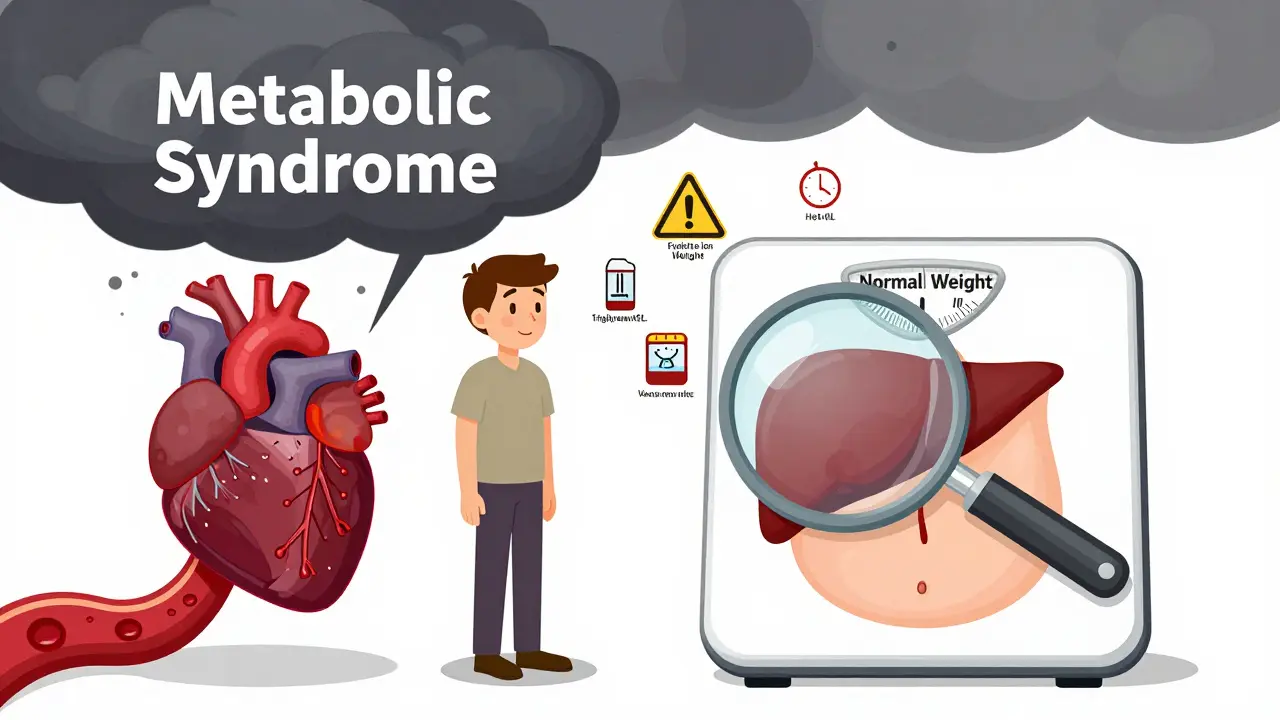
Here’s what most people don’t realize: you don’t need to be overweight to have metabolic syndrome. A lean person with too much fat around their liver and belly can have it too. That’s because it’s not about total weight-it’s about fat distribution. Intra-abdominal fat releases inflammatory chemicals that directly block insulin’s action. That’s why 30-40% of obese people never develop metabolic syndrome, while some thin people do.
The real danger? Having metabolic syndrome doesn’t just mean you’re at risk for diabetes. It means you’re at 2-3 times higher risk for a heart attack or stroke. Mayo Clinic data shows the combination of these five factors is worse than any one on its own. It’s like a storm of metabolic chaos-high sugar, bad fats, high blood pressure, and inflammation all working together to damage your blood vessels and organs.
How Insulin Resistance Turns Into Full-Blown Diabetes
The path from insulin resistance to type 2 diabetes isn’t sudden. It’s a progression. First, you have insulin resistance. Your body compensates with extra insulin. Then you hit prediabetes-fasting blood sugar between 100-125 mg/dL. Your pancreas is still trying, but your cells are getting worse at responding. This is your last chance to turn things around.
Studies like the Diabetes Prevention Program (DPP) showed that people with metabolic syndrome and prediabetes had a 5-6 times higher chance of developing full diabetes within five years. But here’s the good news: lifestyle changes cut that risk by more than half. Losing just 5-7% of your body weight and doing 150 minutes of brisk walking per week improved insulin sensitivity enough to delay or even prevent diabetes in most cases.
But if you ignore it? Beta cells keep burning out. Each year, they lose about 4-5% of their function. By the time you’re diagnosed with type 2 diabetes, you’ve likely lost 50% of your beta cell capacity. That’s why medications like metformin are often started early-not just to lower sugar, but to protect what’s left.
Why Some People Get It and Others Don’t
Not everyone who eats poorly gets type 2 diabetes. And not everyone who’s thin stays healthy. Genetics play a big role. People of South Asian descent, for example, develop insulin resistance at lower body weights. Their bodies store fat more easily around the liver and organs, even if they look lean. That’s why waist measurements are adjusted by ethnicity in guidelines.
Nonalcoholic fatty liver disease (NAFLD) is another clue. If you have fat in your liver, your risk of diabetes doubles. And if you have the more severe form-NASH-that risk jumps even higher. That’s because the liver is one of the first places insulin resistance shows up. When fat builds up there, it starts releasing glucose into your blood even when you haven’t eaten. That’s why fasting glucose rises before you even feel symptoms.
On the flip side, some people with type 2 diabetes don’t have severe insulin resistance at all. Research from Oxford University suggests that in certain genetic subtypes-especially lean individuals-beta cell failure is the main problem. Their insulin sensitivity is okay, but their pancreas just can’t make enough. This is why one-size-fits-all treatments don’t always work.
What Actually Works to Reverse It
There’s no magic pill. But there are proven strategies that work better than drugs for many people.
Weight loss-even small amounts-makes a huge difference. The Look AHEAD trial found that people who lost 10% of their body weight through diet and exercise had a 51% chance of reversing diabetes symptoms in the first year. Twelve percent still had remission eight years later. That’s not a fluke. It’s biology. Less fat means less inflammation. Less inflammation means better insulin signaling.
Exercise isn’t just about burning calories. It’s about rewiring your muscles. When you move, your muscles pull glucose into cells without needing insulin. That’s why even 30 minutes of walking after meals helps lower blood sugar spikes. The American Diabetes Association recommends 150 minutes per week of moderate activity-like brisk walking, cycling, or swimming.
Diet matters more than you think. Cutting back on sugary drinks, white bread, and processed snacks helps more than counting calories. A 2023 study in Frontiers in Endocrinology showed that replacing refined carbs with whole foods, healthy fats, and protein improved insulin sensitivity within weeks. You don’t need to go keto. Just reduce the junk.
For some, medications help. Metformin is still the first-line drug for prediabetes with metabolic syndrome-it cuts diabetes risk by 31%. Newer drugs like semaglutide and tirzepatide are game-changers. In clinical trials, semaglutide led to nearly 15% weight loss and 66% diabetes remission in people with early disease. These aren’t just weight-loss drugs. They help your pancreas recover, reduce liver fat, and lower inflammation.
What the Future Holds
Science is moving fast. The European Association for the Study of Diabetes plans to adopt "metabolic dysfunction syndrome" as the official term by late 2025. That shift matters because it changes how we treat it-from managing symptoms to fixing the root cause.
Stem cell therapies are on the horizon. Vertex Pharmaceuticals’ VX-880 trial replaced damaged beta cells with lab-grown ones. After one year, 71% of participants had HbA1c under 7.0% without needing insulin. That’s not a cure-but it’s a major step toward restoring normal function.
Continuous glucose monitors (CGMs) are now affordable and accurate. Devices like the Dexcom G7, approved in late 2023, last 10 days and are 95% accurate. For someone with metabolic syndrome, seeing real-time glucose spikes after meals can be a wake-up call no doctor’s lecture can match.
But the biggest change won’t come from labs or pills. It’ll come from policy. The Lancet Commission on Obesity says coordinated efforts-like taxing sugary drinks, improving food labeling, and making healthy food cheaper-could cut type 2 diabetes incidence by 40-60% by 2035. That’s not just possible. It’s within reach.
What You Can Do Today
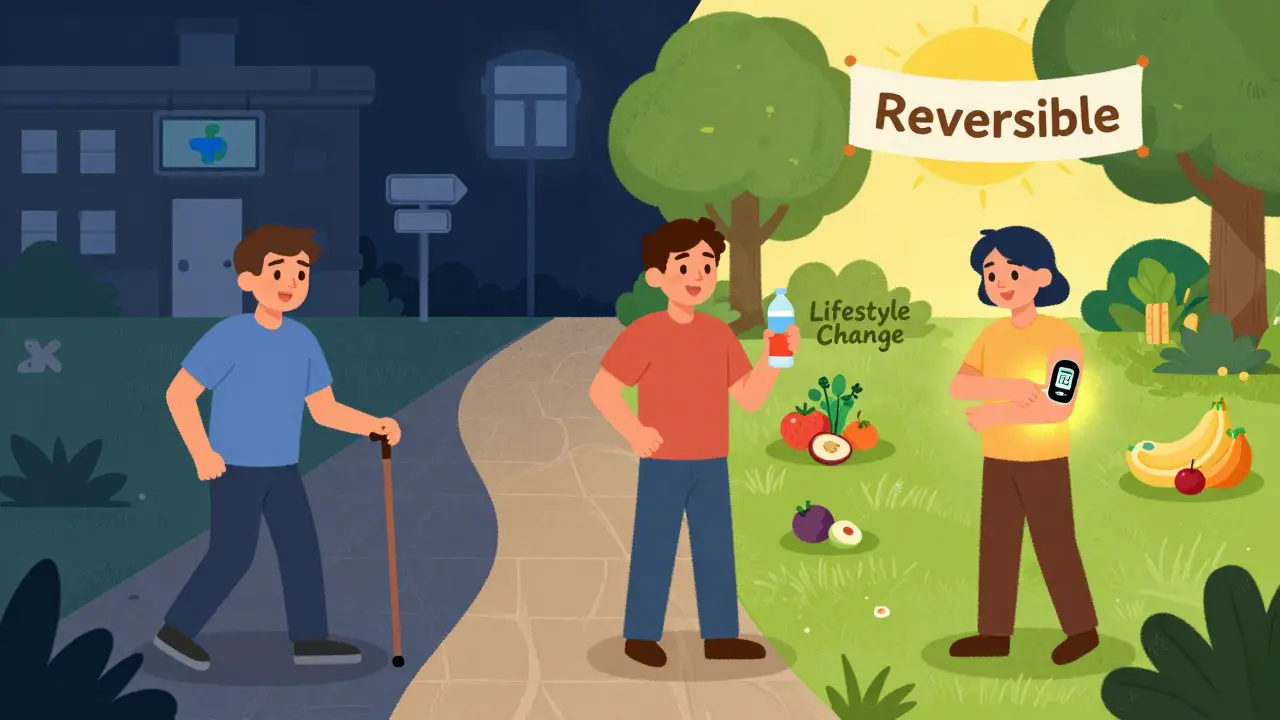
If you’ve been told you have prediabetes, metabolic syndrome, or just "borderline" numbers-don’t wait. The damage isn’t permanent. Your body still has the ability to heal.
- Get your waist measured. It’s more telling than your weight.
- Start walking 20 minutes after dinner. It’s one of the simplest ways to lower blood sugar.
- Swap one sugary drink for water every day. That alone reduces insulin spikes.
- Ask your doctor for an HbA1c test if you haven’t had one in the last year.
- If you’re overweight, aim to lose 5-7% of your body weight. Even 10 pounds can make a difference.
You’re not doomed by your numbers. You’re not broken. You’re just out of balance. And balance can be restored.
Can you reverse type 2 diabetes if you have metabolic syndrome?
Yes, in many cases. Studies like Look AHEAD show that losing 5-10% of body weight and exercising regularly can put type 2 diabetes into remission. This is especially true if caught early, before beta cells are severely damaged. Remission means blood sugar stays normal without medication-not a cure, but a major win.
Is insulin resistance the same as prediabetes?
No, but they’re closely linked. Insulin resistance is the underlying problem-your cells stop responding to insulin. Prediabetes is the result: blood sugar levels are higher than normal but not high enough for a diabetes diagnosis. Most people with prediabetes have insulin resistance. Not everyone with insulin resistance has prediabetes yet, but they’re on the path.
Do you need medication to treat insulin resistance?
Not always. Lifestyle changes-weight loss, exercise, and better food choices-are the most effective first step. Metformin is often prescribed for people with prediabetes and metabolic syndrome because it improves insulin sensitivity and reduces diabetes risk by 31%. But many people reverse insulin resistance without drugs. Medication is a tool, not a requirement.
Can thin people have metabolic syndrome?
Absolutely. About 20% of people with metabolic syndrome are not overweight. It’s about fat distribution, not total weight. Fat around the belly and liver-called visceral fat-is the real problem. Even thin people can have high levels of this fat due to genetics or diet, putting them at risk for insulin resistance and diabetes.
How long does it take to improve insulin sensitivity?
You can see improvements in as little as two weeks with consistent changes. A 2023 study found that people who reduced sugar and increased physical activity lowered insulin resistance within 14 days. Long-term improvements-like reversing prediabetes-take months to years, depending on how much weight you lose and how consistently you stick with healthy habits.
Does metabolic syndrome increase heart disease risk?
Yes, dramatically. Having metabolic syndrome triples your risk of heart attack and stroke compared to someone without any of its components. The combination of high blood pressure, bad cholesterol, high blood sugar, and inflammation damages arteries faster than any single factor alone. That’s why doctors treat metabolic syndrome as a warning sign for heart disease, not just diabetes.
Insulin resistance and metabolic syndrome aren’t life sentences. They’re signals. Your body is telling you it’s time to reset. And it’s never too late to start.

Joanna Reyes
It’s wild how much we’ve been lied to about weight and health. I used to think if you weren’t obese, you were fine. Turns out, I had visceral fat hiding under my skin like a silent saboteur. My waist was 88 cm, triglycerides at 180, HDL at 38 - all while weighing 135 lbs. No one told me that skinny doesn’t mean healthy. My doctor called it ‘lean metabolic syndrome.’ I thought he was making it up. Then I saw the liver ultrasound - fat everywhere. It’s not about calories in, calories out. It’s about where the fat goes. And if it goes into your liver and belly? Your body starts treating insulin like a stranger at a party. You’re not lazy. You’re not broken. You’re just stuck in a system designed to fail you.
Now I walk after every meal. I stopped drinking juice. I eat eggs for breakfast. And my numbers? Down. Not perfect. But moving. And that’s more than I ever got from a pill.
Ashley Johnson
They don’t want you to know this, but insulin resistance is caused by glyphosate in your food and fluoride in the water. Big Pharma and the USDA are in cahoots to keep you dependent on metformin. The real cure? Cold showers, magnesium chloride, and cutting out all grains. I reversed my diabetes in 11 days by drinking apple cider vinegar and sleeping on copper mats. They deleted my YouTube video about it. That’s how you know it’s true.
Vanessa Drummond
Ugh I’ve been here. 300 lbs, prediabetic, crying in the gym aisle because I didn’t know how to use a treadmill. Then I started eating avocado toast and walking 10 mins a day. Not because I was motivated. Because I was tired of being tired. Now I’m 180. No meds. No drama. Just… alive. If you’re reading this and feel hopeless? Stop scrolling. Go outside. Breathe. Then walk. One foot in front of the other. That’s your revolution.
Nick Hamby
There is a profound philosophical shift here that I believe is being overlooked. The medical model treats metabolic syndrome as a disease to be managed - but what if it is, in fact, a signal? A biological cry for alignment. Our bodies did not evolve to process 120 grams of fructose daily, 18 hours of artificial light, and 7 minutes of movement. The insulin resistance we see is not a failure of biology - it is a failure of culture. We have replaced rhythm with routine, nourishment with convenience, and presence with productivity. The science is clear: lifestyle interventions work. But the deeper truth? Healing is not a protocol. It is a return. A return to ancestral patterns of eating, moving, resting, and connecting. The body knows how to heal. We simply forgot how to listen.
And perhaps, that is the most radical act of all - not to fix, but to remember.
Nerina Devi
In India, we call this ‘sugar rot’ - not a medical term, but a truth. My grandmother, who never ate processed food, lived to 97. My cousin, who drank 3 colas a day and worked 14 hours, got diabetes at 32. It’s not about being rich or poor. It’s about what you carry inside. I started teaching women in my village to swap white rice for brown, and to walk after dinner. No fancy gear. Just shoes and a slow pace. One woman, 52, lost 18 kg in 8 months. Her BP dropped. Her eyes stopped blurring. She said, ‘I feel like I’m breathing again.’ That’s not medicine. That’s dignity.
Don’t wait for a diagnosis. Start today. With one step. One meal. One breath. Your body is waiting.
Dinesh Dawn
Man, I read this whole thing and just nodded like a bobblehead. I’ve got metabolic syndrome, but I’m skinny as a rail. People keep asking why I’m not ‘trying harder.’ Like, I’m trying. I walk. I don’t drink soda. I eat veggies. But my liver’s still packed with fat. Turns out, genetics don’t care how hard you try. Still, I’m not giving up. I got a CGM last month. Saw my glucose spike after eating brown rice. Who knew? Now I eat it with vinegar. Tiny changes. Big difference. You don’t need to be perfect. Just consistent. And yeah, it’s frustrating. But I’m still here. That counts.
kirti juneja
Let me tell you something real - insulin resistance doesn’t care if you’re rich, white, or woke. It only cares if you’re fed. I grew up in a village where we ate rice, lentils, and ghee. Then I moved to the city, got a corporate job, and started eating ‘healthy’ salads with sugary dressings and gluten-free crackers. My fasting sugar jumped. My energy crashed. I thought I was doing right. Turns out, ‘health food’ can be poison if it’s processed. Now I eat roti, dal, curry leaves, and walk barefoot on grass. My numbers? Back to normal. No drugs. No keto. Just food that remembers its roots. Don’t overthink it. Eat like your ancestors did. And move like you’re still connected to the earth.
Haley Gumm
Let’s be real - the ‘reversal’ narrative is a scam. Look AHEAD? 51% remission? That’s because they gave people 24/7 access to dietitians, personal trainers, and free meals. In the real world? Most people can’t afford that. Metformin costs $4. A CGM costs $1,200. A gym membership? $50/month. The system is rigged. They sell you hope so you don’t demand change. The real solution isn’t walking after dinner - it’s universal healthcare, food subsidies, and banning corporate sugar. Until then, you’re just being asked to fix a broken system with your willpower. And that’s not fair.