What Is Upper Airway Stimulation?
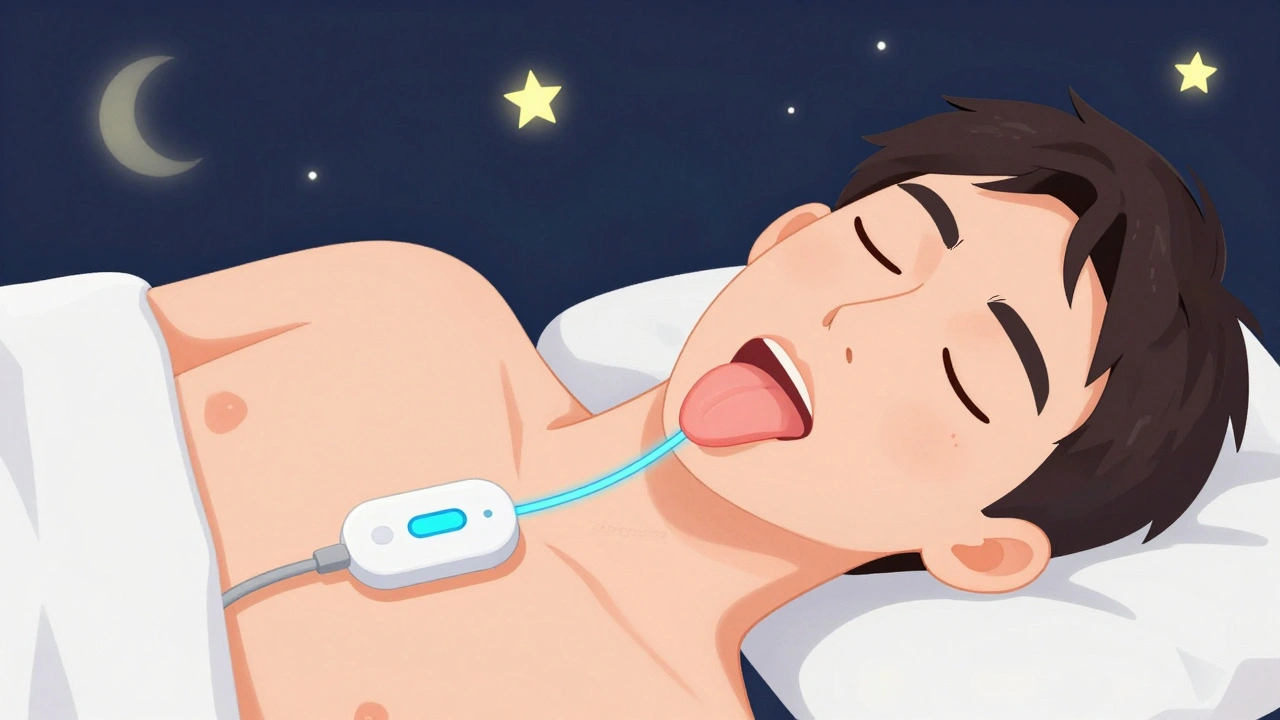
Upper airway stimulation (UAS) is a surgically implanted device that treats obstructive sleep apnea by keeping your airway open while you sleep. Unlike CPAP, which uses a mask and air pressure, UAS works by gently stimulating a nerve that controls your tongue. When you breathe in, the device moves your tongue forward just enough to stop it from blocking your throat. It’s not a cure, but for people who can’t stand CPAP, it’s often the best option left.
The most common system is called Inspire a surgically implanted upper airway stimulation system designed to treat moderate to severe obstructive sleep apnea by stimulating the hypoglossal nerve during inhalation. Approved by the FDA in 2014, it’s been used in over 200,000 people worldwide as of 2025. It’s not for everyone - you have to meet specific medical criteria - but for those who qualify, the results can be life-changing.
How Does It Work?
The Inspire system has three tiny parts implanted inside your body: a small generator (about the size of a pacemaker), a sensing wire that detects your breathing, and a stimulation wire connected to the nerve that moves your tongue. All three are placed during a single outpatient surgery under general anesthesia. The generator sits under your collarbone, the sensing wire runs along your ribcage, and the stimulation wire wraps around the nerve behind your jaw.
At night, you turn the device on with a small remote, just like turning on a TV. When you inhale, the device senses the breath and sends a mild pulse to the nerve. That pulse causes your tongue to move slightly forward, preventing it from collapsing backward and blocking your airway. It only activates during inhalation - never during exhalation - so your muscles don’t get tired. You turn it off in the morning. No masks, no hoses, no noise.
Who Is a Good Candidate?
Not everyone with sleep apnea qualifies. You need to meet strict criteria:
- You have moderate to severe obstructive sleep apnea (AHI between 15 and 100 events per hour)
- Your BMI is under 35 (some centers accept up to 40)
- You’ve tried CPAP and couldn’t stick with it
- You don’t have mostly central apneas (those caused by your brain not signaling your body to breathe)
- You’re over 22 years old
- Your airway isn’t completely blocked or collapsed in the soft palate area
If you’ve tried CPAP for months and gave up because the mask hurt, the air pressure felt suffocating, or you kept pulling it off at night - you might be a candidate. Studies show 29% to 46% of people abandon CPAP within the first year. For those people, UAS is often the next step.
How Effective Is It?
The data is strong. In the STAR clinical trial, patients saw their apnea events drop from an average of 29 per hour to just 9 after one year - that’s a 68% reduction. Two out of three patients had their AHI cut in half or more. And it wasn’t just fewer breathing pauses: daytime sleepiness improved, energy levels rose, and blood pressure dropped in many cases.
Long-term results are just as good. Five years after implant, most patients still maintain the same level of improvement. Bed partners report snoring stopped or became very quiet in 85% of cases. And 86% of patients say they’d choose Inspire again - even over CPAP.
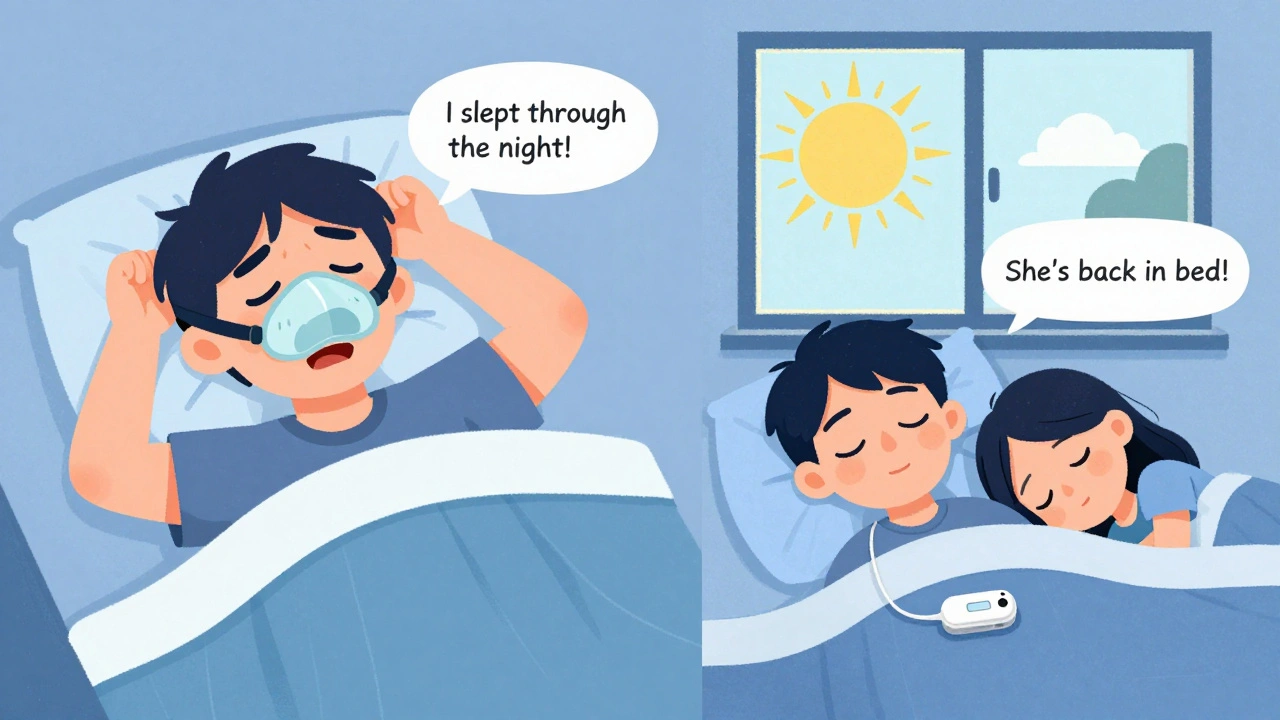
One patient from Brisbane shared on a sleep forum: “I used to wake up 10 times a night gasping. My wife slept in another room. After Inspire, I sleep through the night. She sleeps next to me again. I haven’t felt this rested in 15 years.”
What About Surgery and Recovery?
The surgery takes 2 to 3 hours and is done as an outpatient procedure - you go home the same day. There are three small incisions: one under your jaw, one near your collarbone, and one along your ribcage. Most people return to light activities within a week. Full healing takes about a month.
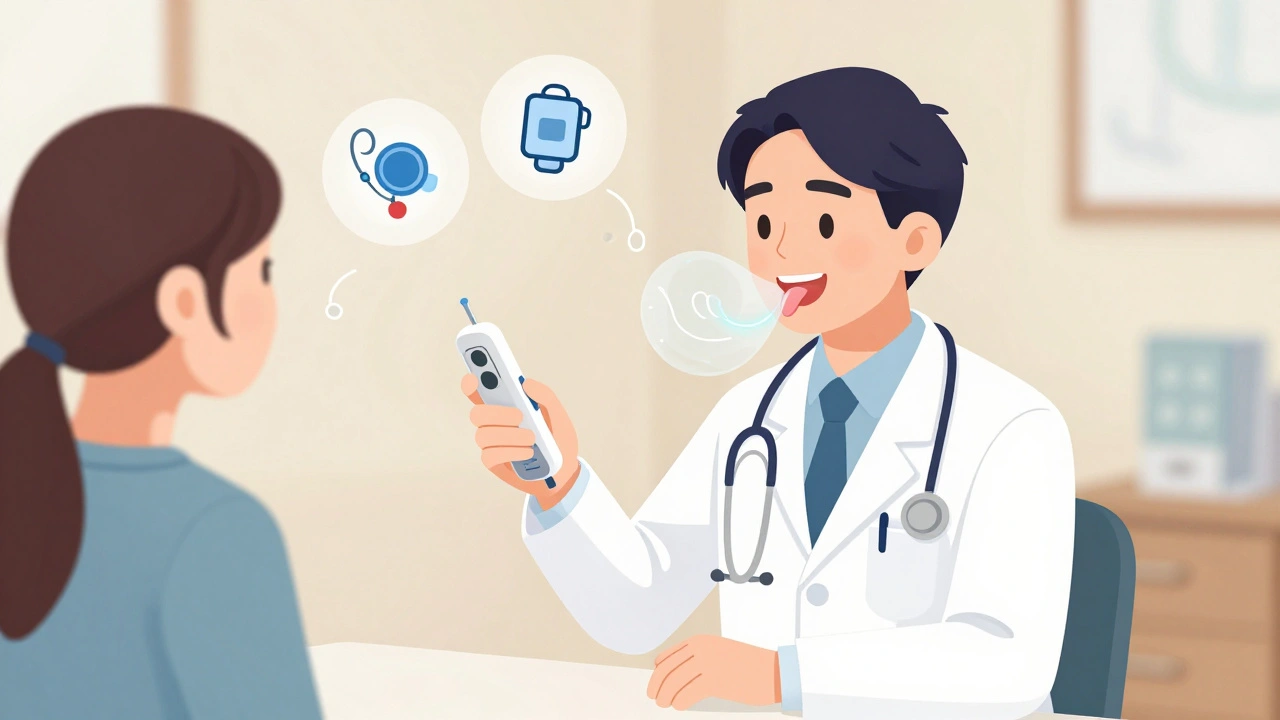
After surgery, you wait 4 to 6 weeks before the device is turned on. That’s because your body needs time to heal. Then, your doctor uses a programmer to adjust the stimulation level. It’s like tuning a radio - you want it strong enough to keep your airway open, but not so strong that your tongue feels tingly or weak.
Side effects are rare. About 5% of people report temporary tongue weakness, which usually fades within a few months. Minor infections at the incision sites happen in about 2% of cases. Serious complications are extremely rare - under 0.5%.
How Does It Compare to CPAP?
CPAP is still the gold standard - if you can use it. But if you can’t, UAS wins on adherence. People use Inspire an average of 7 hours a night, every night. CPAP users average less than 4 hours, and many stop entirely.
CPAP requires daily cleaning, mask replacements, and a power source. Inspire requires nothing but turning it on and off. No noise, no leaks, no pressure on your face. But it does require surgery. And unlike CPAP, you can’t adjust it yourself - you need a doctor to fine-tune the settings.
It’s also more expensive upfront. The total cost - device, surgery, follow-ups - averages $35,000 to $40,000. But over five years, that’s close to what CPAP costs when you factor in masks, filters, repairs, and doctor visits. And for many, the improved quality of life makes it worth it.
What Are the Downsides?
It’s not perfect. You have to remember to turn it on every night. Some people forget, especially if they’re tired or traveling. A few report a slight tingling sensation at first - it fades with time. You can’t have an MRI unless the device is specially programmed first. And if you gain a lot of weight after implant, the therapy might become less effective.
It’s also not a first-line treatment. Doctors won’t offer it unless you’ve tried and failed CPAP. And not all sleep centers offer it - you’ll need to find a specialist trained in the procedure. In Australia, it’s available in major cities like Brisbane, Sydney, and Melbourne, but access is still limited compared to CPAP.
Insurance and Cost
Good news: most insurance plans cover it now. Medicare covers Inspire therapy for eligible patients. Private insurers cover it in about 85% of cases. You’ll still have out-of-pocket costs - copays, deductibles - but many patients pay less than $5,000 total after insurance.
The American Academy of Sleep Medicine recommends UAS as a treatment option for CPAP-intolerant patients. That’s why insurers are more willing to pay. It’s no longer seen as experimental - it’s a proven therapy with real results.
What Happens If You Change Your Mind?
Unlike some surgeries - like removing part of your soft palate - Inspire is reversible. If you decide you don’t like it, the device can be safely removed. The nerve and muscles return to normal function. You won’t be worse off than before. That’s a big advantage over permanent surgical options.
What’s Next for This Therapy?
The FDA expanded eligibility in 2023 to include patients with BMI up to 40 and AHI up to 100. That opened the door for many more people. Researchers are now using AI to predict who will respond best - analyzing airway scans before surgery to avoid implanting people who won’t benefit.
Next-gen devices are smaller, with longer battery life. Some are being tested to work without a remote - automatically turning on when you lie down. That could make it even easier to use.
As more doctors get trained and awareness grows, access will improve. For now, it’s still a niche treatment - but for the right person, it’s not just a treatment. It’s a reset button for sleep.
How to Get Started
If you think you might be a candidate:
- Get a recent sleep study (within the last two years)
- Confirm you’ve tried and failed CPAP
- Ask your sleep doctor about a referral to a UAS specialist
- Undergo a drug-induced sleep endoscopy - this shows your airway collapse pattern
- Meet with the surgical team to review risks, benefits, and insurance
Don’t wait until you’re exhausted all day. If CPAP isn’t working for you, upper airway stimulation might be the answer you’ve been looking for.
Is upper airway stimulation the same as a sleep apnea mouthpiece?
No. A mouthpiece (oral appliance) is a removable device that pushes your jaw forward to open your airway. It’s non-invasive and worn only at night. Upper airway stimulation is a surgically implanted device that stimulates a nerve to move your tongue. It’s more effective for severe cases and doesn’t rely on jaw position.
Can I have an MRI with the Inspire device?
Yes - but only under specific conditions. The device is MRI-conditional, meaning you can have an MRI if the settings are adjusted beforehand and the scan is limited to certain body areas. Always inform your radiology team you have an implanted device. Not all MRI machines are compatible.
Does it hurt to turn on the device?
No. Turning it on with the remote is painless. You might feel a mild tingling or pulling sensation in your tongue when it activates - that’s normal. It’s not painful, but it can feel strange at first. Most people get used to it within a few days.
How long does the battery last?
The battery in the Inspire generator lasts about 11 years on average. When it runs low, the entire generator is replaced in a simple outpatient procedure - similar to replacing a pacemaker. You don’t need to replace the leads or wires.
Will I feel the device when I’m awake?
No. The device only activates during sleep, when you’re breathing in. When you’re awake, it’s completely off. You won’t feel it inside your body, and it doesn’t interfere with talking, eating, or swallowing.
Can I travel with the device?
Yes. The remote is small and fits in your pocket. Airport security won’t set off alarms - the device is made of titanium and doesn’t trigger metal detectors. You’ll get a patient ID card from your doctor to show if asked. No special permission is needed to fly.
Is it covered by Medicare in Australia?
In Australia, the Inspire system is not yet fully funded by Medicare. However, some private health insurers cover part or all of the cost, depending on your policy. Patients often pay a combination of out-of-pocket and insurance. Check with your insurer and a specialist center for current coverage options.
What if I gain weight after the implant?
Weight gain can reduce the effectiveness of the therapy. The device still works, but your airway may narrow more, requiring higher stimulation levels. If you gain more than 10% of your body weight, talk to your doctor. You may need a re-titration or lifestyle changes to maintain results.
Final Thoughts
If you’ve been living with sleep apnea and CPAP hasn’t worked for you, you’re not alone. And you’re not out of options. Upper airway stimulation isn’t magic - it’s medicine. It requires surgery, commitment, and follow-up. But for those who qualify, it’s one of the most effective ways to reclaim your sleep, your health, and your life.

David Brooks
I had this done last year and it’s like night and day. I used to wake up choking every hour. Now? I sleep like a baby. My wife says I snore less than her. Best decision I ever made. No more masks. No more headaches. Just peace.
They told me I’d get used to the tingling. I didn’t even notice it after a week. I turn it on before bed like I turn on my phone. It’s just part of the routine now.
Jennifer Anderson
i just found out my dad is being evaluated for this and i’m so happy. he’s been on cpap for 8 years and hates it so much he only uses it 2 nights a week. he’s always exhausted and irritable. if this gives him his life back? i’ll cry. no joke. he deserves to sleep without feeling like he’s being strangled every night.
Oliver Damon
From a physiological standpoint, the hypoglossal nerve stimulation paradigm represents a neuroprosthetic intervention that effectively mitigates upper airway collapsibility during REM-dominant sleep cycles. The device’s closed-loop respiratory feedback mechanism is elegantly engineered to preserve neuromuscular homeostasis without inducing fatigue. Unlike CPAP, which imposes external positive pressure, UAS leverages endogenous respiratory drive to activate pharyngeal dilators - a fundamentally more physiologically congruent approach. Longitudinal data from the STAR trial demonstrates sustained AHI reduction with high adherence metrics, suggesting a paradigm shift in treatment-resistant OSA management.
Kurt Russell
If you’re reading this and you’re tired of fighting with your CPAP mask - stop. Just stop. Go see a UAS specialist. Don’t wait until you’re 60 and have high blood pressure. Don’t wait until your kid says, ‘Dad, you snore like a chainsaw.’ This isn’t a last resort. It’s a second chance. I got mine at 42. I’m hiking mountains now. I’m present. I’m alive. You can be too.
Ryan Sullivan
Let’s be real - this is just a $40,000 placebo wrapped in titanium. The long-term data is still thin. The fact that you need to be under BMI 35 means it’s only for the privileged few who can afford to diet and exercise. Meanwhile, the real problem - obesity-driven OSA - is being ignored. This isn’t innovation. It’s a luxury fix for people who won’t change their lifestyle. And don’t get me started on the battery replacement surgery. That’s not a cure. That’s a subscription.
Wesley Phillips
So you’re telling me I have to get surgery… to not wear a mask… that I hate… so I can sleep… and not die? Wow. Mind blown. I mean I guess if you’re rich and have nothing better to do than get your tongue zapped by a pacemaker… but I’m just gonna keep my CPAP and my Netflix. At least I can watch shows while I’m breathing through a tube. 😎
Kyle Oksten
I appreciate the optimism here, but let’s not romanticize this. Surgery carries risk. Even if rare, complications happen. And the fact that you can’t get an MRI without special prep? That’s a big deal for someone who might need one later in life. This isn’t a magic bullet. It’s a tool. And tools require context. If you’re young, healthy, and CPAP intolerant - great. But don’t treat this as the universal solution. Respect the complexity.
Sam Mathew Cheriyan
u kno what they dont tell u? this device is linked to the gov. they use it to track ur sleep patterns. its not just for apnea. its for surveillance. they want to know when u sleep, how long, and if u wake up. why? because they dont trust u. i heard from a guy in a forum who said his doctor asked him 'did u dream about the border?' after the implant. wtf. its all connected. u think ur getting help? ur getting tagged.
Ted Rosenwasser
Honestly? If you’re even considering this, you’ve probably already failed at life. CPAP is free with insurance. You just need discipline. This? This is for people who want to outsource their health to a tech billionaire’s toy. $40K for a tongue vibrator? You’re not a patient. You’re a marketing target. And the fact that you’re proud of this? That’s the saddest part.