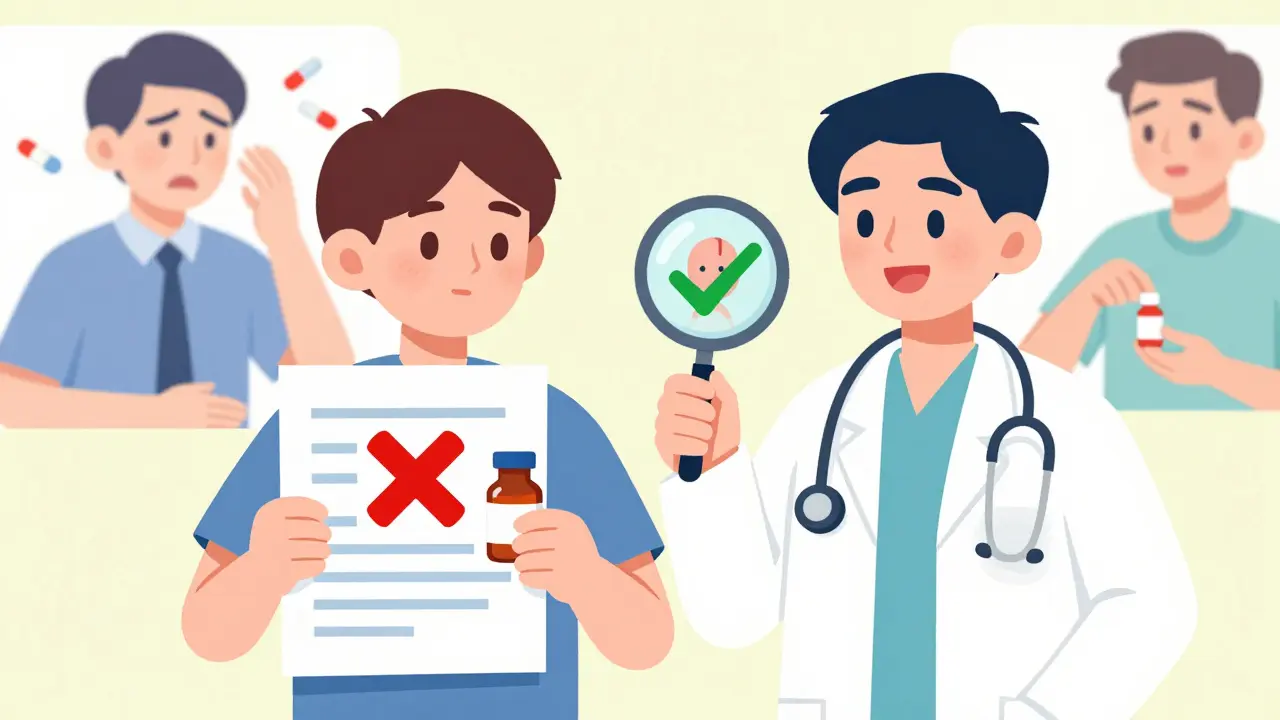
When a drug causes a severe reaction, it’s natural to want to avoid the entire family of medications it belongs to. But not every bad reaction means you need to say no to everything in that class. Some people are told they’re allergic to penicillin after a mild rash as a child-only to spend decades avoiding antibiotics they could safely take. Others are locked out of pain relief because they had a bad reaction to one NSAID, even though switching to another might be fine. The truth? Severe drug reaction doesn’t always mean lifelong avoidance of an entire drug family. Knowing when to avoid it-and when not to-can change your treatment, your health, and even your life.
What Counts as a Severe Drug Reaction?
Not all bad reactions are created equal. The FDA defines a severe adverse drug reaction as one that is life-threatening, requires hospitalization, causes permanent disability, or leads to a birth defect. These aren’t just side effects like nausea or dizziness. They’re events that stop you in your tracks.True emergencies include:
- Anaphylaxis-sudden swelling, trouble breathing, drop in blood pressure
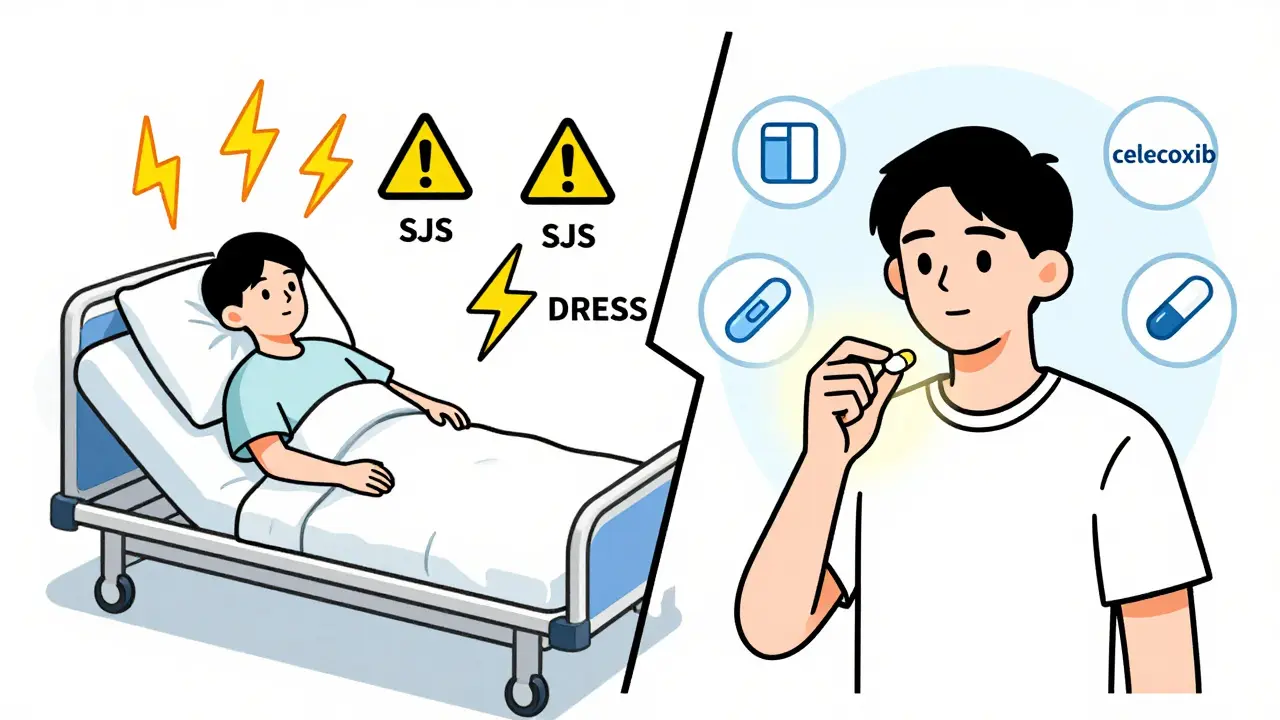
- Stevens-Johnson syndrome (SJS) or toxic epidermal necrolysis (TEN)-widespread blistering skin reactions
- DRESS syndrome-drug reaction with eosinophilia and systemic symptoms, often with fever, rash, and organ damage
- Severe liver or kidney injury directly tied to the drug
These reactions are rare but deadly. TEN alone kills 30-50% of people who get it. That’s why, in these cases, avoiding the entire drug class is almost always necessary. But here’s the catch: most reported drug reactions aren’t like this. About 80-90% of people who say they’re allergic to a drug aren’t actually allergic at all. They had a side effect, not an immune response.
True Allergy vs. Side Effect: The Difference That Matters
Understanding the difference between a true allergic reaction and a side effect is critical. Allergies involve your immune system. They usually show up fast-within minutes to a few hours-and include:
- Hives or widespread rash
- Swelling of lips, tongue, or throat
- Wheezing or difficulty breathing
- Dropping blood pressure or loss of consciousness
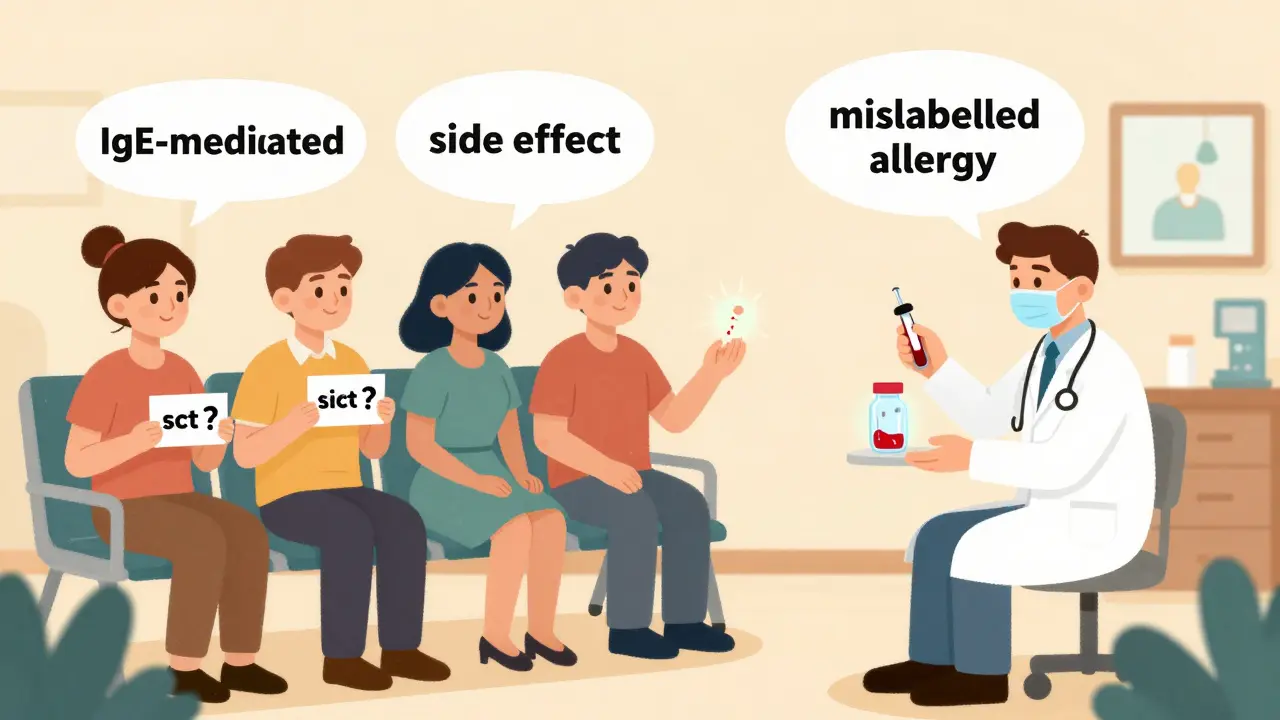
If you’ve had any of these, especially after taking a drug for the first time, it’s likely a true IgE-mediated allergy. These are the reactions that demand caution-and often, avoidance of the whole family.
But if you got a rash days later, without swelling or breathing issues? Or if you had stomach pain after taking ibuprofen? Those are side effects. They’re unpleasant, sometimes serious, but they don’t mean your immune system is primed to attack every drug in that class.
Take penicillin. A 2021 study from the American College of Allergy, Asthma, and Immunology found that only 10% of people labeled with a penicillin allergy actually have a true allergy. The rest? They had a rash, felt nauseous, or were told they were allergic by a doctor who didn’t test them. That’s why so many people avoid antibiotics they could safely use-putting them at risk for worse infections because doctors have fewer options.
Drug Families with High Cross-Reactivity Risk
Some drug classes have a real risk of cross-reactivity. If you react to one, you’re likely to react to others in the same group. These are the ones where avoidance is usually necessary:
- Beta-lactam antibiotics (penicillins, cephalosporins, carbapenems): Cross-reactivity between penicillin and cephalosporins is only 0.5-6.5%, depending on the specific drugs. But if you had anaphylaxis to amoxicillin, avoiding all beta-lactams is still the safest first move-until you get tested.
- Sulfa antibiotics (like Bactrim or Septra): About 10% of people allergic to one sulfa drug react to another. But here’s the twist: sulfa-containing diuretics (like furosemide) or diabetes drugs (like glipizide) are chemically different. Many people can take them safely. The reaction is to the sulfonamide group in antibiotics-not all sulfa drugs.
- NSAIDs (ibuprofen, naproxen, aspirin): If you have aspirin-exacerbated respiratory disease (AERD), 70% of you will react to other NSAIDs. But if you just got a stomach ulcer from naproxen? Switching to a COX-2 inhibitor like celecoxib might be fine.
- Anticonvulsants (carbamazepine, phenytoin): These are linked to SJS/TEN and DRESS. Avoiding the entire class is standard after a severe reaction.
- Allopurinol: This gout drug causes 17% of all TEN cases. Once you’ve had a severe reaction, never take it again-or any drug in its class.
The European Medicines Agency found that 95% of TEN cases come from just six drug classes. For these, the rule is simple: if you had a severe skin reaction, avoid the whole group.
When Avoidance Isn’t Needed-And What to Do Instead
Many people avoid entire drug families unnecessarily. A 2022 survey by the Asthma and Allergy Foundation of America found that 42% of patients with drug allergy labels faced delays in treatment-sometimes for days-because doctors didn’t know what they could safely prescribe.
Here’s where common mistakes happen:
- You got a rash from amoxicillin as a kid. Now you’re told you can’t take any penicillin. But if it was just a delayed rash without fever or swelling, you likely don’t need to avoid it.
- You had nausea from one NSAID. So you avoid all. But switching to a different NSAID or using a stomach-protecting drug might work.
- You’re labeled allergic to sulfa because of Bactrim. Now you can’t take furosemide (a water pill) or glipizide (a diabetes drug). But those aren’t the same chemical structure.
Instead of automatic avoidance, consider:
- Drug challenge tests: Under medical supervision, you’re given a small dose of the drug to see if you react. Success rates are 70-85% for beta-lactams in low-risk cases.
- Skin or blood tests: The FDA-approved ImmunoCap Specific IgE test now has 89% accuracy-far better than old skin tests.
- Genetic testing: For drugs like abacavir (used for HIV), the HLA-B*57:01 gene test tells you with 99% accuracy if you’re at risk. If you don’t have the gene, you can take it safely.
Dr. Kimberly Blumenthal from Harvard says, “95% of people labeled with penicillin allergy can tolerate it after evaluation.” That’s not a guess-it’s data. And if you’re one of them, avoiding penicillin for 20 years was unnecessary.
How to Protect Yourself and Get Better Care
Bad documentation is a huge problem. A 2021 study found only 28% of electronic health records had enough detail to guide safe prescribing. That’s why so many doctors over-avoid.
Here’s what you can do:
- Write down exactly what happened. Not “I’m allergic to penicillin.” But: “After taking amoxicillin on March 12, 2020, I got hives and swelling within 45 minutes. I was treated with epinephrine at the ER.”
- Ask for a referral to an allergist. Especially if your reaction was mild or unclear. They can test you and help you get un-labeled if you’re not truly allergic.
- Carry a medical alert card or bracelet. If you have a true allergy, this saves lives. 78% of specialists recommend it for anaphylaxis.
- Review your records. Ask your doctor to update your allergy list with SNOMED CT codes-standardized terms that tell other doctors exactly what happened.
- Don’t accept blanket avoidance. If a doctor says “no NSAIDs ever,” ask: “Is it because of my reaction, or because of the class? Could I try a different one?”
Technology is helping too. AI tools like IBM Watson for Drug Safety reduced inappropriate avoidance by 41% in a 2022 trial. Computerized systems now require doctors to justify overriding allergy alerts-cutting unnecessary overrides by 37%.
What’s Next? The Future of Drug Allergy Management
The global drug allergy diagnostics market is growing fast-projected to hit $4.1 billion by 2030. Why? Because we’re moving away from fear-based avoidance and toward precision.
More hospitals now have penicillin allergy de-labeling programs. In 2023, 87% of academic medical centers in the U.S. had them. These programs don’t just test patients-they educate them. And they save money. One study found that correctly de-labeling patients cut antibiotic costs by 22% and reduced hospital stays.
The NIH’s All of Us program has collected genetic data from over 3 million people. That’s helping identify who’s truly at risk for reactions before they ever take a drug. Imagine a future where your DNA tells your doctor what drugs are safe for you-no guesswork, no delays, no unnecessary restrictions.
For now, the message is clear: don’t assume. Don’t accept blanket avoidance. If you’ve had a severe reaction, get the facts. Ask for testing. Demand better documentation. Your next prescription shouldn’t be determined by a label from 20 years ago.
Can I ever take a drug from the same family again after a severe reaction?
It depends on the reaction. If you had anaphylaxis, SJS, TEN, or DRESS, avoid the entire class permanently. But if it was a mild rash or stomach upset, you may be able to take a different drug in the same family after evaluation. Drug challenge tests under medical supervision can safely determine if you’re truly at risk.
I was told I’m allergic to penicillin. Do I need to avoid all antibiotics?
No. Only about 10% of people with a penicillin allergy label actually have a true allergy. Many can safely take other beta-lactam antibiotics like cephalosporins or even penicillin again after proper testing. Skin or blood tests can confirm whether you’re truly allergic.
Are all sulfa drugs the same? If I’m allergic to Bactrim, can I take furosemide?
No, they’re not the same. Bactrim is a sulfa antibiotic, while furosemide (a water pill) and glipizide (a diabetes drug) are sulfa-containing but chemically different. Cross-reactivity is low-around 10% or less. Many people can take non-antibiotic sulfa drugs safely after a reaction to Bactrim. Always check with your doctor or allergist.
How do I know if my reaction was allergic or just a side effect?
Allergic reactions happen quickly (minutes to hours), involve the immune system, and include symptoms like hives, swelling, trouble breathing, or low blood pressure. Side effects happen later, are predictable (like nausea from NSAIDs), and don’t involve immune system activation. If you’re unsure, an allergist can help with testing.
What should I do if my doctor won’t let me try a different drug in the same class?
Ask for a referral to an allergist or immunologist. They specialize in distinguishing real allergies from side effects and can perform tests to confirm your risk. Bring your reaction history and ask about drug challenge testing. You have the right to ask for safer, evidence-based alternatives.

SNEHA GUPTA
It’s fascinating how we’ve turned medical labels into identity markers. I’ve seen people refuse to even try a different NSAID because they had stomach upset once-like their body now carries a permanent scar from a single experience. But biology doesn’t work that way. The immune system isn’t a rigid database; it’s adaptive, context-sensitive, and often wrong. We treat drug reactions like moral failings instead of physiological events. That’s not just unscientific-it’s dangerous.
And yet, the system reinforces this. Doctors don’t have time to dig into history. EHRs default to blanket warnings. Patients don’t know how to question. So we end up with people on broad-spectrum antibiotics because a 1998 rash got logged as ‘penicillin allergy.’ The real tragedy isn’t the reaction-it’s the systemic laziness that turns a rare event into a lifetime restriction.
Laura Gabel
I had a rash on amoxicillin as a kid and now I can't get any decent antibiotics when I need them. My doctor just shrugs and says 'you're allergic' like it's a fact written in stone. No testing. No questions. Just nope.
Andrew Mamone
This is one of those topics where science and fear collide. 🧠💉 I’ve had patients terrified of sulfa drugs because of a Bactrim reaction in 2007-only to find out they’ve been taking furosemide for 15 years without issue. The chemical difference is real. The fear? Not so much. We need more allergists in primary care. Not just as consultants. As frontline educators.
MALYN RICABLANCA
Oh my GOD. I had DRESS syndrome from carbamazepine and now I’m told I can’t take ANY anticonvulsant?! But wait-my neurologist just prescribed lamotrigine and I’m like ‘ARE YOU TRYING TO KILL ME?!’ and they’re like ‘no, different pathway, totally different mechanism, here’s your new prescription’ and I’m like ‘I’M NOT TOUCHING ANYTHING WITH A TEN FOOT POLE’ and now I’m in therapy because I’m traumatized by a 2018 skin reaction that still haunts my dreams and I just want to take a nap without wondering if my liver is going to explode. THIS IS A TRAUMA INDUSTRY. WE NEED A SUPPORT GROUP.
gemeika hernandez
People don’t get it. If you had a rash, you’re allergic. Full stop. No testing. No maybe. Just don’t take it. Why risk it? It’s not that complicated.
Kathy Underhill
There’s a quiet dignity in not overreacting to medical labels. I was once told I was allergic to penicillin after a mild rash at age 8. I never questioned it-until I needed antibiotics for pneumonia last year. My doctor gently suggested testing. The result? Negative. I took amoxicillin. No reaction. I didn’t celebrate. I didn’t post about it. I just felt… relieved. Not because I was ‘cleared,’ but because I was finally allowed to be treated like a person, not a risk profile.
That’s what this is about: autonomy. Not fear. Not bureaucracy. Just the right to be treated based on evidence, not assumptions.
Sanjana Rajan
Ugh. Another ‘maybe you’re not allergic’ article. Newsflash: I don’t care about your 10% statistics. I had a reaction. That’s enough for me. Why would I gamble with my life on some lab test? You’re not the one who’s gonna be in the ER screaming because you trusted a doctor who said ‘it’s probably fine.’
Kyle Young
It’s striking how much of modern medicine still operates on legacy assumptions rather than dynamic evidence. The fact that 80-90% of self-reported penicillin allergies are inaccurate suggests a systemic failure in patient education-not patient ignorance. We’ve built a culture of avoidance because it’s easier than investigation. But ease is not safety. Precision is.
Perhaps the real question isn’t whether someone should avoid a drug class-but whether the medical infrastructure is equipped to help them make an informed choice. If testing is accessible, affordable, and normalized, then avoidance becomes a conscious decision-not a default.
Aileen Nasywa Shabira
Oh sweet mercy. So now we’re supposed to trust doctors who say ‘try this other NSAID’ after I had a full-body rash? Let me guess-next they’ll tell me to ‘just take a little more sulfa’ because ‘it’s not the same chemical.’ Yeah, right. Like I’m gonna be the guinea pig for your ‘precision medicine’ experiment. I’ve got a tattoo that says ‘NO MORE DRUGS’ on my forearm. I’m not risking it.