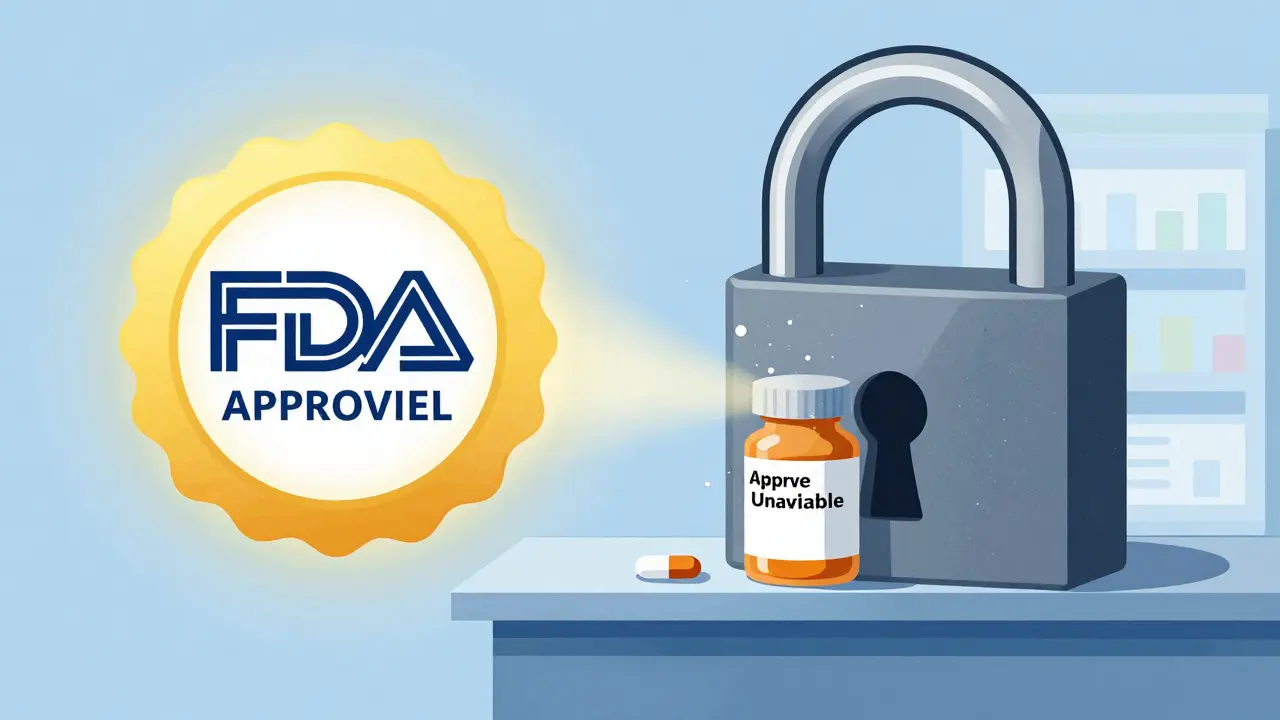
The 30-Month Stay: A Legal Speed Bump
To understand why these delays happen, we have to look at the Paragraph IV certification. This is a process where a generic company tells the FDA that the brand-name company's patent is invalid or won't be infringed by the generic version. While this sounds like a shortcut to competition, it actually triggers a powerful defensive mechanism: the 30-month statutory stay. When a brand-name company sues the generic maker after a Paragraph IV filing, the FDA is legally barred from granting final approval for 30 months. This window allows the courts to decide the patent's validity. According to data from 2024, about 68% of all generic applications included these certifications. Essentially, the brand-name company can use the legal system to freeze the clock, regardless of whether their patent is actually strong. Industry experts, including former Pfizer R&D President Dr. John LaMattina, argue that this stay has shifted from a legal protection to a strategic tool for maintaining monopolies.Patent Thicketing and the "Evergreening" Tactic
It isn't just about one patent; it's about a forest of them. Brand-name manufacturers often employ a strategy called "patent thicketing." Instead of one primary patent, they file dozens of secondary patents covering minor things like the pill's coating, the dosage frequency, or a slightly different chemical salt. Evergreening is the practice of extending a drug's patent life by obtaining new patents on slight modifications to the original product. In 2025, the average number of patents listed per New Drug Application (NDA) in the Orange Book rose to 14.7, up from 12.3 just five years prior. A prime example is the case of Humira. While its basic patent expired in 2016, AbbVie managed to maintain exclusivity through 2023 by creating a massive web of 242 separate patents. Dr. Aaron Kesselheim of Harvard Medical School notes that these strategies have extended monopolies by an average of 3.7 years beyond the intended 20-year term.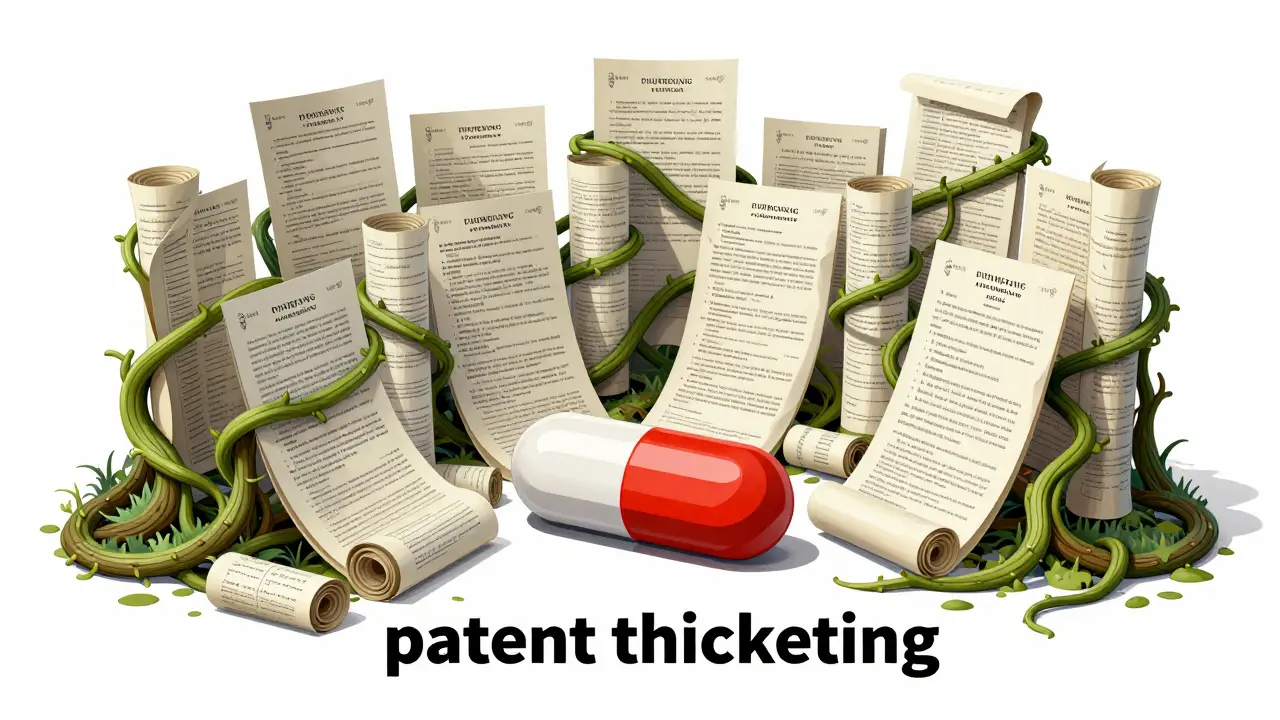
Which Drugs Face the Longest Delays?
Not all medications are delayed equally. The complexity of the drug and the therapeutic area play a huge role in how long a patient has to wait. High-stakes areas like oncology see the most significant gaps between approval and availability.| Therapeutic Area / Drug Type | Average Delay (Years) | Patent-Related Delay Rate |
|---|---|---|
| Oncology Drugs | 4.1 | High |
| Cardiovascular Drugs | 2.8 | Moderate |
| CNS Medications | 2.3 | Moderate |
| Complex Generics (Injectables/Inhalers) | Varies (High) | 89% |
| Simple Generics (Oral Solids) | Varies (Low) | 63% |
Beyond Patents: The Regulatory and Supply Chain Crunch
While patents are the biggest hurdle-causing 72% of all launch delays-they aren't the only problem. The regulatory environment itself has slowed down. In the third quarter of 2025, the FDA's drug approval rate dropped to 73%, down from a previous average of 87%. Review deadlines are being missed more frequently, and the average review cycle for an Abbreviated New Drug Application (ANDA) grew to 14.3 months in 2025. Supply chain instability has also stepped in. About 37% of delayed generics between 2023 and 2025 cited issues with the Active Pharmaceutical Ingredient (API). This is especially true for oncology injectables, where 14 out of 15 shortage-hit drugs were injectables. If a company wins the legal battle but can't source the raw chemical ingredients, the drug still doesn't reach the patient.
The Human Cost: Pharmacists and Patients
For the people on the ground, this looks like a pharmacy counter where the answer is always "not yet." A survey by the Association for Accessible Medicines found that 82% of pharmacists are constantly fielding questions about "approved but unavailable" drugs. Medications like Eliquis, Trulicity, and Steglatro are frequently mentioned as being stuck in this legal limbo. This isn't just a financial inconvenience; it's a health risk. Patient advocacy groups have documented hundreds of cases where people stopped taking their medication because they couldn't afford the brand-name version and the generic was delayed. The price difference is staggering: an average of $487 per month for the brand versus a projected $85 for the generic. When a drug is approved but withheld, the financial barrier becomes a medical barrier.Current Efforts to Break the Deadlock
There are attempts to fix this. The Federal Trade Commission (FTC) has become more aggressive, filing seven enforcement actions against "patent thicketing" between 2024 and 2025. One notable success was the settlement with Jazz Pharmaceuticals regarding Xyrem, which forced earlier generic entry. On the regulatory side, the FDA's new AI-assisted review process (launched in Q2 2025) has cut review times by 22% for drugs not embroiled in patent fights. However, AI can't solve a lawsuit. Until the 30-month stay or the way patents are listed in the Orange Book is reformed, the legal clock will continue to override the regulatory clock.Why is a drug "FDA Approved" but not available at my pharmacy?
This usually happens because of a patent dispute. Even if the FDA agrees the generic is safe and effective, the brand-name company may have a patent that prevents the generic from being sold. If the brand company sues, a "30-month stay" often freezes the commercial launch until a court decides who is right.
What is a Paragraph IV certification?
It's a legal claim made by a generic manufacturer stating that the brand-name drug's patent is invalid, unenforceable, or will not be infringed by the generic version. This is the primary way generics challenge monopolies to enter the market early.
How does "evergreening" work?
Evergreening is when a company files new patents on minor changes to an old drug-like a new extended-release formula or a different pill coating-to extend their market exclusivity beyond the original 20-year patent limit.
Are biosimilars delayed in the same way?
Yes, and often more so. Biosimilars face a "patent dance" that is even more complex than small-molecule generics. For example, Humira involved over 200 patents, creating a decade of exclusivity despite the original patent expiring much earlier.
Does this happen in other countries?
It happens globally, but the US has some of the longest delays. In Europe, the average time from approval to launch is about 1.7 years, compared to 3.2 years in the US, largely due to different patent linkage and litigation rules.

Anastasios Kyriacou
absulutly ridiculs system lol
Mel Glick
This is pure corporate greed at its finest! It's disgusting how they treat patients like ATMs while hiding behind these fake patents. We need to tear these laws down and stop letting lobbyists write the rules for the FDA. Absolute garbage! 😡
Ajinkya Joshi
Oh look, another 'shocking' discovery that pharma companies prioritize money over lives. Truly groundbreaking stuff here. I'm sure the 30-month stay is just a little clerical error and not a blatant loophole for profit. 🙄
Sue Stoller
It's so great to see the FTC finally stepping in to help! 🌟 Every small win against these thickets brings us closer to affordable healthcare for everyone. Let's keep pushing for transparency and better access! ✨💪
Mayur Pankhi Saikia
The sheer incompitence of the public to grasp how intellectual property actually works is astounding...!! Only an amatur would think it's simple. The complexitiy of the Orange Book is beyond most users' comprehension, clearly...!!
vimal purwal
While I completely agree that the current systemic delays are detrimental to the global health infrastructure, we must also consider that without the incentive of patent protection, the initial investment for high-risk research and development in oncology would simply vanish, which would lead to a far more catastrophic outcome where no new drugs are created at all, although the current abuse of 'evergreening' is indeed an unacceptable deviation from the original intent of patent law.
Mike Arrant
You people are just complaining. If you can't afford the drug, maybe you should look into lifestyle changes or generic alternatives from other countries if you're brave enough. Stop acting like the world owes you a cheap pill.
Dave Edwards
Typical American dystopia! 🤡 It's a moral failure of the highest order to let people die just so some CEO can buy a third yacht. The fact that the US has twice the delay of Europe is just a testament to how broken the system is. Absolutely shameful! 😱
Sarah Watters
The 'AI-assisted review' is just another way for the government to track who is trying to bypass the big pharma giants. They aren't cutting review times, they're just filtering out the threats more efficiently. It's all a game to keep the population dependent on expensive chemicals controlled by the elite.
Emma Cozad
Typical EU propaganda trying to make the US look bad. We invent the drugs, they just copy them. If we don't protect our patants, there's no reason to innovate. Keep your socialized medicine, we'll keep our breakthroughs even if it takes a few years to sort out the lawsuits.
Chidi Prosper
The point is that the 30-month stay is a weaponized legal tool. We can't just ignore the fact that 68% of applications are getting hit with this. It's a deliberate strategy and it needs to be abolished immediately if we want actual competition.
Anantha Lakshmi
We can definitely find a middle ground here! 🌈 If we reform the Orange Book listing process, we can protect real innovation while stopping the fake patents. Let's stay positive and advocate for a system that works for both scientists and patients! 💖
Dan Wizard
It is quite fascinating to see how the complexity of the drug delivery system, such as in the case of inhalers and injectables, creates a secondary layer of legal barriers that go beyond the chemical formula itself, and I wonder if there is a way to standardize these delivery mechanisms to prevent companies from using them as a shield to extend their market dominance long after the primary drug patent has lapsed.
Odicha ude Somtochukwu
The disparity between the cost of brand names and generics is truly heartbreaking...!! It is a matter of human rights that these barriers be removed for the sake of the poor...!! We must support the FTC in their aggressive pursuit of these monopolies...!!
Nicole Antunes
It's a bit disheartening to see the supply chain issues adding another layer of delay. Even when the law is settled, the API shortages mean patients are still waiting. It's a systemic failure across the board. (っ˘ω˘ς)