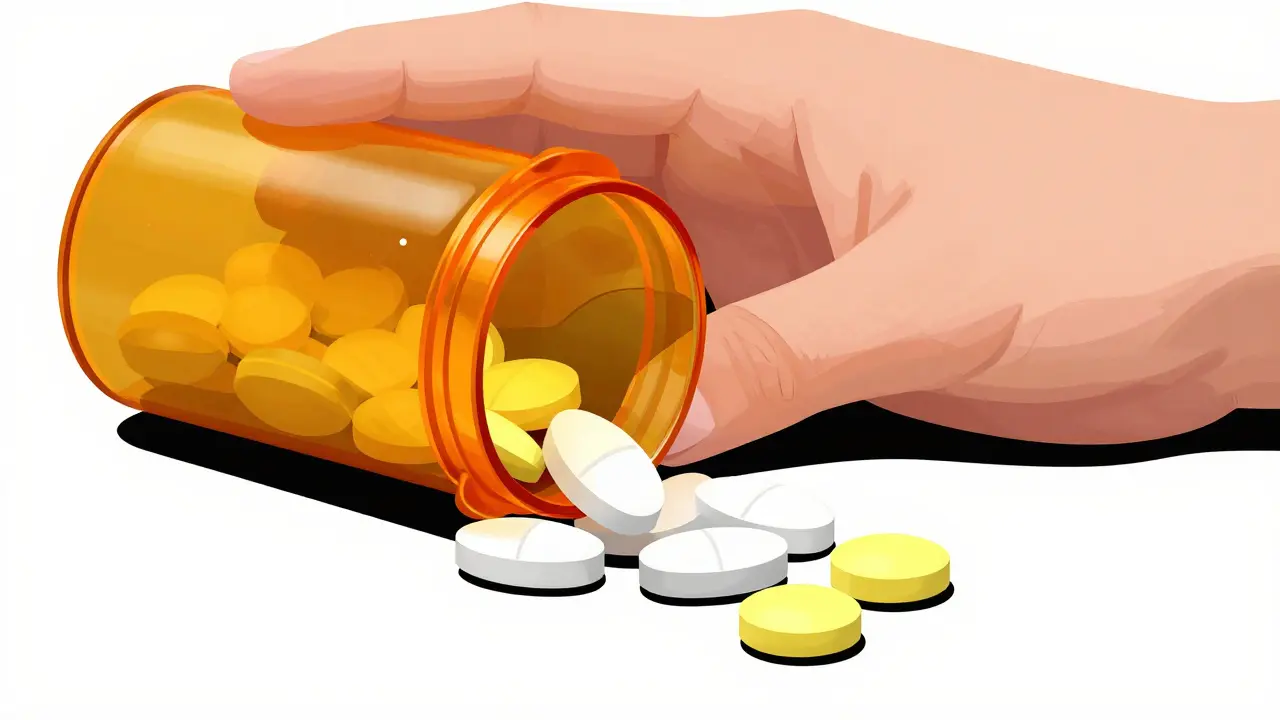
You pick up your monthly prescription, open the bottle, and freeze. The pills that were white and oval last month are now small, round, and bright yellow. Your first instinct is probably a surge of panic: Did the pharmacy give me the wrong medicine? Is this a fake? Or did the dosage change without me knowing?
If you've experienced this, you aren't alone. In fact, it's a common hurdle for millions of people switching to generics. While it feels alarming, these generic drug appearance is the variation in color, shape, size, and markings between a brand-name medication and its generic version, or between different generic manufacturers changes are usually a result of legal requirements rather than a change in the medicine's quality. But while the chemistry remains the same, the psychological impact of a "different-looking pill" can actually be dangerous to your health.
Why your pills don't look the same
You might wonder why the government doesn't just force every manufacturer to make the same pill. The answer is actually found in trademark law. Under the Hatch-Waxman Act, generic companies are prohibited from making their drugs look identical to the brand-name version. This protects the brand's intellectual property and prevents confusion in the marketplace. Because of this, a generic version of a drug like Lipitor (atorvastatin calcium) might be a white round tablet from one company and a pale yellow oblong tablet from another, even though both contain the exact same active ingredient.
The FDA (U.S. Food and Drug Administration) requires that generic drugs be "bioequivalent." This means the drug must deliver the same amount of active ingredient into your bloodstream at the same rate as the brand-name version. However, the FDA allows manufacturers to use different "inactive ingredients"-the fillers, binders, and dyes that give a pill its color and shape. As long as these additives don't change how the medicine works, the FDA gives the green light.
The hidden danger: The "Nocebo" effect and adherence
While pharmacists will tell you that a change in color doesn't change the efficacy, human psychology suggests otherwise. When a pill looks different, patients often stop trusting the medication. This leads to a significant drop in medication adherence, which is simply the act of taking your medicine exactly as prescribed.
The data is startling. Research from Harvard Medical School and Brigham and Women's Hospital found that when the appearance of a pill changed, the odds of patients stopping their essential cardiovascular medications jumped by 34%. For people managing chronic conditions like hypertension or diabetes, skipping doses because of a "scary" color change can lead to immediate health crises. It's not just a matter of preference; it's a matter of safety.
| Metric | Finding | Source/Context |
|---|---|---|
| Discontinuation Rate | 16.8% stop meds after appearance change | Annals of Internal Medicine (Cardio patients) |
| Patient Concern | 28.4% report being "very concerned" | 2023 Healthgrades Survey |
| Dose Skipping | 14.7% admit to skipping doses | Appearance uncertainty (Healthgrades) |
| Seniors' Difficulty | 37% of adults 65+ struggle to recognize meds | AARP Medication Safety Survey |
How to handle a change in your medication
Since pharmacy chains often switch generic suppliers based on cost or availability, you might see these changes several times a year. To avoid errors and anxiety, you need a system to verify your meds. Don't rely on your memory or the color of the pill-those are the first things to change.
First, start a personal medication log. Take a photo of your pill and the prescription bottle every time you get a refill. If the pill looks different next month, you can compare the photos and then call your pharmacist to confirm the change. A study from Johns Hopkins showed that this simple habit of keeping visual records can reduce medication errors by 27%, especially for elderly patients who take multiple drugs.
Second, use a pill organizer. When you fill your weekly organizer, you'll notice a change immediately while you're at the kitchen table, rather than discovering it in a hurry right before you take a dose. This gives you time to call the pharmacy and get confirmation before you actually swallow the pill.
What to ask your pharmacist
Your pharmacist is the best resource for navigating these changes. If you are anxious about a new look, don't just ignore it. Ask them specifically about the manufacturer. You can ask, "Who is the manufacturer of this generic, and why does it look different from the last batch?"
Some pharmacists can provide "pill identification counseling," where they walk you through the markings and shapes of your current meds. Others can use tools like the Surescripts Medication History feature to show you images of what your previous pills looked like. While not every pharmacy uses these tools, asking for them shows the provider that you are concerned about safety, which often prompts them to be more thorough in their verification.
The future of pill appearance
Regulators are starting to realize that "therapeutic equivalence" isn't enough if the patient is too scared to take the pill. The FDA is currently working on "Visual Medication Equivalence Standards" to help standardize the look of high-risk medications-those with narrow therapeutic indices where a small mistake in dosing can be fatal.
Europe has already taken a more aggressive lead. The European Medicines Agency often requires generics for chronic conditions to maintain a similar appearance to the original brand if possible. This shift has already led to an 18.3% reduction in appearance-related medication errors in the EU. It's likely that the U.S. will move in a similar direction as the cost of non-adherence-estimated at $1.3 billion annually-becomes too high for the healthcare system to ignore.
Is it safe if my generic pill changes color?
Yes, in the vast majority of cases, it is safe. The FDA requires generics to be bioequivalent to the brand name, meaning the active medicine is the same. The color change is usually due to different inactive fillers or dyes used by different manufacturers, which is legally required so they don't infringe on trademarks.
Can I request the same generic manufacturer every time?
You can ask your pharmacy, but it's difficult to guarantee. Most Pharmacy Benefit Managers (PBMs) and insurance companies do not guarantee a specific manufacturer. However, some pharmacies may be able to request a specific one if your doctor notes that a change in appearance is causing a medical risk to your adherence.
How can I tell if I actually got the wrong medication?
Check the imprint code on the pill. Every FDA-approved drug has a unique combination of letters and numbers stamped on it. You can use a reputable online pill identifier or call your pharmacist to verify that the imprint on your "new-looking" pill matches the drug you were prescribed.
Why does the brand-name drug look so much better?
Brand-name companies spend a lot of money on the "patient experience," including the look, feel, and taste of the pill. Since generics are designed to be low-cost alternatives, they focus on the chemical efficacy rather than the aesthetic design, provided they don't copy the brand's trademarked look.
Does the shape of the pill affect how fast it works?
Generally, no. As long as the pill meets the FDA's dissolution profile requirements (falling within 80-125% of the reference drug's performance), the shape-whether it's round, oval, or a caplet-won't change how the medicine is absorbed by your body.
