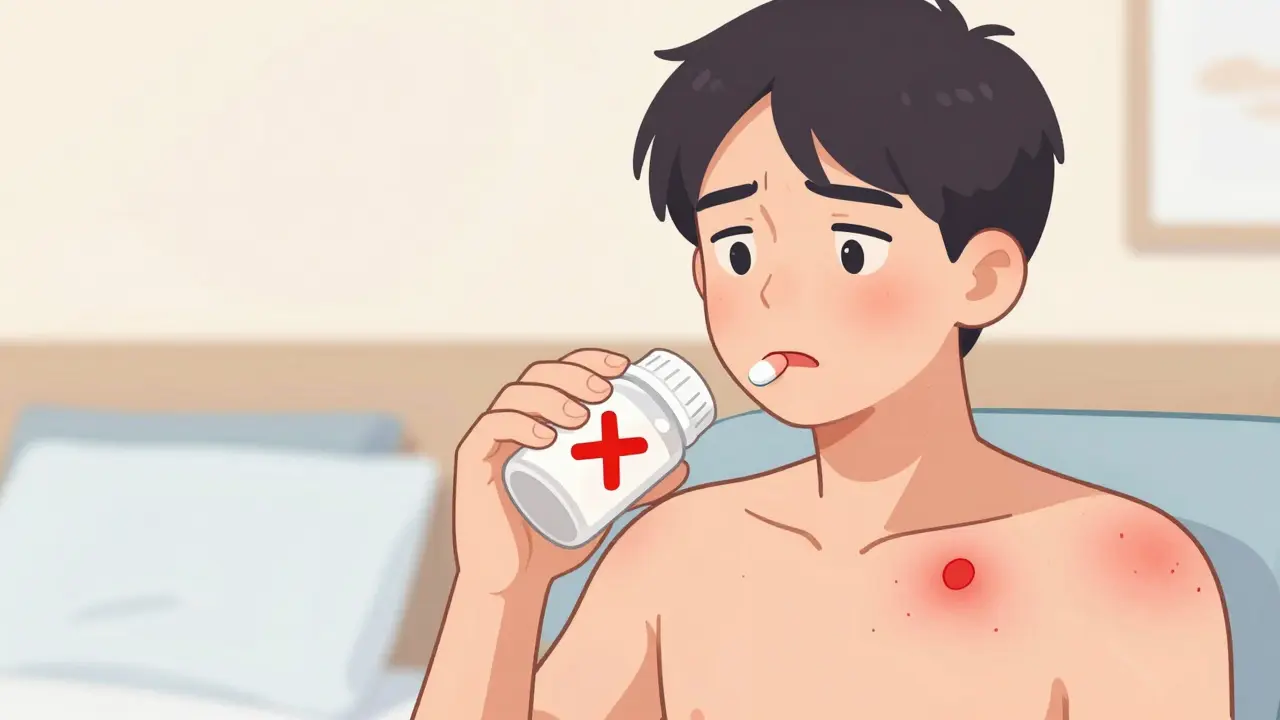
Imagine taking an antihistamine to calm your allergies, only to find your symptoms get worse. It sounds impossible, but this paradoxical reaction happens in rare cases. This condition, known as antihistamine allergy, occurs when the medication designed to treat allergies instead triggers hypersensitivity. According to Durda et al. (2017), this occurs when H1 antihistamines activate receptors rather than blocking them, leading to symptoms like urticaria (hives) rather than relief.
What is antihistamine allergy?
Antihistamine allergy is a rare but serious condition where medications meant to treat allergies cause allergic reactions. Normally, antihistamines work by binding to H1 receptors and blocking histamine's effects. But in some people, the drug's structure causes the receptor to flip into an active state instead. This paradoxical activation leads to symptoms like hives, swelling, or itching-exactly what the medication should prevent.
For example, a 2017 study documented a woman who developed chronic hives from multiple antihistamines, including first-generation (like diphenhydramine) and second-generation (like loratadine) drugs. Her symptoms only improved after stopping all antihistamines and treating an underlying infection. This shows how complex and counterintuitive this condition can be.
How cross-reactivity works between antihistamine classes
Cross-reactivity in antihistamine allergies defies simple chemical classification. You might expect drugs in the same class to react together, but research shows otherwise. Lee et al. (2018) studied a patient who reacted to ketotifen despite negative skin tests. Ketotifen belongs to a different chemical group than other antihistamines she reacted to, proving cross-reactivity isn't predictable by structure alone.
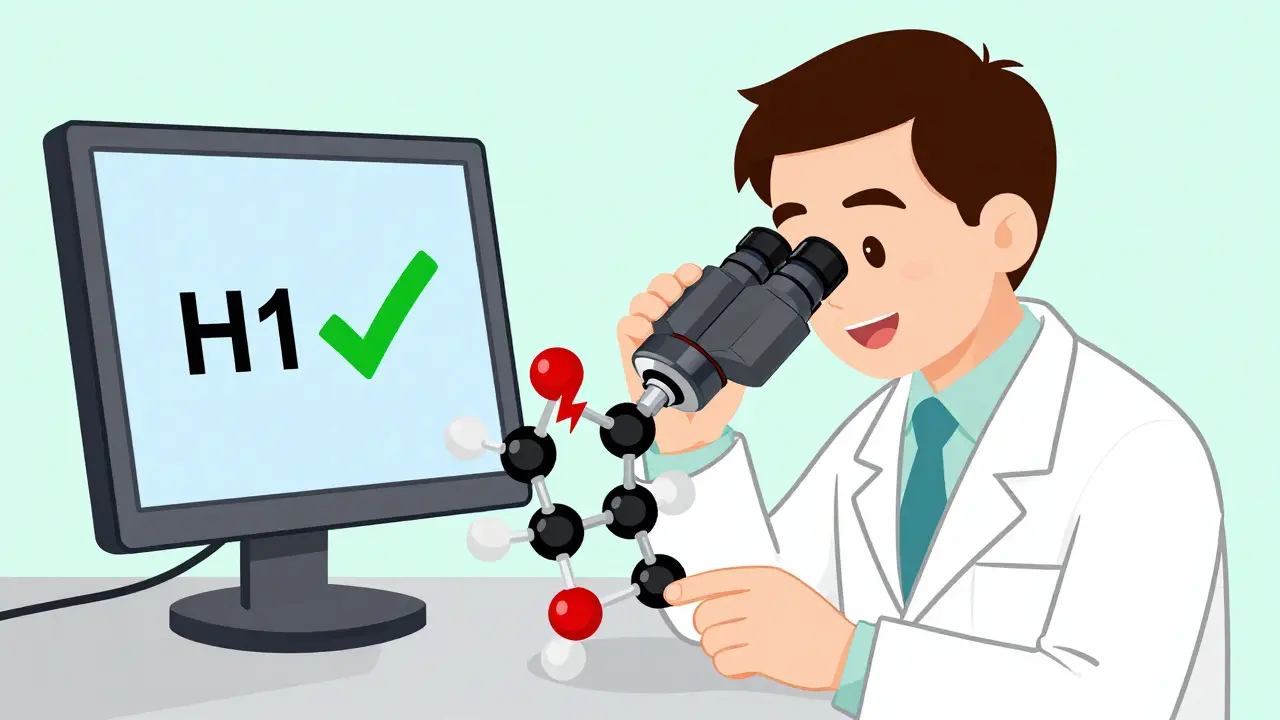
Wang et al. (2024) used cryo-EM imaging to study H1 receptor binding sites. They found both a primary cavity and a secondary binding site, which could explain why drugs from different classes sometimes trigger reactions. This complexity means avoiding one antihistamine doesn't guarantee safety with others. Even if a skin test is negative for a specific drug, it might still cause a reaction during oral challenge.
Symptoms to watch for
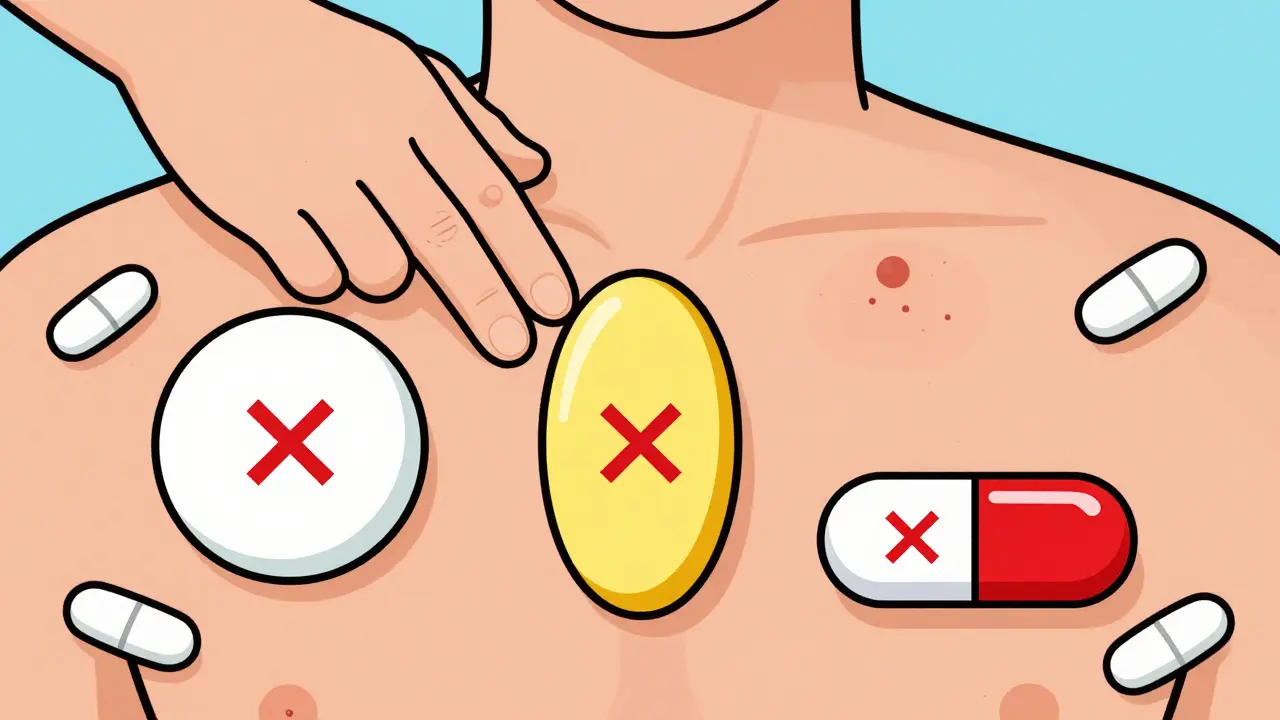
When antihistamine allergy strikes, symptoms often mimic worsening allergies. You might notice:
- Sudden hives (urticaria) or red, raised patches on the skin
- Swelling of lips, face, or throat (angioedema)
- Intense itching that spreads after taking the medication
- Worsening of existing allergy symptoms despite taking antihistamines
Urticaria is the most common symptom, but it's critical to recognize it's caused by the antihistamine itself, not your original allergy. Many patients are misdiagnosed with chronic urticaria and given more antihistamines, making the problem worse. In rare cases, severe reactions like difficulty breathing or low blood pressure can occur, requiring immediate medical attention.
Diagnosis challenges and testing
Diagnosing antihistamine allergy isn't straightforward. Standard allergy tests often fail here. Skin prick tests-which involve injecting small amounts under the skin-frequently give false negatives. Lee et al. (2018) documented a case where a patient had negative skin tests for ketotifen but developed hives during oral challenge. This shows why doctors must consider oral provocative testing when skin tests are inconclusive.
Test Type
How It Works
Pros
Cons
Skin prick test
Injecting small amount under skin
Quick, minimally invasive
Often misses reactions; Lee et al. (2018) found negative tests despite positive oral challenges
Oral provocative testing
Gradual dosing under medical supervision
Most accurate diagnosis
Risk of severe reaction; requires specialist supervision
Oral provocative testing is the gold standard but carries risks. It involves taking small, controlled doses of the suspected drug under medical supervision while monitoring for reactions. This process can take hours, as symptoms may appear up to 120 minutes later. Always work with an allergist for this type of testing-never attempt it at home.
Managing antihistamine allergy
If you suspect you have antihistamine allergy, stop taking the medication immediately. Consult an allergist or immunologist who can guide you through safe alternatives. Treatment focuses on two key areas: avoiding all triggering antihistamines and addressing underlying causes.
Durda et al. (2017) reported cases where treating a chronic infection-like a sinus infection or dental abscess-resolved symptoms. This highlights the importance of holistic care. For chronic hives, alternatives include:
- Leukotriene inhibitors (e.g., montelukast)
- Biologics like omalizumab (Xolair)
- Topical treatments for skin symptoms
Never self-prescribe. Work with a specialist to find safe options. Remember, avoiding all antihistamines is crucial-even if one drug seems safe, cross-reactivity can occur unexpectedly.
What the future holds
Scientists are working to understand why antihistamine allergy happens. Wang et al. (2024) used advanced imaging to study H1 receptor structures, revealing how antihistamines bind. This could lead to safer drugs designed to avoid paradoxical activation. However, current research gaps remain. Durda noted that "H1-receptor polymorphisms" may play a role, but their clinical impact is still unclear.
Future studies will focus on genetic factors and personalized medicine approaches. For example, identifying specific receptor variants could help predict who's at risk. Wang's team also suggested that understanding secondary binding sites in H1R "will facilitate the structure-based design of next-generation drugs," potentially solving this rare but dangerous condition.
Can you be allergic to antihistamines?
Yes, though it's rare. This condition is called antihistamine allergy, where the medication triggers an allergic reaction instead of treating it. Symptoms include worsening hives, rash, or swelling after taking the drug. It's paradoxical because the medicine designed to help causes harm.
How is antihistamine allergy diagnosed?
Standard skin prick tests often miss this condition. The most reliable method is oral provocative testing under medical supervision, where small doses are given and monitored for reactions. Skin tests may be negative even when oral challenges trigger symptoms, as shown in Lee et al. (2018). Always work with an allergist for accurate diagnosis.
Do all antihistamines cause cross-reactivity?
No, but cross-reactivity isn't predictable by chemical class. Some patients react to multiple antihistamines across different groups (piperidines and piperazines), while others only react to specific ones. Research by Lee et al. (2018) showed reactions between chemically dissimilar drugs, meaning you can't assume safety based on class alone. Always consult an allergist before switching medications.
What should I do if I react to an antihistamine?
Stop taking the medication immediately and contact your doctor. They may recommend alternatives like leukotriene inhibitors or biologics. If you have chronic hives, treating underlying issues-such as infections-can sometimes resolve symptoms. Never self-diagnose; always work with an allergy specialist to find safe treatments.
Are there safer antihistamines for sensitive people?
There's no guaranteed safe antihistamine for those with antihistamine allergy. Even drugs with negative skin tests can trigger reactions during oral challenges. For example, Lee et al. documented a case where ketotifen had negative skin tests but caused eruptions. The safest approach is avoiding all antihistamines and using non-antihistamine treatments under specialist guidance.

lance black
This changes everything.
Johanna Pan
I had a friend who had this issue. She thought it was her allergies getting worse. Took weeks to figure out the antihistamine was the cause. So glad this is being discussed. Its important to spread awareness. Many people dont know this can happen. Doctors should check for it. I'm glad the article explains it well. Its a rare condition but serious. People need to be aware. I hope more research is done. This could save lives. We need to talk about this more.
Carol Woulfe
Big Pharma is hiding the truth about antihistamine allergies.
They don't want you to know.
The studies are manipulated.
The FDA is in on it.
They profit from people's illnesses.
This is a classic case of corporate greed.
They suppress the data.
The research is biased.
The authors have conflicts of interest.
The whole system is corrupt.
They want us to stay sick.
So we buy more drugs.
But I know the truth.
The truth will out.
People need to wake up.
This is a conspiracy.
They're lying to us.
It's all about money.
Stop trusting the system.
Question everything.
Lisa Scott
This study is flawed.
Methodology is inadequate.
Sample size is insufficient.
Data is cherry-picked.
Conclusions are invalid.
Peer review is a joke.
Scientific community is compromised.
This is a sham.
Evidence is circumstantial.
Research is biased.
Authors have conflicts of interest.
This is not science.
It's propaganda.
The truth is being suppressed.
We need transparency.
Public is being misled.
Regulatory bodies are corrupt.
They ignore evidence.
This is dangerous.
People need to know.
jan civil
It's important to recognize this rare reaction. Many doctors may not be aware. Proper diagnosis is key. Alternatives exist for those affected. Consulting a specialist is crucial. This information can help prevent misdiagnosis.
Kieran Griffiths
Hang in there. This is tough but manageable. There are alternatives. Don't give up. Work with a specialist. You're not alone. There's hope. Keep pushing forward. Small steps matter. You've got this.
Georgeana Chantie
This is why America is great. We have the best healthcare. Other countries can learn from us. 😂 But seriously, this is a non-issue. The real problem is overmedication. People should just tough it out. This article is overhyped. The data is skewed. Trust me, I know.
Tehya Wilson
This is a trivial concern.
Real issues exist.
Such as healthcare access.
This is not important.
Focus on real problems.
Stop worrying about minor issues.
People need to prioritize.
Otherwise it's a waste of time.
Elliot Alejo
This is an important topic. More awareness is needed. Doctors should be trained on this. Patients need clear information. Collaboration between specialists is key. We can improve outcomes with better knowledge. Let's work together on this.
Kate Gile
This knowledge is crucial. Knowing what to watch for can save lives. Don't hesitate to seek help. There are solutions. You're not alone. Let's support each other. Keep sharing this knowledge. We can make a difference.
Laissa Peixoto
It's fascinating how our bodies react to medications. The H1 receptor's dual binding sites explain why some drugs cause paradoxical effects. This highlights the complexity of human physiology. Understanding these mechanisms can lead to better treatments. It's a reminder that medicine is not one-size-fits-all. Personalized approaches are essential. We must consider individual biochemistry. This research opens doors for future innovations. The implications are profound. It's a step towards truly tailored medicine. We're only scratching the surface. More studies are needed. But this is a promising direction.
Jenna Elliott
This is a scam. The data is fake. They're lying to us. Big Pharma controls everything. Stop trusting them. This is why we need to take matters into our own hands. The government is corrupt. It's all about money. They don't care about us. Wake up people.