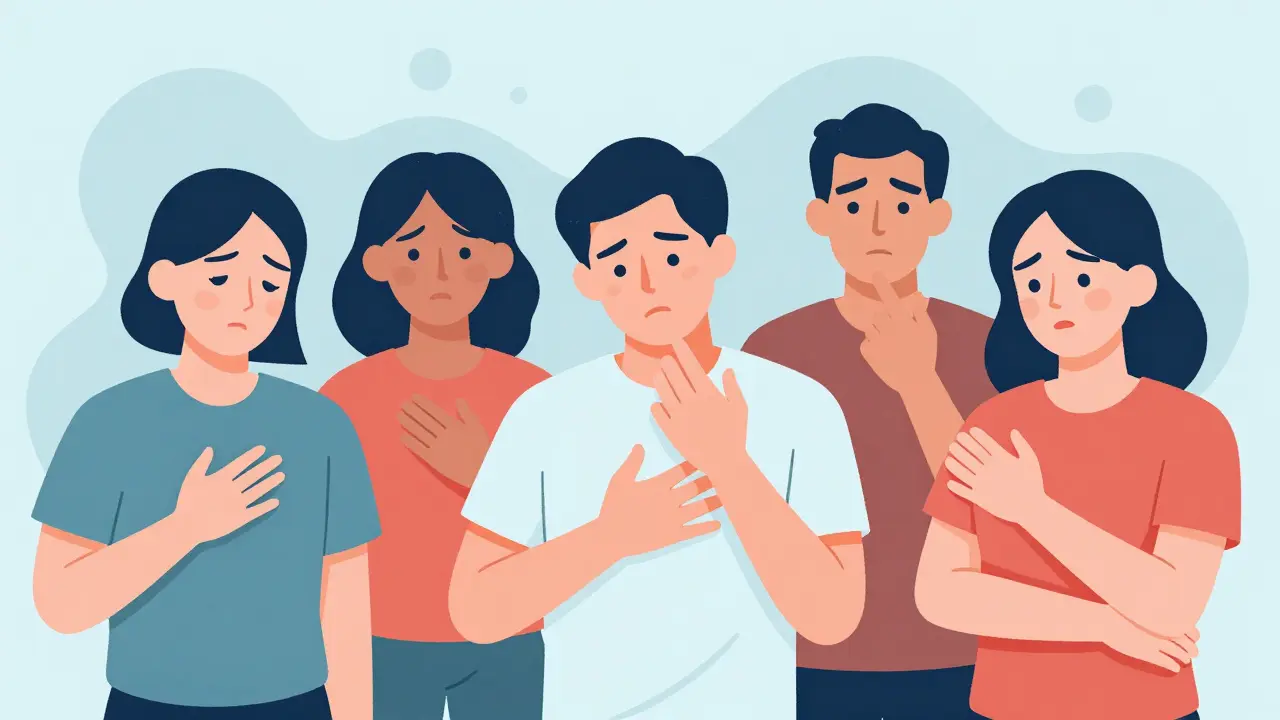
That sudden squeeze in your chest. The pressure that feels like an elephant sitting on your sternum. Or maybe it’s just a weird ache in your jaw or upper back. Chest pain is one of the most common reasons people rush to the hospital, but it is also one of the scariest. You stand there, hand on your chest, wondering if you are having a heart attack or if it’s just indigestion. The stakes are incredibly high. Waiting too long can be fatal, but rushing to the Emergency Department for every twinge leads to unnecessary stress and costs.
So, how do you know when to call for help? The answer isn’t always black and white, but medical guidelines provide a clear roadmap. Understanding the difference between stable discomfort and a life-threatening event can save your life or the life of someone you love. This guide breaks down exactly what doctors look for, what tests they run, and why timing matters more than anything else.
What Counts as "Chest Pain"?
We often think of chest pain as sharp agony right behind the breastbone. But your heart doesn’t always send signals that way. According to the 2021 guidelines from the American Heart Association (AHA) and the American College of Cardiology (ACC), "chest pain" is a broad term. It includes pressure, tightness, squeezing, or burning sensations. Crucially, these feelings might not even be in your chest.
You might feel this discomfort in your:
- Shoulders or arms (often the left arm, but not always)
- Neck or jaw
- Upper abdomen (which many people mistake for heartburn)
- Back
If you have any of these sensations, especially if they come with shortness of breath, nausea, cold sweats, or extreme fatigue, your body might be signaling Acute Coronary Syndrome (ACS). ACS is an umbrella term for conditions where blood flow to the heart muscle is suddenly reduced. This includes unstable angina and heart attacks. Recognizing these "anginal equivalents" is vital because women, older adults, and people with diabetes often experience these atypical symptoms rather than classic crushing chest pain.
The Red Flags: When to Call 9-1-1 Immediately
Not all chest pain requires an ambulance, but some signs demand immediate action. If you or someone else experiences any of the following, do not drive yourself. Call emergency services right away.
1. Pain that won't go away
If chest pressure lasts more than a few minutes, goes away and comes back, or gets worse with activity, treat it as an emergency. Stable angina usually happens during exertion and stops with rest. Unstable pain happens at rest or wakes you up from sleep.
2. Associated physical symptoms
Look for diaphoresis (cold, clammy sweat), pale skin, or looking generally "ill." If you are gasping for air (tachypnea) or your heart is racing uncontrollably (tachycardia), your body is under severe stress.
3. Signs of shock or heart failure
Low blood pressure (feeling faint or dizzy), crackling sounds in the lungs when breathing, or a new irregular heartbeat are critical warning signs. These suggest your heart is struggling to pump effectively.
Why call 9-1-1 instead of driving? Studies show that patients who drive themselves to the hospital have a 25-30% higher risk of adverse events before they even get there. Paramedics can start treatment on the scene, perform an initial assessment, and alert the hospital so the team is ready when you arrive. This saves precious minutes.
What Happens When You Arrive at the ED?
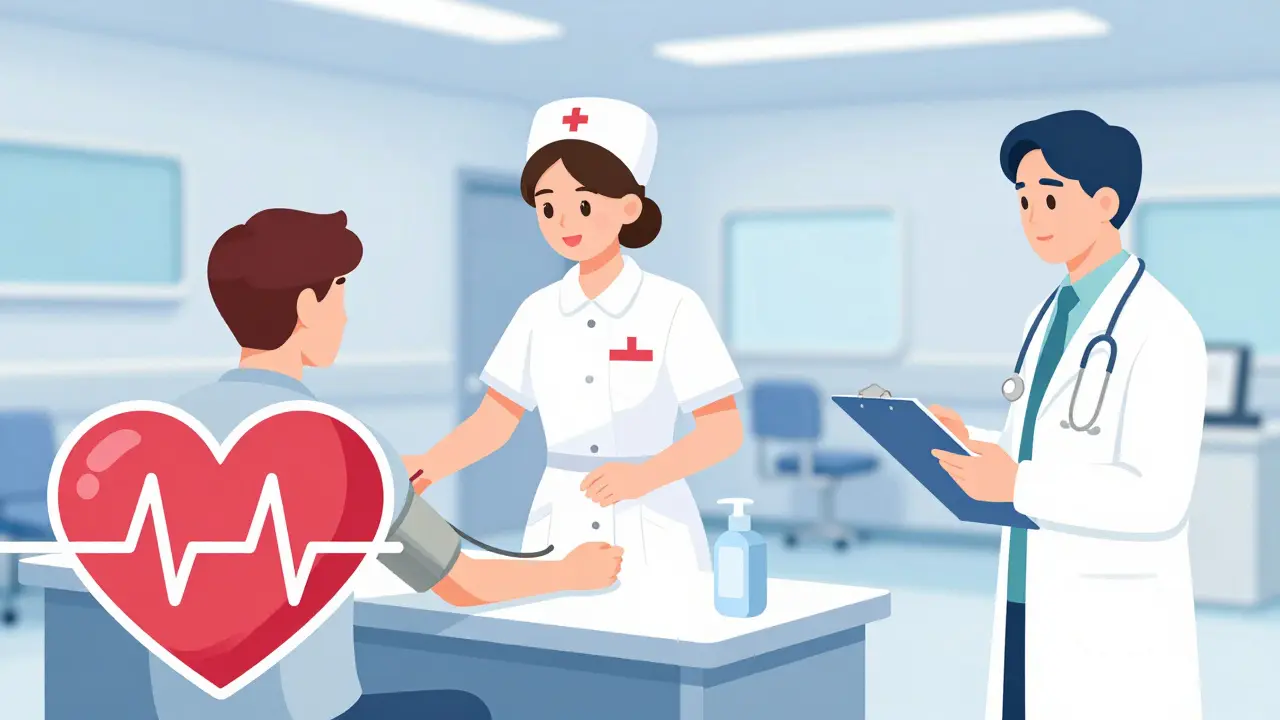
Walking into the Emergency Department with chest pain triggers a specific protocol designed to rule out life-threatening causes quickly. The goal is speed and accuracy. Here is the step-by-step process you will likely encounter.
Step 1: The "Sick vs. Not Sick" Assessment
Within seconds of arrival, triage nurses assess your stability. They check your airway, breathing, and circulation (ABCs). They measure your vital signs: blood pressure, heart rate, respiratory rate, and oxygen levels. This quick gestalt determines if you need immediate resuscitation or if you can wait for diagnostic tests.
Step 2: The 12-Lead ECG (Within 10 Minutes)
This is non-negotiable. Guidelines mandate that a 12-lead electrocardiogram (ECG) must be acquired and interpreted within 10 minutes of your arrival. The ECG records the electrical activity of your heart. Doctors look for ST-elevation, which indicates a full blockage of a coronary artery (STEMI). If this is found, you are rushed immediately to a catheterization lab for a procedure called percutaneous coronary intervention (PCI) to open the blocked vessel. Time is muscle; every minute counts.
Step 3: Blood Tests (Troponin)
While the ECG checks electricity, blood tests check for damage. Doctors draw blood to measure cardiac troponin, a protein released when heart muscle is injured. Modern hospitals use high-sensitivity troponin assays. These are incredibly precise. By taking two samples-one on arrival and another 1 to 2 hours later-doctors can safely rule out a heart attack in 70-80% of patients within just two hours. If your troponin levels remain low and unchanged, it is highly unlikely you are having a myocardial infarction.

Risk Stratification: Where Do You Fit?
Once the initial tests are done, doctors categorize your risk level to decide your next steps. This prevents unnecessary hospital stays for low-risk patients while ensuring high-risk patients get intensive care.
| Risk Level | Typical Findings | Recommended Action |
|---|---|---|
| High Risk | ST-elevation on ECG, rising troponin, hemodynamic instability, ongoing pain. | Immediate coronary angiography (catheterization) and possible stenting. |
| Intermediate Risk | Normal ECG, normal initial troponin, but concerning history or risk factors (e.g., HEART score 4-6). | Observation, serial troponins, functional stress testing, or Coronary CT Angiography (CCTA). |
| Low Risk | Normal ECG, negative troponin, no risk factors, typical musculoskeletal or GI cause (HEART score 0-3). | Safe discharge with outpatient follow-up. No further immediate testing needed. |
Doctors often use tools like the HEART score to calculate this risk. It looks at History, ECG findings, Age, Risk factors (like smoking or high cholesterol), and Troponin levels. A low score means you can likely go home. A high score means you stay for closer monitoring.
Diagnostic Tools Beyond the Basics
If your initial tests don’t show a heart attack, but your pain persists or your risk profile is intermediate, doctors may order additional imaging.
Coronary CT Angiography (CCTA):
This scan uses dye and X-rays to create a detailed 3D image of your coronary arteries. It has a sensitivity of 95-99% for detecting blockages. It is particularly useful for younger patients or those without known heart disease. However, it involves radiation and contrast dye, so it isn’t suitable for everyone, especially those with kidney issues or allergies to iodine.
Stress Testing:
This involves exercising on a treadmill or using medication to simulate exercise while monitoring your heart. It helps identify if blood flow drops during exertion. While slightly less sensitive than CCTA for anatomical blockages, it provides functional data about how your heart performs under load.
Echocardiogram:
An ultrasound of the heart checks for structural problems, valve issues, or areas of the heart muscle that aren’t moving correctly due to lack of blood flow.
Common Non-Cardiac Causes of Chest Pain
Here is the good news: only 10-15% of chest pain cases in the Emergency Department turn out to be heart attacks. Most other causes are serious but manageable, or entirely benign.
- Gastrointestinal Issues: Acid reflux (GERD) and esophageal spasms mimic heart pain perfectly. If antacids relieve the pain, it’s a clue, but never assume this without ruling out heart issues first.
- Musculoskeletal Pain: Costochondritis (inflammation of the rib cartilage) causes sharp pain that worsens when you press on your chest wall or take deep breaths.
- Pulmonary Embolism (PE): A blood clot in the lung. This is life-threatening. Symptoms include sharp pain that worsens with breathing, rapid heart rate, and sometimes leg swelling.
- Aortic Dissection: A tear in the major artery from the heart. This causes sudden, tearing pain in the chest or back. It is a rare but catastrophic emergency requiring immediate surgery.
Practical Tips for Patients
If you are unsure whether your pain is cardiac, err on the side of caution. Here are a few practical rules to keep in mind:
- Don't ignore "weird" symptoms: Fatigue, nausea, and jaw pain can be heart attacks, especially in women.
- Note the onset: Did it start during exercise? At rest? After eating? Write this down to tell the doctor.
- Bring your medication list: Knowing what drugs you take helps doctors interpret your symptoms and test results.
- Ask about the HEART score: If you are being discharged, ask if your risk was formally stratified. It gives you peace of mind knowing a standardized tool was used.
Remember, the Emergency Department is equipped to handle uncertainty. Their job is to rule out the worst-case scenarios. If they send you home, it means the evidence strongly suggests your heart is safe. Follow up with your primary care provider or a cardiologist for ongoing management, especially if you have risk factors like high blood pressure, diabetes, or a family history of heart disease.
How long should I wait to see if chest pain goes away?
You should not wait if the pain is severe, crushing, or accompanied by shortness of breath, sweating, or nausea. If mild chest discomfort occurs during exercise and resolves completely with rest within a few minutes, it may be stable angina, but you still need to see a doctor soon. However, if pain lasts more than 5-10 minutes at rest, does not improve with rest, or feels different from previous episodes, seek emergency care immediately.
Can anxiety cause chest pain that feels like a heart attack?
Yes, panic attacks and severe anxiety can cause chest tightness, rapid heartbeat, and shortness of breath that mimic heart attacks. However, you cannot reliably distinguish between anxiety and a heart attack on your own. Medical professionals must rule out cardiac causes through ECG and troponin tests before attributing the pain to anxiety. Never assume it is just anxiety without professional evaluation.
Why is an ECG done within 10 minutes?
Time is critical in treating heart attacks. An ST-elevation myocardial infarction (STEMI) requires immediate reperfusion therapy, such as angioplasty, to restore blood flow. Guidelines state that an ECG must be performed within 10 minutes of arrival to identify STEMI quickly. Delays in obtaining the ECG can delay treatment by 20-30 minutes, leading to greater heart muscle damage and worse outcomes.
What is the HEART score?
The HEART score is a clinical tool used to stratify the risk of major adverse cardiac events in patients with chest pain. It evaluates five components: History, ECG, Age, Risk factors, and Troponin. Each component is scored from 0 to 2. A total score of 0-3 indicates low risk, 4-6 indicates intermediate risk, and 7-10 indicates high risk. It helps doctors decide who needs admission and who can be safely discharged.
Is it safer to drive myself or call an ambulance?
Calling an ambulance is significantly safer. Research shows that patients who drive themselves have a 25-30% higher risk of adverse events before reaching the hospital. Paramedics can begin treatment en route, monitor your condition, and alert the emergency department to prepare for your arrival, reducing the time to definitive care.
