
Imagine a scenario where a patient refuses to take their prescribed blood pressure medication simply because the pill is blue. To some, that color might signal danger or inferiority, despite the drug being perfectly safe and effective. Now imagine another situation: a Muslim patient discovers that the gelatin capsule of their new generic antibiotic contains pork-derived ingredients. They stop taking it immediately. These aren't just hypotheticals; they are real-world barriers that prevent millions from getting the care they need.
Generic medications make up roughly 70% of all medicines sold in Europe, according to IQVIA's 2024 data. In the United States, the numbers are similarly high. Yet, as healthcare becomes more diverse, a significant gap has emerged between standard pharmaceutical practices and the specific cultural needs of patients. This isn't about politics or preference-it’s about basic biology, trust, and religion. When we ignore these factors, treatment fails. Let’s look at why cultural competence matters so much when it comes to generics, and what you can do about it.
The Hidden Ingredients Problem
When a doctor prescribes a brand-name drug and the pharmacy dispenses a generic version, the active ingredient-the part that actually treats the illness-is identical. That is the law. However, the inactive ingredients, known as excipients, often differ. These fillers, binders, and coatings help the pill hold its shape or dissolve properly. But for many people, these "invisible" components carry heavy cultural weight.
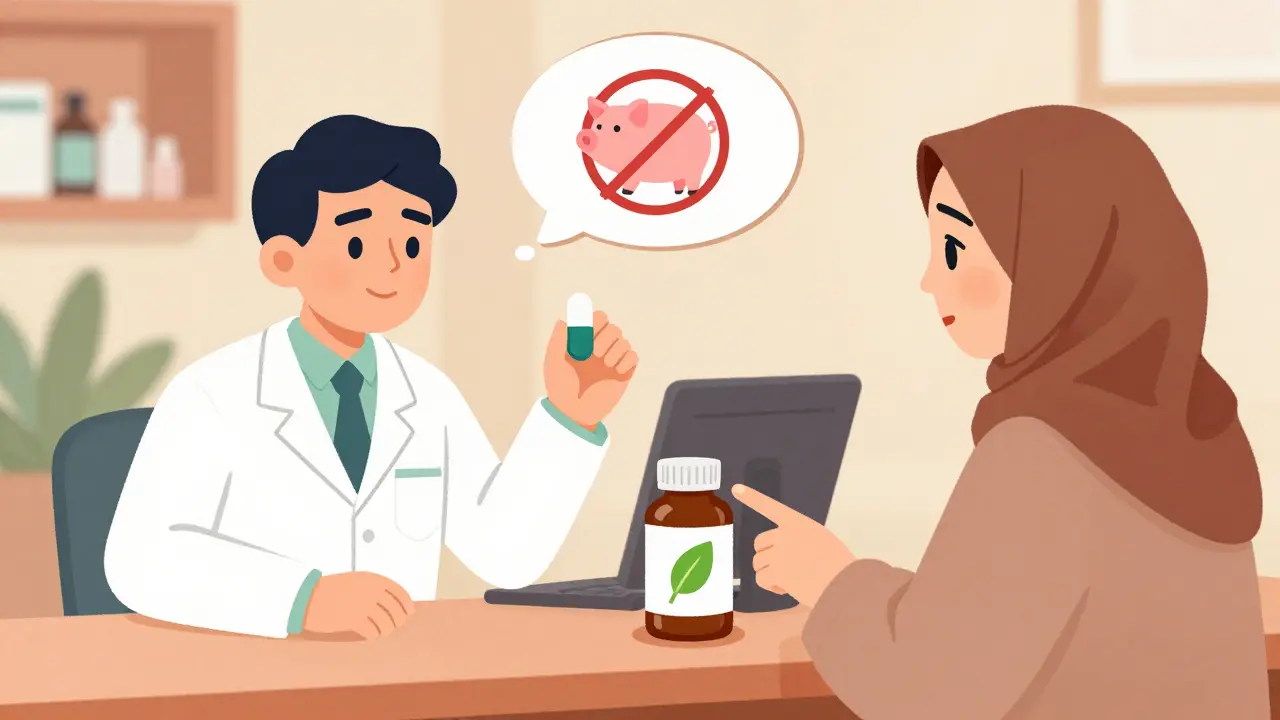
Consider gelatin. It is one of the most common materials used to make capsules. Often derived from pigs, this ingredient is strictly forbidden in Islamic (halal) and Jewish (kosher) dietary laws. A study published in PMC in 2023 highlighted this exact friction. Pharmacists reported spending hours sourcing liquid alternatives or contacting multiple manufacturers to find a suitable substitute for a single patient. One pharmacist noted, "Somebody who's Muslim wouldn't be happy with pork products, like gelatine, in their capsules." If that patient doesn't know to ask, or if the pharmacist doesn't know to check, the medication sits unused in a drawer.
This issue extends beyond gelatin. Some cultures avoid certain dyes derived from insects or shellfish due to religious restrictions or allergies. Others have deep-seated beliefs about plant-based versus animal-based derivatives. Without clear labeling, patients are left guessing. Currently, only 37% of generic medication package inserts in the U.S. provide detailed excipient information, compared to 68% in the European Union. This lack of transparency forces patients to rely on trial and error, which is risky when dealing with chronic conditions.
Color, Shape, and Trust
You might think that a pill’s appearance shouldn’t matter if the chemistry is the same. But human psychology doesn’t work that way. Color and shape play a massive role in how we perceive medicine. For decades, marketing campaigns linked specific colors to strength or gentleness. Over time, these associations became ingrained in our collective consciousness.
For many patients, especially those switching from a familiar brand to a new generic, a change in appearance signals a change in quality. A white pill suddenly becoming yellow can trigger anxiety. Research shows that patients from African American and Hispanic communities report higher rates of concern regarding generic efficacy than non-Hispanic White patients. A 2022 FDA survey found that 28% of African American patients believed generics were less effective, compared to just 15% of non-Hispanic White patients.
Why does this disparity exist? Partly, it stems from historical mistrust in the healthcare system. When a community has experienced medical discrimination, skepticism toward "cheaper" alternatives is natural. If a patient feels unheard or rushed during a consultation, they are less likely to accept a substitution. The visual difference acts as a tangible reminder of that disconnect. Addressing this requires more than just handing over a bottle; it requires explaining *why* the pill looks different and reassuring the patient that the therapeutic effect remains unchanged.
Language Barriers and Health Literacy
Even if a patient accepts the generic, can they understand how to take it? Language barriers remain one of the biggest hurdles in patient education. Generic labels often use complex medical terminology that assumes a high level of health literacy. For immigrants or non-native speakers, instructions like "take once daily before meals" can be ambiguous. Does "before meals" mean an hour before? Immediately before? On an empty stomach?
Misunderstanding dosage instructions leads to poor adherence, which worsens health outcomes. A study by the National Institutes of Health emphasized that diversity impacts pharmaceutical innovation, noting that greater diversity among researchers increases focus on underserved conditions. However, research alone doesn't help the individual standing in the pharmacy aisle today. We need translated materials, pictorial guides, and pharmacists trained in cross-cultural communication.
It’s not enough to offer a pamphlet in Spanish or Mandarin if the content itself isn’t culturally relevant. Medical concepts vary across cultures. Some traditional healing systems view illness as an imbalance of energy rather than a bacterial infection. Bridging these worldviews requires patience. A pharmacist who acknowledges a patient’s cultural background builds trust faster than one who dismisses it. Simple gestures, like asking, "Do you have any concerns about this medication based on your personal beliefs?" can open doors to better compliance.
| Cultural/Religious Group | Potential Conflict | Practical Solution |
|---|---|---|
| Muslim Patients | Pork-derived gelatin in capsules | Seek bovine gelatin, vegetable cellulose capsules, or liquid forms |
| Jewish Patients | Non-kosher excipients (e.g., porcine enzymes) | Consult rabbinical guidelines or choose certified kosher brands |
| Vegans/Vegetarians | Animal-based stearic acid or lactose fillers | Request plant-based alternatives or verify ingredient lists |
| Patients with Color Sensitivities | Dyes causing allergic reactions or psychological aversion | Ask for dye-free versions or different manufacturer generics |

The Industry’s Slow Awakening
For years, the pharmaceutical industry treated multicultural markets as a niche segment. Around 2010-2015, major companies began recognizing that ethnic diversity constituted the fastest-growing consumer segment in the U.S. By 2015, approximately 40% of pharmaceutical companies were exploring corporate-wide multicultural strategies. But progress has been uneven, especially in the generics sector.
Major players like Teva Pharmaceutical Industries, Sandoz, and Viatris dominate the global generic market. Until recently, few prioritized cultural adaptation. That is changing. In Q2 2023, Teva launched a "Cultural Formulation Initiative" to document excipient information for all generic products across 15 major therapeutic areas. Sandoz announced plans in January 2024 to develop a "Global Cultural Competence Framework." These steps are crucial. They move cultural competence from a buzzword to a operational standard.
Regulatory shifts also play a role. The Food and Drug Omnibus Reform Act (FDORA), passed in December 2022, increased emphasis on improving diversity in clinical trials and addressing social determinants of health. Experts like Cheryle Barnett and Todd Parker argue that medical communication professionals must engage with healthcare providers across the global, multicultural landscape to achieve optimal patient outcomes. The goal is no longer just selling pills; it’s ensuring those pills are taken correctly by everyone.
What You Can Do Today
If you are a patient, advocate for yourself. Don’t assume the pharmacist knows your dietary restrictions unless you tell them. Ask questions:
- "Does this capsule contain gelatin?"
- "Are there any animal products in this tablet?"
- "Can I get a different color if this one bothers me?"
If you are a healthcare provider, invest in training. Only 22% of community pharmacies have formal training programs addressing cultural considerations for generic medications, according to a 2023 American Pharmacists Association survey. This is a huge gap. Training should cover religious dietary restrictions, cultural perceptions of illness, and communication strategies. It takes 8-12 hours of specialized training per staff member, but the return on investment is measured in lives saved through better adherence.
Finally, demand better documentation. Push manufacturers to list all excipients clearly. Support initiatives that promote transparency. When we bridge the gap between science and culture, we don’t just improve statistics-we restore dignity to the healing process.
Why do generic pills look different from brand-name ones?
Generic medications must contain the same active ingredient as the brand-name drug, but they can have different inactive ingredients (excipients). These include fillers, binders, and dyes that affect the pill's color, shape, and size. Manufacturers use different formulations to save costs or protect patents, leading to visual differences that do not impact efficacy but may affect patient perception.
Are generic medications less effective than brand names?
No, generic medications are required by regulatory bodies like the FDA to be bioequivalent to their brand-name counterparts. This means they deliver the same amount of active ingredient into the bloodstream over the same period. While some patients report concerns due to appearance changes or past experiences, clinically, generics perform identically to branded drugs.
How can I find halal or kosher-certified generic medications?
Finding certified generics can be challenging because certification is voluntary and not always advertised. Start by asking your pharmacist to check for bovine gelatin or vegetable-based capsules instead of porcine gelatin. Some manufacturers, like Teva, are beginning to document excipient sources more clearly. You can also consult online databases maintained by religious organizations that list approved medications.
What should I do if my doctor prescribes a brand but the pharmacy gives me a generic?
First, talk to your pharmacist. Explain any concerns about appearance, ingredients, or cost. In many cases, they can switch to a different generic manufacturer that uses a similar formulation to the brand. If insurance allows, you can request "dispense as written," though this may increase out-of-pocket costs. Open communication ensures you receive a medication you are comfortable taking.
Why is cultural competence important in pharmacy practice?
Cultural competence improves patient adherence and health outcomes. When patients feel their cultural and religious values are respected, they are more likely to trust their healthcare providers and follow treatment plans. Ignoring these factors can lead to non-adherence, worsening chronic conditions, and increased healthcare costs. It bridges the gap between scientific availability and actual usage.
