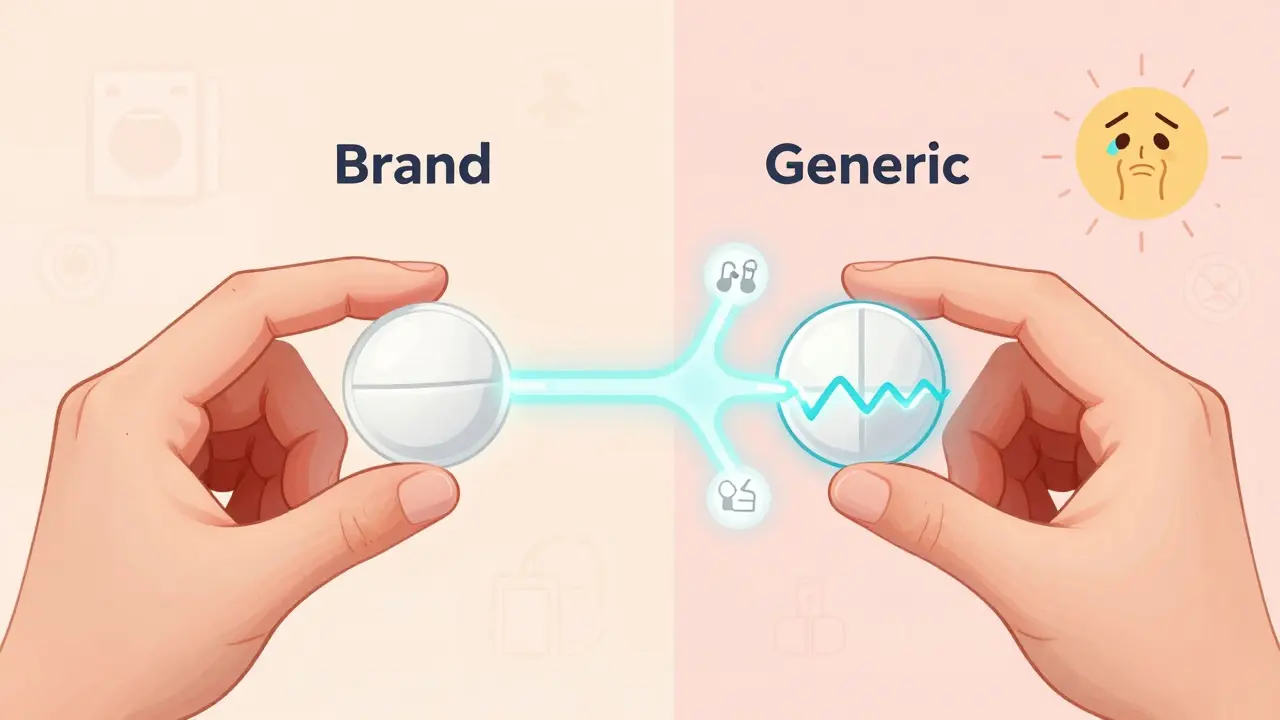
When you pick up a prescription, you might not think twice about whether it’s the brand-name drug or the cheaper generic version. After all, the FDA says they’re the same. But for some people, switching from a brand-name drug to a generic isn’t just a cost change-it’s a health change. You might feel more tired, get headaches, or notice your condition suddenly worsening. And you’re not imagining it. Generic medications are chemically identical in active ingredients, but that doesn’t mean they work the same for everyone.
What ‘Same Active Ingredient’ Really Means
The FDA requires generic drugs to contain the exact same active ingredient, in the same strength, and delivered the same way as the brand-name version. That’s the law. But what the FDA doesn’t require is that the rest of the pill be the same. In fact, inactive ingredients-like fillers, dyes, binders, and coatings-can be completely different. And these make up 80% to 99% of the pill’s weight. For most people, that doesn’t matter. A generic metformin for diabetes works just as well as the brand. But for others, especially those taking drugs with a narrow therapeutic index (NTI), even tiny differences in how the body absorbs the medicine can cause big problems. NTI drugs are those where the difference between a helpful dose and a dangerous one is razor-thin. Think levothyroxine for thyroid conditions, warfarin for blood thinning, or phenytoin for seizures. A 10% change in blood levels can mean the difference between control and crisis.The Bioequivalence Gap
Here’s where things get tricky. The FDA allows generic drugs to deliver between 80% and 125% of the brand-name drug’s blood concentration. That’s a 45% range. Two different generic versions of the same drug can be on opposite ends of that range and still both be considered “bioequivalent.” So if you switch from one generic to another-or from brand to generic-you could be getting a dose that’s 45% stronger or weaker than what you were on before. A 2019 study in JAMA Internal Medicine followed over 2,000 people who switched from brand-name Synthroid to generic levothyroxine. Nearly 24% had thyroid hormone levels that moved outside the safe range within six months. Only 14% of those who stayed on the brand had the same issue. That’s not a small difference. It’s a clinical one. And it’s not just thyroid drugs. In a 2018 study of epilepsy patients, 17% had breakthrough seizures after switching from brand-name lamotrigine to generics. That’s one in six people. For a condition where even one seizure can be life-altering, that’s unacceptable to many patients and doctors.Why Inactive Ingredients Matter More Than You Think
You might think: “It’s just cornstarch or lactose. How bad could it be?” But for some, it’s more than that. People with allergies or sensitivities can react to dyes, preservatives, or fillers in generics. Sodium metabisulfite, a common preservative, triggers asthma attacks in 5-10% of asthmatics. Lactose is a problem for those with severe intolerance. Even a small amount of a dye like FD&C Red No. 40 can cause migraines or anxiety in sensitive individuals. One patient on Reddit described switching from brand-name Wellbutrin (bupropion) to a generic and suddenly having severe headaches and panic attacks. Others reported mood swings, insomnia, or brain fog. When they switched back, symptoms disappeared. This isn’t anecdotal fluff-it’s backed by data. A 2022 survey of over 3,200 pharmacists found that 68% had seen patients have adverse reactions after switching between generic manufacturers. Over 40% said it happened “frequently.”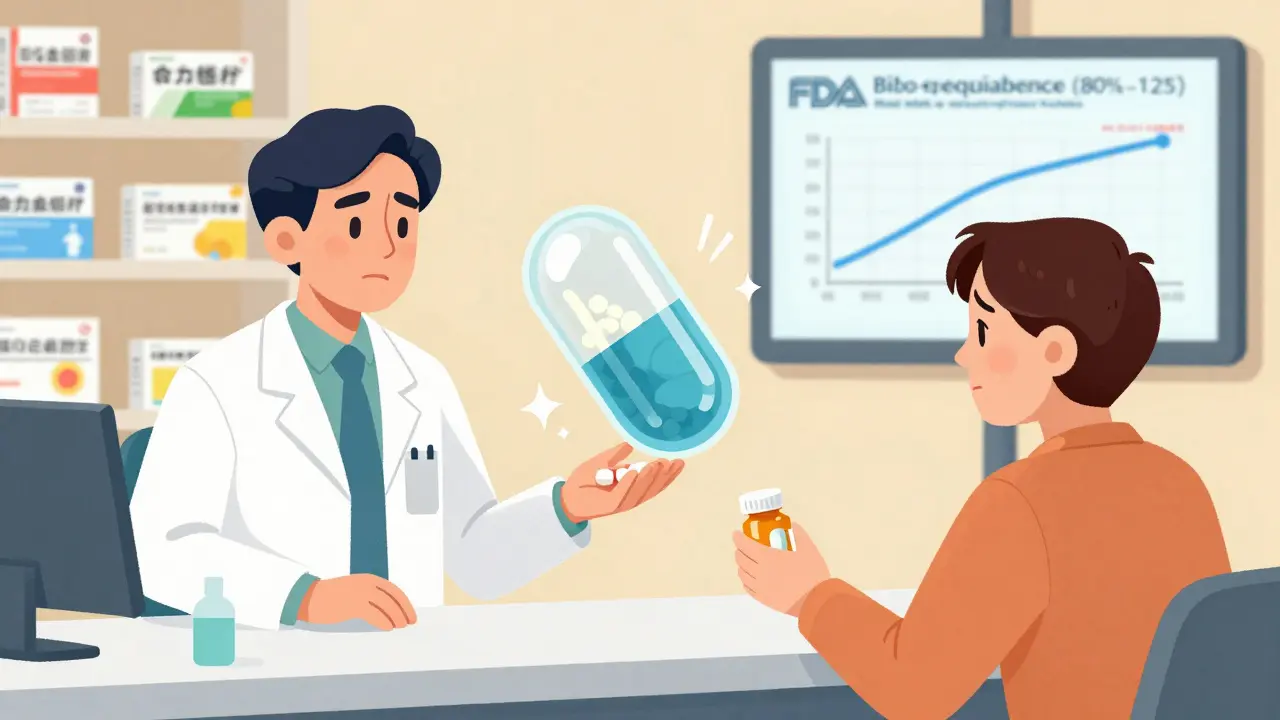
Who’s Most at Risk?
Not everyone reacts this way. But certain groups are far more vulnerable:- Patients on narrow therapeutic index (NTI) medications: levothyroxine, warfarin, digoxin, phenytoin, carbamazepine
- People with complex medication regimens: taking five or more drugs daily
- Those with chronic conditions that rely on precise dosing: thyroid disease, epilepsy, heart rhythm disorders
- Individuals with known allergies or sensitivities to fillers or dyes
- Older adults and people with liver or kidney issues, where drug metabolism is slower
What Doctors and Pharmacists Are Doing About It
Many prescribers now avoid automatic substitution for NTI drugs. At CVS and Walgreens, pharmacists are trained to flag these cases and won’t swap a brand for a generic without the doctor’s okay. That’s because they’ve seen the results. The American Thyroid Association now recommends checking TSH levels 6-8 weeks after any levothyroxine switch. For warfarin users, INR levels should be checked within 3-5 days. These aren’t just suggestions-they’re lifesaving steps. Some pharmacies now keep a “medication diary” for patients switching generics. Patients are asked to track symptoms, energy levels, sleep, and mood. A simple log can help connect a new headache or fatigue to a recent pill change. The FDA also now offers an Inactive Ingredient Database where patients can look up exactly what’s in a generic pill-down to the dye or preservative. If you’ve had a reaction before, ask your pharmacist for this info before accepting a new version.Is There a Better Way?
Yes-and it’s already happening. The FDA recently approved the first “authorized generic” of Synthroid. It’s made by the same company as the brand, with the exact same ingredients, but sold under a generic label. It’s cheaper than the brand, but just as consistent as the original. Research is also moving toward personalized medicine. A 2024 study showed that pharmacogenomic testing-analyzing your genes to predict how you’ll process a drug-can forecast response to generics with 83.7% accuracy. Imagine a future where your doctor doesn’t just prescribe a pill, but picks the right version of it based on your biology. Meanwhile, the European Union has tighter standards: generics must deliver 90-111% of the brand’s concentration for NTI drugs. That’s a much smaller window. As a result, fewer generics are approved in Europe for these high-risk medications-but fewer patients suffer adverse events, too.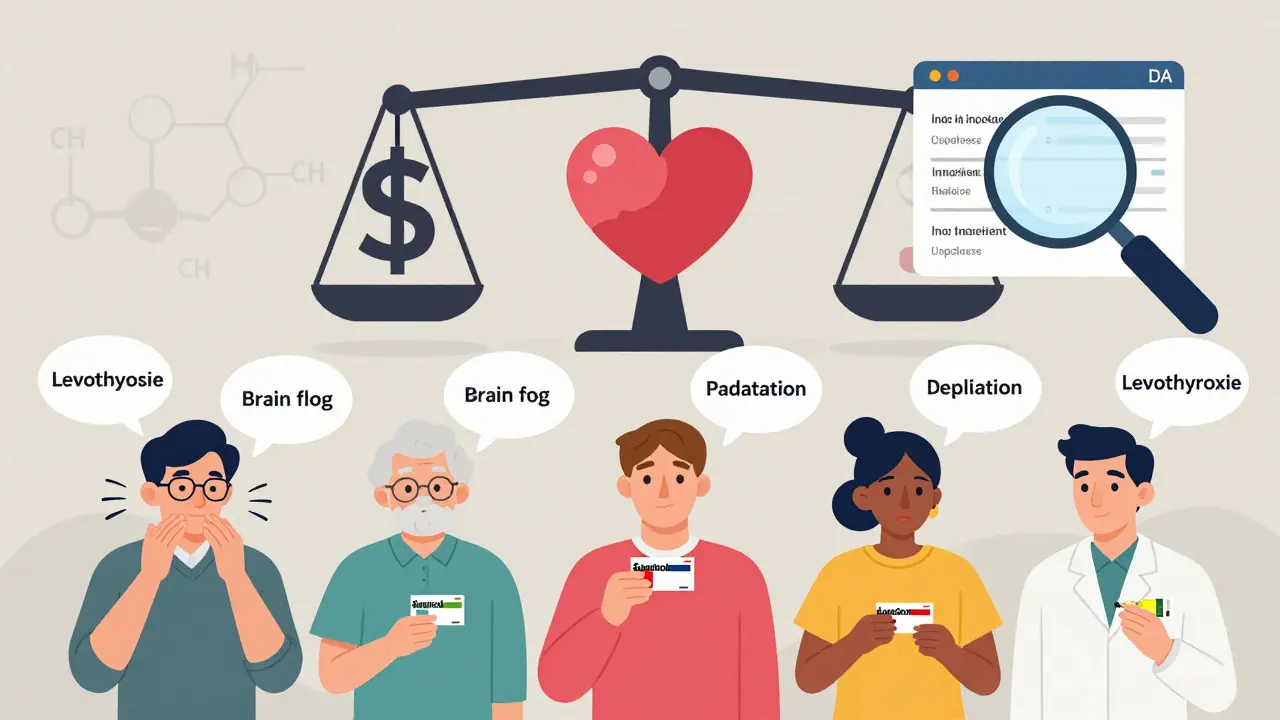
What You Can Do
If you’re taking a medication with a narrow therapeutic index-or if you’ve noticed changes after switching to a generic-here’s what to do:- Don’t assume the generic is fine just because it’s cheaper.
- Track your symptoms. Write down how you feel before and after a switch.
- Ask your pharmacist: “Is this the same formulation I’ve been taking?”
- Request the inactive ingredients list from the FDA’s database.
- Ask your doctor to write “Dispense as Written” or “Do Not Substitute” on your prescription.
- If you’re on levothyroxine, warfarin, or similar drugs, get blood tests 3-8 weeks after any switch.
Why This Isn’t Just About Money
Generics save the U.S. healthcare system $373 billion a year. That’s huge. But saving money shouldn’t come at the cost of safety. The FDA says 99.7% of generics are fine. But that 0.3%? That’s tens of thousands of people who get sicker because their pill changed-even though the label didn’t. The truth is, not all generics are created equal. And not everyone reacts the same. For some, switching isn’t a cost-saving move-it’s a risk. And if you’re one of them, you’re not being difficult. You’re being smart.Are generic medications always safe?
For most people and most medications, yes. But for drugs with a narrow therapeutic index-like levothyroxine, warfarin, or phenytoin-even small differences in how the body absorbs the drug can lead to serious side effects. About 4% of generic drugs have a "BX" rating from the FDA, meaning they may not be interchangeable for everyone.
Why do I feel worse on a generic version of my medication?
It’s not in your head. Generic drugs must match the brand in active ingredient, but they can differ in fillers, dyes, and coatings. These inactive ingredients can affect how quickly the drug is absorbed. For some people, especially those on NTI drugs, even a 10-15% change in blood levels can cause symptoms like fatigue, anxiety, or seizures. Studies show a significant number of patients report worsening symptoms after switching.
Which medications are most likely to cause problems when switched to generics?
Medications with a narrow therapeutic index (NTI) are the highest risk. These include levothyroxine (for thyroid), warfarin (blood thinner), phenytoin and carbamazepine (anti-seizure), digoxin (heart medication), and lithium (for bipolar disorder). Even small changes in blood levels of these drugs can cause serious health issues.
Can I ask my doctor to keep me on the brand-name drug?
Yes. You can ask your doctor to write "Dispense as Written" or "Do Not Substitute" on your prescription. Many doctors will do this, especially for NTI medications. Pharmacists are required to honor this request. If cost is a concern, ask about authorized generics-these are made by the brand company and have the same ingredients as the original.
How can I find out what’s in my generic pill?
The FDA maintains a public Inactive Ingredient Database where you can search for any drug by name and see its full list of inactive ingredients. Ask your pharmacist to help you look up your medication’s exact formulation. If you have allergies to lactose, dyes, or sulfites, this is critical information.

Austin LeBlanc
Oh wow, another one of those 'my pill made me cry' stories. You know what? If you can't handle a $5 generic instead of a $50 brand, maybe you shouldn't be on medication at all. Everyone else takes generics just fine. Stop being a drama queen and get over it.
Gray Dedoiko
I used to think generics were all the same too, until I switched my levothyroxine and started having heart palpitations and brain fog for weeks. Switched back to the brand-gone in 48 hours. I didn’t even know inactive ingredients could do that. This post saved me from a lot of unnecessary panic. Thanks for laying it out so clearly.
Paula Villete
Wow. So the FDA says 'same' but means 'close enough for government work.' Classic. I mean, if I bought a 'Nike' sneaker that looked like a Nike but had a different glue and fell apart in the rain, I'd sue. But when it's my brain chemistry? Oh no, it's 'bioequivalent.' Sure, Jan.
Also, I just typed 'bioequivalent' and my autocorrect didn't even know the word. That says something, right?
Georgia Brach
This entire narrative is dangerously misleading. The FDA's bioequivalence standards are statistically rigorous and validated across thousands of clinical trials. To suggest that 0.3% of patients represent a systemic failure ignores the fact that placebo effects, non-compliance, and confirmation bias account for the vast majority of reported adverse events. This post is fear-mongering disguised as patient advocacy.
Katie Taylor
Stop letting Big Pharma and the FDA gaslight you. If your doctor won’t write 'Do Not Substitute,' demand a new one. Your life is not a cost-cutting experiment. I had a friend who had three seizures because her pharmacy swapped her carbamazepine. She’s fine now, but only because she fought back. You don’t have to accept this. Fight for your meds. Now.
Ademola Madehin
OMG I switched to generic Wellbutrin and my soul left my body for 3 weeks. I cried in the shower every day. My dog started avoiding me. I thought I was going crazy. Then I switched back and I was myself again. Like, literally. I felt like I came back from the dead. I’m telling everyone. This is real. I’m not lying. I swear on my cat’s life.
siddharth tiwari
they dont want you to know this but the fda is in cahoots with big pharma. generics are laced with microchips to track your mood. thats why you feel weird. also the fillers are made from 5G radiation and glyphosate. i know because i read it on a forum in russia. my cousin in delhi had the same problem. he now only takes ayurvedic herbs. the system is rigged.
Adarsh Dubey
This is such an important conversation. I’ve been on warfarin for 12 years and switched generics twice. My INR spiked both times-no symptoms, just a lab result that scared the hell out of me. Since then, I only take the same generic, and I keep a printed copy of the inactive ingredients in my wallet. Small steps, but they matter. Thanks for the FDA database link-I’m sharing it with my support group.
Spencer Garcia
Ask your pharmacist for the manufacturer code on your pill. If it changes, ask why. Keep a symptom log. If you’re on NTI meds, insist on consistency. Simple. Effective. No drama needed.