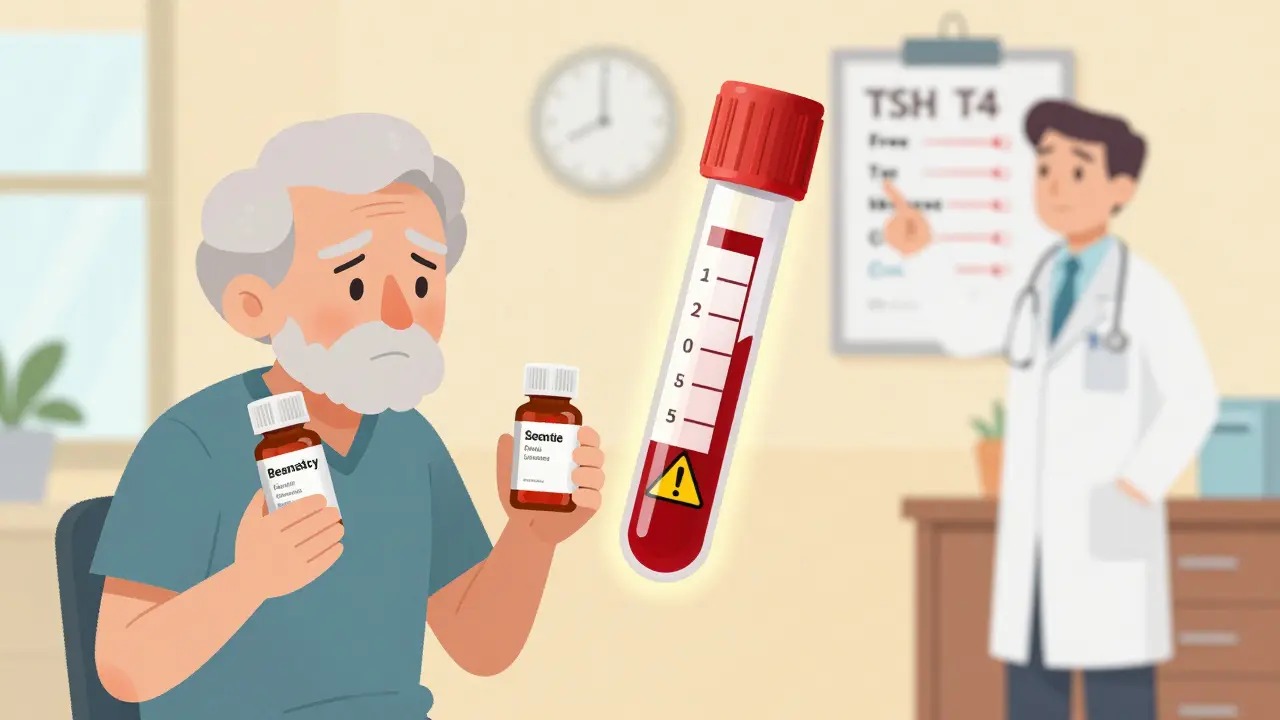
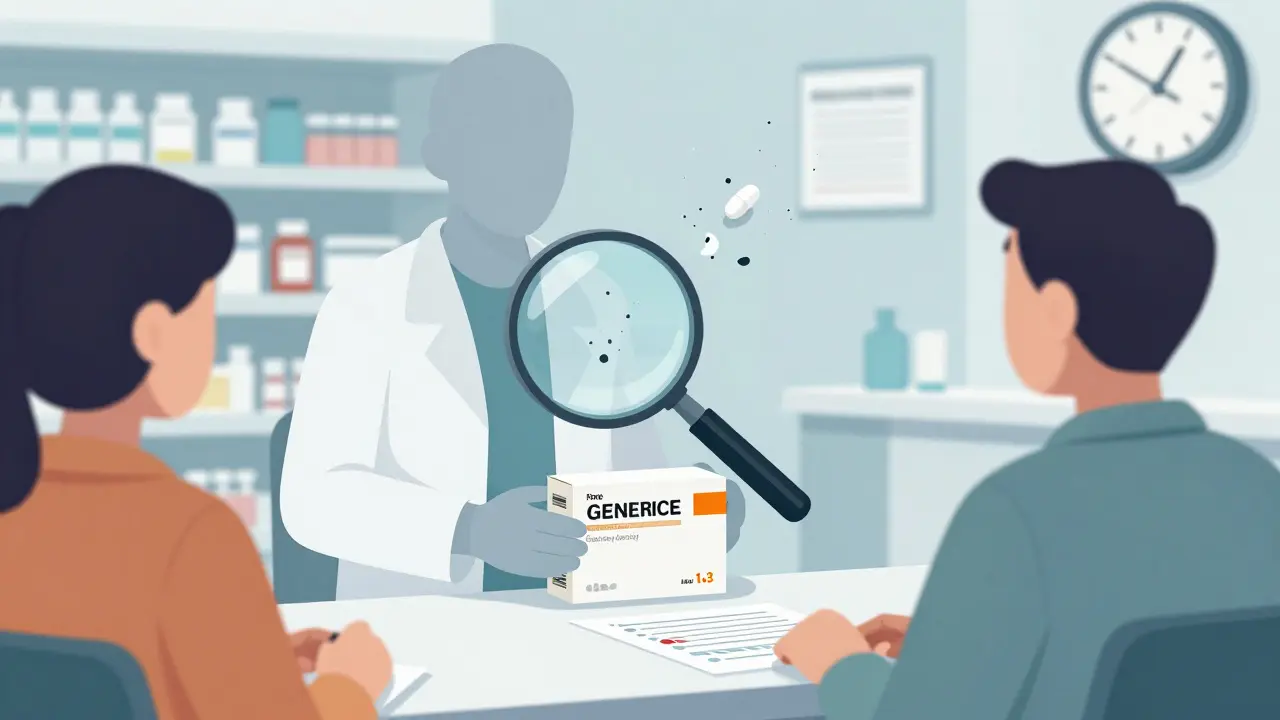
When a patient switches from a brand-name drug to a generic version, they’re often told it’s the same thing-chemically identical, just cheaper. But for a small group of medications known as NTI drugs-narrow therapeutic index drugs-that assumption can be dangerous. These are drugs where even a tiny difference in blood levels can mean the difference between effective treatment and serious harm. Think warfarin, lithium, phenytoin, levothyroxine, and certain antiepileptics. When generics are substituted without careful oversight, patients can slip out of their safe window. That’s where therapeutic drug monitoring (TDM) isn’t just helpful-it’s essential.
What Makes a Drug an NTI Drug?
NTI stands for narrow therapeutic index. That means the gap between a dose that works and a dose that causes toxicity is razor-thin. For example, lithium is used to treat bipolar disorder, but if your blood level goes just 0.2 mmol/L above the target range, you risk tremors, confusion, or even kidney damage. Go 0.2 mmol/L below, and your mood can crash back into depression. There’s no room for error.
Generic versions of these drugs are required to be bioequivalent to the brand-name version-meaning their average absorption in the body must fall within 80% to 125% of the original. Sounds fair, right? But for NTI drugs, that 45% swing is too wide. Two generics might both meet the legal standard, but one could push your levels into the toxic zone while the other barely hits the target. And because patients often don’t know which generic they’re getting from one refill to the next, the risk builds silently.
Why Generic Substitutions Are Risky for NTI Drugs
In Australia, the Pharmaceutical Benefits Scheme (PBS) encourages pharmacists to substitute brand-name drugs with cheaper generics unless the doctor specifically says "do not substitute." For most medications, this saves money without consequence. But for NTI drugs, it’s a gamble.
One real case from a Brisbane clinic in 2024 involved a 68-year-old woman on levothyroxine. She’d been stable for years on the brand version. After a pharmacy switch, her TSH levels jumped from 2.1 to 8.7 over six weeks-signaling under-treatment. She developed fatigue, weight gain, and brain fog. Her doctor didn’t suspect the switch until TDM showed her free T4 levels had dropped 30%. The generic she’d been given had different fillers and dissolution rates. It wasn’t faulty-it was legally approved. But it wasn’t the same for her body.
Similar stories exist with phenytoin. A 2023 study in the Australian Journal of Clinical Pharmacology found that 1 in 7 patients on generic phenytoin had unexpected blood level changes after switching. One patient had a seizure. Another was hospitalized for toxicity. Neither had any change in adherence, diet, or other medications. The only variable? The generic manufacturer.
How Therapeutic Drug Monitoring Works
Therapeutic drug monitoring is simple in concept: measure the actual amount of drug in your blood and adjust the dose to keep it in the safe, effective range. It’s not about guessing. It’s about knowing.
For NTI drugs, TDM typically involves drawing a blood sample just before the next dose (called a trough level), then sending it to a lab that uses precise methods-like liquid chromatography-mass spectrometry-to measure the exact concentration. Results come back in 2-5 days. If the level is too low, the dose is increased. Too high? It’s lowered. No more guesswork.
This isn’t experimental. It’s standard practice in hospitals for drugs like vancomycin and cyclosporine. But for NTI drugs used in chronic conditions-often managed in community settings-it’s still underused. Why? Cost, access, and awareness.
Who Benefits Most from TDM?
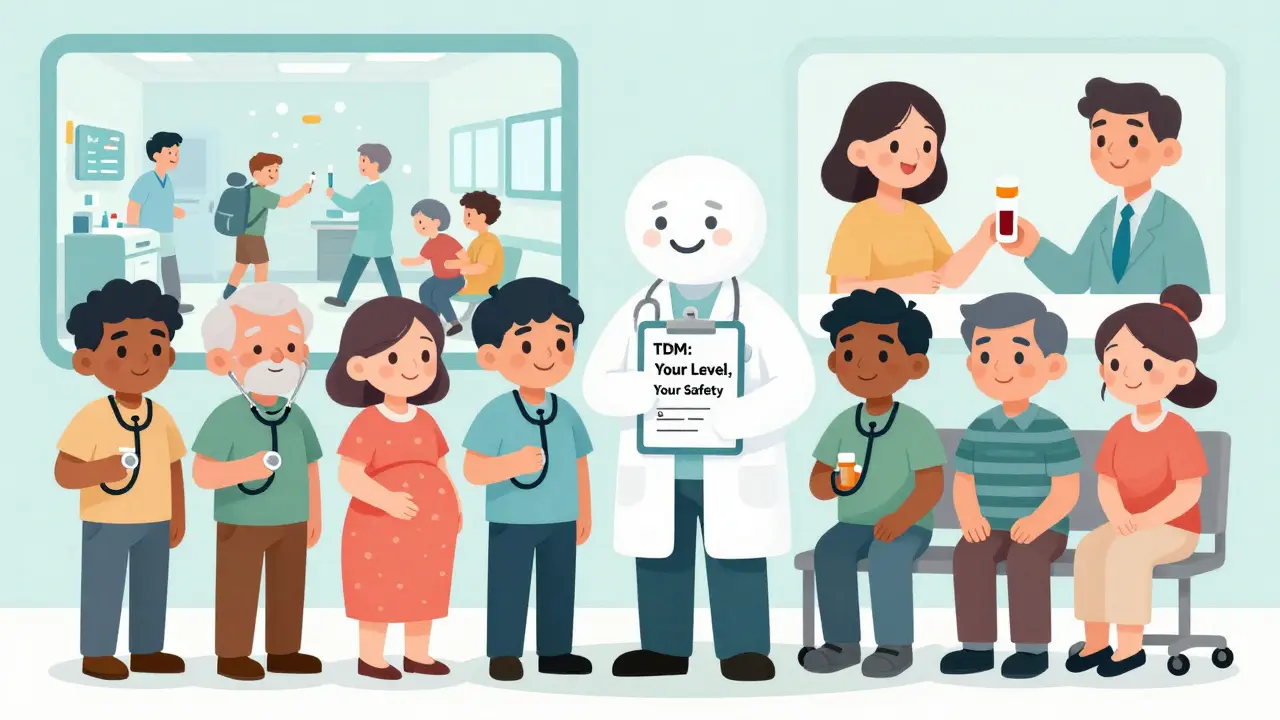
TDM isn’t for everyone. But it’s critical for certain groups:
- Patients switching between generic brands, especially if they’ve had previous instability
- Older adults with slower metabolism or kidney changes
- People taking multiple medications that interact with NTI drugs
- Pregnant women-hormonal shifts can alter drug clearance
- Patients with gastrointestinal issues like Crohn’s or gastric bypass surgery
- Anyone who’s had unexplained side effects or treatment failure despite good adherence
For example, a 55-year-old man on warfarin for atrial fibrillation was switched to a new generic. His INR jumped from 2.5 to 5.1-dangerously high. He wasn’t bleeding yet, but his risk of stroke or internal hemorrhage had skyrocketed. TDM confirmed his warfarin level was 35% higher than before. His doctor adjusted the dose, and within two weeks, his INR returned to target. He didn’t need a hospital stay. He didn’t need a blood transfusion. He just needed a blood test.
The Barriers to Widespread Use
So why isn’t TDM routine for all NTI drug patients?
First, cost. In Australia, a TDM test for levothyroxine or phenytoin costs around $80-$120 out-of-pocket if not covered by private insurance. Medicare doesn’t currently subsidize TDM for these drugs unless it’s part of a hospital admission or specialist referral. That puts it out of reach for many.
Second, access. Only a handful of labs in Brisbane and other major cities offer reliable, validated TDM for NTI drugs. Most general practitioners don’t know where to send samples. Pharmacists rarely flag the need. And many patients assume their doctor already checks their levels-when they don’t.
Third, misinformation. Some clinicians still believe that if a patient’s symptoms are stable, their levels must be fine. But symptoms lag behind blood levels. By the time someone feels unwell, the damage may already be done.
What Patients Can Do
You don’t have to wait for your doctor to suggest TDM. If you’re on an NTI drug and you’ve switched generics-even once-ask for a blood test. Say it clearly: “I’m on a narrow therapeutic index drug. Can we check my blood level to make sure the new generic is working the same way?”
Keep a log: note when you switch generics, any new symptoms, and your dosing schedule. Bring it to your appointment. If your doctor says no, ask for a referral to a specialist pharmacy or clinical pharmacology service. In Brisbane, the Royal Brisbane and Women’s Hospital offers TDM consultations for chronic NTI drug users.
Also, ask your pharmacist: “Is this generic the same brand as last time?” If they say “I don’t know,” or “It’s just a different supplier,” that’s a red flag. You have a right to know which version you’re getting.
The Bigger Picture: Safety Over Savings
Generic drugs save billions of dollars in healthcare spending. That’s good. But savings shouldn’t come at the cost of patient safety. For NTI drugs, bioequivalence standards are outdated. The 80-125% range was designed for drugs with wide therapeutic windows-not for lithium or warfarin.
Some countries are starting to change. In the UK, the NHS now recommends TDM for all patients on generic levothyroxine after any switch. In Canada, pharmacists must notify prescribers when switching NTI generics. Australia is lagging.
The solution isn’t to ban generics. It’s to use TDM as a safety net. A single blood test every 3-6 months after a switch can prevent hospitalizations, seizures, strokes, and even deaths. The cost of one TDM test is less than one day in the emergency department.
Protecting patients on NTI drugs isn’t about distrust of generics. It’s about recognizing that biology isn’t binary. Two pills that look the same can behave differently in your body. And when the margin for error is this small, measurement isn’t optional-it’s life-saving.
When to Ask for TDM
Here’s a quick checklist for patients on NTI drugs:
- ✅ You’ve switched generic brands in the last 3 months
- ✅ You’ve noticed new side effects (tremors, dizziness, fatigue, mood swings)
- ✅ Your condition seems worse despite taking your medication correctly
- ✅ You’re over 65 or have kidney/liver disease
- ✅ You’ve started or stopped another medication recently
If you checked even one box, talk to your doctor about TDM. Don’t wait for a crisis.
What are NTI drugs, and why are they dangerous with generics?
NTI drugs, or narrow therapeutic index drugs, have a very small range between a safe, effective dose and a toxic one. Examples include warfarin, lithium, phenytoin, and levothyroxine. Generic versions must be bioequivalent, but the legal standard allows up to a 45% variation in absorption. For NTI drugs, that variation can push blood levels out of the safe zone, leading to treatment failure or serious side effects-even if the generic is legally approved.
Is therapeutic drug monitoring covered by Medicare in Australia?
Medicare does not currently subsidize TDM for most NTI drugs when done in outpatient settings. Some private health insurers cover it under extras packages, but many patients pay out-of-pocket, typically between $80 and $120 per test. It’s often covered if ordered by a specialist or as part of hospital care. Always ask your doctor if a subsidy might apply in your case.
Can I request TDM even if my doctor doesn’t suggest it?
Yes. You have the right to ask for any test that could affect your safety. Say clearly: “I’m on a narrow therapeutic index drug and switched generics. I’d like to check my blood level to make sure it’s still in the safe range.” If your doctor refuses, ask for a referral to a clinical pharmacologist or hospital pharmacy service. Many hospitals have TDM programs designed exactly for this situation.
How often should TDM be done for NTI drugs?
After switching generics, TDM should be done within 4-6 weeks. Once stable, testing every 6-12 months is usually sufficient-unless you start a new medication, change your health status (like kidney function), or experience new symptoms. More frequent testing may be needed if you’re elderly, have liver or kidney disease, or are on multiple interacting drugs.
Does TDM replace regular blood tests like INR or TSH?
No. TDM measures the actual drug concentration in your blood, while tests like INR (for warfarin) or TSH (for levothyroxine) measure your body’s response to the drug. Both are important. TDM tells you if the drug level is right; the other tests tell you if your body is responding correctly. Using both gives the clearest picture of your treatment safety.
Final Thought: Know Your Drug, Know Your Level
Medication safety isn’t just about taking your pills. It’s about knowing if they’re working the way they should. For NTI drugs, that means knowing your blood level-not just hoping it’s okay. TDM isn’t fancy science. It’s basic patient care. And if we’re going to trust generics to save money, we owe it to patients to make sure they don’t cost them their health.

Amit Jain
For NTI drugs, even small changes in generics can mess with your levels. I've seen it in my clinic-patients on levothyroxine go from fine to exhausted because the filler changed. TDM isn't fancy, it's just smart. Get the blood test. No guesswork.
Katherine Urbahn
It's absolutely irresponsible to allow bioequivalence standards of 80%-125% for drugs like warfarin and lithium-this isn't 'generic savings,' it's medical negligence. The FDA and TGA are complicit in patient harm by clinging to outdated benchmarks. There is no ethical justification for risking seizures, strokes, or death to save $2.50 per prescription. This is systemic malpractice disguised as cost-cutting.
Mandy Vodak-Marotta
I literally just switched my levothyroxine last month and started feeling like a zombie-like, seriously, I napped at my desk and my husband asked if I was depressed. I thought it was stress, but then I read this and went straight to my doc and said, ‘Check my T4.’ She rolled her eyes but ordered the test anyway. My level was 30% lower. They switched me back to the brand. I’m not mad, I’m just… wow. Why does this even have to be a battle? I just want to feel normal.
Harriot Rockey
Thank you for writing this 💙 I’ve been on lithium for 12 years and switched generics twice. The second time, I had hand tremors so bad I couldn’t hold my coffee. My psychiatrist didn’t even think to check levels until I begged. TDM saved me. Please, if you’re on an NTI drug, don’t wait until you’re hospitalized-ask for the test. You deserve to feel stable.
Geri Rogers
Stop acting like this is a mystery. Pharmacists are swapping generics like trading cards and doctors are asleep at the wheel. TDM should be mandatory after every switch-period. And if your insurance won’t cover it, go to a university hospital. They’ll do it for free if you ask nicely. This isn’t ‘healthcare innovation,’ it’s just basic dignity.
Alec Stewart Stewart
My mom’s on phenytoin and switched generics last year. She had a seizure at home. They didn’t know why until the neurologist asked if the pill looked different. She didn’t even notice. TDM isn’t expensive-it’s cheaper than an ambulance ride. Why aren’t we doing this for everyone?
Jhoantan Moreira
This is such an important topic 🙏 I’ve worked in pharmacy for 15 years and I’ve seen too many cases where ‘bioequivalent’ doesn’t mean ‘the same for you.’ We need better standards-and we need to empower patients to ask for TDM. You’re not being difficult, you’re being smart. Keep pushing!
pradnya paramita
The current regulatory paradigm for bioequivalence is fundamentally flawed for NTI pharmacokinetics due to the non-linear relationship between AUC/Cmax and clinical outcomes. The 80–125% CI is derived from linear pharmacokinetic models, which are statistically invalid for drugs exhibiting narrow therapeutic windows where inter-individual variability exceeds intra-formulation variance. TDM remains the gold standard for individualized dosing, particularly in polypharmacy cohorts with altered CYP450 metabolism.
Keith Harris
Oh wow, so now we’re treating patients like lab rats? Next they’ll be requiring weekly blood draws for ibuprofen. This is pure fearmongering. If generics weren’t safe, they wouldn’t be approved. The FDA doesn’t let dangerous stuff on the market. You people are just scared of saving money. Get over it.
Caleb Sutton
They're doing this on purpose. The pharma giants own the labs. They want you dependent on expensive brand names. TDM is a trap. They only test when they want to keep you hooked. Your 'safe levels' are a lie. Wake up.
Coy Huffman
i think we forget that our bodies are weird. two pills that look the same can feel totally different. it's not about trustin' the system, it's about trustin' yourself. if you feel off after a switch, it's not 'in your head'-it's your body tellin' you somethin's off. tdm is just listenin' to your body.
Samuel Bradway
I’m a nurse and I’ve seen this too many times. A patient comes in with confusion, fatigue, nausea-looks like depression or aging. Then we check the levels and boom-generic switch two weeks ago. TDM isn’t a luxury. It’s part of the job. Why isn’t it standard?
Janice Williams
It is profoundly unethical to permit the substitution of narrow therapeutic index pharmaceuticals without mandatory therapeutic drug monitoring. The current regulatory framework constitutes a violation of the Hippocratic Oath by proxy. This is not a matter of cost-it is a matter of criminal negligence. Patients are being treated as experimental subjects in a corporate profit experiment. I demand immediate legislative intervention.
rahulkumar maurya
Let's be honest-most patients don't even know what a therapeutic index is. Why should they? The burden of pharmaceutical literacy shouldn't fall on the layperson. If we're going to allow generics, then the onus is on regulators and manufacturers to ensure true interchangeability-not just statistical equivalence. This isn't about activism. It's about basic science.
Katherine Urbahn
And yet, despite all the evidence, the Australian PBS continues to incentivize substitution without TDM mandates. This isn't just policy failure-it's institutional betrayal. The same agencies that warn against off-label drug use are silently endorsing off-label biological outcomes. If this were a food product, it would be recalled. For drugs, it's just 'business as usual.'