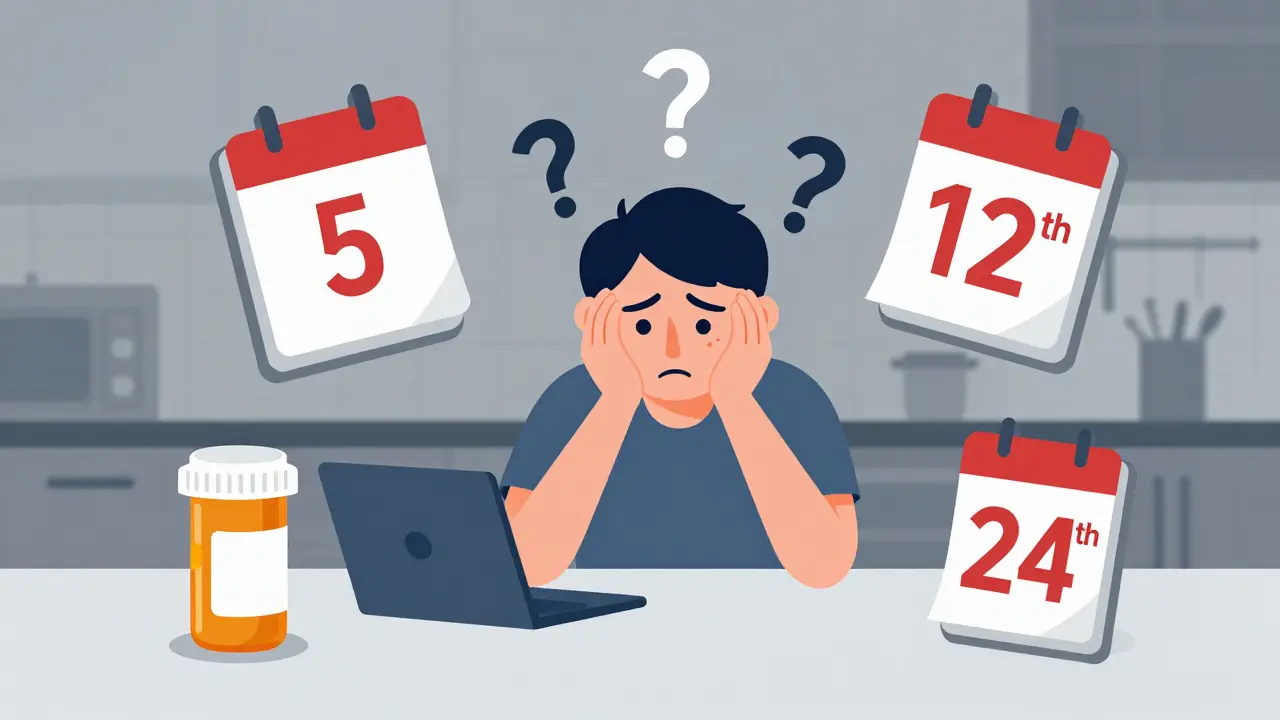
Imagine this: You have prescriptions for high blood pressure, diabetes, and cholesterol. One needs refilling on the 12th, another on the 24th, and the third on the 5th. By the time you remember which is which, you’ve missed a dose or two. This chaos is exactly why refill synchronization, often called med sync, was created. It aligns all your medication refill dates to a single day each month. The goal isn’t just convenience; it’s keeping you healthy by ensuring you actually take the pills that keep chronic conditions in check.
Medication non-adherence affects roughly half of patients with chronic illnesses, according to the World Health Organization. When people skip doses, hospitalizations rise, and costs skyrocket. Med sync tackles this head-on by removing the mental load of tracking multiple schedules. If you manage three or more maintenance medications, this service could be the missing link in your health routine.
What Is Medication Synchronization?
Medication synchronization is a pharmacy service that consolidates a patient's multiple prescription refill dates into one coordinated monthly date. Instead of juggling different pickup days, you visit the pharmacy-or get delivery-once a month. This concept gained traction around 2010-2012 as pharmacists looked for practical ways to support patients managing complex regimens. Major chains like CVS and Walgreens helped popularize it, but independent pharmacies offer it too.
The core idea is simple: simplify the process so adherence becomes automatic. Studies show that synchronized schedules can improve adherence metrics by 3 to 5 percentage points. While that number might sound small, it translates to thousands of fewer missed doses per year and significant reductions in preventable hospital stays. For Medicare Advantage patients, the impact is even clearer, with research published in the American Journal of Managed Care showing stronger benefits for those using retail pharmacies exclusively.
Who Should Consider Med Sync?
Not everyone needs med sync. If you take one antibiotic for a short-term infection, synchronization won’t help. But if you fall into these categories, it’s worth asking your pharmacist:
- You take three or more daily maintenance medications for conditions like hypertension, diabetes, or high cholesterol.
- You frequently forget when refills are due or run out before your next scheduled pickup.
- You use only one pharmacy for all your prescriptions (this makes syncing much smoother).
- You’re enrolled in Medicare Advantage or commercial insurance plans that incentivize adherence through star ratings or cost-sharing models.
Patients with low baseline adherence see the biggest gains. In fact, one study found that adherence improvements were three times greater for those who started off struggling most. So if you’ve been slipping up lately, med sync might be your best tool.
How the Process Works Step-by-Step
Getting started doesn’t require tech skills or complicated forms. Here’s what typically happens:
- Initial Consultation: Your pharmacist reviews every active prescription, including dosing frequency and current refill dates. They’ll ask about any recent changes or new medications.
- Synchronization Plan Creation: The pharmacist adjusts quantities-sometimes giving you a few extra doses upfront-to line everything up to your chosen monthly date. For example, if you pick the 15th, all meds will be ready then.
- Monthly Review & Refill: Each month, the pharmacy proactively prepares your bundle. Pharmacists check for interactions, update records, and confirm no new scripts have been added elsewhere.
- Pickup or Delivery: On your designated day, you grab everything at once-or have it delivered if your pharmacy offers that option.
This four-step cycle runs continuously. You don’t need to do anything except show up (or click “deliver”) on your set date. The system handles the rest.

Measuring Success: How Do We Know It Works?
Adherence isn’t guessed-it’s measured. Two key metrics dominate the field:
- Medication Possession Ratio (MPR): Calculates how many days’ supply you have on hand versus the total days covered.
- Proportion of Days Covered (PDC): More clinically relevant, PDC looks at whether you had access to medication on each day of the period studied. A PDC above 80% is generally considered good adherence.
In a landmark 2017 study published in Health Affairs, nearly 23,000 propensity-matched patients showed a mean PDC of 0.87 for synchronized users versus 0.84 for controls-a solid 3-point gain. Among retail-only users, the jump was even larger, ranging from 8 to 11 percentage points depending on drug class. These aren’t marginal tweaks; they’re meaningful shifts that reduce risk.
| Feature | Traditional Refills | Medication Synchronization |
|---|---|---|
| Refill Frequency | Multiple dates per month | One consolidated date |
| Adherence Improvement (PDC) | Baseline ~0.84 | +3-5 percentage points |
| Best For | Acute or single-medication patients | Chronic condition patients on 3+ meds |
| Insurance Challenges | Minimal early refill issues | May face approval delays for partial/early fills |
| Pharmacist Involvement | Reactive (patient-initiated) | Proactive (pharmacy-managed) |
Common Hurdles-and How to Overcome Them
Med sync isn’t magic. It has friction points, especially around insurance and patient education.
Insurance Restrictions: Some plans block early refills unless medically justified. About 47% of pharmacists report dealing with these hurdles regularly. Solution? Ask your pharmacist to coordinate with your prescriber for pre-authorized exceptions. Many insurers now recognize med sync as valid justification.
Patient Resistance: Nearly 28% of potential candidates hesitate because they’re used to their old schedule. Pharmacists spend 20-30 minutes explaining the benefit during enrollment. Tip: Bring a printed calendar showing your current mess versus the clean synced version. Visuals sell.
Complex Dosing: Medications taken every other day, weekly, or with special storage (like insulin) can complicate syncing. Not ideal candidates. Stick to daily oral solids for best results.

Real-Life Impact: What Patients Say
Data tells one story; lived experience tells another. An 87% satisfaction rate among Walgreens customers speaks volumes. On Reddit’s r/pharmacy, user u/MedicationMama shared: “Since my pharmacist synced my 5 medications to the 15th of each month, I haven’t missed a single dose in 18 months-this has literally changed my diabetes management.”
A case study from Farmington Drugs highlighted a 72-year-old man with hypertension, diabetes, and hyperlipidemia. His PDC jumped from 65% to 92% after joining med sync. Better control meant fewer ER visits and stable lab results. That’s the real win-not just filling bottles, but improving outcomes.
Is Med Sync Right for You? A Quick Decision Guide
Ask yourself these questions:
- Do I take 3+ daily medications long-term?
- Have I ever run out of a med because I forgot to refill?
- Do I use one pharmacy consistently?
- Am I willing to commit to a fixed monthly pickup/delivery day?
If you answered yes to at least three, med sync is likely beneficial. If you’re still unsure, talk to your pharmacist-they can run a quick review and tell you if you qualify.
Looking Ahead: Where Is Med Sync Heading?
The future looks bright. CVS integrated med sync with its digital platform in 2022, sending automated text reminders and letting patients track adherence via app. Walgreens launched “Sync & Save” in January 2023, bundling synchronization with copay assistance. Telehealth pilots, like Kroger Health’s virtual consults tied to pickup days, hint at deeper integration.
By 2025, ASHP predicts 75% of U.S. pharmacies will offer formal programs. With value-based care tying reimbursement to adherence, pharmacies have strong incentives to expand. And for patients? Simpler lives, better health, lower costs.
Does medication synchronization work for acute medications?
No. Med sync is designed for maintenance medications taken daily over long periods-like those for blood pressure or diabetes. Acute treatments (antibiotics, painkillers) change too quickly and shouldn’t be synced.
Will my insurance cover the adjusted refill quantities?
Most plans allow minor adjustments (e.g., +3-5 days) without issue. Larger gaps may require prescriber authorization. Your pharmacist will handle this step-but expect occasional delays.
Can I switch back to traditional refills if I don’t like med sync?
Yes. There’s no lock-in period. Just notify your pharmacy, and they’ll revert your schedule to individual refill dates. No penalty, no hassle.
How much does medication synchronization cost?
Usually nothing extra. Most pharmacies include it as part of standard service. Some charge a small fee for delivery coordination, but the base sync itself is free.
Is med sync available at independent pharmacies?
Absolutely. While big chains dominate enrollment numbers, 45% of independent pharmacies offered formal med sync programs by 2022. They often provide more personalized counseling.
