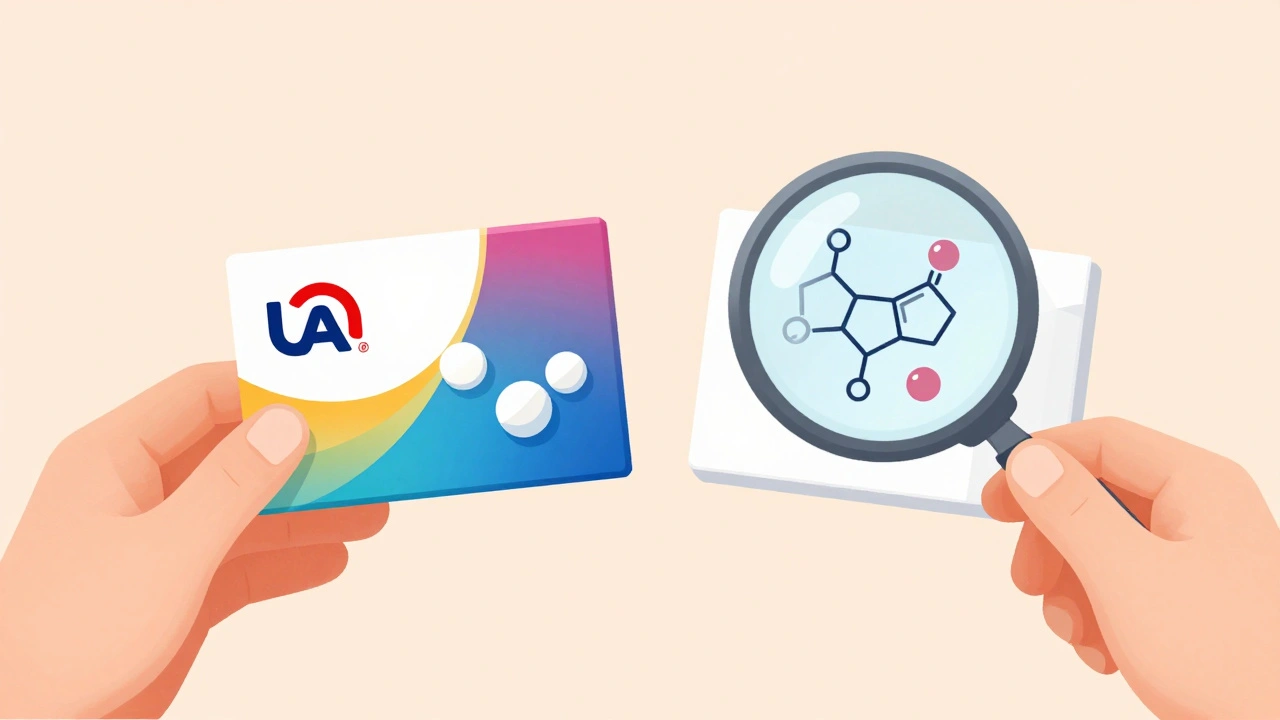
Ever picked up a prescription and noticed the pill looks different-maybe a different color or shape-but the name on the bottle is the same as your brand-name drug? You might think it’s a new generic. But what if it’s not a generic at all? What if it’s the exact same pill, just repackaged under a different label? That’s an authorized generic.
What Exactly Is an Authorized Generic?
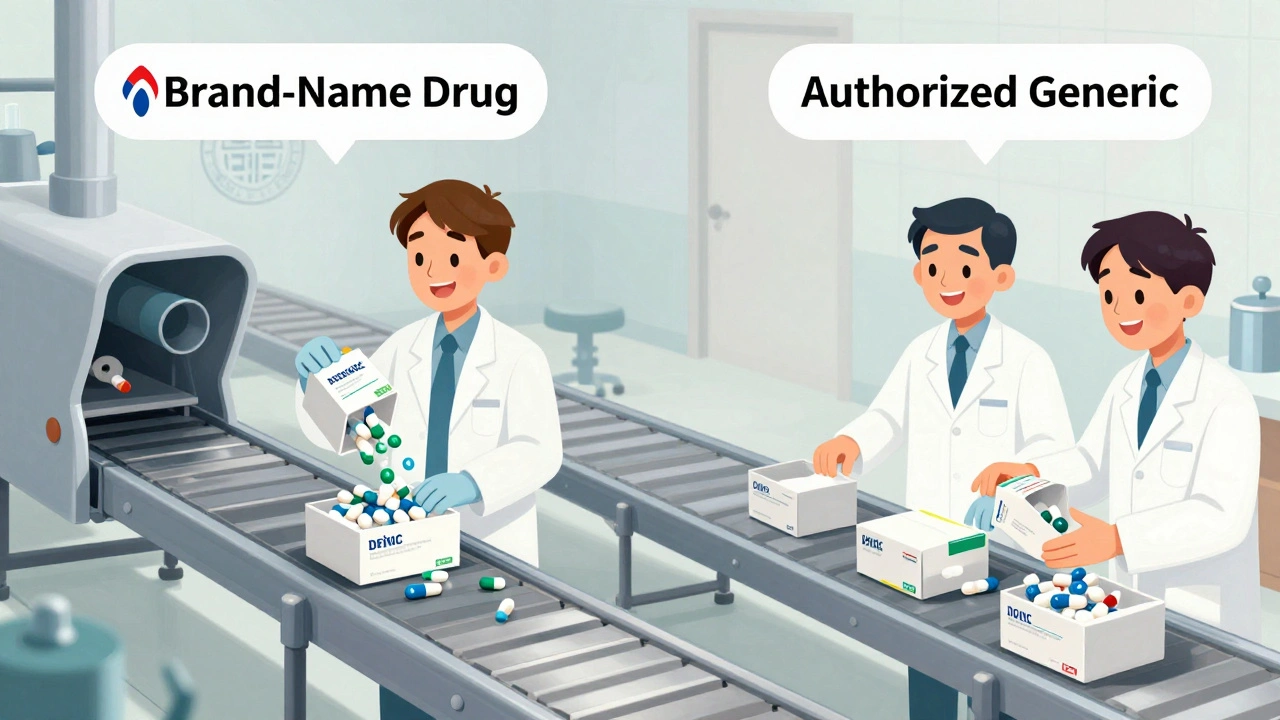
An authorized generic is not a copy. It’s not a knockoff. It’s the real thing-identical in every way to the brand-name drug you’ve been taking. Same active ingredient. Same inactive ingredients. Same size, shape, and manufacturing process. The only difference? No brand name on the box.Here’s how it works: the same company that makes the brand-name drug-say, Pfizer or AbbVie-also makes an identical version and sells it under a generic label. They don’t need to re-prove it works. They don’t need to run new clinical trials. They’re just using the same FDA-approved production line, just putting a different label on it.
This isn’t a loophole. It’s legal, regulated, and tracked by the FDA. According to federal rules, an authorized generic is defined as a drug that’s approved under the original brand’s New Drug Application (NDA) but sold without the brand name, trademark, or logo. That means it’s not listed in the FDA’s Orange Book, where traditional generics appear. So if your pharmacist checks the Orange Book and doesn’t see it, that doesn’t mean it’s fake-it just means it’s an authorized generic.
How Is It Different From a Regular Generic?
Let’s clear up the confusion. A regular generic is made by a different company. They copy the brand-name drug’s active ingredient and must prove it works the same way through bioequivalence studies. But they can change the color, shape, or inactive ingredients-like fillers or dyes-as long as the active part matches.An authorized generic doesn’t need to prove anything. It’s the same pill, from the same factory, made by the same company. No bioequivalence study. No different fillers. No guesswork. It’s the brand drug, stripped of its branding.
Think of it like this: imagine you buy a smartphone from Apple. Then Apple makes the exact same phone, removes the Apple logo, puts it in a plain box, and sells it for half the price. That’s an authorized generic. A regular generic would be a different company building a phone that works like the iPhone but uses a different battery, screen, or case.
Why Do Companies Do This?
It’s business. When a brand-name drug’s patent expires, other companies can start making generics. The first one gets 180 days of exclusive rights to sell it-this is called the Hatch-Waxman exclusivity period. That’s a big financial incentive for generic makers to challenge patents.But here’s the twist: the brand company can launch its own generic version at the same time. That’s the authorized generic. Suddenly, the first generic company isn’t alone. They’re competing with the original manufacturer, who knows the product inside and out and can undercut prices.
This move can crush the financial reward the first generic company was counting on. That’s why some critics say authorized generics undermine the whole point of the Hatch-Waxman Act. The law was meant to encourage competition. But if the brand company can just jump in and take the market, why would anyone risk the cost and time of challenging a patent?
Still, for the brand company, it’s smart. They keep revenue flowing. They keep control of quality. And they don’t lose customers to a new, unknown maker. It’s a way to stay in the game without pretending they’ve stopped making the drug.
Who Makes Authorized Generics?
You won’t find them on the shelf unless you’re looking. Major pharma companies use subsidiaries to handle authorized generics. Pfizer has Greenstone. Procter & Gamble runs Prasco. Other big names like Teva and Amgen also have dedicated arms for this.These aren’t small players. They’re the same companies that make the brand-name drugs. So when you see a generic version of Lipitor, Zoloft, or Plavix that’s made by Greenstone or Prasco, you’re holding the exact same tablet as the brand version.
Some companies even make authorized generics for other brands. For example, a company might produce an authorized generic of a competitor’s drug under license. But the key rule stays the same: it must be made under the brand’s original FDA approval.
What Does This Mean for You as a Patient?
If you’re on a brand-name drug and your pharmacy switches you to a generic, ask: is this an authorized generic?Here’s the good news: you’re getting the exact same medicine. No difference in how it works, how fast it kicks in, or how long it lasts. No hidden ingredients. No surprises.
The bad news? You might not know it. Pharmacists aren’t always trained to tell the difference. Authorized generics don’t show up in the Orange Book, so if your pharmacist checks that database, they might think it’s not a valid generic. That’s why some patients get confused when they get a pill that looks different but is labeled as the same drug.
Some people report feeling uneasy when the pill changes color or shape-even if it’s the same medicine. That’s normal. Our brains associate appearance with effectiveness. But with authorized generics, that’s just packaging. The science doesn’t change.
And here’s the kicker: authorized generics often cost the same as regular generics. Sometimes even less. So if you’re paying less for your drug and getting the exact same product, why wouldn’t you want it?
Why Aren’t Authorized Generics More Well-Known?
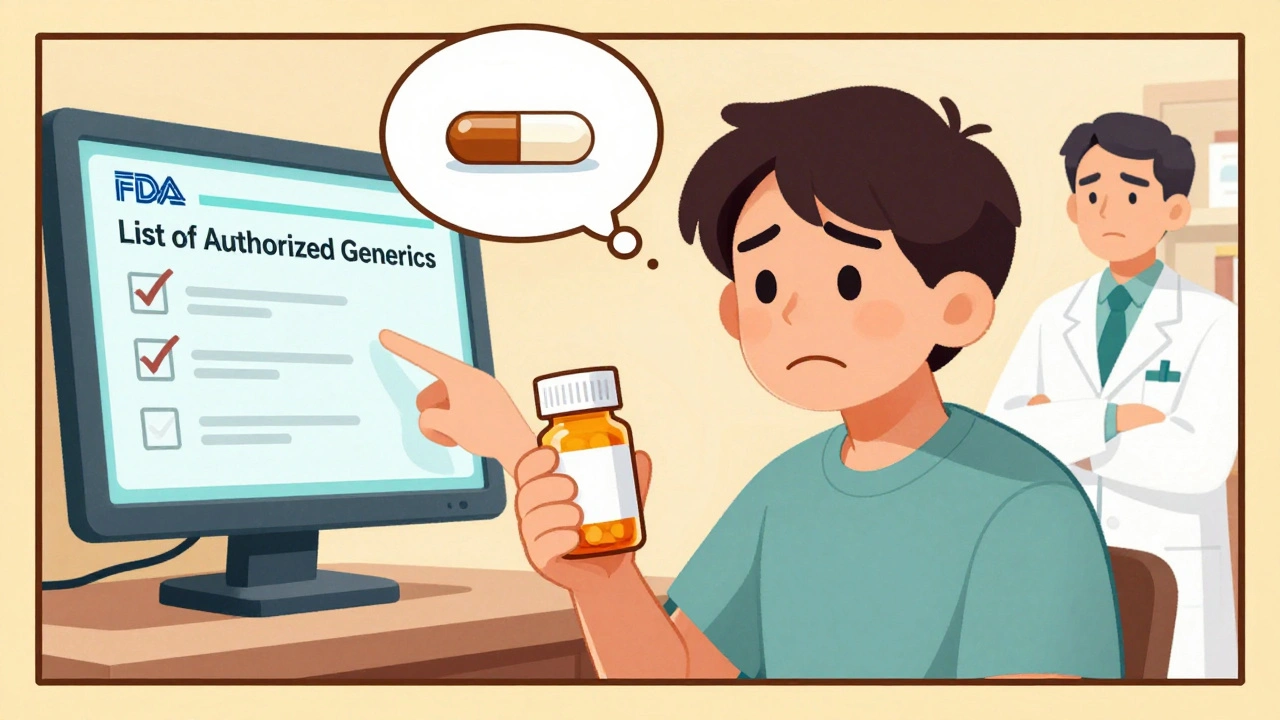
Because the system doesn’t make it easy to spot them. They’re not advertised. They’re not listed in most drug databases. They don’t have their own FDA approval number. They’re invisible to most patients and even some doctors.Pharmacists have to check a separate FDA list-the List of Authorized Generic Drugs-to verify them. That’s not something most people know about. So if you ask your pharmacist, “Is this an authorized generic?” they might not know.
And the brand companies don’t want you to know. Why? Because if you realize you’ve been paying $200 for a drug that’s literally the same as the $5 version next to it, you might start asking why the brand version costs so much.
Is This Practice Going to Change?
It’s unlikely. The FDA still recognizes authorized generics as legal and safe. They’ve kept their official list updated. The industry continues to use them. And Congress hasn’t moved to ban them, even though experts have raised concerns for years.Some lawmakers have proposed changes to the Hatch-Waxman Act to block brand companies from launching authorized generics during the 180-day exclusivity window. But those bills keep stalling. The pharmaceutical industry has too much influence.
So for now, authorized generics are here to stay. They’re a quiet part of the drug system-used by big companies to protect profits, accepted by regulators, and quietly filling prescriptions across the country.
What Should You Do?
If you’re taking a brand-name drug and your prescription is switched to a generic, don’t panic. Ask your pharmacist: “Is this an authorized generic?” If they say yes, you’re getting the exact same medicine. No loss in quality. No risk.If you’re worried about cost, ask if the authorized generic is cheaper than the brand. It usually is. And if you’re on a tight budget, you might even ask your doctor to prescribe the authorized generic directly-some doctors don’t realize they can.
And if you’re ever confused by the look of your pill, check the imprint code on it. You can look it up on the FDA’s website or use a pill identifier tool. If the imprint matches the brand-name version, it’s likely an authorized generic.
You’re not getting a second-rate drug. You’re getting the same drug, just without the marketing.
Are authorized generics safe?
Yes. Authorized generics are made by the same company using the same production line as the brand-name drug. They contain identical active and inactive ingredients. The FDA requires no additional testing because they’re the exact same product-just sold under a different label.
Do authorized generics work the same as brand-name drugs?
Absolutely. Because they’re chemically and physically identical, they work the same way in your body. There’s no difference in absorption, effectiveness, or side effects. The only change is the label.
Why does my pill look different if it’s the same drug?
The FDA allows minor changes in color or markings to distinguish authorized generics from the brand-name version. These changes are purely for labeling and regulatory tracking-they don’t affect how the drug works.
Are authorized generics cheaper than brand-name drugs?
Yes, usually. Authorized generics are priced like traditional generics-often at a fraction of the brand-name cost. Sometimes they’re even cheaper than regular generics because the manufacturer doesn’t have to invest in separate production or approval.
Can my doctor prescribe an authorized generic directly?
Yes. Your doctor can write the prescription for the generic name of the drug. If an authorized generic is available, your pharmacy can dispense it unless you specifically request the brand. Many doctors aren’t aware of the distinction, so asking can help you save money.

Harriet Wollaston
Wow, I had no idea authorized generics were the exact same pill! My pharmacist switched me to one for my blood pressure med last month and I was freaking out because it looked different. Turns out I was just paranoid. Now I save like $80 a month and feel the same as ever. 🙌
Tyrone Marshall
This is one of those hidden truths in healthcare that makes you question everything. The system’s designed to make us think generics are inferior, but if the brand company itself is selling the identical product under a different label… what does that say about the pricing of the branded version? We’re being sold a story, not just a pill.
Tom Zerkoff
It is imperative to underscore that the regulatory framework governing authorized generics remains robust and scientifically valid. The FDA's classification system, while opaque to the layperson, ensures that bioequivalence is not merely presumed but inherently guaranteed by identical manufacturing parameters. This is not a loophole-it is a logical extension of the NDA framework, designed to preserve product integrity while enabling market competition.
Yatendra S
Same pill, different label… 😒 I mean, come on. Big Pharma is just playing mind games. They want you to think you’re saving money, but really they’re just hiding the same product in a plain box so you don’t ask why the brand costs 10x more. 🤷♂️💸
Shelby Ume
It’s fascinating how the pharmaceutical industry has engineered a system where the most effective cost-saving option is also the least transparent. Patients are conditioned to distrust anything that doesn’t carry a familiar logo-even when it’s objectively superior in consistency and quality.
Jade Hovet
OMG I JUST REALIZED MY ZOLOFT IS AN AUTHORIZED GENERIC!! 🤯 I thought I was getting some sketchy cheap version but it’s literally the same thing?? I’m telling all my friends!! Also, why does my pill look like a tiny blue spaceship now?? 😅
nithin Kuntumadugu
they dont want you to know this because theyre in cahoots with the fda and the gov’t to keep you docile. the real drug is in the brand, the generic is just a placebo with the same chemicals. you think you’re saving money? you’re being experimented on. 🕵️♂️💊 #pharmaconspiracy
John Fred
Authorized generics = the ultimate insider play. Same API, same excipients, same QC checks. The only difference? No marketing budget. No sales reps. No fancy packaging. Just pure pharmacology. If you’re not asking for these, you’re leaving money on the table-and possibly compromising consistency.
Lauren Scrima
So… you’re telling me I’ve been paying $180 for a pill that’s literally the same as the $4 one? And the company that made the $180 one also made the $4 one? 🤔 Oh. My. God. I’m never buying brand again. Also, who designed this system? A cartoon villain?
Emily Haworth
Wait… if they’re the same, why don’t they just rebrand everything as generics? Is this just to trick us into thinking we’re getting a "better" version? I swear, if I find out they’re putting tracking chips in the brand-name pills, I’m moving to Canada.
Jamie Clark
It’s not just unethical-it’s criminal. A company creates a drug, charges you $300 for it, then turns around and sells the exact same thing for $5 under a different name. And you’re supposed to be grateful? This isn’t capitalism. This is corporate theft dressed up as innovation.
Keasha Trawick
Authorized generics are the pharmaceutical equivalent of buying a Rolex… but it’s the same watch, just without the crown logo. You’re not getting a knockoff-you’re getting the real deal, but someone’s convinced you that the logo makes it sacred. And now they’re charging you $200 for the logo. 🤯
Webster Bull
Whoa. I just checked my Lipitor-yep, made by Greenstone. Same pill, half the price. I’m telling my mom to switch. Also, I didn’t know pharmacists don’t even know this exists. We need a billboard. Or a TikTok. Or both. 💪
Scott Butler
Let me get this straight: American taxpayers fund the research, then a corporation monopolizes the market for 20 years, then they slap a generic label on the same pill and call it a win? This isn’t free enterprise. This is a rigged game-and we’re the suckers.
Deborah Andrich
It’s wild how much trust we give to branding. I used to panic when my pills changed color. Now I know it’s the same medicine, just quieter. Maybe we need to stop letting companies sell us fear and start letting them sell us truth.