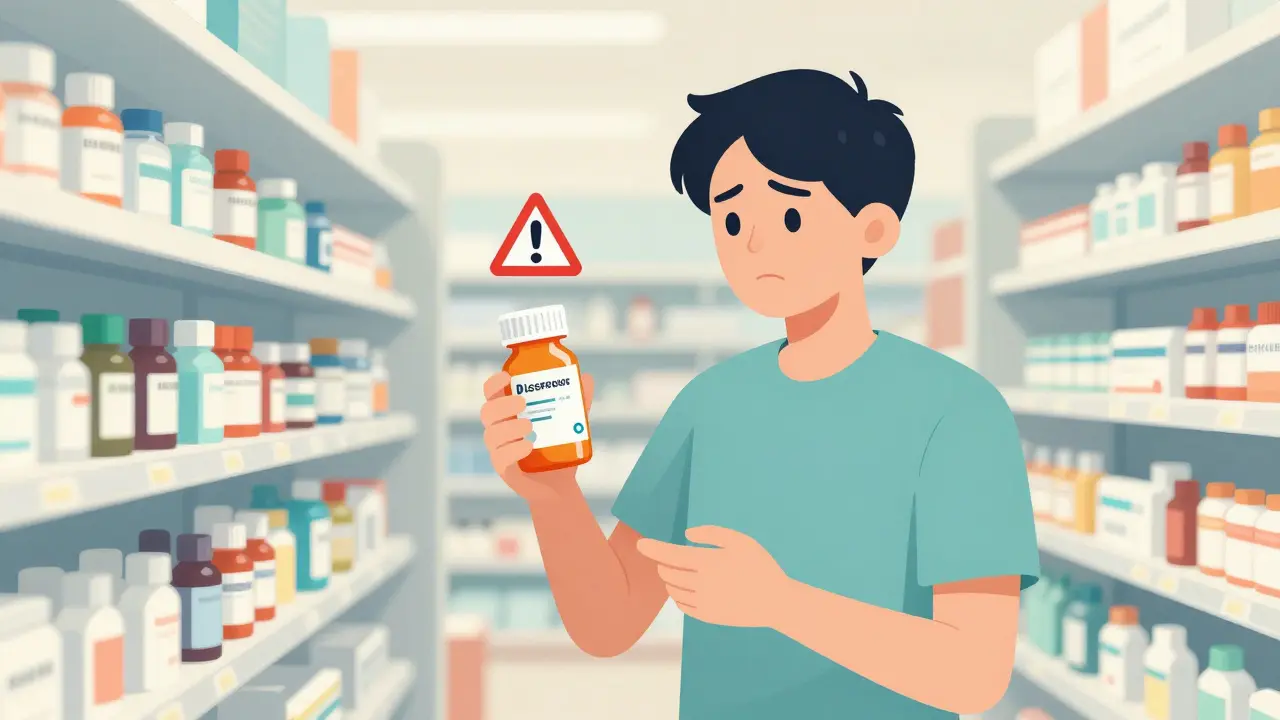
Imagine picking up a new bottle of pills for high blood pressure. You glance at the label, see a list of side effects, and toss it in your bag without a second thought. Now imagine that same pill interacting dangerously with the over-the-counter pain reliever you take for headaches. This isn't a hypothetical scare tactic; it’s a reality for millions of people. Unanticipated drug interactions are chemical reactions between medications that can reduce effectiveness or cause serious harm contribute to approximately 2 million adverse events annually in the United States alone. Of those, 100,000 result in hospitalization (BeMedWise Foundation, 2023). The good news? Most of these are preventable. The key lies in understanding the information already printed on your prescription labels.
Why Prescription Labels Matter More Than You Think
You might think your doctor or pharmacist is the only one responsible for catching dangerous combinations. While they play a huge role, the prescription label is the primary legal document providing specific usage instructions and warnings for a medication is your first line of defense. According to the Food and Drug Administration (FDA), labels must contain clinically relevant information to support safe use. Specifically, about 30% of medication-related hospitalizations stem from preventable drug interactions (Duke-Margolis Center for Health Policy, 2023).
The problem is accessibility. A 2023 study found that only 38% of healthcare providers could consistently locate critical interaction info within 30 seconds during practice. For patients, it’s even harder. Only 41% of adults consistently read their prescription labels, and that number drops to 28% for those taking five or more medications (CDC, 2024). If you’re not reading them, who is? You need to know what’s inside that paper insert.
Decoding the Label: Where to Look First
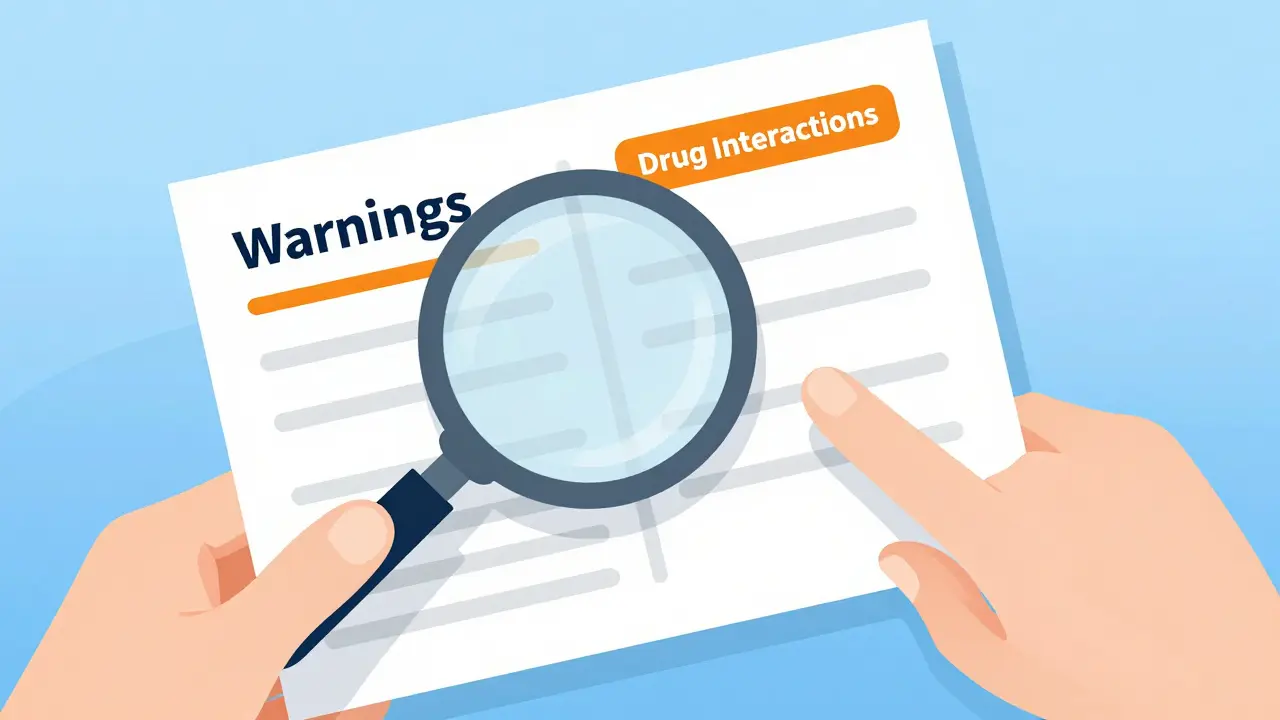
FDA regulations mandate a specific structure for prescription labeling. When you open that packet, don’t just skim. Look for two specific sections:
- Warnings and Precautions (Section 5): This is where serious, life-threatening interactions live. The FDA requires manufacturers to place 'clinically significant' interactions here. If it says "Avoid concomitant use," take that seriously. It means do not take this drug with another specified substance.
- Drug Interactions (Section 7): This section provides comprehensive details. The FDA’s 2024 guidance update (Docket Number FDA-2024-D-3903) requires this section to answer three questions: Is there a problem? How bad is it? What do I do about it?
For over-the-counter (OTC) meds, look at the Warnings section. BeMedWise reports that 98% of common OTC products contain critical interaction info here, yet 63% of consumers overlook it (BeMedWise, 2023). If you’re buying ibuprofen or antacids, check if they interact with your heart meds or blood thinners.
The Hidden Danger: Supplements and Herbs
Here’s a tricky part: prescription labels often miss the mark when it comes to supplements. A 2023 Harvard Health study documented 147 cases of severe bleeding caused by combining warfarin (a blood thinner) with herbal supplements like ginkgo biloba. Despite accounting for 32% of serious drug interactions, supplement interactions are mentioned in only 17% of prescription labels (Harvard Health, 2023).
This gap is dangerous because many people view vitamins and herbs as "natural" and therefore safe. They aren’t always. St. John’s Wort, garlic supplements, and vitamin K can all alter how drugs work. Since the label won’t always warn you, you have to be the detective. Treat every supplement like a medication.
| Source | Coverage | Reliability | Key Limitation |
|---|---|---|---|
| Prescription Label | 100% of Rx drugs | High (Manufacturer validated) | Complex language; low readability |
| OTC Warnings | 98% of products | High | Often ignored by consumers |
| Drug Apps (e.g., Drugs.com) | 92% of Rx drugs | Medium-High (89% accuracy) | Lacks individual patient context |
| Supplement Labels | Variable | Low (Less regulated) | Rarely mentions drug interactions |
Practical Steps to Stay Safe
Reading a dense medical label can feel overwhelming. Here’s a simple, actionable strategy that takes about 2.7 minutes per medication (BeMedWise time-motion study, 2023):
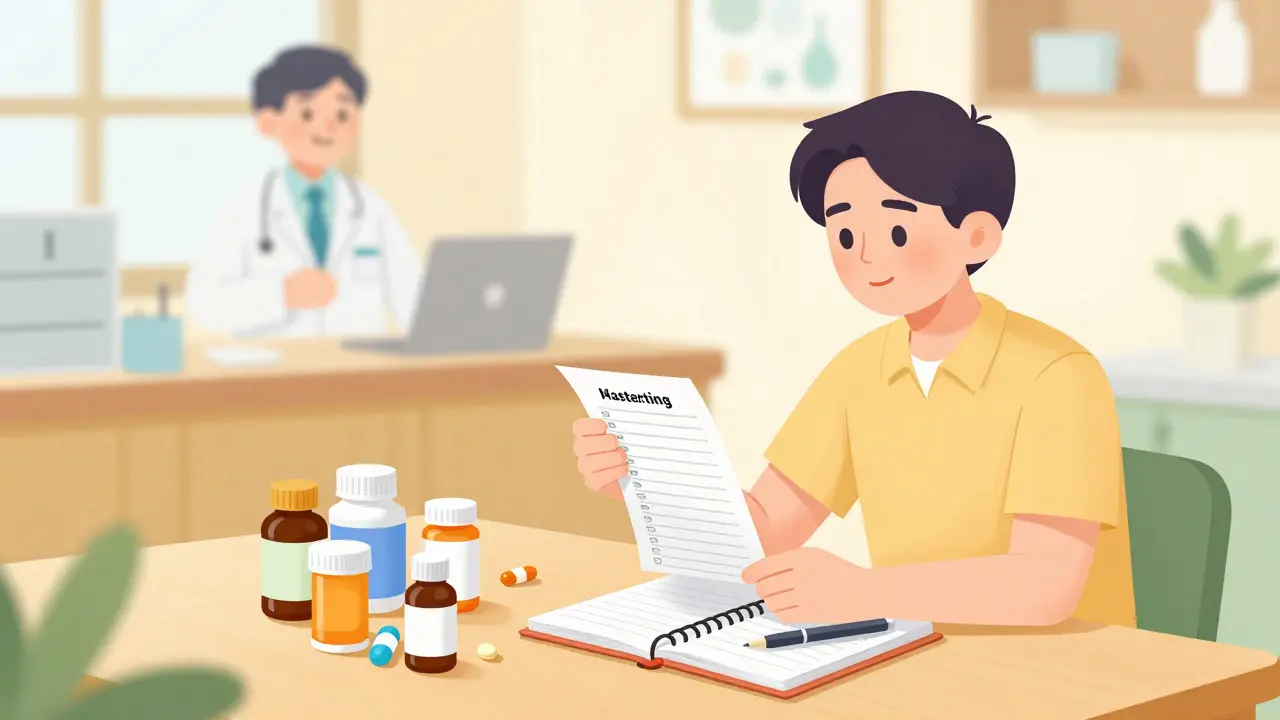
- Create a Master List: Write down every prescription, OTC drug, vitamin, and herb you take. Share this list with every doctor and pharmacist you see. This single step reduces interaction risks by 47% (BeMedWise, 2023).
- Label Your Bottles: Harvard Medical School recommends writing the reason for taking the drug on the bottle (e.g., "for blood pressure"). This prevents mix-ups between similar-sounding names like Klonopin and clonidine, which cause 12% of reported medication errors (Harvard Health, 2023).
- Ask the Pharmacist: When picking up a new script, bring your master list. Pharmacists identify potential interactions in 22% of consultations (2023 study of 10,000 consults). Don’t be shy-ask, "Does this interact with anything else I’m taking?"
- Use Digital Tools Wisely: Apps like the Drugs.com Drug Interactions Checker process 1.2 million monthly queries. Use them to screen for interactions, but remember they lack personal context. They are a supplement, not a replacement, for professional advice (FDA, 2024).
Understanding the Language
Medical jargon is a barrier. Phrases like "concomitant use" confuse 78% of users in online pharmacy communities (Reddit r/Pharmacy, 2024). Here’s a quick translation guide:
- Concomitant use: Taking two drugs at the same time.
- Avoid concomitant use: Do not take these together.
- Monitor for [symptom]: Watch for this side effect and report it if it happens.
- Reduce dosage: You may need a lower dose of one drug if taken with the other.
If you see bold text or boxes in the label, pay attention. The FDA’s 2024 guidance requires manufacturers to highlight critical interactions in bold. This is their way of saying, "This is important."
Future Changes: What’s Coming in 2026
The system is improving. The 21st Century Cures Act requires Electronic Health Records (EHR) systems to incorporate FDA drug interaction data by 2026. This integration could reduce interaction-related adverse events by an estimated 28% (CMS projections). Additionally, pilot programs launched in Q1 2025 are testing QR codes on prescription bottles that link to updated, easy-to-read interaction info. Keep an eye out for these scannable codes-they might make reading labels easier soon.
Until then, the responsibility falls on you. With 67% of seniors taking five or more medications daily, the complexity is rising. By mastering the label, creating a master list, and talking to your pharmacist, you turn a passive piece of paper into an active safety tool.
What is the most important section on a prescription label for drug interactions?
The most critical sections are "Warnings and Precautions" (Section 5) for serious, life-threatening interactions, and "Drug Interactions" (Section 7) for comprehensive details. Always check Section 5 first for immediate dangers.
Do over-the-counter (OTC) medicines have drug interaction warnings?
Yes. 98% of common OTC products contain interaction information in the "Warnings" section. However, 63% of consumers overlook this information, leading to preventable errors.
Why don't prescription labels mention interactions with supplements?
Supplement interactions are mentioned in only 17% of prescription labels despite causing 32% of serious interactions. This is due to less strict regulation of supplements compared to pharmaceuticals. Patients must proactively disclose supplement use to their doctors.
Can I rely on drug interaction apps instead of reading labels?
Apps like Drugs.com are useful screening tools with 89% accuracy, but they cover only 92% of prescription drugs and lack individual patient context. They should supplement, not replace, professional consultation and label reading.
What does "avoid concomitant use" mean on a label?
It means you should not take the specified medications at the same time. This is a strong warning indicating a potentially serious or life-threatening interaction.
How can I reduce the risk of medication errors at home?
Create a master list of all medications and supplements, share it with all healthcare providers, label your bottles with the reason for use, and ask your pharmacist to review everything when picking up new prescriptions.
Are there any upcoming changes to prescription labeling?
Yes. The FDA’s 2024 guidance requires clearer "bottom line" information and bold highlighting of critical interactions. By 2026, EHR systems will integrate FDA interaction data, and QR codes on bottles may provide easy access to updated info.

alexander barrera
another day another article telling americans they are too stupid to read a label 😒 honestly if you cant figure out that mixing blood thinners with garlic supplements is bad maybe you shouldnt be self medicating in the first place. typical lack of basic education here.
Charlotte Stuart
The premise of this article is fundamentally flawed in its assumption that laypersons possess the cognitive capacity or time to decipher pharmaceutical labeling conventions designed for medical professionals. The FDA mandates these structures not because they are user-friendly, but because they must satisfy legal and clinical rigor. Expecting patients to act as pharmacists is an abdication of professional responsibility by healthcare providers, not a failure of patient literacy. Furthermore, the reliance on 'master lists' is a band-aid solution for a systemic failure in electronic health record interoperability. It is pretentious to suggest that a casual glance at Section 5 constitutes adequate due diligence when the pharmacokinetic implications of CYP450 enzyme inhibition require specialized training to fully comprehend.
Tucker Brown
they want you to think checking the label saves you but the real danger is what they dont tell you. the big pharma companies control the fda guidelines and they hide the worst interactions in the fine print so you never see them. my uncle took a simple antihistamine and ended up in the icu because the label said it was safe with his heart med but it wasnt. trust no one just avoid all meds if you can.
Hema Khimasia
From an epistemological standpoint, the dichotomy between prescribed pharmaceuticals and herbal supplements is largely a construct of regulatory frameworks rather than biochemical reality. The bioactive compounds in St. John’s Wort exert potent inhibitory effects on P-glycoprotein transporters, mirroring mechanisms seen in synthetic drugs. Therefore, treating supplements as benign entities ignores their pharmacodynamic potency. The gap in labeling reflects a historical lag in regulatory science regarding natural products, necessitating a more rigorous application of evidence-based scrutiny by the consumer regardless of the source's classification.
krystal Live
you got this!!! making a master list sounds like such a good idea i feel like i would forget half my vitamins anyway. lets all try to be smarter about our health together 💪✨
Frank Polster
sure, because nothing says 'empowerment' like reading a wall of text written by lawyers while you're trying to get to work on time. great advice, really. I'm sure everyone has 2.7 minutes to spare to decode 'concomitant use' instead of just asking the pharmacist who gets paid to know this stuff.
ankit agarwal
The integration of pharmacogenomic data into EHR systems by 2026 represents a paradigm shift in personalized medicine. However, the efficacy of this transition hinges on the standardization of semantic ontologies across disparate database architectures. Until then, the burden of vigilance remains on the patient, requiring a proactive approach to medication reconciliation. We must leverage digital tools not as replacements for clinical judgment but as augmentative interfaces for real-time interaction screening, thereby optimizing therapeutic outcomes through informed decision-making processes.
Alyssa Smith
I appreciate how this breaks down the jargon. In many cultures, we rely heavily on family elders for health advice, which sometimes leads to mixing traditional remedies with prescriptions without realizing the risks. This guide helps bridge that gap by encouraging open dialogue with pharmacists, which is a universal step towards better health safety.