
Every year, tens of thousands of patients in the U.S. die because of mistakes made when medications are dispensed. Not because of bad doctors or careless pharmacists-but because the systems they work in are flawed. The patient safety goals set by The Joint Commission aren’t just paperwork. They’re the bare minimum needed to stop preventable harm. And if you work in a pharmacy, hospital, or clinic, ignoring them isn’t an option-it’s a risk to life.
What Are the National Patient Safety Goals (NPSGs)?
The National Patient Safety Goals (NPSGs) are updated every year by The Joint Commission, the group that accredits most U.S. hospitals. They started in 2003 after a shocking report from the Institute of Medicine found that medical errors kill more people than car accidents or breast cancer. Since then, medication errors have remained one of the top concerns. In fact, one in every 131 outpatient deaths and one in every 8,548 inpatient deaths are tied to medication mistakes, according to AHRQ data from 2021. These aren’t vague suggestions. They’re specific, measurable rules. For example, NPSG.03.04.01 says: Every medication container-whether it’s a syringe, IV bag, or pill bottle-must be labeled with the drug name, strength, and concentration. The font must be at least 10-point. Sounds simple? A 2023 survey found 27% of operating rooms still use unlabeled syringes. That’s not just sloppy-it’s deadly.Medication Errors Happen at Every Step
People think errors happen when a pharmacist hands out the wrong pill. But most mistakes occur before that. A nurse misreads a handwritten order. A doctor prescribes a drug that interacts with another one the patient is already taking. A pharmacy tech grabs the wrong bottle because the labels look too similar. Even after the medication leaves the pharmacy, errors can still happen-like giving a patient the wrong dose because no one checked their weight. The Five Rights (right patient, right drug, right dose, right route, right time) have been the gold standard for decades. But here’s the problem: 83% of medication errors still happen even when nurses check all five rights. Why? Because the system doesn’t support them. Nurses are stretched thin. Shifts are long. There’s no time to double-check every label. And if the barcode scanner isn’t working, or the automated cabinet lets you override safety checks too easily, the burden falls on the person doing the job-often without the tools to do it safely.High-Alert Medications: The Silent Killers
Some drugs are so dangerous that even a tiny mistake can kill. These are called high-alert medications. Think insulin, heparin, opioids, and injectable potassium. The ISMP lists 19 specific high-risk scenarios that need special safeguards. One of the most chilling? Injectable promethazine. Between 2006 and 2018, it caused 37 amputations because it was accidentally given into an artery instead of a vein. That’s not a rare event-it’s a preventable disaster. The 2025 NPSGs now require stricter controls for these drugs. Automated dispensing cabinets (ADCs) must lock down access to high-alert meds unless there’s a documented clinical reason to override. But here’s the catch: 34% of pharmacists report override rates higher than 5%, often because staff are rushing during emergencies. That’s a red flag. Every override should trigger a review. If it doesn’t, you’re not fixing the problem-you’re just covering it up.Barcodes, Labels, and Tech: Tools That Actually Work
Technology isn’t the enemy-it’s the solution. Barcode-assisted medication administration (BCMA) reduces wrong-drug errors by up to 86%, according to pharmacy directors on ASHP forums. But it’s not magic. One hospital added 7.2 minutes per dose to nurse workload because the system wasn’t properly integrated. That’s why success isn’t about buying tech-it’s about designing workflows around it. Labeling is another area where simple fixes make a huge difference. The Joint Commission now requires bedside specimen labeling-meaning the label must be applied in front of the patient, using two identifiers (like name and date of birth). Why? Because mislabeled blood samples cause around 160,000 adverse events every year. That’s not a tech problem. It’s a culture problem. If staff aren’t trained to do it right, and leadership doesn’t enforce it, the system fails.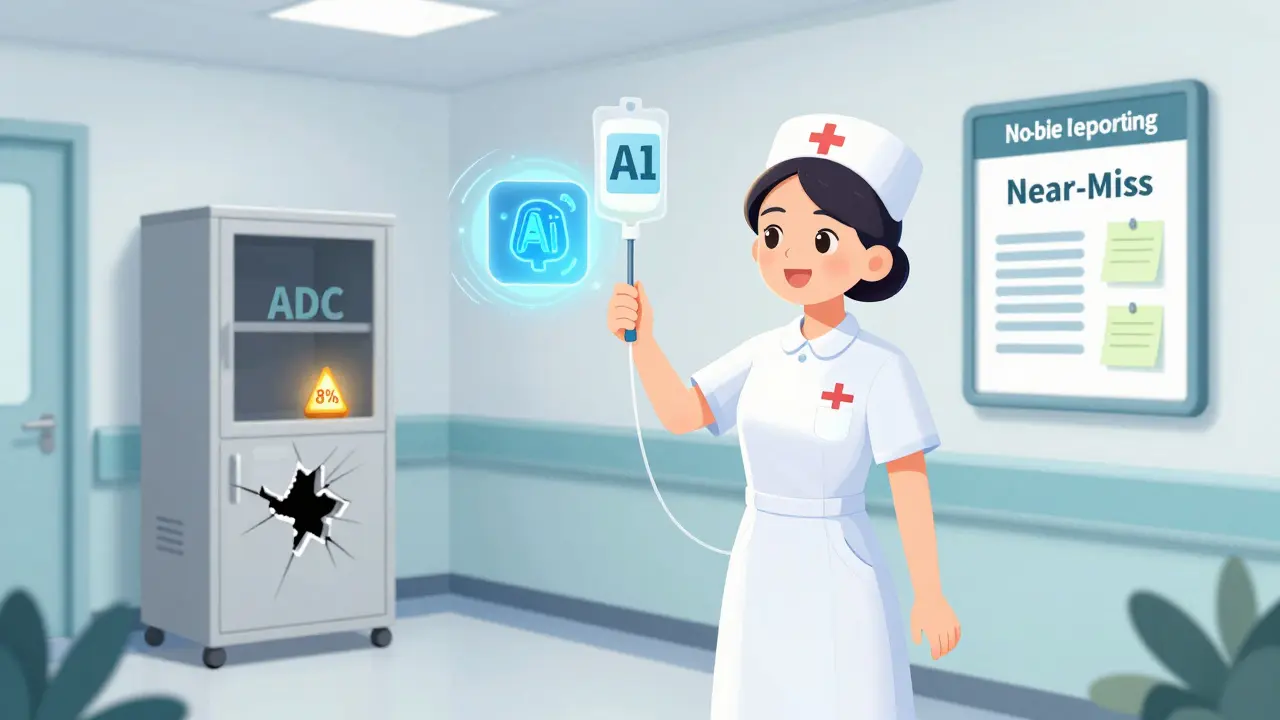
Australia’s Approach: System Over Individual
While U.S. guidelines focus on rules, Australia’s ASHP guidelines take a different path. They don’t blame the pharmacist for forgetting a step. Instead, they ask: Why did the system let this happen? Australian pharmacies emphasize standardized procedures, mandatory double-checks for high-risk drugs, and regular error reviews-not just after something goes wrong, but as part of daily practice. This mindset shift matters. In the U.S., nurses often feel like they’re being punished for mistakes. In Australia, the focus is on learning. One Melbourne hospital reduced dispensing errors by 40% in two years simply by creating a no-blame reporting system and reviewing every near-miss. That’s how you build safety-not by adding more checks, but by making the system smarter.Children Are Different-And More Vulnerable
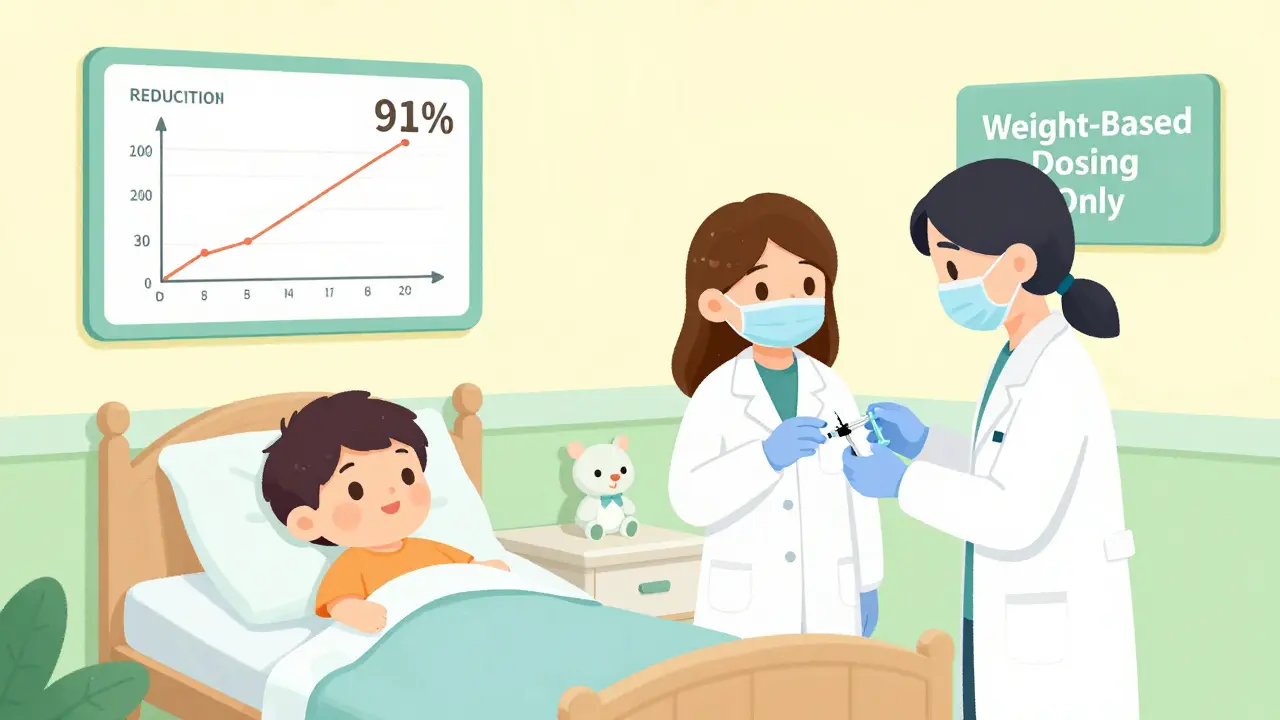
Kids aren’t small adults. Their bodies process drugs differently. A dose that’s safe for a 70kg adult could be lethal for a 5kg infant. Yet, pediatric medication errors happen three times more often than in adults. The Children’s Hospital of Philadelphia fixed this by creating a pediatric-specific safety model: weight-based dosing protocols, mandatory double-checks for high-alert meds, and staff trained only in pediatric pharmacology. Result? A 91% drop in dosing errors. That’s not luck. That’s design. And it’s proof that one-size-fits-all safety rules don’t work. You need tailored solutions for different patient populations.What’s Holding You Back?
Most pharmacies and hospitals have the tools. What they lack is consistent execution. Here are the biggest roadblocks:- ADC overrides too high-Over 5% means your system is broken.
- Training is minimal-38% of facilities give staff less than 4 hours of safety training per year.
- Leadership doesn’t prioritize it-If pharmacy leaders aren’t at the table when budgets are set, safety gets cut first.
- Blame culture-Staff hide mistakes because they fear punishment, not because they’re careless.
How to Get It Right
You don’t need a big budget. You need discipline. Here’s how to start:- Review your ADC override logs monthly. If more than 5% are being bypassed, investigate why. Is it because staff are rushed? Is the system too slow? Fix the cause, not the symptom.
- Implement barcode scanning for every medication-no exceptions. Even if it slows things down. Safety isn’t optional.
- Label everything, every time. No unlabeled syringes. No unlabeled IV bags. Period.
- Create a no-blame reporting system. If staff feel safe reporting near-misses, you’ll catch problems before they hurt someone.
- Train staff on pediatric and high-alert meds every quarter. Skills fade. Knowledge must be refreshed.
- Get pharmacy leadership involved in hospital safety committees. If the pharmacist isn’t at the table, medication safety won’t be a priority.
The Future Is AI and Accountability
The next wave of safety isn’t just about rules or barcodes-it’s about prediction. Mayo Clinic’s pilot program used AI to flag potential drug interactions before they happened. It cut adverse events by 47%. That’s not science fiction. It’s happening now. But tech alone won’t save lives. You need people who care enough to use it. The World Health Organization wants every country to adopt medication safety standards by 2030. High-income countries are at 63%. Low-income ones? Only 22%. The gap isn’t about money-it’s about willpower.Final Thought: Safety Is a Daily Choice
Patient safety goals aren’t about checking boxes. They’re about making sure the person taking your medication walks out alive. Every label you write, every override you question, every near-miss you report-it adds up. The systems are there. The data proves they work. What’s missing is the consistent, daily commitment to do it right-even when no one’s watching.What are the most common medication dispensing errors in pharmacies?
The most common errors include wrong drug selection (often due to similar-looking labels), incorrect dosage calculations (especially in pediatrics), mislabeled medications, failure to check for drug interactions, and bypassing safety checks in automated dispensing cabinets. Over 70% of these errors occur because of system flaws-not individual mistakes.
How do Joint Commission NPSGs differ from ISMP best practices?
NPSGs are mandatory for accredited U.S. hospitals and focus on minimum safety standards like labeling and patient identification. ISMP best practices are voluntary but more detailed-they target specific high-risk scenarios like promethazine injections or opioid overdoses. While NPSGs set the baseline, ISMP provides the advanced tools to go beyond compliance.
Why is the Five Rights model no longer enough to prevent errors?
The Five Rights rely entirely on human memory and vigilance. But in high-pressure environments, even the most careful staff can miss something. Studies show 83% of errors still happen despite confirming all five rights. The real fix is reducing reliance on memory-using barcodes, automated checks, and standardized workflows instead.
What’s the impact of automated dispensing cabinet (ADC) overrides?
When ADC override rates exceed 5%, medication errors increase by 3.7 times. Overrides are often necessary in emergencies, but if they’re too frequent, it means the system isn’t meeting clinical needs. Facilities must track override reasons and adjust workflows-like stocking more stat meds or improving response times-to reduce unnecessary bypasses.
How can pharmacies reduce pediatric medication errors?
Use weight-based dosing protocols with built-in alerts, require double-checks by two trained staff for high-risk drugs, train all staff in pediatric pharmacology, and eliminate adult dosing references from pediatric areas. Children’s Hospital of Philadelphia cut dosing errors by 91% using these exact steps.
What role does leadership play in medication safety?
Leadership determines whether safety is a priority or a checkbox. Hospitals with pharmacy leaders in executive meetings see 89% sustainability of safety programs over five years. Without leadership backing, even the best tools fail-staff won’t use them if they’re not supported, funded, or enforced.
Are electronic health records (EHRs) helping or hurting medication safety?
They help when integrated with clinical decision support and barcode scanning. But poorly designed EHRs can make things worse-cluttered screens, default dosing suggestions, and alert fatigue cause more errors than they prevent. The key isn’t having an EHR-it’s having one that’s built for safety, not convenience.
How often should pharmacy staff receive safety training?
At least every quarter, with hands-on drills for high-alert medications and emergency overrides. The average U.S. facility gives less than 4 hours per year-far below what’s needed. Training should be practical, scenario-based, and tied to real error data from your own pharmacy.
What’s the connection between patient safety and hospital reimbursement?
Centers for Medicare & Medicaid Services (CMS) now withholds 2% of hospital payments if they have high rates of preventable errors like medication incidents. This financial penalty pushes hospitals to invest in safety-not because it’s right, but because it’s required.
Can artificial intelligence really reduce medication errors?
Yes. Pilot programs at Mayo Clinic and other major hospitals show AI can reduce potential adverse drug events by up to 47% by predicting interactions, flagging abnormal dosing, and alerting staff before errors occur. But AI works best when paired with human oversight-never as a replacement.

saurabh singh
Man, I've seen this in India too-labels half-faded, syringes sitting on counters like they're just tools, not life-or-death items. We don't need more rules, we need people who actually care enough to double-check. One nurse here stopped a mix-up because she noticed the vial didn't match the script. No alarm, no tech-just eyes on the job.
John Wilmerding
While the data presented is compelling, it is imperative to recognize that adherence to the National Patient Safety Goals (NPSGs) remains inconsistent across institutional settings due to systemic underfunding and workforce attrition. The 27% non-compliance rate with labeling standards, as cited, reflects not negligence but structural failure. Evidence-based interventions such as barcode-assisted medication administration (BCMA) demonstrate an 86% reduction in error rates, yet implementation is often hindered by inadequate training protocols and resistance to workflow modification.
Peyton Feuer
so like… i get the whole labeling thing. but what if your barcode scanner just dies in the middle of a 12-hour shift? and no one has a backup? and the boss says ‘just do it manually’? we’re not robots. systems break. people get tired. maybe we need less blame and more backup batteries.
Siobhan Goggin
It’s astonishing how often we mistake compliance for safety. The Joint Commission’s guidelines are a starting point, not an endpoint. Real safety emerges from consistent, daily vigilance-not from ticking boxes on an audit form. The fact that 38% of facilities provide less than four hours of safety training annually speaks volumes about misplaced priorities.
Vikram Sujay
One cannot help but reflect on the ontological tension between individual responsibility and systemic design. The Five Rights, though noble in intent, presuppose an idealized human agent-unfatigued, unpressured, perfectly attentive. Yet human beings are finite, fallible, and embedded within flawed institutions. To demand perfection from imperfect systems is not wisdom, but hubris. The Australian model, by contrast, recognizes error as inevitable and seeks to transform it into learning-a profoundly humane approach.
Jay Tejada
yeah right. another article telling us nurses are lazy. funny how the same people who make $200k a year writing guidelines never had to do a 14-hour shift with 12 patients and no help. 27% unlabeled syringes? yeah, because the hospital ran out of labels and no one gave a damn. blame the worker, not the broken system. classic.
Shanna Sung
THEY’RE HIDING THE TRUTH. The Joint Commission is owned by Big Pharma. That’s why they only care about labels and not about how drugs are made. They don’t want you to know that 80% of meds are toxic by design. That’s why they push ‘safety goals’-to distract you from the real killer: chemical poisoning. Wake up. They want you dependent. The AI stuff? It’s surveillance. They’re tracking your every move. I saw a nurse get fired for overriding an ADC once. Coincidence? I think not.
Allen Ye
It is worth contemplating the epistemological foundations of contemporary medication safety paradigms. The reliance on technological interventions-barcodes, AI, automated cabinets-represents a form of technocratic reductionism, wherein complex human systems are simplified into algorithmic inputs and outputs. While these tools may reduce certain types of error, they simultaneously displace tacit knowledge, erode professional autonomy, and create new forms of vulnerability-alert fatigue, overreliance, and the illusion of infallibility. True safety lies not in automation, but in cultivating a culture of reflective practice, where every clinician is empowered to question, to pause, and to intervene-not because they are told to, but because they understand the moral weight of their actions.
mark etang
Adherence to established patient safety protocols is non-negotiable. The data is unequivocal: implementation of standardized labeling, barcode verification, and mandatory double-checks for high-alert medications directly correlates with reduced morbidity and mortality. Institutions that prioritize these measures demonstrate measurable improvements in clinical outcomes. Leadership must enforce compliance with zero tolerance for deviations.
josh plum
Let’s be real-nurses don’t make mistakes because they’re tired. They make them because they’re lazy and don’t care. If you can’t follow five simple rules, you shouldn’t be holding a syringe. And those ‘no-blame’ systems? They’re just excuses for people to keep screwing up. Punish the people who mess up. That’s how you fix it. No more coddling. Safety isn’t a feeling. It’s discipline.
John Ross
The pharmacovigilance infrastructure in the U.S. remains fragmented. While NPSGs establish baseline compliance, they lack granularity in addressing high-risk pharmacodynamic interactions, particularly in polypharmacy cohorts. The ISMP’s granular protocols-especially regarding concentrated electrolytes and insulin protocols-provide actionable mitigation strategies that align with pharmacokinetic modeling. Without integration of these into EHR clinical decision support (CDS) modules, we’re merely performing safety theater.
Clint Moser
ai is going to take over. i heard the machines are already reading labels and overriding cabinets without humans. they’re learning how to bypass safety checks. next thing you know, the robots will be prescribing. and the docs? they’ll just sit there scrolling tiktok. i saw a video of a robot handing out insulin to a kid. no one was watching. it was wrong. it was wrong. they’re hiding it.
Ashley Viñas
It’s frankly embarrassing that we’re still having this conversation in 2025. If your pharmacy can’t get labeling right, you shouldn’t be open. And if your leadership doesn’t show up to safety meetings? Fire them. This isn’t complicated. It’s basic. People who cut corners on medication safety are one step away from being criminally negligent. The fact that this even needs to be said is a national disgrace.
Brendan F. Cochran
americans are so soft. back in my day we just memorized the drugs and never made mistakes. now everyone needs a scanner, a checklist, a therapist, and a no-blame zone. if you can’t handle the pressure, go work at starbucks. safety isn’t about feeling good-it’s about doing the job right. stop coddling people and start holding them accountable.
jigisha Patel
The assertion that 83% of errors occur despite adherence to the Five Rights is misleading. The data fails to account for confounding variables such as cognitive load, shift length, and EHR usability. Furthermore, the 91% reduction in pediatric errors cited from Children’s Hospital of Philadelphia was achieved under highly controlled, resourced conditions that are not scalable to community pharmacies. The proposed solutions are thus contextually inapplicable to 87% of U.S. healthcare settings. A more rigorous, evidence-based meta-analysis is required before policy recommendations are enacted.