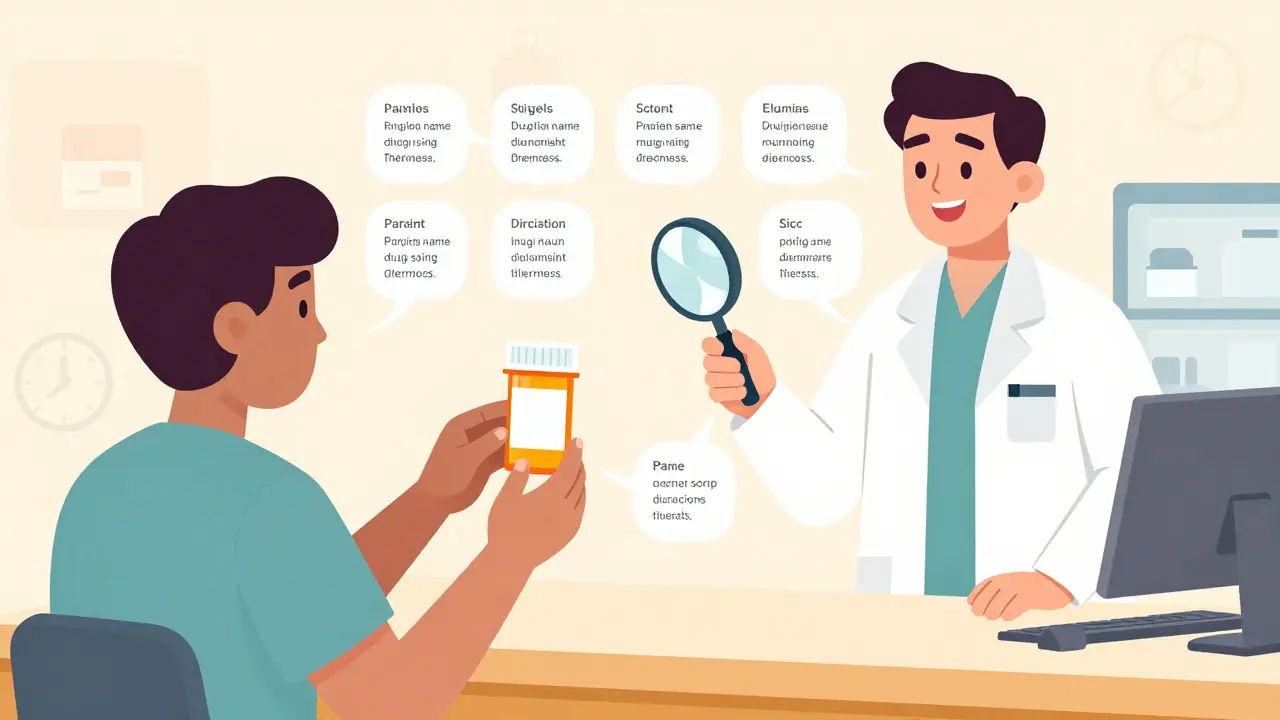
Every time you pick up a prescription, you’re holding a safety document that could prevent a hospital visit-or cause one if you miss something important. The label on your pill bottle isn’t just a sticker. It’s your roadmap for taking medicine safely. But most people glance at it, shrug, and walk out. That’s a mistake. Prescription labels contain critical details that pharmacies are legally required to include, yet 22% of medication errors in the U.S. happen because patients didn’t understand what was written on them.
What’s on Your Prescription Label? The 9 Must-Have Elements
By law, every U.S. prescription label must include nine key pieces of information. If any of these are missing, ask for clarification. They’re not suggestions-they’re requirements.
- Patient name: Double-check the spelling. One wrong letter could mean you get someone else’s medicine.
- Prescriber name: Who ordered this? Make sure it’s your doctor or a licensed provider.
- Drug name: Both brand and generic names should appear. If you’ve taken this before, does the name match what you expected?
- Strength: Is it 5 mg or 50 mg? A missing decimal point can be deadly.
- Dosage form: Tablet? Capsule? Liquid? Injection? This tells you how to take it.
- Quantity: How many pills or how much liquid are you getting?
- Directions for use: Read these word-for-word. "Take one by mouth daily" means something very different from "Take one as needed."
- Number of refills: How many times can you get this without a new prescription?
- Pharmacy contact info: Always keep this handy. If something doesn’t feel right, call them.
These nine items form the foundation of the "5 Rights" of medication safety: Right Patient, Right Medicine, Right Dose, Right Route, Right Time. If you can’t confirm all five, don’t take the medicine.
What the Label Doesn’t Tell You-But You Should Ask
Just because something isn’t printed doesn’t mean it’s not important. Many critical warnings live only in conversation. Here’s what to ask:
- "Is this the same as what I took before?" Even if the brand name changed, the generic might be different. A new batch might look different, smell different, or even have a different inactive ingredient that could trigger an allergy.
- "Does this interact with anything I’m already taking?" Including over-the-counter meds, supplements, or even grapefruit juice. Some drugs can’t be taken with dairy, alcohol, or caffeine.
- "What side effects should I watch for?" Not just "you might feel dizzy." Ask which ones are common, which are serious, and when to call your doctor.
- "When should I expect to feel better?" Antibiotics take days. Blood pressure meds take weeks. If you stop because you don’t "feel" it working, you might make things worse.
- "Is there a cheaper version?" Sometimes the generic is just as effective. Ask if your insurance has a preferred alternative.
Storage: It’s Not Just About Keeping It Dry
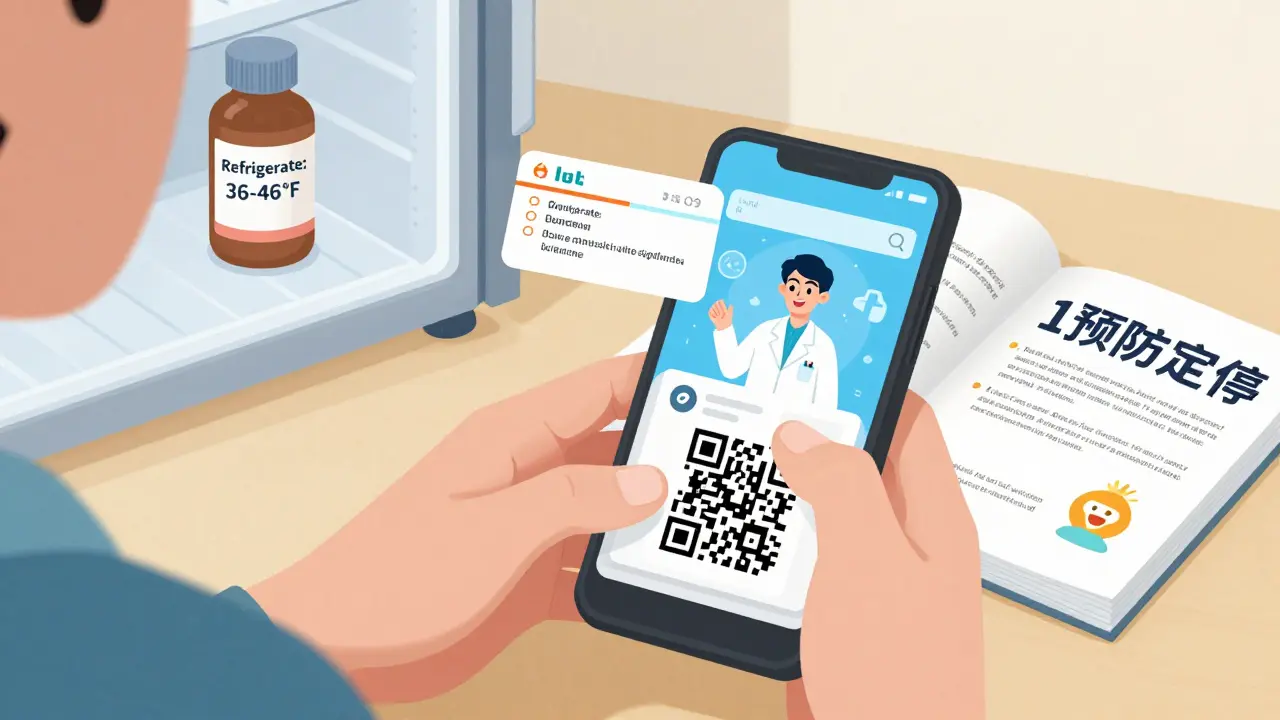
Most people think medicine just sits on the counter. But 15% of prescriptions need refrigeration. If you store insulin, certain antibiotics, or eye drops at room temperature when they need cold, you’re wasting money and risking your health.
Ask: "Does this need to be kept cold?" If yes, find out the exact temperature range. Some need 36-46°F (2-8°C). Others need to stay away from light or moisture. A 2022 survey found that 78% of prescriptions are fine at room temperature, but that still leaves 22% that can break down fast if mishandled.
One patient on Reddit shared: "I kept my blood pressure med on the bathroom shelf for two weeks because the label said "store at room temperature"-but it was actually supposed to be refrigerated. My numbers spiked. I had no idea."
Expiration Dates: Don’t Assume It’s Still Good
The expiration date isn’t a suggestion. It’s the last day the manufacturer guarantees the drug will work as intended. The FDA requires this to be printed clearly. But many people ignore it.
Ask: "Is this medicine still effective past the date on the label?" The answer is usually no. Some drugs, like insulin or liquid antibiotics, lose potency fast after opening-even before the printed date. Others, like tablets, might be stable longer, but you can’t risk it.
Don’t take expired medicine unless your doctor or pharmacist says it’s safe. And never take medicine that’s changed color, smell, or texture.
Refills and Renewals: Know the Rules
Some prescriptions expire after six months. Others can’t be refilled at all without a new prescription. Controlled substances like opioids or ADHD meds have strict limits-often just one or two refills.
Ask: "How many refills do I have left?" and "Do I need a new prescription after this?"
Missing this can mean running out mid-treatment. A 2023 study showed that 38% of patients who ran out of medication didn’t realize their refill had expired. If you’re on a long-term drug, set a reminder three days before your last refill runs out.
Language, Vision, and Health Literacy: Ask for Help
If you have trouble reading small print, don’t guess. If English isn’t your first language, don’t pretend you understand. You’re not alone.
Ask: "Can you give me a large-print label?" or "Can you explain this in Spanish/Tagalog/Vietnamese?"
By law, pharmacies that receive federal funding (which is nearly all of them) must provide free translation services. You can also ask for a printed Medication Guide-these are separate sheets that explain high-risk drugs like blood thinners, opioids, or diabetes meds in plain language. There are 107 such guides required by the FDA.
One in three U.S. adults struggles with health literacy. That means they can’t read or understand medical instructions. If you’re one of them, don’t feel ashamed. Ask for help. Pharmacists are trained to explain things simply.
QR Codes and Digital Labels: The New Normal
More pharmacies now offer QR codes on labels. Scan it with your phone, and you’ll get a video of someone explaining how to take the drug, what to avoid, and what side effects to watch for.
Ask: "Do you have a video or digital guide for this medication?"
Pharmacies using these systems saw 31% fewer medication errors in 2022. It’s not magic-it’s clarity. If your pharmacy doesn’t offer it, ask them why. It’s becoming standard, especially for high-risk drugs.
What to Do If Something Feels Off
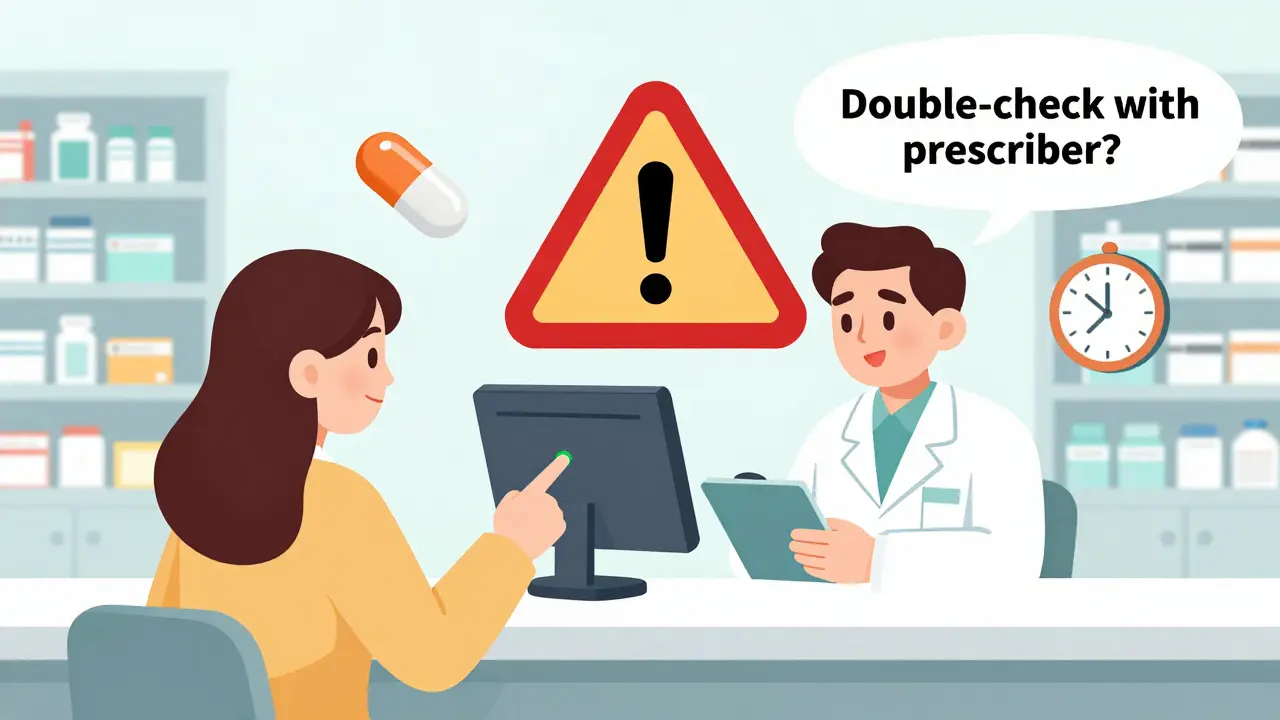
Trust your gut. If the pill looks different from last time, if the directions seem confusing, if the pharmacist seems rushed-pause.
Ask: "Can you double-check this with the prescriber?"
Pharmacists are trained to catch errors. In fact, they fix an average of 3.5 errors per day per pharmacist, according to the American Society of Health-System Pharmacists. But they can’t fix what they don’t know about.
One woman in Alabama told her pharmacist: "This pill is green. Last time it was white." He checked the system and found she’d been given the wrong drug entirely. She didn’t take it. She saved herself a hospital stay.
Final Checklist Before You Leave the Counter
Before you walk out, run through this quick 2-minute routine:
- Confirm your name is spelled right on the label.
- Compare the pill’s color, shape, and markings to what you remember.
- Read the directions out loud. Do they make sense?
- Ask about storage: "Does this need to be refrigerated?"
- Check the refill count: "How many times can I get this again?"
- Ask: "Is there a Medication Guide for this?"
- If anything’s unclear: "Can you explain this one more time?"
That’s it. Two minutes. One conversation. Could save your life.
What should I do if I can’t read the label?
Ask for a large-print version. Nearly all U.S. pharmacies offer this for free. You can also request a printed Medication Guide, which uses simpler language. If you need translation, ask for an interpreter-pharmacies are legally required to provide this if they receive federal funding. Don’t guess. Misreading a label is one of the top causes of medication errors.
Can I trust the generic version of my drug?
Yes. Generic drugs must meet the same FDA standards as brand-name drugs for strength, quality, and how they work in your body. The only differences are usually the inactive ingredients (like fillers or dyes), which rarely affect how the drug works. But if you notice a change in how you feel after switching to a generic, tell your pharmacist. It could be an allergy to a new ingredient.
Why do some labels say "take on an empty stomach"?
Some drugs are absorbed better without food. Others can cause nausea if taken with meals. For example, antibiotics like tetracycline bind to calcium in dairy, making them less effective. Always follow the label’s instructions exactly. If you’re unsure, ask your pharmacist what "empty stomach" means-usually, it’s one hour before or two hours after eating.
What if the pharmacy gives me the wrong medicine?
Don’t take it. Call the pharmacy immediately. Most errors are caught before they happen-pharmacists double-check prescriptions. But if you get something that looks wrong, smells wrong, or doesn’t match your history, speak up. Your pharmacist is trained to catch these mistakes. In 2022, pharmacists prevented over 1.2 million medication errors just by verifying labels.
Do I need to keep the original bottle?
Yes. The bottle has the full label with all required information. If you transfer pills to a pill organizer, you lose the expiration date, dosage instructions, and refill info. Always keep the original container until you’ve finished the course. It’s your proof of what you were prescribed-and your safety net if something goes wrong.

Katelyn Slack
i always just glance at the label and hope for the best... but after reading this, i’m gonna actually read it next time. my grandma almost got poisoned by a mixup last year, and i didn’t even know the label had her name spelled wrong.
Melanie Clark
pharmacies are lying to us and the FDA is in on it they print expiration dates to make you buy more drugs and the real shelf life is 10x longer i know this because my cousin works at a warehouse and he saw the files and the government hides this because they make billions off fear
Venkataramanan Viswanathan
In India, we rarely get printed labels with full details. Most pharmacists just hand over the pills and say 'take once daily'. I wish more places here adopted the U.S. standard. This post should be translated and shared in every pharmacy waiting room.
Mukesh Pareek
the pharmacokinetic profile of a drug is non-trivial and misinterpretation of dosage form and bioavailability parameters can induce subtherapeutic plasma concentrations or conversely, toxic accumulation. the 5 rights framework is foundational but insufficient without clinical pharmacology literacy.
Brian Anaz
why are we even talking about this? america is the only country that lets patients read their own prescriptions. in real countries, doctors tell you what to do and you shut up and take it. this over-explaining is why we’re so sick all the time.
Vinayak Naik
man i used to dump all my pills into a little plastic box and forget the bottle. then i took some weird blue capsule that looked like my blood pressure med but was actually a muscle relaxer-ended up passed out on the couch for 12 hours. now i keep every bottle like it’s a sacred relic. label = life insurance.
Saylor Frye
the fact that this is even a conversation is a testament to how broken our healthcare system is. if you need a 12-point checklist to not die from your meds, we’ve already lost.
Kiran Plaha
my dad is blind and he always gets his meds explained by the pharmacist in person. they even read the label out loud to him. i didn’t realize that was a legal right until now. this post made me cry. thank you.
Molly McLane
if you’re new to taking meds or helping someone who is, please bookmark this. i used to panic every time my pills looked different. now i know to ask: is this the same? is it stored right? can you explain it again? never feel dumb for asking. your life matters more than their rush.
Tiffany Adjei - Opong
actually the real problem is that doctors prescribe too many drugs in the first place. i’ve seen people on 12 pills a day and none of them even need half of them. this label thing is just a bandaid on a bullet wound.
Ryan Barr
read the label. it’s that simple.
Cam Jane
oh my gosh YES. last week i got a new antibiotic and the label said "take with food" but i thought "with food" meant "anytime i eat" so i took it with my 2am snack. woke up puking. turned out it meant "with a full meal" not a granola bar. i called the pharmacy at 3am and they laughed but then gave me a printed guide with pictures. best pharmacist ever. don’t be shy. ask. ask. ask.
Joann Absi
THEY’RE WATCHING YOU. 🕵️♀️ the QR code? it’s tracking your meds. the government and Big Pharma are colluding to monitor your health data through your pill bottles. they already know if you skipped your dose. they’re building a database of who’s compliant. don’t scan it. don’t trust it. your freedom is in the bottle.
Ashley S
why is this even a thing? people are just too lazy to follow directions. if you can’t read a label, maybe you shouldn’t be taking medicine.
Rachel Wermager
the 5 rights model is outdated. modern pharmacovigilance requires a systems-based approach integrating electronic prescribing, barcode scanning, and clinical decision support. relying on patient interpretation of static labels is a cognitive load failure and a latent safety threat.