
DRESS Syndrome Symptom Checker
Check all symptoms that apply to you or the patient. This tool uses the RegiSCAR diagnostic algorithm.
- 0-3 Definitely Not DRESS
- 4-5 Possible DRESS
- 6-7 Probable DRESS
- 8+ Definite DRESS
Note: This tool provides an educational assessment based on RegiSCAR criteria. It is not a medical diagnosis. Always consult a healthcare professional for proper evaluation.
Imagine starting a new medication for epilepsy or gout. Two weeks later, you develop a fever. A week after that, your skin breaks out in a widespread red rash. You assume it’s just an allergy or a virus. But then your liver enzymes spike, and you’re rushed to the hospital with organ failure. This is not a rare horror story; it is DRESS syndrome, also known as Drug Reaction with Eosinophilia and Systemic Symptoms. It is a life-threatening medical emergency that affects roughly 1 in 1,000 people taking high-risk medications.
DRESS is not just a bad rash. It is a complex multisystem inflammatory response where your immune system attacks your own organs after reacting to a drug. With a mortality rate of approximately 10%, early recognition is the difference between full recovery and permanent disability or death. If you or a loved one has recently started a new medication and developed unexplained symptoms, this guide explains what to look for, how doctors diagnose it, and why immediate action matters.
What Is DRESS Syndrome?
DRESS syndrome is a severe cutaneous adverse reaction (SCAR) characterized by a delayed hypersensitivity response to medications. First described in 1950 as phenytoin hypersensitivity, it was formally named DRESS by researchers Bocquet et al. in 1996. The condition is sometimes referred to as Drug-Induced Hypersensitivity Syndrome (DIHS), particularly in Asian medical literature, but they describe the same clinical entity.
The defining feature of DRESS is its timeline. Unlike typical drug allergies that appear within hours or days, DRESS has a long latency period. Symptoms typically manifest 2 to 8 weeks after starting the offending drug. This delay often leads to misdiagnosis, with patients being told they have a viral infection or simple allergic reaction when their body is actually undergoing a systemic crisis.
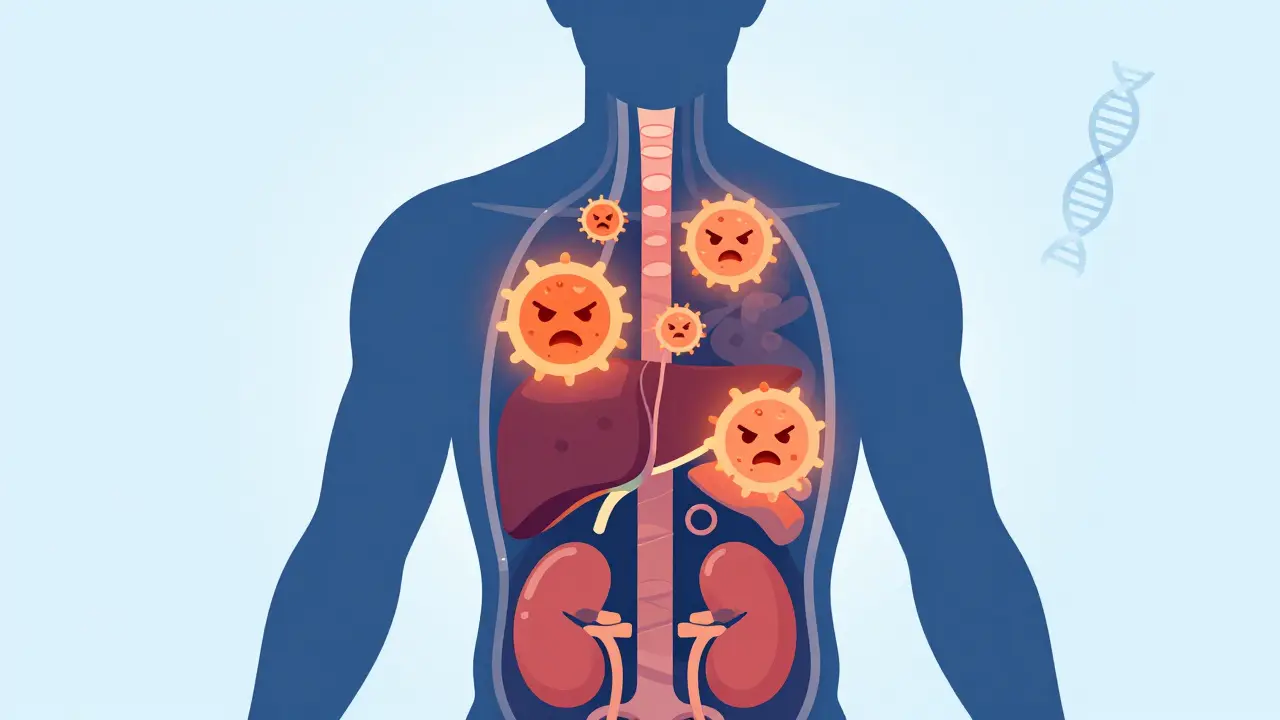
The core mechanism involves the immune system becoming overactivated. Your body produces excessive white blood cells called eosinophils (hence "eosinophilia" in the name) and atypical lymphocytes. These cells migrate into tissues, causing inflammation in the skin, liver, kidneys, lungs, and heart. In many cases, this process is complicated by the reactivation of latent viruses, such as Human Herpesvirus 6 (HHV-6), Epstein-Barr Virus (EBV), or Cytomegalovirus (CMV).
Key Symptoms and Clinical Presentation
Recognizing DRESS requires looking beyond the skin. While the rash is the most visible sign, the internal damage is what makes it dangerous. According to data from the NIH and dermatological reviews, here are the cardinal features:
- Fever: Present in 98% of cases, usually exceeding 38.5°C (101.3°F). It is often the first symptom, appearing before the rash.
- Skin Rash: A widespread morbilliform (measles-like) rash appears in 95% of patients. It typically starts on the face and upper body, spreading to cover 80-90% of the body surface area. Facial swelling (edema) occurs in 68% of cases.
- Lymphadenopathy: Swollen lymph nodes are found in 75% of patients, often in the neck, armpits, or groin.
- Hematologic Abnormalities: Blood tests reveal eosinophilia (>1,500 cells/μL) in 70% of cases and atypical lymphocytes in 60%.
- Organ Involvement: Occurs in 90% of cases. The liver is the most common target (77.6%), followed by kidneys (14.3%), lungs (9.3%), and heart (8.3%).
A critical distinction from other severe reactions like Stevens-Johnson Syndrome (SJS) is the lack of severe mucosal involvement. While SJS causes painful blistering in the mouth, eyes, and genitals, DRESS primarily affects the skin surface and internal organs. Only 15-20% of DRESS patients experience significant mucosal issues.
High-Risk Medications and Genetic Factors
Not all drugs carry the same risk. Certain medications are notorious triggers for DRESS. Understanding these can help clinicians and patients stay vigilant.
| Medication Class | Specific Drugs | Prevalence in Cases |
|---|---|---|
| Anticonvulsants | Carbamazepine, Phenytoin, Lamotrigine | 24% |
| Gout Medication | Allopurinol | 28% |
| Antibiotics | Sulfonamides, Vancomycin, Minocycline | 20% |
| Others | Alendronate, Losartan | <5% |
Genetics play a massive role in susceptibility. Specific Human Leukocyte Antigen (HLA) alleles predispose individuals to DRESS. For example, the HLA-B*58:01 allele is strongly associated with allopurinol-induced DRESS, particularly in Han Chinese, Thai, and Korean populations. Similarly, HLA-A*31:01 is linked to carbamazepine-induced DRESS across various ethnic groups. Taiwan implemented mandatory HLA-B*58:01 screening for allopurinol prescriptions in 2012, which reduced the incidence of DRESS by 80%. This highlights how genetic testing can be a powerful preventive tool.
Diagnosis: The RegiSCAR Criteria
Because DRESS mimics viral infections and other autoimmune conditions, diagnosis is challenging. Misdiagnosis rates hover around 30-40%. To standardize identification, doctors use the RegiSCAR scoring system, a validated diagnostic framework for severe cutaneous adverse reactions.
The RegiSCAR criteria assign points based on eight parameters: hospitalization, reaction severity, age, knowledge of causative drug, latency period, associated diseases, laboratory results, and other organ involvement. A score of ≥5 indicates a definite case, while 3-4 suggests probable DRESS. This system has 80% sensitivity and 97% specificity, making it the gold standard.
Key diagnostic steps include:
- Immediate Drug Cessation: Stop the suspected medication within 24 hours of suspicion.
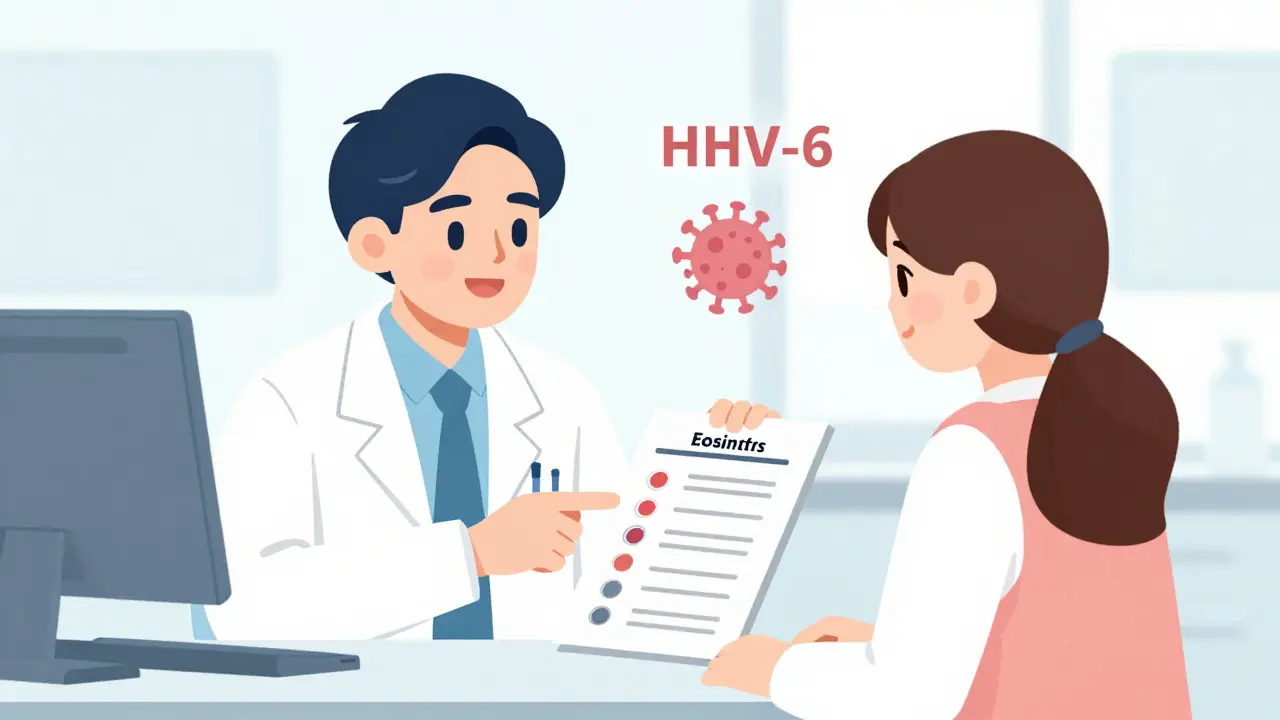
- Blood Work: Complete blood count with differential (looking for eosinophils), liver function tests (ALT/AST), renal function (creatinine), and viral serologies (HHV-6, EBV, CMV).
- Skin Biopsy: Often shows interface dermatitis with eosinophilic infiltration, helping rule out SJS/TEN.
- Organ Assessment: Ultrasound or CT scans if abdominal pain or respiratory distress is present.
Treatment and Management Strategies
There is no single FDA-approved cure for DRESS, so treatment relies on expert consensus and supportive care. The cornerstone of therapy is systemic corticosteroids.
Dr. Miri Assi and other experts recommend initiating high-dose prednisone (1 mg/kg/day) within 72 hours of diagnosis. Observational studies show 60-70% response rates with this approach. However, steroids must be tapered very slowly-often over 3 to 6 months-to prevent relapse. Rapid withdrawal can cause the immune system to rebound aggressively, worsening organ damage.
In severe cases involving multi-organ failure, patients require ICU-level monitoring. Alternative or adjunctive therapies include Intravenous Immunoglobulin (IVIG) and mycophenolate mofetil, especially for steroid-resistant cases. Recent phase 2 trials at Vanderbilt University are exploring optimized steroid-sparing regimens to reduce long-term side effects.
Supportive care is equally vital. This includes hydration, nutritional support, and managing secondary infections. Patients may need topical steroids for skin comfort and antihistamines for itching, though these do not treat the underlying systemic inflammation.
Prognosis and Long-Term Outlook
The prognosis for DRESS varies widely. While 90% of patients survive, the road to recovery is long. Acute phase resolution takes weeks, but fatigue and mild organ dysfunction can persist for months. Some patients develop chronic complications, such as thyroiditis, type 1 diabetes, or permanent renal impairment.
One unique aspect of DRESS is the phenomenon of "autoimmune sequelae." Because the initial trigger is a drug, but the ongoing damage is driven by autoimmunity (often fueled by viral reactivation), some patients continue to have symptoms even after the drug is cleared from their system. This is why prolonged follow-up with rheumatologists and dermatologists is essential.
Patient advocacy groups like the DRESS Syndrome Foundation report that 78% of patients visit emergency departments multiple times before receiving a correct diagnosis. This delay significantly impacts outcomes. Education and awareness are therefore as critical as medical intervention.
Prevention and Future Directions
Prevention focuses on pharmacogenomics. As mentioned, HLA screening is already standard in some regions for high-risk drugs. The FDA has mandated black box warnings for allopurinol and carbamazepine regarding DRESS risk. In 2023, the FDA approved the Verigene System for point-of-care HLA-B*58:01 testing, enabling same-day screening before prescribing.
Research is moving toward personalized medicine. Dr. Simon Pilkington predicts that pre-prescription HLA screening will become standard for all high-risk medications within five years, potentially reducing DRESS incidence by 60-70%. Additionally, global registries launched in 2023 aim to track outcomes and identify new biomarkers for predicting chronic sequelae.
For patients, the best prevention is vigilance. If you start a new medication, monitor for fever, rash, or swollen glands. Do not ignore symptoms that appear weeks after starting a drug. Report them to your doctor immediately. Early detection saves lives.
How long does it take for DRESS syndrome to appear?
DRESS syndrome typically has a delayed onset, appearing 2 to 8 weeks after starting the offending medication. This long latency period distinguishes it from acute allergic reactions, which usually occur within hours or days. The delay often contributes to misdiagnosis, as symptoms may resemble a viral illness initially.
Is DRESS syndrome fatal?
Yes, DRESS syndrome can be fatal. The mortality rate is approximately 10%, primarily due to multi-organ failure, particularly liver or kidney damage. However, with early diagnosis and appropriate treatment with systemic corticosteroids, the majority of patients survive and recover, though some may face long-term health complications.
What is the difference between DRESS and Stevens-Johnson Syndrome (SJS)?
While both are severe cutaneous adverse reactions, they differ significantly. SJS presents rapidly (days) with severe mucosal blistering and skin detachment. DRESS has a longer latency (weeks), features prominent systemic symptoms like fever and organ involvement, and is characterized by eosinophilia and atypical lymphocytes. Mucosal involvement is rare in DRESS compared to SJS.
Can DRESS syndrome come back after recovery?
Relapse can occur if corticosteroids are tapered too quickly. Therefore, treatment involves a slow taper over several months. Additionally, some patients develop chronic autoimmune conditions post-DRESS, such as thyroid disease or diabetes, which are not direct relapses but long-term sequelae of the immune dysregulation caused by the syndrome.
Are there genetic tests to prevent DRESS?
Yes, genetic testing for specific HLA alleles can help prevent DRESS in susceptible individuals. For example, testing for HLA-B*58:01 is recommended before prescribing allopurinol, especially in Asian populations. Similarly, HLA-A*31:01 screening is advised before using carbamazepine. These tests are increasingly available through point-of-care systems.
