CPAP Alternative: Real Options for Sleep Apnea Without the Machine
When you’re diagnosed with sleep apnea, the go-to fix is often a CPAP machine, a device that delivers continuous air pressure through a mask to keep airways open during sleep. Also known as continuous positive airway pressure therapy, it’s effective—but many people struggle with discomfort, noise, or just can’t stick with it. That doesn’t mean you’re stuck. There are real, science-backed CPAP alternatives that work for people who can’t or won’t use the machine.
One of the most common alternatives is an oral appliance, a custom-fitted mouthpiece that shifts the jaw forward to prevent airway collapse. These are FDA-cleared, quiet, and easy to travel with. They’re especially helpful for mild to moderate sleep apnea and snoring. Another option is positional therapy, a method that trains you to sleep on your side instead of your back, where airway blockage is most likely. Simple tools like a tennis ball sewn into the back of a t-shirt or wearable sensors can make a big difference. And then there’s the most powerful tool of all: weight loss, a proven way to reduce or even eliminate sleep apnea by decreasing fat around the neck and airway. Studies show that losing just 10% of body weight can cut apnea events in half for many people.
It’s not one-size-fits-all. Some people use a combination—oral appliance at night, side-sleeping habit, and gradual weight loss. Others find that avoiding alcohol before bed or quitting smoking alone improves their breathing enough to skip the machine. The key is working with a sleep specialist to test what works for your body, not just following the most popular trend. Below, you’ll find real patient experiences, clinical insights, and comparisons of treatments that actually move the needle—no marketing fluff, just what works when CPAP isn’t an option.
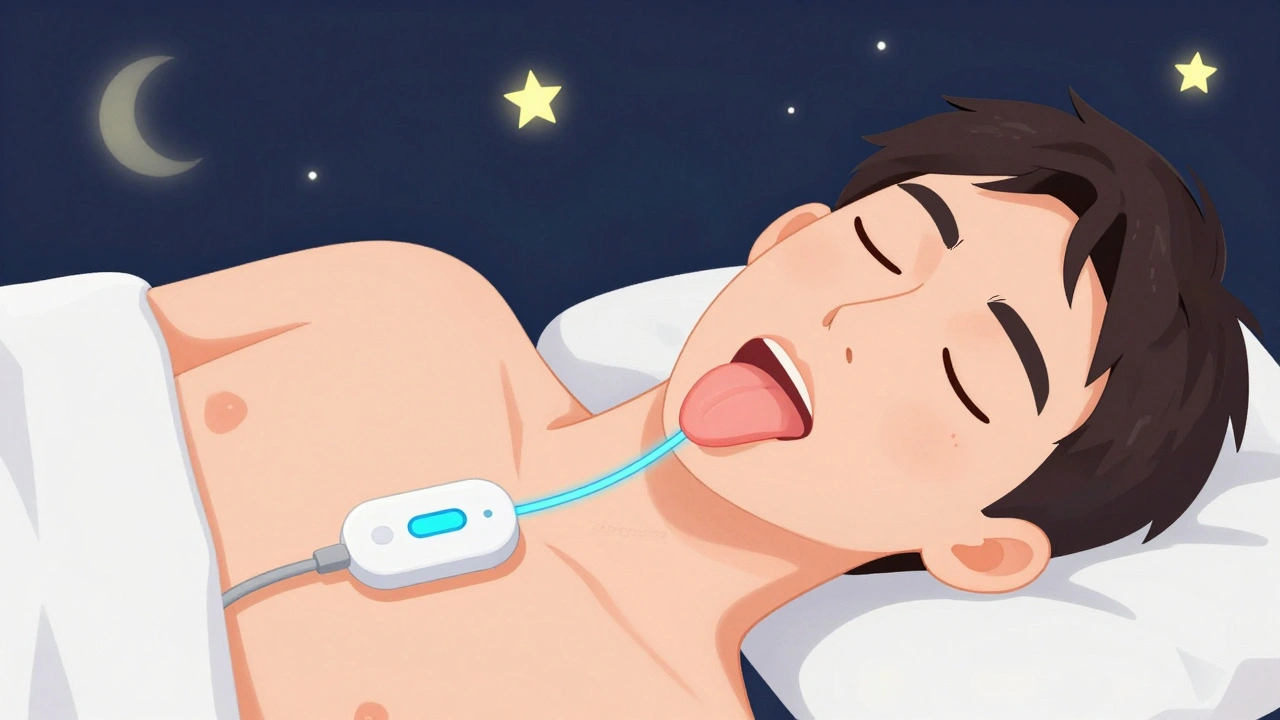
Upper Airway Stimulation: An Implant Option for Sleep Apnea When CPAP Doesn’t Work
Upper airway stimulation is a surgical implant for sleep apnea that works when CPAP fails. It stimulates the tongue nerve to keep the airway open, with high success rates and better adherence than masks.