Degenerative Joint Disease: Causes, Symptoms, and Treatment Options
When your joints start aching, stiffening, or clicking with movement, it’s often not just aging—it’s degenerative joint disease, a progressive condition where the protective cartilage in joints breaks down over time. Also known as osteoarthritis, it’s the most common form of arthritis, affecting millions of adults, especially after 50. Unlike rheumatoid arthritis, which is autoimmune, degenerative joint disease happens because of wear and tear, injury, or genetics. It doesn’t just affect the elderly—you can develop it after a sports injury, with obesity, or even from repetitive motion at work.
What happens inside the joint is simple but damaging: the smooth cartilage cushion between bones thins, then wears away. Bone starts rubbing on bone. The body tries to fix it by growing extra bone—those bony lumps you feel around knuckles or knees? Those are bone spurs, outgrowths that form as the body attempts to stabilize a damaged joint. Inflammation follows, swelling increases, and movement becomes painful. You might notice stiffness after sitting for a while, or a grinding feeling when you bend your knee or turn your neck. These aren’t normal parts of aging—they’re signs the joint structure is breaking down.
Some people manage it with lifestyle changes: losing weight takes pressure off knees and hips, low-impact exercise like swimming or cycling keeps joints moving without crushing them, and strength training supports the muscles that hold joints steady. Others need medication—NSAIDs, nonsteroidal anti-inflammatory drugs like ibuprofen or naproxen, commonly used to reduce pain and swelling in degenerative joint disease—or injections of corticosteroids or hyaluronic acid. But these don’t fix the damage, only mask it. For severe cases, joint replacement surgery becomes the only real solution. The good news? You don’t have to wait until you’re in constant pain. Early action slows progression.
The posts here cover real-world approaches people use to live with this condition. You’ll find comparisons of pain meds like Celebrex and naproxen, tips on managing side effects, and even how certain supplements or physical therapies help. Some articles dive into how other conditions—like obesity or diabetes—make joint damage worse. Others explain what to expect before and after joint surgery. This isn’t theory. It’s what people actually do to get through their days without being held back by stiff, aching joints.
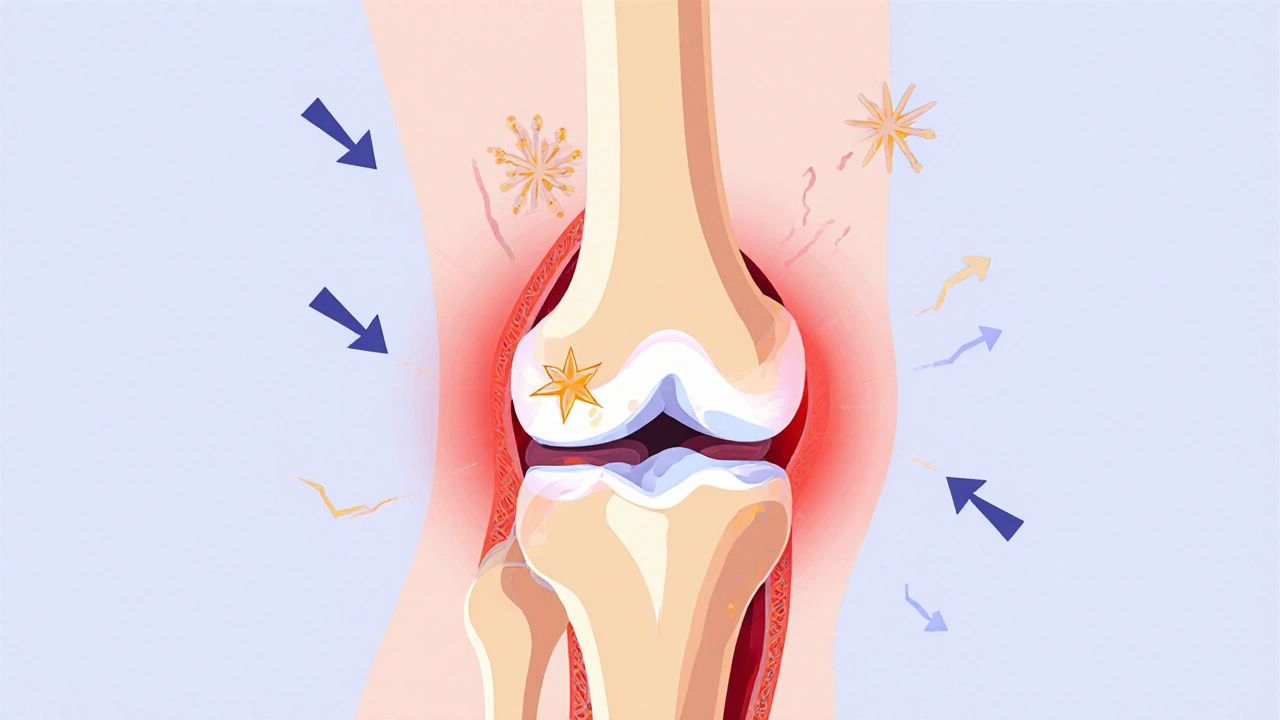
Osteoarthritis: Understanding Joint Degeneration and Effective Pain Management Strategies
Osteoarthritis is the most common form of joint degeneration, affecting over 500 million people worldwide. Learn how movement, weight loss, and joint protection can significantly reduce pain and improve mobility-without relying only on medications.