Sleep Apnea Treatment: Effective Options, Risks, and What Actually Works
When you have sleep apnea, a condition where breathing repeatedly stops and starts during sleep. It’s not just snoring—it’s your body struggling for air, often without you even knowing. Left untreated, it raises your risk of heart attack, stroke, and high blood pressure. Also known as obstructive sleep apnea, this isn’t something you can ignore or wish away. Many people think it’s just a nuisance, but it’s a medical issue that needs real solutions.
There are several ways to treat it, and not all of them are the same. The most common and proven method is CPAP therapy, a machine that delivers steady air pressure through a mask to keep your airway open. It’s not glamorous, but it works—for most people. Then there are oral appliances for sleep apnea, custom mouthpieces that reposition your jaw to prevent airway collapse. They’re smaller, quieter, and easier to travel with, but they’re not for everyone. If you’re overweight, losing even 10% of your body weight can cut symptoms in half. Alcohol and sleeping on your back? Those make it worse. Cutting out late-night drinks and switching to side sleeping can be the first step before you even buy a device.
Some people try herbal remedies or nasal strips, but those rarely fix the real problem. The key is matching the treatment to your specific type of sleep apnea and how severe it is. A sleep study isn’t just a formality—it’s the only way to know if you need a machine, a mouthguard, or surgery. And if you’re using a CPAP and still feeling tired? You’re probably not using it right. Mask leaks, wrong pressure settings, or skipping nights can make all the difference. It’s not about willpower—it’s about getting the right setup and sticking with it.
Below, you’ll find real advice from people who’ve been there—what works, what doesn’t, and what no one tells you until it’s too late. From how to handle CPAP discomfort to why some over-the-counter sleep aids make it worse, these posts cut through the noise. No fluff. No hype. Just what you need to breathe easier at night.
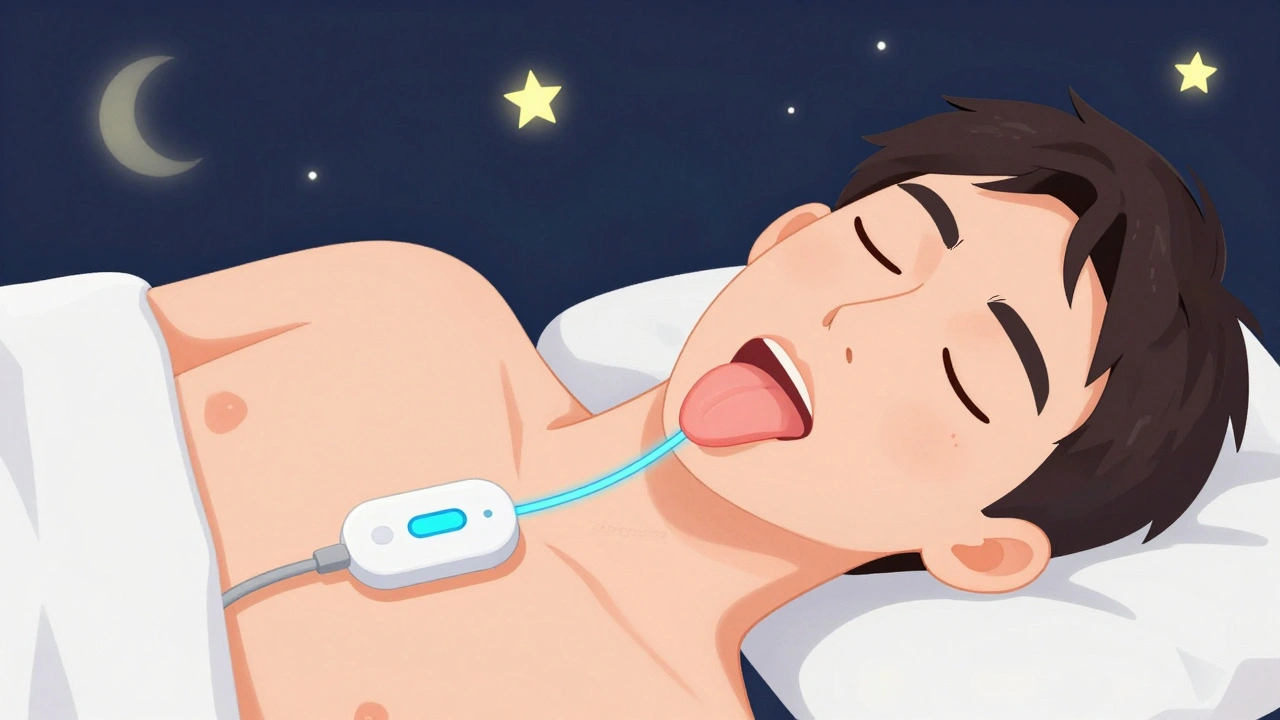
Upper Airway Stimulation: An Implant Option for Sleep Apnea When CPAP Doesn’t Work
Upper airway stimulation is a surgical implant for sleep apnea that works when CPAP fails. It stimulates the tongue nerve to keep the airway open, with high success rates and better adherence than masks.