SPF: What It Really Means for Skin Protection and Health
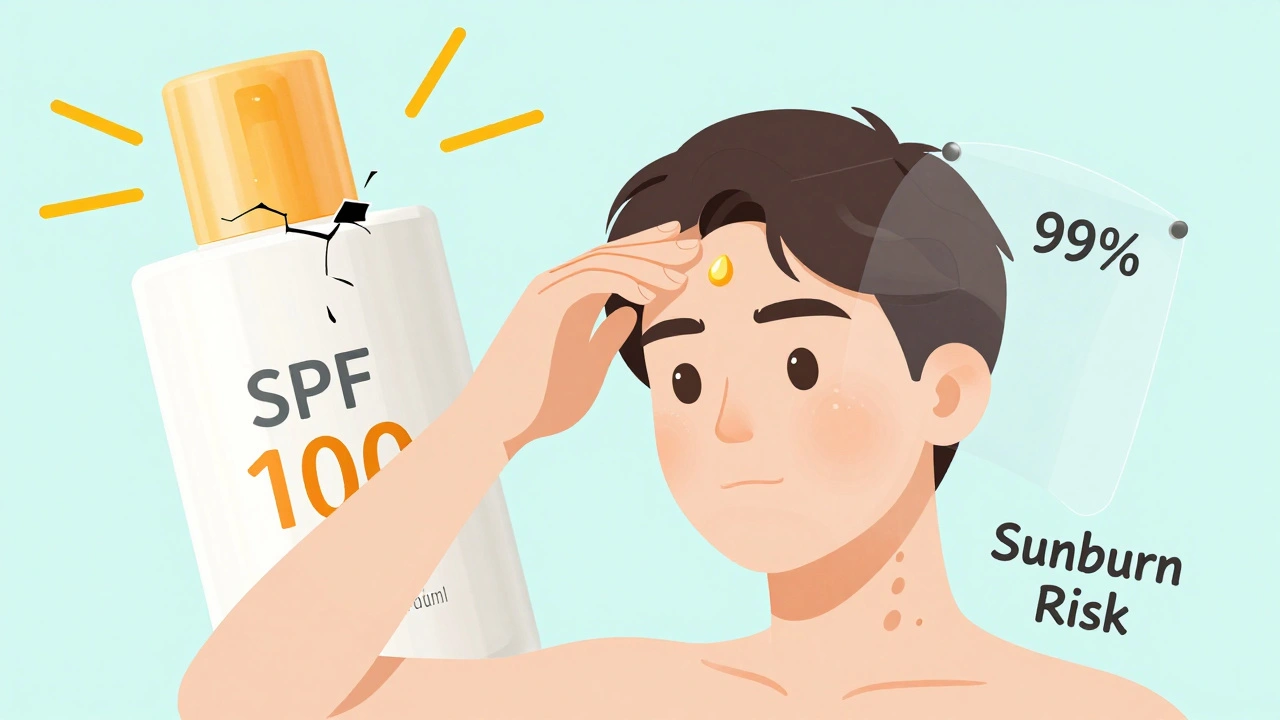
When you see SPF, Sun Protection Factor, a measure of how well a sunscreen blocks UVB rays that cause sunburn and skin damage. Also known as Sun Protection Factor, it tells you how long you can stay in the sun before your skin starts to burn—assuming you apply enough and reapply often. But most people think SPF 30 is twice as strong as SPF 15. It’s not. SPF 30 blocks about 97% of UVB rays. SPF 50 blocks 98%. The jump isn’t magic—it’s marginal. What matters more is how you use it.
SPF only measures protection against UVB rays—the ones that burn your skin. It says nothing about UVA rays, which go deeper, age your skin, and contribute to skin cancer. That’s why you need broad-spectrum sunscreen, a formula that protects against both UVA and UVB radiation. Look for that phrase on the label. If it’s not there, you’re only half-protected. And don’t forget: sunscreen isn’t just for beach days. Up to 80% of UV rays penetrate clouds. You get exposure walking to your car, sitting by a window, or driving. Daily use cuts your risk of melanoma by 50%, according to long-term studies in Australia.
Applying too little ruins everything. The standard test uses two milligrams per square centimeter of skin—that’s about a shot glass full for your whole body. Most people use a quarter of that. And reapplying every two hours? Rare. Sweat, towel-drying, and even just time break down the protection. Zinc oxide and titanium dioxide are physical blockers—they sit on top of your skin and reflect UV. Chemical filters like avobenzone absorb it. Both work if used right. But if you have sensitive skin, physical blockers are less likely to cause irritation.
High SPF doesn’t mean you can stay out longer. It doesn’t give you a free pass to skip hats, shade, or clothing. sun-protective clothing, fabric designed to block UV radiation with a UPF rating. A UPF 50 shirt blocks 98% of UV rays—better than most sunscreens. And don’t forget your lips, ears, and scalp. Those are common spots for skin cancer. Kids need protection too. Their skin is thinner and more sensitive. A sunburn before age 18 doubles your lifetime melanoma risk.
SPF is one of the simplest, cheapest, and most effective tools we have to prevent skin cancer. But it’s only powerful if you use it correctly, consistently, and with the right product. The posts below break down exactly what works, what doesn’t, and how to make sure your sunscreen is actually doing its job—not just giving you a false sense of safety.
OTC Sunscreens: How SPF, Broad Spectrum, and Reapplication Really Work
Learn how SPF, broad spectrum, and reapplication actually work with OTC sunscreens. Get real advice on ingredients, what to buy, and how to avoid common mistakes that leave your skin unprotected.